REVIEW · AMSTERDAM
Amsterdam: Houseboat Museum Entry Ticket
Book on GetYourGuide →Operated by Boat Boys · Bookable on GetYourGuide
A museum you can feel. On the 1914 cargo ship Hendrika Maria, you step into the 1970s interior and learn how this boat became home in 1967. It’s a rare chance to see canal life from the inside, not just the outside postcard version.
I really like how the museum connects daily living to real boat features. You also get a strong story of a family of four using the space while the vessel was still working as a freight barge—then living that same layout as a houseboat.
The only real drawback is size and pacing. The house is compact, the stairs are steep, and at $12 it can feel expensive if you want a long, slow walk-through.
In This Review
- Key things to know before you go
- A 1914 Cargo Ship Converted Into a Houseboat Museum
- Entering the Hendrika Maria: 1970s Colors, Small Spaces, Real Stairs
- The Mast and Leeboard: How This Boat Once Moved Goods
- What the Family-of-Four Story Teaches You
- How Long You’ll Be Inside: A Compact Visit You Can Finish Calmly
- Price and Value: Is $12 Worth It?
- Practical Tips for a Smoother, More Enjoyable Visit
- Who Should Book This Ticket?
- Should You Book the Amsterdam Houseboat Museum Entry Ticket?
- FAQ
- How much is the Amsterdam Houseboat Museum entry ticket?
- How long is the visit?
- What’s included with the ticket?
- What boat is the museum located on?
- Is photography allowed inside the museum?
- Is flash photography permitted indoors?
- What languages are available?
- Is the museum difficult to access due to stairs or space?
- Can I cancel for a full refund?
Key things to know before you go
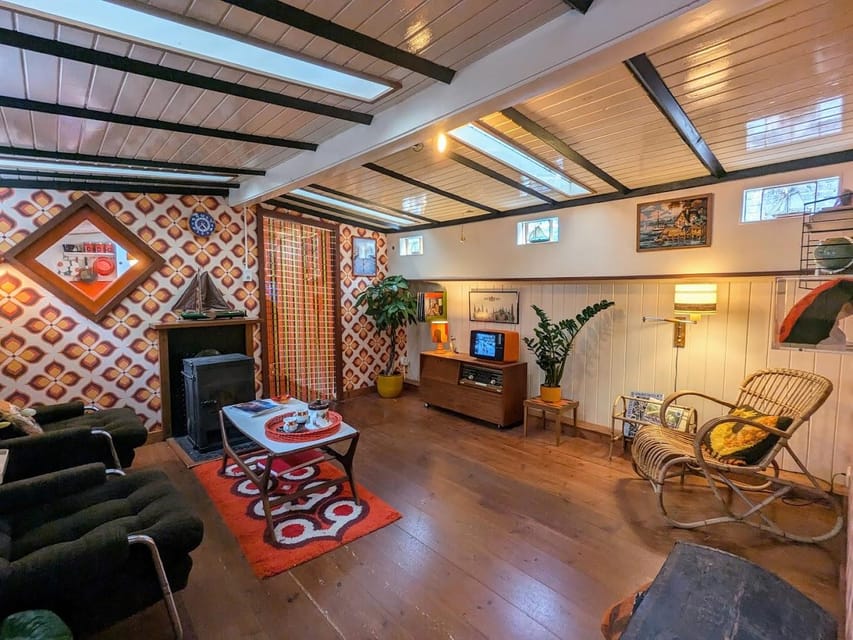
- It’s a real houseboat, not a staged model, so space is tight and the layout is practical.
- The museum is on the Hendrika Maria, a 1914 cargo ship converted to a houseboat in 1967.
- The interior still reflects the 1970s, with the kind of colors that instantly put you in the period.
- You’ll see boat-working details like the sailing mast and leeboard, not just furniture.
- There’s a family-of-four story, showing how life changed when freight work stopped.
- Photography is allowed, but no flash inside the museum.
A 1914 Cargo Ship Converted Into a Houseboat Museum
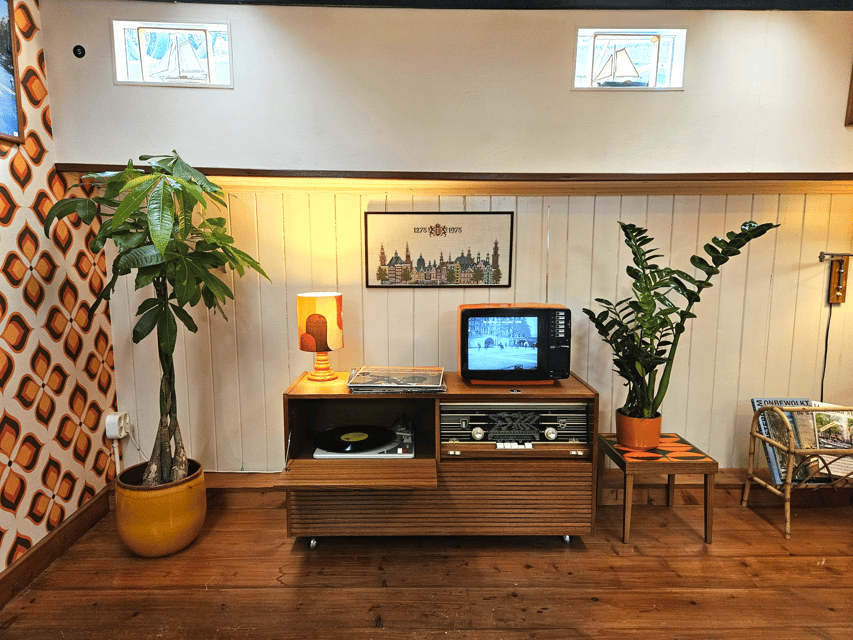
Amsterdam has lots of ways to learn about the canals. This one is different because you’re not looking at history behind glass. You’re standing in it.
The museum is aboard the Hendrika Maria, built in 1914 as a cargo vessel. Later, in 1967, it was turned into a residential houseboat. That jump—from freight ship to floating home—is the whole point of the visit, and it gives you a clear sense of what changed, and what didn’t.
I like that the experience stays grounded. You’re shown how people lived with the limitations and advantages of life on a boat. That matters because it explains canal living beyond aesthetics. This is practical history: where things go, how people move, and how everyday routines fit in a space meant for cargo first.
One more bonus: the museum is described as the only houseboat museum in Amsterdam. Even if you’re not a collector of specialty tickets, that uniqueness makes it worth adding.
A few more Amsterdam tours and experiences worth a look



Entering the Hendrika Maria: 1970s Colors, Small Spaces, Real Stairs
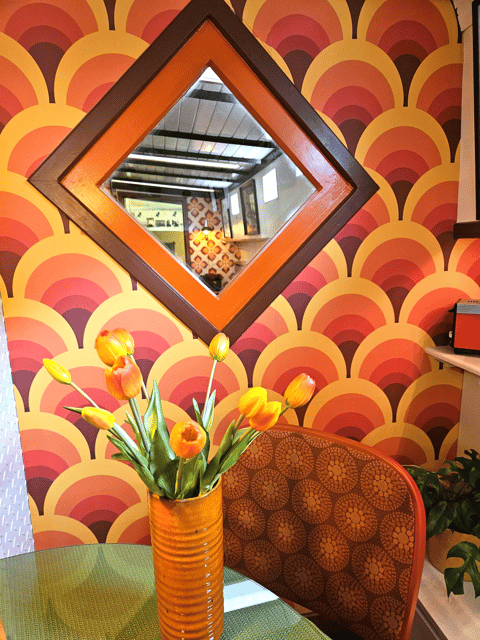
When you step inside, you immediately notice the period look. The interior design reflects the time when it started being used more like a regular house—especially the 1970s. Expect plenty of orange, yellow, and brown. It’s not subtle, and it’s not trying to be trendy now. It’s trying to be honest about how it felt back then.
This matters for how you experience the museum. In a normal museum, you see objects. Here, you feel the layout. Because it’s a real houseboat, the rooms are tight and the corners tell you where the boat’s original structure limits you.
Also: stairs are steep. That’s not a minor note. It affects how comfortable you’ll be moving around. If stairs make you slow down at home, assume you’ll feel it here too. And if you need extra space to maneuver, the limited room size can be annoying fast. Plan for a careful pace, and wear shoes with decent grip.
The museum is set up to be interactive, and there’s a lot of shared context. That’s a good match for a small site. Instead of stretching you across multiple rooms and floors for hours, the museum uses conversation and explanations to make the space feel bigger than it is.
The Mast and Leeboard: How This Boat Once Moved Goods
One of the most satisfying parts is learning that the boat wasn’t just converted. It was built to work.
You can see original sailing-related features, including the sailing mast and the leeboard. Those aren’t decorations. They connect to how the vessel traveled when it was used for transport—reportedly including routes to Scandinavia. It’s a small detail, but it’s also a big idea: the same boat that carried freight was designed to handle water and wind, not just to drift.
So when you’re walking around, you’re not only imagining a home. You’re also imagining a working vessel. That makes the museum feel more logical. The furniture and lived-in areas don’t feel random. They look like they grew around the boat’s real function.
I also appreciate how this kind of “how it worked” information gives you something to watch for. You start noticing practical choices—what would matter on a ship, and what would matter for living. Even if you’re not a sailor, the physical presence of the mast area and the boat gear turns the visit into a kind of hands-on explanation.
What the Family-of-Four Story Teaches You
The museum doesn’t just list dates. It tells a human-scale story of how a family used the space.
A key part of the experience is learning about how a family of four lived on board when the Hendrika Maria was still used as a freight barge. Then you see how life adapted after the boat became a houseboat.
That shift—from shipyard work rhythms to home rhythms—changes everything, even if the floorplan stays tight. It’s one thing to hear “converted in 1967.” It’s another to see how living arrangements make sense when the vessel’s movement, storage, and practical limitations are part of the daily environment.
You’ll also get the feeling that these residents weren’t newcomers. The museum emphasizes that people lived on the boat for more than 100 years, so you’re not just looking at a one-time conversion. You’re looking at continuity: generations using the same kinds of spaces, solving the same types of problems with the tools available then.
For me, this is where the museum earns its ticket price. When a place tells you what life was like, you start understanding why the space looks the way it does. You stop viewing rooms as set dressing and start reading them as solutions.
How Long You’ll Be Inside: A Compact Visit You Can Finish Calmly
This is not a full-day museum. The good news is that you won’t feel trapped with hours on a schedule.
Even though the experience is listed for a 1-day booking window, the actual houseboat visit is naturally short because the setting is small. One review specifically notes about 15 to 20 minutes for a tour when following the audio guide route over the roughly 80m² space. That lines up with what you’d expect from a real floating house.
Here’s how I’d plan it: treat it like a focused stop. Don’t stack it expecting it to behave like a large indoor museum. If you come in knowing it’s compact, you’ll leave thinking you got a solid dose of lived-in history without wasting time.
If you’re the type who asks lots of questions, the experience could feel longer, because the museum is interactive and the host shares knowledge. But the physical limit is still there. The boat doesn’t expand just because you want it to.
You can also read our reviews of more museum experiences in Amsterdam






Price and Value: Is $12 Worth It?
At $12 per person, this ticket sits in the “small splurge” category. The question isn’t whether it costs money—it’s what you get for that money.
You’re paying for access to a real houseboat museum, plus the chance to understand the design and history in a place where the layout is part of the lesson. You’re not paying for a big theater show or a long self-guided maze.
That said, the museum’s compact size can make the price feel sharp if you expect a long visit. One review called it too expensive for how quickly you can see everything. I get the frustration. If you want a long, drawn-out walk-through, this won’t be that.
But if you go in with the right expectations—short, hands-on, and very specific—you’ll likely feel the value. The best way to judge it is to ask yourself what you like more:
- Do you enjoy compact sites that teach you one strong story well?
- Or do you prefer hours of changing rooms, exhibits, and wandering?
If you’re in the first camp, $12 can be a fair trade for a one-of-a-kind Amsterdam experience.
Practical Tips for a Smoother, More Enjoyable Visit
These small things can make the difference between a “quick look” and a “real understanding.”
- Wear stable shoes. The stairs are steep. Shoes that grip help you feel confident as you move between levels.
- Give yourself a calm pace. The space is limited, so rushing makes it harder to absorb details.
- Use the audio guide route if offered to you on-site. One review mentions it can guide you through the ~80m² in about 15–20 minutes. It’s a good way to avoid missing the main story beats.
- Look for boat features, not only furniture. The mast and leeboard are part of the museum’s logic. They help you connect the ship’s movement to the way people lived.
- Take photos—but skip flash. Photography is allowed, and flash photography is not permitted inside.
If you’re sensitive to crowds, the tight interior means group movement matters. Keep an easy pace and let people ahead of you clear a spot.
And if your schedule is up in the air, you can book with flexibility. There’s free cancellation up to 24 hours in advance for a full refund, and reserve now with pay later is offered—handy if you’re planning a busy Amsterdam day.
Who Should Book This Ticket?
This works best for people who like grounded, lived-in history and don’t need a huge building to enjoy a museum.
You’ll probably love it if:
- You’re interested in Amsterdam canals beyond houseboats as scenery.
- You enjoy stories about how ordinary families adapted to unusual living conditions.
- You’re the type who likes practical design details—especially how a working vessel becomes a home.
- You want a short stop that still feels different from big-ticket sights.
You might want to think twice if:
- You need step-free access. The stairs are steep and the space can be limited.
- You’re expecting a long visit with lots of separate exhibits and rooms to wander through.
- You strongly prefer museums that let you linger for a long time at every stop.
Should You Book the Amsterdam Houseboat Museum Entry Ticket?
My take: Yes, book it if you’re the kind of visitor who appreciates compact experiences with a clear theme—this one is the transformation of the Hendrika Maria from freight ship to floating home. The 1970s interior look, the family-of-four story, and the visible sailing hardware (mast and leeboard) are the kinds of details that stay with you.
But don’t book it if you need a long museum outing. This is a real houseboat. That’s the charm—and the limitation. Go in expecting a short, focused visit, and the $12 price becomes easier to justify.
If you’re building an Amsterdam plan around canals, architecture, and everyday life, this is one of the more memorable “small ticket” stops you can make.
FAQ
How much is the Amsterdam Houseboat Museum entry ticket?
The price is $12 per person.
How long is the visit?
The experience is listed for 1 day, and you can check availability for starting times. The visit itself is naturally compact due to the houseboat setting.
What’s included with the ticket?
The ticket includes entrance to the Houseboat Museum.
What boat is the museum located on?
The museum is on the Hendrika Maria, a 1914 cargo ship converted into a residential houseboat in 1967.
Is photography allowed inside the museum?
Yes, photography is allowed.
Is flash photography permitted indoors?
No, flash photography is not permitted inside the museum.
What languages are available?
The host or greeter offers English, French, Traditional Chinese, German, Spanish, Portuguese, Italian, and Dutch.
Is the museum difficult to access due to stairs or space?
The museum is in a real houseboat, so space may be limited and there are steep stairs.
Can I cancel for a full refund?
Yes. Free cancellation is available up to 24 hours in advance for a full refund.