REVIEW · ROME
Vatican Museums & Sistine Chapel Entry Ticket
Book on GetYourGuide →Operated by City Lights Tours · Bookable on GetYourGuide
Skip the line, then wander at your pace. This Vatican Museums ticket is built for people who want the big classics—without being locked into a scripted group tour. You start with a host-led escort for quick entry, then you’re free to move at your own speed all the way to the Sistine Chapel.
I especially like the timed-entry setup and the practical way the host helps you get oriented right away. Names that come up in real-world experiences include Albert and Giulia, who helped groups get through entry and start the museum smart. I also like the “see the highlights, then pause” flow—think Raphael Rooms and the Sistine Chapel—so you can linger where you care most.
One consideration: after the host brings you in, this is truly self-guided. There’s no full guided commentary and no audio device provided, and you still have to deal with Vatican security, modest dress rules (shoulders and knees covered), and no re-entry once you exit.
In This Review
- Key highlights worth planning around
- Why timed-entry matters at the Vatican Museums
- Getting in with a host: the fastest part of your visit
- The calm self-guided format (and what you do and don’t get)
- Your 3-hour flow: from sculptures to Sistine silence
- Laocoön and His Sons: the first masterpiece people lock onto
- Gallery of the Candelabra: when Roman statues and chandeliers meet
- Gallery of Maps: Italy’s regions, painted like a wall-sized story
- Raphael Rooms: where you can actually control how long you linger
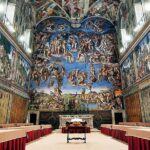
- Sistine Chapel: finish strong, not tired
- What to know about Last Judgment scaffolding
- Crowd reality: what to do when it’s busy
- Dress code and the stuff that slows you down
- Value: is $67 per person worth it?
- Who this experience fits best
- Should you book this Vatican Museums & Sistine Chapel entry ticket?
- FAQ
- How early should I arrive for my timed entry?
- Do I get a guided tour once I’m inside?
- How long is the visit?
- Is re-entry allowed after I leave the Vatican Museums route?
- What should I wear?
- Will I see Michelangelo’s Last Judgment during winter scaffolding?
Key highlights worth planning around
- Timed-entry that still feels flexible: you get host help, then you set your own pace.
- The museum hits in a logical order: classic sculpture first, then major galleries, then the Sistine Chapel.
- Laocoön and His Sons: a standout stop in the octagonal courtyard that many people remember most.
- Gallery of the Candelabra and Gallery of Maps: long, bright corridors where it’s easy to slow down and really look.
- Raphael Rooms: you’ll see the famous fresco cycles by Raphael and his students up close.
- Seasonal note for Last Judgment: from Jan 12 to Mar 31, Michelangelo’s Last Judgment is covered by scaffolding, though the Sistine Chapel stays open.
Why timed-entry matters at the Vatican Museums
The Vatican Museums can be a patience test. Even with good planning, the entry area and security can eat up your morning before you’ve seen a single masterpiece.
This ticket fixes the biggest friction point: you get timed-entry access with a host who brings you into the museums. That small shift changes the whole day. Instead of losing time to queues, you start viewing sooner and spend your energy inside, where it counts.
A few more Rome tours and experiences worth a look
Getting in with a host: the fastest part of your visit
Your experience starts with an English-speaking host or greeter who meets you at a designated spot (the exact meeting point can vary by option). The goal is simple: get you past the long lines and into the museum system with minimal stress.
Once you’re through security, the host typically helps with early orientation—what to see first, how to move through the galleries, and when to start thinking about your final approach to the Sistine Chapel. In real experiences, hosts like Albert, Giulia, and Sean have guided groups right up to the final entrance gate inside, then you go on your own.
Also note the “real life” details you’ll thank yourself for:
- Arrive at least 15 minutes early for your timed slot.
- Backpacks and large bags may need checking at security.
- Even during smooth entry, peak periods can still mean a short wait for security.
The calm self-guided format (and what you do and don’t get)
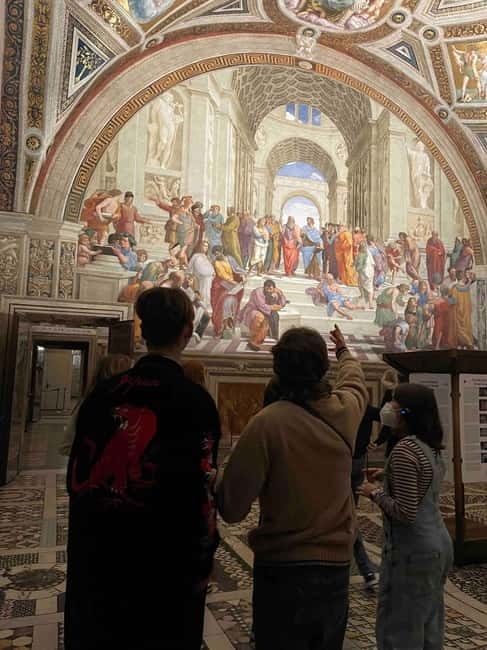
This is not a full guided tour. After the escort, you explore freely, with no fixed schedule and no audio device.
That’s a plus if you like control. You can slow down for a few rooms, skip what doesn’t interest you, and stop to look closely at small details in the Raphael Rooms or the corridors of maps. It also helps families and mixed-interest groups, since you’re not forced to keep pace with someone else’s commentary.
It’s a drawback if you want a running explanation of every masterpiece. You’ll be relying on your own curiosity and instincts inside the galleries. If you love structured storytelling, you might prefer a guided tour instead.
Your 3-hour flow: from sculptures to Sistine silence
The stated duration is 3 hours, but it’s best to think of this as a window that starts when you enter the museum area. Many people can reach the Sistine Chapel in about 2.5 hours if they keep moving with purpose, then take their time once they’re there.
The route is designed to move you through major stops without you having to map the Vatican like a cryptographer. You’ll start in the galleries with classical sculpture, then work through signature corridors and rooms, and finish at the Sistine Chapel—the most famous room in the whole museum complex.
Laocoön and His Sons: the first masterpiece people lock onto
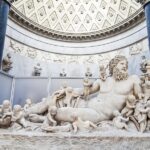
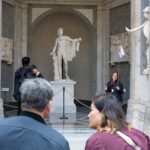
One of the most memorable stops on this path is Laocoön and His Sons. It’s displayed in an octagonal courtyard that has influenced generations of artists.
Why it’s worth prioritizing early: this sculpture sets the tone for the Vatican Museums. You go from the practical challenge of entering a crowd-filled complex to a room where the work itself feels intense and human. Even if your “museum style” is quick browsing, this is one of those pieces that grabs your attention fast.
Also, going earlier often helps. In many visits, the first part of the museum feels noticeably lighter than later hours, which makes it easier to see the sculpture without getting shoved into the back of a tour group.
You can also read our reviews of more museum experiences in Rome
Gallery of the Candelabra: when Roman statues and chandeliers meet
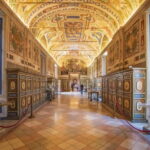
Next comes the Gallery of the Candelabra, a bright corridor lined with Roman statues and elegant chandeliers.
This isn’t just a photo spot. Corridors like this are where you can pause and let the museum work on you at a slower pace. The long, open sightlines make it easier to take in composition rather than darting between room entrances.
Practical move: if the crowd density rises, treat the gallery like a “look from the edges” space. You’ll often see more by stepping aside to get a clear view instead of trying to stand exactly where everyone else funnels in.
Gallery of Maps: Italy’s regions, painted like a wall-sized story
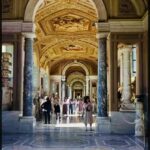
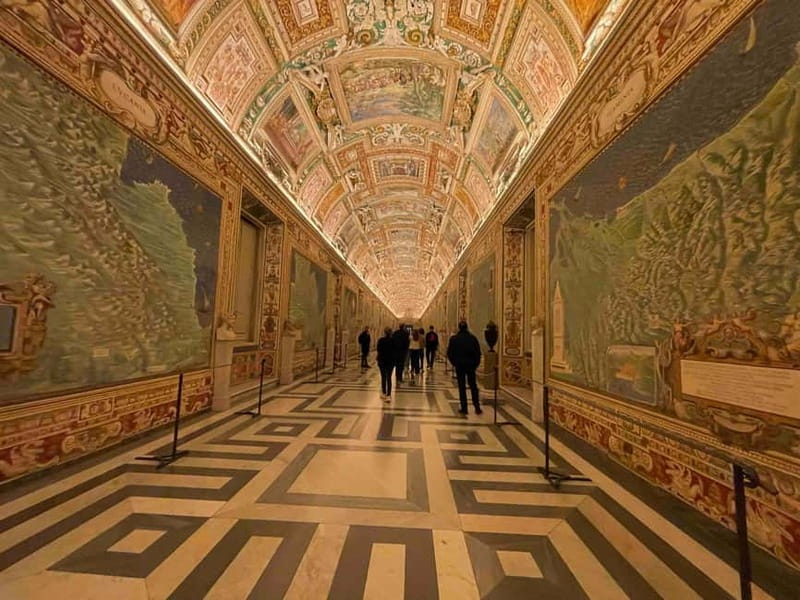
The Gallery of Maps is famous for a reason: it’s a long corridor covered with detailed frescoes showing Italy’s regions.
It’s also a useful palate cleanser between sculpture and the Raphael Rooms. Instead of thinking about marble and myth, you start noticing the way the artists and patrons used art to frame knowledge—place, identity, and history all painted into one sweeping visual.
If you like facts, this gallery gives you plenty to focus on. If you prefer atmosphere over details, it still works because the scale is the point. Either way, this is one of those spaces where you naturally end up moving slower.
Raphael Rooms: where you can actually control how long you linger
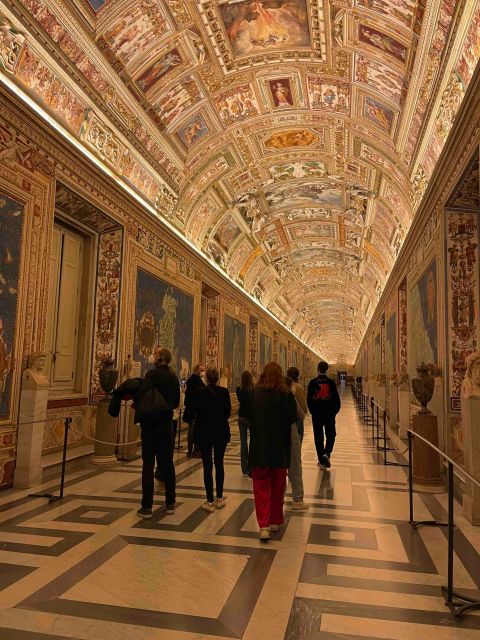
Then you reach the Raphael Rooms, known for vivid colors and impressive frescoes created by Raphael and his students.
This is a great place to use the self-guided setup. You can:
- Spend extra time on the scenes that hook you.
- Skip the ones you don’t care about.
- Step back and read the room like a sequence instead of trying to see everything at once.
A common mistake is rushing through the Raphael Rooms because they feel like they need to be “checked off.” With this format, you don’t have to. You decide how much time each scene deserves, which is exactly what makes a self-paced ticket work here.
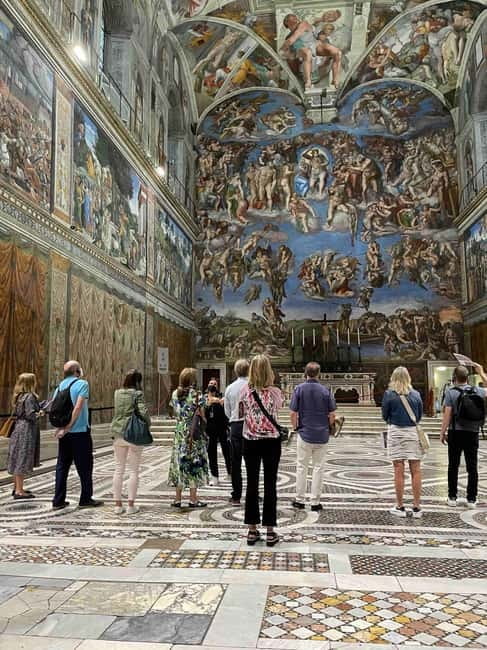
Sistine Chapel: finish strong, not tired
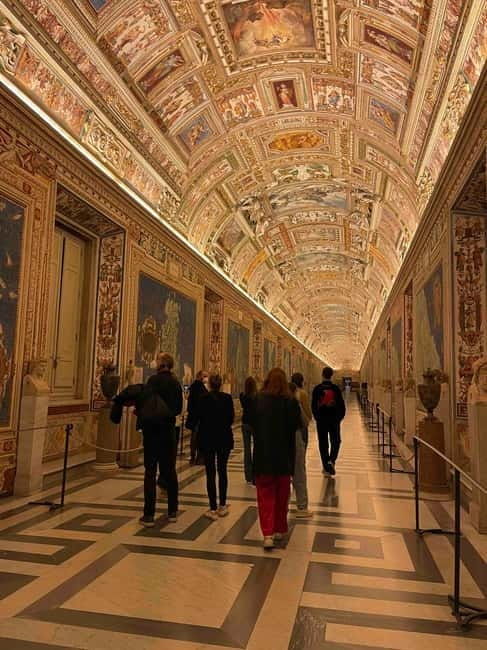
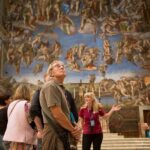
Your visit ends in the Sistine Chapel, with time to stay as long as you want inside that space.
This matters because the Sistine Chapel rewards stillness. When you arrive feeling calm—not whipped through rooms—you get more out of the experience. It’s also easier to notice the details when you aren’t constantly thinking about what’s next.
What to know about Last Judgment scaffolding
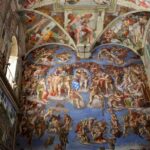
From Jan 12 to Mar 31, Michelangelo’s Last Judgment will be covered by scaffolding for extraordinary maintenance. The Sistine Chapel remains open to the public.
So if your heart is set on seeing Last Judgment fully exposed, that seasonal window changes the equation. You’ll still be in the Sistine Chapel, but the presentation of that particular fresco will be altered.
Crowd reality: what to do when it’s busy
Even with timed entry, the Vatican still packs people in. Security lines can still be short but real, and once you’re inside, you’ll encounter busy pockets.
The host guidance helps you avoid some of the worst bottlenecks early. But once you’re on your own, your best tools are small behavior changes:
- Keep moving until you spot a good viewpoint, then stop.
- Don’t fight the center of a doorway. Step slightly aside to let the flow pass.
- If you see a room turning into a traffic jam, shift to the next space and come back only if you still care.
The goal is not to beat crowds at all costs. The goal is to avoid wasting time with frustration.
Dress code and the stuff that slows you down
Two rules can trip people up at the last second:
- Knees and shoulders must be covered.
- Backpacks and large bags may need checking at security.
Plan for this like you’re dressing for a church, not a theme park. If you’re visiting in warm weather, bring a light layer that covers your shoulders without turning you into a walking sauna. It saves stress during entry when you don’t want to argue with security.
Also remember: there’s no re-entry. Once you exit the museum route, you can’t hop back in later with the same ticket.
Value: is $67 per person worth it?
At $67 per person, this ticket isn’t the cheapest way into Vatican Museums. But the value isn’t just the museum access—it’s what you buy with the timed-entry host.
You’re paying for:
- Host help getting you into the museums through a separate entrance route.
- A smoother start that can prevent losing hours to queues and confusion.
- A structured-to-freedom format: you get the “how to begin” support, then you explore at your own pace.
If you hate guided tours but still want help beating the biggest line outside, this is often a sweet spot. If you love having a narrator and a strict schedule, you may feel this ticket is “just entry,” because it is. The experience becomes what you make of it once the host steps back.
Who this experience fits best
This ticket is a great match if you:
- Want to skip the long line and enter at a timed slot.
- Prefer self-guided freedom over a scripted tour.
- Like key highlights more than a deep, room-by-room lecture.
- Are traveling with different interests (one person loves sculpture, another wants fresco rooms).
It’s also a decent choice if you’re short on time and want a controlled route ending at the Sistine Chapel. For people who want extensive historical context during every room, you’ll likely add context yourself (through a guidebook, online reading beforehand, or an audio option purchased separately outside this ticket).
Should you book this Vatican Museums & Sistine Chapel entry ticket?
I’d book it if you want the practical advantage of timed-entry host assistance and you’re happy to explore independently afterward. This format is built for people who want a calmer museum day, not a rush with a group leader pulling you along.
Skip booking (or consider another option) if you need a full narrated tour to enjoy museums. Without an included guide or audio device, the experience depends heavily on your own interest level once inside.
One last decision tip: if you’re traveling during Jan 12 to Mar 31, check your priorities for Last Judgment. The Sistine Chapel stays open, but that specific fresco area will be affected by scaffolding.
If you’re flexible and you want the best mix of entry efficiency plus freedom, this is one of the most sensible ways to tackle the Vatican Museums without turning your day into a queue marathon.
FAQ
How early should I arrive for my timed entry?
Arrive at least 15 minutes before your timed entry. That extra buffer helps with security and meeting up with the host.
Do I get a guided tour once I’m inside?
No. You’ll have host assistance to get into the museums, and then the rest is self-guided exploration at your own pace. No audio device is included.
How long is the visit?
The experience is listed at 3 hours. Many people complete the route from entry through to the Sistine Chapel in about 2.5 hours, then stay for as long as they like inside.
Is re-entry allowed after I leave the Vatican Museums route?
No re-entry is allowed. Once you exit, you can’t return with the same ticket.
What should I wear?
You need modest dress with shoulders and knees covered.
Will I see Michelangelo’s Last Judgment during winter scaffolding?
From Jan 12 to Mar 31, Last Judgment will be covered by scaffolding for maintenance. The Sistine Chapel remains open to the public.