REVIEW · ROME
Skip the Line Tour: Vatican Museums and Sistine Chapel
Book on Viator →Operated by Greenline Tours · Bookable on Viator
One coach, three masterpieces, and a line you avoid. That’s the appeal here: fast-track entry into the Vatican Museums and a guided route to the Sistine Chapel without wrestling a two-hour queue.
I love that the guide actually connects what you’re seeing. The bronze spiral staircase sets up the story behind the Flemish tapestries, and the route also spotlights big-hit rooms like the Gallery of Maps. I also like that the tour includes hearphones, which matter when you’re packed in close with other groups.
The catch is time pressure. Even with skip-the-line access, you’ll still clear security (plan on 20–30 minutes), and the Sistine Chapel and St. Peter’s stops don’t leave much room for lingering.
In This Review
- Key things to know before you go
- Skip-the-line access at the Vatican: what you’re really paying for
- From Rome to Vatican City: the coach ride and the views en route
- Vatican Museums highlights: tapestries, maps, and that bronze staircase moment
- The Sistine Chapel stop: how long you’ll have and how to make it count
- St. Peter’s Basilica: Michelangelo’s Pietà and the timing reality
- Dress code, security, and comfort: small rules that affect your whole day
- Morning vs afternoon tours: when the schedule feels calm, and when it doesn’t
- Group size, hearing your guide, and the headphone advantage
- What the price covers—and whether it’s a fair deal
- Who should book this Vatican tour, and who should rethink it
- Should you book: my straight answer
- FAQ
- How long is the tour?
- What is included in the tour price?
- Is lunch included?
- Where do I meet the tour?
- Does the tour include pick-up or drop-off?
- How does the skip-the-line part work if there is still security?
- What dress code do I need for the Vatican?
- Is St. Peter’s Basilica always visited?
- Is the tour offered in English?
- How far in advance is it commonly booked?
Key things to know before you go
- Fast-track helps at the entrance, not at security
- Small group size (max 20) makes it easier to hear and move as one unit
- Two Michelangelo moments: Sistine Chapel and St. Peter’s Basilica highlights
- Raphael’s influence shows up via the tapestries linked to his school
- Dress code is enforced: shoulders and knees covered for both men and women
- St. Peter’s can get swapped for extra Vatican Museums time if it’s closed
Skip-the-line access at the Vatican: what you’re really paying for
Let’s be blunt: the Vatican is famous for lines. This tour’s main value is that you’re not stuck in the long public queue to enter the Museums. That time savings can be huge on busy days, and it changes the mood from stressful to doable.
But here’s the part people trip on. Skip-the-line access doesn’t remove the reality of metal detectors. You’ll still go through security and should expect a 20–30 minute wait before you reach the ticketed entry flow. So yes, it’s faster than going completely on your own—but you’re still stepping into a highly controlled building.
I also appreciate the practical pacing logic behind this style of tour. Vatican Museums are enormous, and trying to cover everything independently usually turns into wandering plus disappointment. This one gives you a guided route with key stops, so you don’t waste your limited time playing “guess where the best room is.”
You can also read our reviews of more museum experiences in Rome
From Rome to Vatican City: the coach ride and the views en route
You meet at Piazza della Città Leonina, 8 (00193 Roma). From there, you’ll board an air-conditioned coach headed toward Vatican City. The tour route passes recognizable Rome landmarks—like Piazza del Popolo—then crosses the Tiber and gives you a chance to spot Castel Sant’Angelo from the road.
Why this matters: if it’s your first Vatican day, the coach portion helps you get oriented fast. Rome looks different at street level than it does on postcards. Seeing the river, the big bridges, and the skyline approach is a nice mental warm-up before the Museums.
The tour duration is about 3 hours, so you won’t have a long bus ride buffer. Still, that short ride can be a relief if you’re coming in from central Rome and don’t want to figure out transport at the last second.
Vatican Museums highlights: tapestries, maps, and that bronze staircase moment
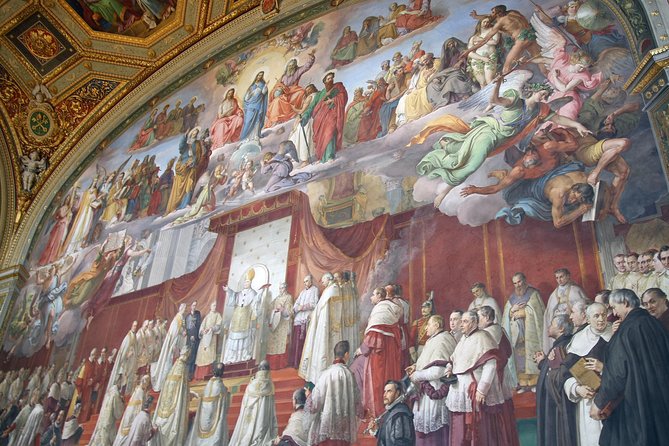
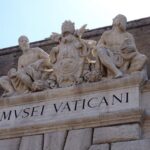
Once you arrive, you head into the Vatican Museums with your fast-track admission. The guided route is built around a few high-impact areas rather than a marathon of every gallery. In the time you’re given, you hit rooms that help you understand the building as a museum world, not just a collection of random masterpieces.
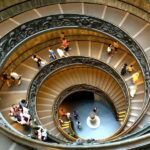
One standout part of the experience is the route down the bronze spiral staircase (Giuseppe Momo is the name tied to that iconic design). The guide uses that setting to bring context—especially around the Flemish tapestries. The story you’ll hear links these tapestries to original paintings by students of Raphael, which is a smart shortcut. Without that connection, tapestries can feel like decorative wall fabric. With the context, they read as a Renaissance-era system of art-making, copying, and prestige.
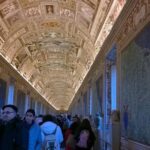
You also get the kind of rooms that are basically designed for photo magnets—like the Gallery of Maps and the Gallery of Tapestries. The maps room can feel like your brain wants to memorize it all at once, so having a guide to point out what’s important helps you avoid the usual overload.
One practical detail: the Museums stop time is limited (you’ll have about an hour for the Vatican Museums portion with admission ticket included). That means the experience leans toward seeing and learning, not slow study. If you love spending long stretches in one or two rooms, you might feel the schedule tightening.
The Sistine Chapel stop: how long you’ll have and how to make it count
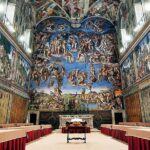
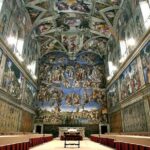
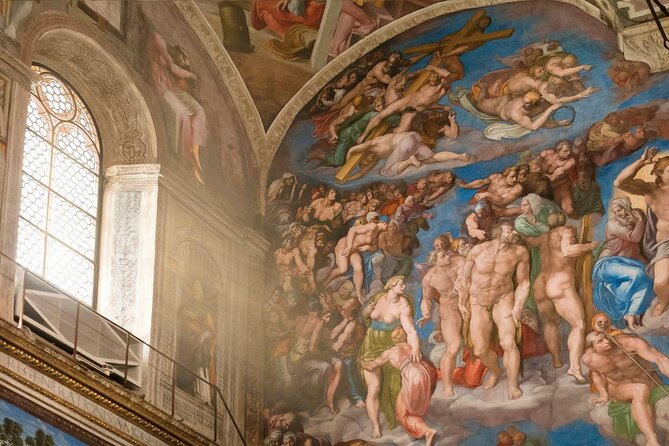
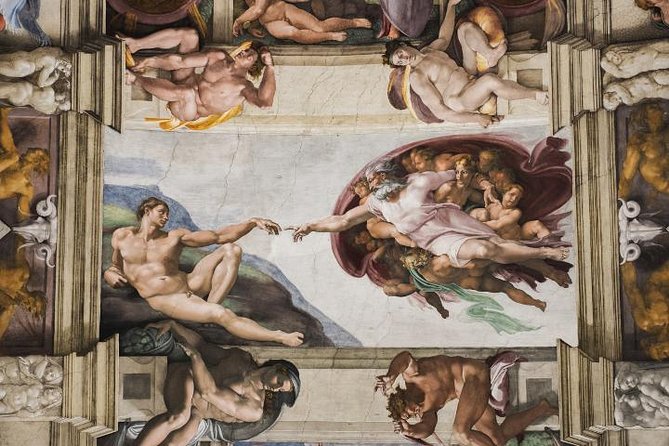
The Sistine Chapel is the headline. You’re given an admission ticket and a time slot that’s typically around 30 minutes at the chapel area. In theory, 30 minutes is enough to see the ceiling and take it in without rushing your eyes off the artwork. In practice, your actual comfort level depends heavily on crowd flow inside the chapel.
Here’s what I’d plan for: you’ll be moving with the group, and you’ll likely feel the pressure of shared space. The chapel is one of the most crowded indoor places in Rome, and the rules there mean you can’t treat it like a museum lounge.
So your best strategy is simple. Before you arrive at the chapel, decide what you want to notice most. If your focus is Michelangelo’s ceiling scenes, pick 2–3 details you want to locate first (not all at once). Then the time feels satisfying instead of frantic.
Also, small but real: the guide’s job is to keep you together. That’s why some visitors feel the pace fast. If you’re the type who needs a long quiet moment alone, this tour may feel like it’s skimming.
St. Peter’s Basilica: Michelangelo’s Pietà and the timing reality
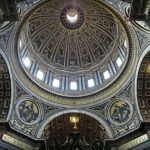
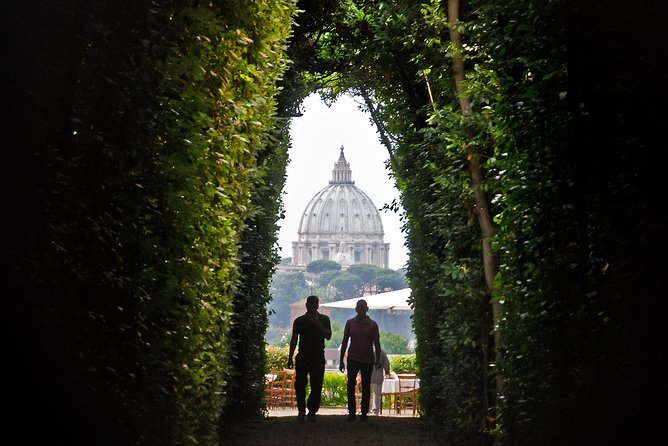
After the Museums and Sistine Chapel, you continue to St. Peter’s Basilica. The tour highlights Michelangelo’s work there, including La Pietà. You’ll also hear history and construction stories from the guide, which is useful because the Basilica can feel like sensory overload if you don’t know where to look first.
But you should know the tempo. This is still a short tour, so the Basilica visit tends to be more of a guided introduction than a slow, deep walkthrough. And you may find yourself limited by exit flow and when the group has to regroup.
There’s also an important contingency: if St. Peter’s Basilica can’t be visited because it’s closed, you’ll spend more time in the Vatican Museums instead. That’s a good backup plan, but it does mean your schedule might shift day-of.
One more note that’s worth taking seriously: if you’re bringing a stroller, be aware that Vatican security may refuse it entry into the chapel area. You’ll want to think about how you’ll handle that if your group includes young kids.
A few more Rome tours and experiences worth a look
Dress code, security, and comfort: small rules that affect your whole day
This tour is very good at saving time—but the Vatican runs on rules, and ignoring them costs you time.
Dress code is required. Shoulders and knees must be covered for both men and women for entry to the Vatican Museums. This is strictly enforced. If you show up in shorts and a tank top, you can get refused entry, and that turns a skip-the-line plan into a scramble.
Plan for the security line too. The tour includes skip-the-line access, yet you’ll still pass through metal detectors and should expect around 20–30 minutes to clear security. Wear shoes you can stand in for a while, and keep your expectations realistic.
Finally, the tour isn’t built around frequent breaks. Expect walking and standing. The folks who enjoy this most are the ones who show up ready for a packed schedule and don’t require long pauses between rooms.
Morning vs afternoon tours: when the schedule feels calm, and when it doesn’t
You get a choice of morning or afternoon departure. I’d choose morning if your goal is to absorb the art more than just collect the highlights.
Afternoons can be tough because the Vatican is simply busier. When crowd levels spike, guides have to work harder to keep groups together, and that can mean explanations happen faster and less time gets left for you to linger. You don’t need “empty rooms” to enjoy the day—but you do need enough elbow room to let the experience breathe.
If you’re flexible, aiming earlier in the day is the best way to increase your odds of a smoother flow, especially during peak travel periods.
Group size, hearing your guide, and the headphone advantage
This is capped at 20 travelers, which is a meaningful detail. Smaller groups usually move better and keep the experience from feeling like a herd stampede.
Also, the tour includes hearphones so you don’t have to strain to understand your guide over crowds. This matters a lot because you’ll be in noisy, echoing spaces where voices can get swallowed by the room.
One thing to know: not all guides communicate at the same pace, and accents vary. If you’re sensitive to audio clarity, choose English carefully and be ready to use the provided gear.
What the price covers—and whether it’s a fair deal
The price is $126.50 per person for about 3 hours. That number looks steep until you break down what you’re getting.
You’re paying for:
- Fast-track entrance into the Vatican Museums (time savings versus public lines)
- A professional guide who helps you interpret what you’re seeing
- Hearphones
- Guided route highlights (including major rooms like Maps and Tapestries)
- Access to the Sistine Chapel and a stop at St. Peter’s Basilica
- Coach transport from central Rome area to Vatican City (pickup/drop-off isn’t included as a separate benefit)
Is it worth it? For many first-timers, yes—because it prevents the biggest common failure: showing up, getting stuck waiting, then racing through everything with no context. If you love art but hate logistics, this kind of guided, timed experience usually pays off.
If you’re the kind of visitor who wants to roam with zero schedule and spend 2–3 hours in just one wing, you might prefer paying for entry separately and using a freeform self-guided plan. But if your time in Rome is short, skip-the-line tours tend to be the most efficient way to see the big masterpieces without turning your day into a line-management project.
Who should book this Vatican tour, and who should rethink it
This tour is a strong fit if:
- You’re seeing the Vatican for the first time and want a guided route
- You want skip-the-line benefits and don’t want to spend your morning stuck in queues
- You like learning the story behind what you’re looking at (Raphael-related tapestries, what to notice in maps rooms)
- You can handle walking and standing with limited breaks
It may not be ideal if:
- You have walking difficulties (this tour is not recommended)
- You want a slow, quiet, unhurried visit inside the Sistine Chapel
- You’re very sensitive to pace and group flow
- You’re planning to rely on a stroller inside the chapel area (security can be a problem)
There’s also an optional upgrade idea associated with this tour style: a full-day Christian Rome option that adds a walking tour and stops such as Santa Maria Maggiore, San Giovanni in Laterano, the Holy Steps, the Sancta Sanctorum, plus the Appian Way area and catacombs, and it ends with a drop-off. If you love structured sightseeing days, it could be a good way to extend the experience.
Should you book: my straight answer
Book it if you want the Vatican hits with the least pain. The fast-track part is the reason to choose this format, and the guide storytelling makes the Museums feel less like a checklist.
Skip this one if your top priority is time to linger in the Sistine Chapel and Basilica. This tour is built for moving efficiently through crowded places. You can still have a meaningful visit, but you’ll need to meet the schedule halfway.
If you do book, come prepared: follow the dress code, wear comfy shoes, and plan your mental expectation for a guided highlights day, not a museum day that stretches into slow bliss.
FAQ
How long is the tour?
The tour lasts about 3 hours.
What is included in the tour price?
It includes a professional guide and hearphones, plus admissions during the tour (Sistine Chapel and Vatican Museums). Transport is part of the experience, but lunch is not included.
Is lunch included?
No, lunch is not included.
Where do I meet the tour?
The meeting point is Piazza della Città Leonina, 8, 00193 Roma RM, Italy.
Does the tour include pick-up or drop-off?
Pick up and drop off are not included.
How does the skip-the-line part work if there is still security?
You skip the long lines to enter the Vatican Museums, but you still must go through metal detectors and security. Expect about 20–30 minutes to clear security.
What dress code do I need for the Vatican?
You must have shoulders and knees covered for both men and women. The dress code is strictly enforced.
Is St. Peter’s Basilica always visited?
If St. Peter’s Basilica cannot be visited because it is closed, the time is increased in the Vatican Museums instead.
Is the tour offered in English?
Yes. The tour is offered in English.
How far in advance is it commonly booked?
It’s typically booked around 54 days in advance on average.