REVIEW · SIENA
Siena: Civic Museum and Palazzo Pubblico Entry Ticket
Book on GetYourGuide →Operated by GetYourGuide Tours & Tickets GmbH · Bookable on GetYourGuide
Siena’s civic power is hiding in plain sight. With this ticket, you get access to the Civic Museum inside the 13th-century Palazzo Pubblico, where frescoes and official rooms show how Siena ruled itself. I especially love the Hall of Peace with Lorenzetti’s Allegory of Good and Bad Government, because the politics feel personal, not academic.
My second favorite part is the run of big-name artists in one place: Simone Martini’s Maestà in the museum’s largest hall, plus other standout fresco cycles that you can actually compare as you walk. The one drawback to plan for: Torre del Mangia is not included, so if you want the tower view, you’ll need to buy a separate ticket on site.
In This Review
- Key highlights you’ll actually notice
- Your $11 Civic Museum Ticket: What you’re really paying for
- Entering Palazzo Pubblico: Where to trade your voucher
- Sala del Risorgimento: Fresh-looking art, old civic ambition
- Sala di Balìa, Sala dei Cardinali: Government spaces with real objects
- Sala del Concistoro and the Cappella: The Beccafumi vault effect
- Newly reopened Sala della Pace: Lorenzetti’s Good and Bad Government
- Sala del Mappamondo: Maestà by Simone Martini in Siena’s biggest room
- Loggia dei Nove: Where the city hands you the view
- Torre del Mangia: Plan your tower view separately
- Practical tips so your 1 day doesn’t get tight
- Who this Civic Museum entry ticket fits best
- Should you book this Siena Civic Museum and Palazzo Pubblico ticket?
- FAQ
- Is a guided tour included with this ticket?
- Is an audio guide included?
- Is the Torre del Mangia included?
- Where do I exchange my voucher to enter?
- How long is the experience valid for?
- Is the museum wheelchair accessible?
- What’s the last admission time?
Key highlights you’ll actually notice
- Lorenzetti’s Hall of Peace returns with the Allegory of Good and Bad Government fresco cycle on view
- Maestà by Simone Martini hangs in the Sala del Mappamondo, where Siena’s civic council once met
- Panoramic breaks at the Loggia dei Nove, with wide views over the Sienese countryside
- Political rooms and everyday civic life appear through halls tied to administration and governance
- Carved coffers and precious reliquaries show the museum isn’t just paintings
- A last-admission cutoff (one hour before closing) keeps your visit from stretching too long
Your $11 Civic Museum Ticket: What you’re really paying for
At $11 per person for a 1-day ticket, this is a strong deal for what you get: major fresco art, museum rooms tied to Siena’s government, and one of the best “walk-through” ways to understand medieval civic pride. The ticket includes entrance to the Civic Museum in Siena and a booking/handling fee. It does not include a guided tour, an audio guide, or access to the Torre del Mangia.
What I like about the value here is the mix. You’re not paying just for one famous painting. You’re moving through a sequence of halls that feel like chapters: art of governance, rooms used by officials, and spaces meant for public decision-making. Even if you’re short on time, the museum is built so you can see big moments without needing a tour group to tell you where to stand.
Also, the experience has a high rating (4.5 from 92 reviews), which usually means the ticket does what it promises: clear entry process, good support at the visitor area, and solid cultural value.
You can also read our reviews of more tours and experiences in Siena.
Entering Palazzo Pubblico: Where to trade your voucher
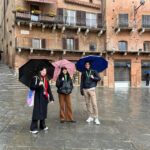
You’ll start at the Dear Guests – Visitor Center office and exchange your voucher to enter. This matters more than it sounds, because Siena runs on timed flow and small administrative steps. Don’t show up at the last minute assuming your voucher works automatically at the door.
The visitor center setup is practical. I like that there’s a customer-support area there, so if your ticket details or timing look confusing, you have a place to sort it out quickly instead of wandering.
Sala del Risorgimento: Fresh-looking art, old civic ambition
After you’re in, your visit begins in the Sala del Risorgimento. This room uses frescoes that celebrate the life of Vittorio Emanuele II, Italy’s first king. In other words, Siena’s civic museum isn’t stuck in the Middle Ages only—it also reflects on later national identity.
Why this room is worth your time: it’s a reminder that civic art changes with power. You’re not just looking at medieval Siena; you’re seeing how civic walls kept narrating authority and identity long after the city-state era.
Practical tip: keep an eye on how the museum shifts from political eras. It helps you connect the artworks to the institution they served.
Sala di Balìa, Sala dei Cardinali: Government spaces with real objects
Next comes the Sala di Balìa, decorated with frescoes from the 15th century by Spinello Aretino and Martino di Bartolomeo. This is one of those rooms where the art is clearly tied to the function of the space—these are not random decorations. They fit the serious work of rule.
Then you move into the Sala dei Cardinali, where you’ll find intricately carved coffers and precious reliquaries. This is where the museum surprises people who thought it was only paintings and famous names. The carved elements and religious objects add texture: they show wealth, craftsmanship, and the way official spaces collected meaning.
If you like museums that mix mediums—paint + objects—you’ll feel at home here. If you’re more strictly a fresco person, still give this room a couple minutes. Those carved coffers help you visualize the hands-on world behind the images.
Sala del Concistoro and the Cappella: The Beccafumi vault effect
In the Sala del Concistoro, look up for the celebrated Beccafumi vault. A vault ceiling changes how you experience a museum: your body posture shifts, and the artwork becomes something you register with your whole field of view.
After that, you reach the Cappella, linked to Taddeo di Bartolo. This is a quieter pocket in the museum flow, and that contrast is useful. After the larger civic rooms, a chapel-like pause helps you reset your attention for what comes next.
A simple strategy: treat these spaces like rhythm. Big up-stare artwork, then a calmer corner, then the museum’s headline political fresco cycle.
Newly reopened Sala della Pace: Lorenzetti’s Good and Bad Government
This is the museum moment most people remember: the Sala della Pace, described as newly reopened and back on view. Here you’ll see Ambrogio Lorenzetti’s Allegory of Good and Bad Government fresco cycle.
What makes this cycle special isn’t only artistic technique. It’s the way it offers a medieval social argument in images. You’re looking at how Siena thought power should work—and what happens when it fails. The theme is also easy to relate to modern life because it’s about governance, public order, and consequences.
If you’re into politics, art history, or both, plan to slow down here. Stand back enough to take in the whole scene, then move closer to pick up details. The point of the museum ticket is that you’re seeing these works in the institutional building they were meant to belong to, not in a separate display that erases context.
Sala del Mappamondo: Maestà by Simone Martini in Siena’s biggest room
The Sala del Mappamondo is the museum’s largest hall and once sat at the center of the General Council. That matters. When you stand in a space that once held decision-making, the scale of the art feels intentional, not just decorative.
In this hall, you can see Simone Martini’s Maestà, a Gothic treasure. The painting’s detail and grandeur are the kind that reward a patient look—especially because you’re not rushing through a single room. You’re finishing a sequence of civic spaces, so the painting lands as an extension of Siena’s identity rather than a standalone showpiece.
If you’re visiting with someone who says they do not like museums, this is the room where you can probably change their mind. The scale and atmosphere do a lot of the work.
Loggia dei Nove: Where the city hands you the view
After the civic interiors, you get an outdoor-feeling break at the Loggia dei Nove, a 14th-century gallery designed for open-air views. This is where you can exhale and look out across the Sienese countryside.
It’s a smart closing stop. The museum gives you images of civic life and power. The Loggia gives you the geography behind the city—how Siena sits in its landscape. It helps the medieval art feel located, not floating.
If you have limited time, still don’t skip this. That view is part of the ticket’s value equation because it turns your indoor experience into something your brain can file away as a complete memory.
Torre del Mangia: Plan your tower view separately
One of the key limitations: access to the Torre del Mangia is not included. If you want that extra height-and-views experience, you can buy tickets directly at the ticket office.
This is actually good to know ahead of time. It means you won’t waste time expecting a tower climb to be part of your $11 plan. If you’re trying to keep your day efficient, you can treat the Civic Museum as the core activity and add the tower only if you still have energy.
Practical tips so your 1 day doesn’t get tight
A short museum visit sounds easy, but Siena can surprise you with crowds and timing. Here’s how to keep the day smooth:
- Last admission is one hour before closing. Don’t plan to arrive right near closing and hope for the best.
- Opening hours can change, so check before you go.
- Access to the museum may be suspended for extraordinary events. If that happens, you’ll need flexibility.
- You’re dealing with a wheelchair-accessible museum, with elevator dimensions noted as 69 cm wide (door) and 83 cm deep. If you use a mobility device, this measurement can help you plan with less guesswork.
About pacing: since this is a ticket valid for 1 day, you can visit at a starting time based on availability. If you prefer calmer photos and fewer interruptions, aim earlier rather than later.
Who this Civic Museum entry ticket fits best
This ticket is best for you if:
- you want major fresco art tied to civic life, not just framed pictures
- you like seeing how political themes show up in medieval imagery
- you enjoy walking through themed rooms—Risorgimento to 15th-century administration to Lorenzetti’s political allegory
- you need a museum-day plan that stays contained and manageable
If you’re a pure tower-and-views person, you may find the museum alone doesn’t satisfy you unless you add Torre del Mangia separately. But if you want one strong cultural stop that explains Siena’s identity, this is a very workable choice.
Should you book this Siena Civic Museum and Palazzo Pubblico ticket?
Yes, if you want a high-value ticket that mixes civic rooms, major fresco names, and a payoff view in under a full day. For the price, the museum’s “big hits” are concentrated: Lorenzetti in the Hall of Peace, Simone Martini’s Maestà in the Sala del Mappamondo, and the Loggia dei Nove panorama to wrap it up.
Book it if:
- you care about how art and government shaped Siena
- you want a self-paced visit with enough structure to keep you moving
- you’d like a smooth entry process with visitor support at the Dear Guests – Visitor Center
Skip it (or add a tower plan) if:
- you mainly want the Torre del Mangia experience and expect it to be included
- your schedule only allows last-minute arrival, since last admission is tight
FAQ
Is a guided tour included with this ticket?
No. Entrance to the Civic Museum is included, but a guided tour is not included.
Is an audio guide included?
No. An audio guide is not included.
Is the Torre del Mangia included?
No. Access to the Torre del Mangia is not included, and you can purchase tickets directly at the ticket office.
Where do I exchange my voucher to enter?
You need to go to the Dear Guests – Visitor Center office and exchange your voucher there.
How long is the experience valid for?
The ticket is valid for 1 day. Check availability for the starting times.
Is the museum wheelchair accessible?
Yes. The museum is wheelchair accessible, and the elevator dimensions are listed as 69 cm wide (door) and 83 cm deep.
What’s the last admission time?
Last admission is one hour before closing time.
![Frida Kahlo VIP [Museum Tickets Included] Bike, Markets & Churros - Where You Meet and How the Timing Works (So You Don’t Stress)](https://cdn.museumtravelguide.com/wp-content/uploads/frida-kahlo-vip-museum-tickets-included-bike-markets-churros-400x300.jpg)