REVIEW · ROME
Rome: Vatican Museums & Sistine Chapel Guided Tour
Book on GetYourGuide →Operated by Ancient Roman Tours srl · Bookable on GetYourGuide
The Vatican feels different when you go after-hours. This guided Vatican Museums and Sistine Chapel visit is built for art lovers who want context, not just standing and staring, and you’ll get an English-speaking guide to connect the dots from marble statues to Michelangelo. I especially like how the route includes the Gallery of Maps and the Raphael Rooms so the famous names land in your brain, and I like that the Sistine Chapel is part of the plan, with the Creation of Adam and the Last Judgment as clear targets. One thing to keep in mind: even on a short 2-hour tour, you’ll still have mandatory Vatican security time, and in peak months that can cut into actual viewing time.
If you care about why these artworks were made, this tour has the right pace. You’ll move through major rooms where ancient Greek and Roman sculpture meets Renaissance storytelling, and your guide should help you understand what you’re seeing before you reach the ceiling. A possible drawback is that some headsets can be hit-or-miss, and the overall timing can feel tight if you end up with longer-than-usual lines.
In This Review
- Key things I think you’ll enjoy
- Why this evening route makes the Vatican easier to handle
- Price and what you’re really paying for
- The tour flow: what happens before you even enter
- Stop 1: Museo Pio Clementino and the marble you can actually understand
- Stop 2: A quick look in Vatican City
- Stop 3: Vatican Museums highlights—Maps, tapestries, and the Raphael Rooms
- The Gallery of Maps: Renaissance science, not just decoration
- The Raphael Rooms: where you can start reading paintings like stories
- The big finale: Sistine Chapel and Michelangelo’s ceiling
- Headsets: when sound matters
- Timing reality: why some people feel rushed
- What kind of traveler this fits best
- Provider and how to plan your best outcome
- Should you book this guided tour?
- FAQ
- How long is the Vatican Museums and Sistine Chapel guided tour?
- How much does the tour cost?
- Is entry to the Vatican Museums and Sistine Chapel included?
- What language is the tour guide available in?
- What should I bring for the tour?
- Are there dress restrictions?
- How long does Vatican security usually take?
- What if the Sistine Chapel is closed on my date?
- Is there any maintenance affecting Michelangelo’s The Last Judgment?
- Is the tour suitable for wheelchair users?
Key things I think you’ll enjoy
- A guided route that connects statues, maps, and frescoes so you don’t feel lost in a building full of masterpieces.
- Gallery of Maps highlights Renaissance science, not just pretty decoration.
- Raphael Rooms get explained in plain language, including The School of Athens.
- Sistine Chapel focus on the big Michelangelo scenes, especially the Creation of Adam and the Last Judgment.
- Evening timing with a shorter duration, which is great if you want value without eating your whole day.
- Headset support for larger groups, though quality can vary—so listen for alternatives if yours seems weak.
Why this evening route makes the Vatican easier to handle
The Vatican Museums can overwhelm you fast. Even with good pacing, it’s a long maze of rooms, crowds, and sensory overload. What helps here is the framing: you’re not trying to “do everything.” You’re doing the best-known highlights in a short evening visit with a guide to keep you oriented.
That matters because the Vatican isn’t just a collection of famous art. It’s also a story about power, faith, and learning, layered over centuries. When you have someone pointing out what’s happening—why a statue is posed a certain way, why a room was decorated as it was—you start noticing details you’d otherwise miss.
Also, evening tours can feel more comfortable. You’re still in a packed attraction, but you’re not competing with the same full-day crowd energy. If you’re the type who gets tired around midday, this time window can work better.
You can also read our reviews of more guided tours in Rome
Price and what you’re really paying for
At $100 per person for a 2-hour guided experience, this is not a budget move. But it’s closer to paying for access + interpretation than paying for “transportation and a quick look.”
Here’s what you do get:
- Your Vatican Museums and Sistine Chapel entry ticket included
- A tour guide
- Host assistance at the meeting point
- A flyer and map
- Headset support for groups larger than 10 (headsets are excluded for children)
And what you don’t get:
- Transportation
- Food and drinks
For many people, the biggest value is the guide’s time. The Vatican is one of those places where self-guided browsing can turn into a blur. A good guide helps you filter the chaos. In the reviews I see that guides can genuinely shape the experience—one guest highlighted that their guide, Irina, was excellent—while another noted the tour felt too fast, which is a timing reality with a 2-hour cap.
So think of this as a “smart highlights” option. If you want hours and hours of slow wandering, you’ll probably prefer a longer, more flexible museum ticket. If you want the core masterpieces with explanations, this price can feel fair.
The tour flow: what happens before you even enter
Even with a guided plan, you can’t skip the Vatican’s security process. You should plan for a mandatory checkpoint that usually takes about 15–20 minutes before you enter the museums.
In busy seasons—especially April, May, June, July, September, October, and December—security waits can exceed 20 minutes. This is where short tours get tricky: your “2 hours” can shrink in practice if you hit a longer line.
Bring your documents and plan your clothing. You’ll need a passport. Children also need the appropriate identification (and children under 7 can enter free with valid ID). And there are strict clothing rules: no shorts, no short skirts, no sleeveless shirts. If you show up dressed wrong, you’re the one who pays the delay.
And one more practical note: the meeting point may vary depending on what option you booked. One listed option includes Via Santamaura, 32. Double-check your exact meeting spot before you head out, so you’re not hunting around when you should be in line.
Stop 1: Museo Pio Clementino and the marble you can actually understand
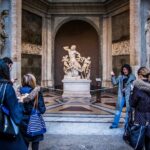
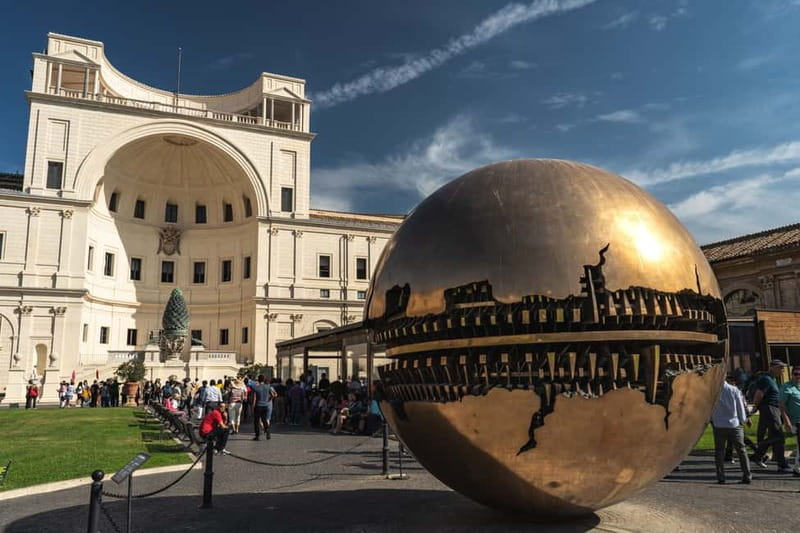
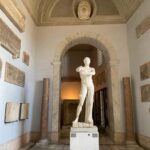
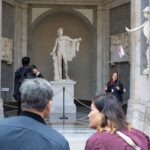
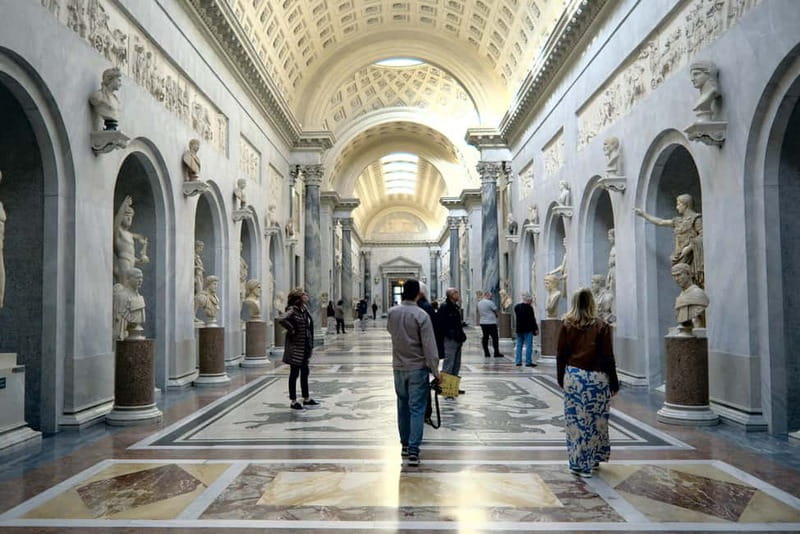
The day starts with Museo Pio Clementino, one of the museum sections where the Vatican shows off its ancient collection in a very theatrical way. This is where you start to see the link between ancient sculpture and Renaissance art thinking.
What you should look for here:
- The “life-like” quality of marble statues, including how ancient artists captured movement and anatomy.
- The way these pieces influenced later artists, because Renaissance creators didn’t treat antiquity like dead history. They treated it like a workshop.
The benefit of having a guide at this stage is simple: you get context early. If you’re seeing Greek and Roman works cold, you might admire them but not understand why they matter. With guidance, you’re more likely to notice details—pose, proportion, expression—that connect to what you’ll see later in the Renaissance rooms.
Timing caveat: this portion is part of a short tour. If you’re a slow museum observer, you might wish you had more minutes here.
Stop 2: A quick look in Vatican City
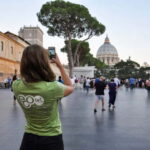
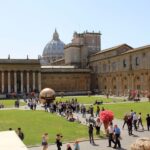
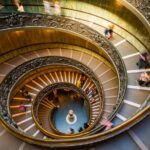
After the opening museum section, the tour includes Vatican City time for a break and photo stops, plus more guided walking.
This isn’t the moment for deep architecture study. It’s more of a transition: you get a sense of place, you reset your bearings, and you’re moved along toward the inner museum route.
If you’re traveling with people who don’t always love art but like landmarks, this bit can help keep the group engaged. If you’re a hardcore art historian, it may feel too brief to matter.
You can also read our reviews of more museum experiences in Rome
Stop 3: Vatican Museums highlights—Maps, tapestries, and the Raphael Rooms
This is where the tour really becomes worth it for most people.
You’ll walk through several signature areas:
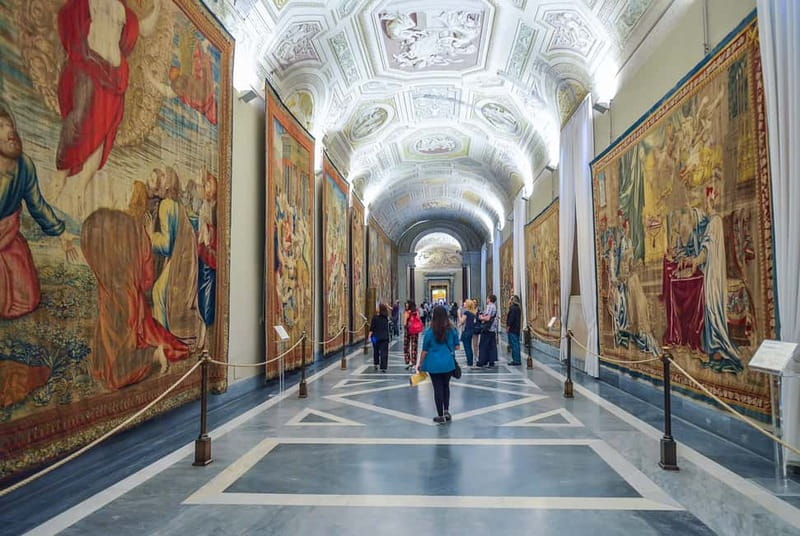
- Gallery of Maps
- Gallery of Tapestries
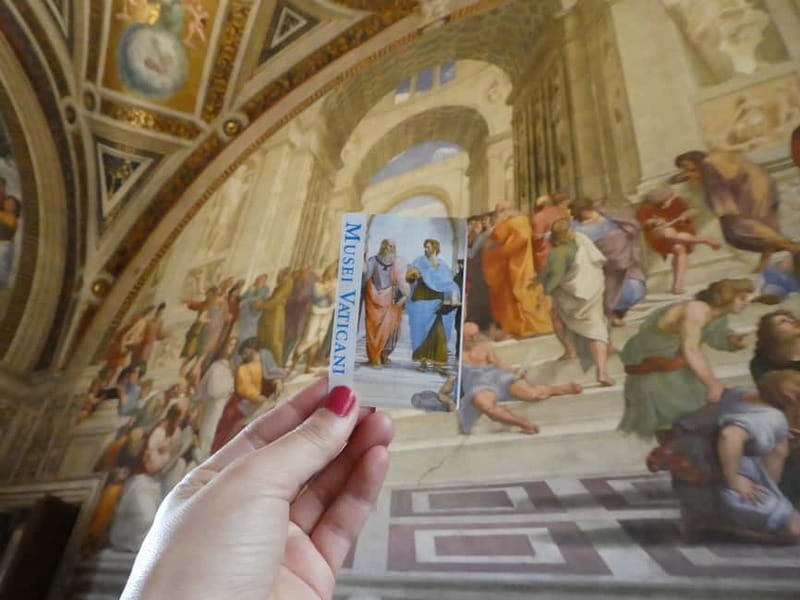
- Raphael Rooms, including The School of Athens
The Gallery of Maps: Renaissance science, not just decoration
The Gallery of Maps can surprise you. It’s easy to assume these rooms are about religious iconography only, but this gallery is connected to Renaissance learning and the desire to map the world with scientific curiosity. A good guide can help you see the point: these maps were part of how Renaissance thinkers organized knowledge.
So if you like the idea of the Renaissance as a blend of art and inquiry, this stop is a strong reason to book.
The Raphael Rooms: where you can start reading paintings like stories
The Raphael Rooms are famous for a reason. They’re not just pretty murals. They’re structured as statements—about ideas, theology, education, and who has authority to teach.
The School of Athens is often the star, and your guide’s job is to help you see it as more than a famous image. If the guide explains the relationships between figures and the symbolism, the room clicks. You stop seeing a painting and start seeing an argument.
One thing to know: the Vatican is a place where crowd pressure can affect your viewing time. With a short tour, you’ll get enough to understand the basics, but not enough for a long, quiet, study-level experience.
The big finale: Sistine Chapel and Michelangelo’s ceiling
This is the reason most people book.
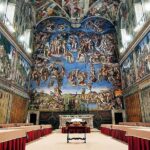
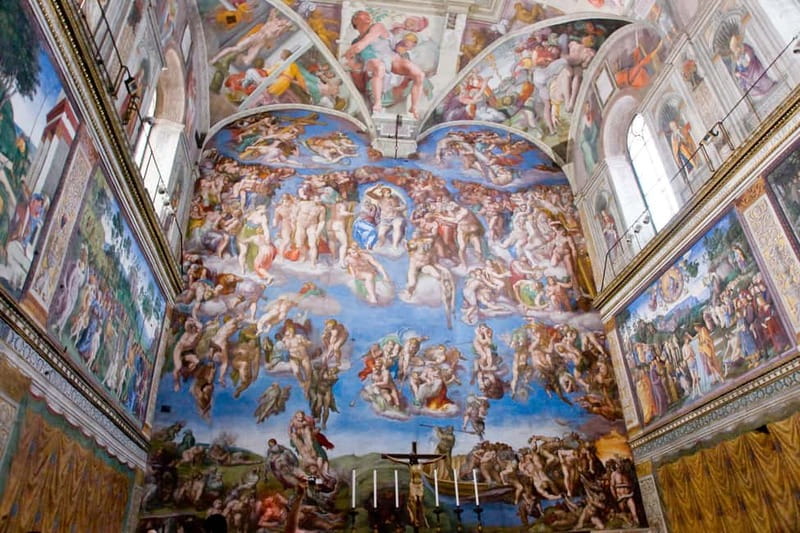
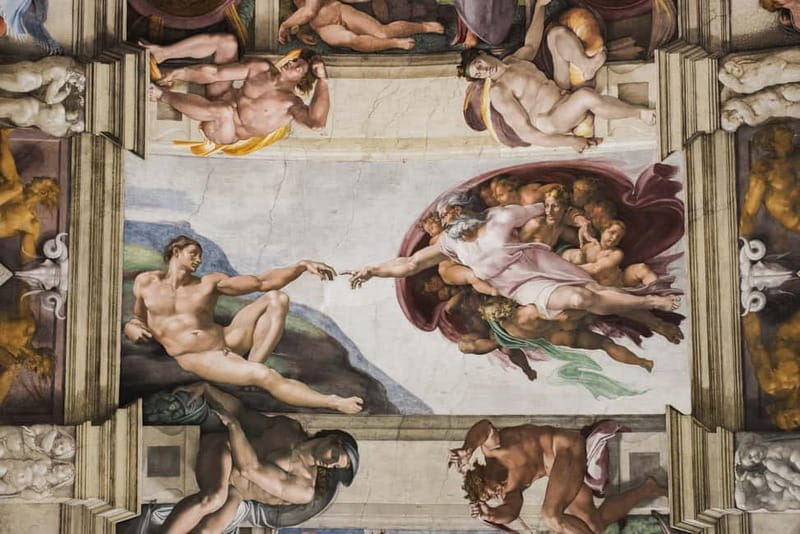
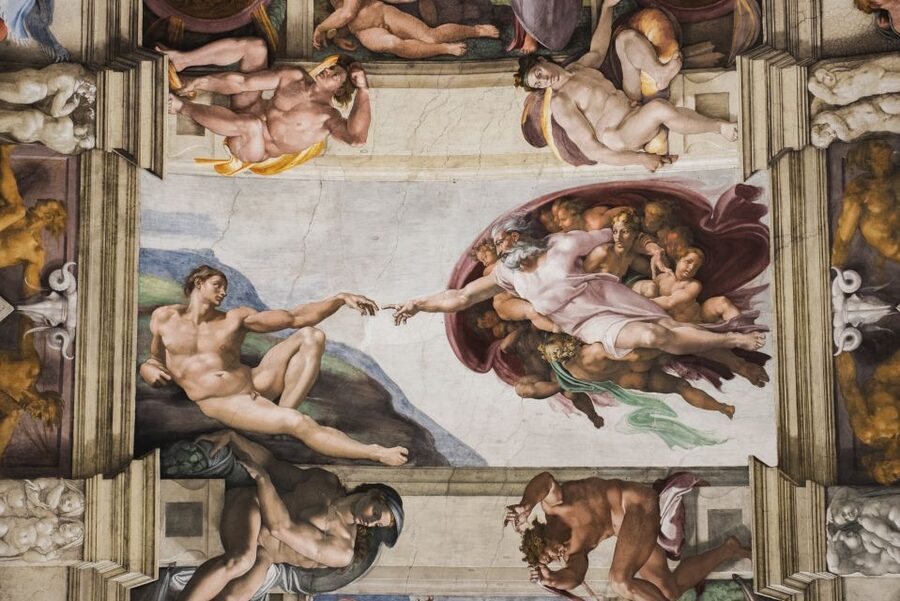
You’ll reach the Sistine Chapel with guided time focused on Michelangelo’s key frescoes, including The Creation of Adam and The Last Judgment. Standing under that ceiling is one of those experiences where even people who don’t love art still get quiet.
A couple of important reality checks so you’re not blindsided:
- Access can be subject to Vatican rules and scheduled events. On some occasions, the chapel may close without prior notice due to religious ceremonies or official functions.
- If that happens, you can still visit the Vatican Museums, and your ticket remains valid for that.
There’s also a heads-up for the near future: from January 2026, conservation work will begin on Michelangelo’s The Last Judgment, scaffolding will be installed, and parts of the artwork may be partially covered. If your trip falls after that start date, expect some visual changes.
Headsets: when sound matters
The tour provides headsets for groups larger than 10 (excluding children). That can be a huge help inside the museum’s constant noise. Still, at least one review flagged that the headphones were poor, so be ready to ask for adjustments if your audio is weak or unclear.
Also, one review mentioned struggling to understand their guide at times. That’s not a deal-breaker, but it’s a good reminder: if you’re sensitive to accents or volume issues, plan to stand closer to the guide when possible.
Timing reality: why some people feel rushed
This tour is 2 hours, which is ambitious for the Vatican.
You’re stacking:
- security time (often 15–20 minutes, sometimes longer in peak months)
- guided walking and photo moments
- the museum highlights route
- and the Sistine Chapel experience
The upside: you get the core hits without taking over your whole night. The downside: you might feel like you’re moving quickly, especially if you encounter longer lines.
If you’re the kind of visitor who wants to linger with one artwork for 10–15 minutes, you may want to budget for a separate return visit later. If you’re more “tell me what I’m looking at and I’ll do the rest,” this format can feel just right.
What kind of traveler this fits best
This tour is a strong fit if:
- You want a structured route through the Vatican’s top rooms with explanations.
- You’d rather learn the stories behind famous works than wander randomly.
- You have evening plans later and need a tighter timeline.
- Your group includes people who will appreciate quick context and iconic stops.
It’s probably not the best fit if:
- You need wheelchair access (this tour is listed as not suitable for wheelchair users).
- You want deep time in galleries and long rest breaks.
- You’re highly sensitive to noise and audio quality, since headsets can vary.
And if you’re visiting during crowded months, take the security and timing seriously. Go in with patience, not hope.
Provider and how to plan your best outcome
The experience is run by Ancient Roman Tours srl. In practice, your success here comes down to a few controllable choices:
1) Arrive with documents ready (passport; children’s IDs where applicable).
2) Dress correctly to avoid last-minute refusals at entry.
3) Build in extra minutes for security in peak seasons.
4) Use the headset and stay near the guide if audio is uneven.
5) For Sistine Chapel risk, hold the mindset that sometimes the chapel’s closure is out of anyone’s hands. You’ll still have museum time if that happens.
That last point matters because one guest described a disappointment tied to chapel access. You can’t predict ceremonies, but you can decide how flexible you’ll be if the Sistine Chapel plan changes.
Should you book this guided tour?
Book this tour if you want the Vatican’s greatest hits in a guided, time-smart package—especially if you care about understanding the art and symbolism behind Michelangelo and Raphael. The value is strongest when you treat it as a highlights education session, not a slow museum day.
Skip it (or consider a longer option) if you want maximum quiet time, if you’re worried about the short duration, or if you dislike the idea that the Sistine Chapel could be unavailable on your exact day due to official events.
If you’re going in a peak month, I’d also recommend booking with realistic expectations about security lines and timing. This isn’t the tour for stress-free wandering. It’s the tour for smart orientation and a high-impact finish under Michelangelo’s ceiling.
FAQ
How long is the Vatican Museums and Sistine Chapel guided tour?
The duration is 2 hours.
How much does the tour cost?
The price is $100 per person.
Is entry to the Vatican Museums and Sistine Chapel included?
Yes. Your Vatican Museums and Sistine Chapel entry ticket is included.
What language is the tour guide available in?
The tour guide is available in English, French, and German.
What should I bring for the tour?
You should bring your passport. Children also need a valid passport or ID card (a copy is accepted in some cases, as noted).
Are there dress restrictions?
Yes. Shorts, short skirts, and sleeveless shirts are not allowed.
How long does Vatican security usually take?
Security usually takes about 15–20 minutes before entering the museums.
What if the Sistine Chapel is closed on my date?
Access depends on Vatican rules and scheduled events. If it closes without notice, your ticket will remain valid to visit the Vatican Museums.
Is there any maintenance affecting Michelangelo’s The Last Judgment?
Yes. From January 2026, conservation work will begin on The Last Judgment, and scaffolding may be installed, with parts of the artwork partially covered.
Is the tour suitable for wheelchair users?
No. The tour is listed as not suitable for wheelchair users.