REVIEW · MUSEO DEL PRADO
Madrid: Private Prado Museum Masterpieces Tour
Book on GetYourGuide →Operated by Tim Bikes · Bookable on GetYourGuide
The Prado can feel like a lot. This private Madrid Prado Museum Masterpieces Tour turns it into a clear, story-driven visit, with a guide who knows how to spot what matters fast. You’ll meet near the statue of Goya by the ticket area, get in without the ticket-line headache, and then spend your time on standout works and the threads that connect them.
What I like most is the way this tour keeps the focus on major Spanish and European painters, from Goya and Velazquez to Bosch and El Greco. The other big win is the guiding style: guides like Alicia have a knack for shrinking the museum down to the key pieces, using chronology and comparisons so the artwork starts to make sense immediately.
The main thing to consider is simple: you only have 2 hours, so you’ll see the best of the Prado rather than trying to cover it all. If you want a slow, room-by-room museum day, you might need a longer format.
In This Review
- Key takeaways for your Prado visit
- Why the Prado feels different on a private, 2-hour master tour
- Meeting near the statue of Goya and getting in without the hassle
- How the guide turns masterpieces into clear stories
- Goya’s The Third of May 1808: drama, color, and moral contrast
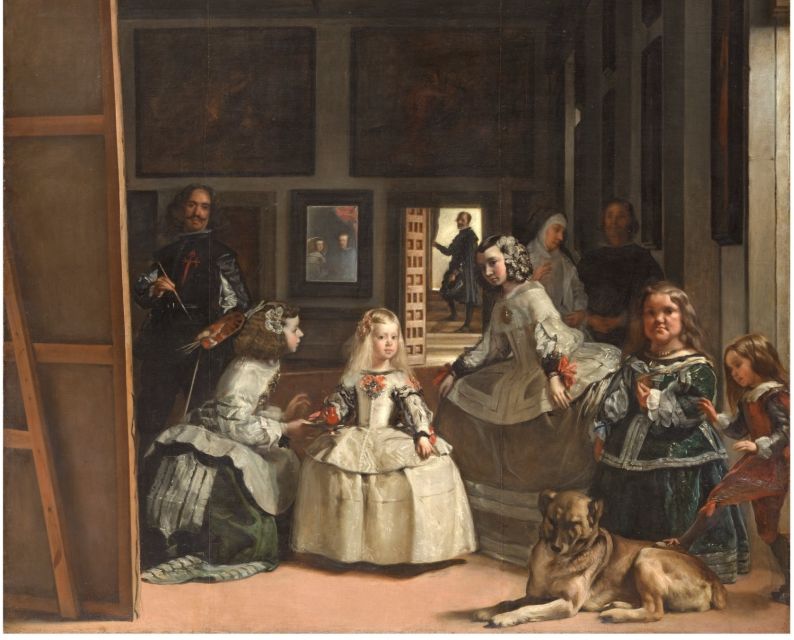
- Velazquez’s Las Meninas: a normal day with complicated layers
- The Spanish Royal Collection thread across centuries
- Price, time, and what you actually get for $215
- Who should book this Prado master tour
- Quick practical checklist before you go
- Should you book the Madrid Private Prado Museum Masterpieces Tour?
- FAQ
- How long is the Prado private tour?
- Where does the guide meet us?
- Is this tour private?
- What language options are available for the guide?
- What’s included in the price?
- Do I need tickets if I’m eligible for free entry?
- What should I bring for the visit?
Key takeaways for your Prado visit
- A private art-historian guide: You get official guidance built around major works and how they connect.
- Skip the ticket line: Less time waiting, more time looking closely.
- You’ll hit the heavyweight scenes: The Third of May 1808 and Las Meninas are front and center.
- Spanish Royal Collection context: You get perspective on Spain’s most famous painters within the Prado’s broader sweep.
- Lots of Q and discussion time: This isn’t a walk-past-and-go tour.
- Multiple language options: Spanish, English, French, and Italian are available with a live guide.
Why the Prado feels different on a private, 2-hour master tour
The Prado is one of those museums that can swallow a whole day. On a first visit, that’s exciting. It’s also how you end up walking around with a foggy sense of what you just saw. This private tour solves that problem by choosing the masterpieces and explaining them in a way that helps you remember.
I like that the emphasis stays on the art itself: why a painter built a scene the way they did, what symbols or choices stand out, and how a work fits into bigger artistic shifts between the 12th and 19th centuries. Instead of treating the museum like a checklist, the guide uses comparisons and timelines to show how one artist’s approach influenced another.
You’ll also get a strong Spanish-art angle. The Prado isn’t only famous for famous names; it’s famous because it holds a major slice of what Spain collected and celebrated in royal circles. That context matters. When you understand that the Spanish works here came through a specific cultural lens, the paintings land with more weight.
Two hours won’t make you a Prado expert. But it can give you what most people want: a confident first map. You leave knowing where to look when you return for a second, slower visit.
You can also read our reviews of more tours and experiences in Museo Del Prado.
Meeting near the statue of Goya and getting in without the hassle
Your guide picks you up near the statue of Goya in front of the Prado ticket sales area. That’s a handy starting point because the museum can be busy, and you don’t want to be hunting for your group right as you’re trying to get inside.
From there, the tour includes skip-the-ticket-line entry. That matters more than it sounds, especially during peak hours. You’re starting with momentum instead of losing time to queueing. And because this is a private group, you’re not competing with a big crowd for attention or forcing the guide to rush.
You’ll also want to bring a passport or ID card. The tour description calls this out, so have it ready. If you’re traveling with kids, plan for age-based entry: admission is free for those under 18 with proof of age, and children younger than 9 are free as well, though you should still select a ticket during the reservation to enable access.
One more practical note: meals and drinks aren’t included. The tour is short, so you likely won’t need a meal during it, but you’ll want to plan a snack or water around your museum stop so you don’t feel distracted by hunger while you’re trying to look closely at brushwork and details.
How the guide turns masterpieces into clear stories
The best part of a guided Prado visit isn’t just facts. It’s structure. This tour is built around letting you understand what you’re seeing in real time.
You’ll hear explanations that link major works to the bigger artistic world around them. The guide highlights painters such as Hieronymus Bosch, Raphael, El Greco, Rubens, Roger van der Weyden, and Dürer, along with the Spanish giants Goya and Velazquez. That selection isn’t random. It lets you compare styles across centuries—how composition changes, how faces are modeled, and how drama is staged.
I also like that the tour format supports questions. In one example, Alicia was noted for keeping the visit engaging even for a family group, with lots of opportunities to ask and discuss. That’s a good sign if you’re the type who can’t help asking why a painting looks the way it does.
And yes, language quality matters. One review specifically pointed out that English wasn’t the guide’s native language, but the explanations were still clear and conceptual. That tells me the core teaching is strong, not just the polish of speaking. So if you’re choosing between languages for comfort, pick what you can listen to best without getting lost.
If you’ve ever left a museum feeling like you saw a lot but couldn’t explain much, this is the fix. The tour is basically a guided filter: it helps you focus on the works that carry the museum’s meaning.
Goya’s The Third of May 1808: drama, color, and moral contrast
You’ll encounter one of the Prado’s most emotionally intense paintings: The Third of May 1808, completed in 1814. The subject is the execution by Napoleon’s troops—painted with dramatic focus on what power does when it meets helpless civilians.
Here’s the key detail the guide will emphasize: Goya contrasts the soldiers’ coldness in gray uniforms with the colorful anonymous citizens facing death. That opposition isn’t only visual. It’s moral and emotional. The soldiers look like part of a machine—uniform, controlled. The civilians look exposed and individual, even though they’re anonymous. That contrast is the heart of why the painting hits so hard.
On a private tour, you can slow down without feeling like you’re holding up strangers. You can look at the faces, notice posture, and let the explanation connect the scene to why it was painted when it was.
If you’re someone who likes your art to mean something, this is the work that gives the entire visit a backbone. It’s also a useful gateway to understanding how later artists talked about violence, humanity, and power.
Velazquez’s Las Meninas: a normal day with complicated layers
Another highlight you’ll see is Velazquez’s Las Meninas. The painting depicts a day at the Alcázar of Madrid with members of King Philip IV’s family, and Velazquez himself appears in the scene. That alone makes it feel self-aware: the artist includes himself and turns observation into part of the artwork.
What I find most useful on a guided stop like this is getting beyond the basic description. The guide will help you see it as a scene with multiple levels of attention. Who is watching whom? What does the arrangement suggest about roles and power inside the court? How does the presence of Velazquez shift your position as the viewer?
You’ll also connect Las Meninas to later art. The tour notes that it inspired artists such as Goya and Picasso. That’s a great takeaway because it tells you the Prado isn’t only a museum of old masterpieces. It’s a source of visual ideas that kept getting reused, questioned, and reinvented.
For first-timers, this is a painting that feels approachable at the start and then grows more complex the longer you look. With a guide, that transformation happens faster.
The Spanish Royal Collection thread across centuries
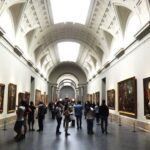
One thing the Prado does well is hold a wide stretch of European western art—from the 12th to the 19th century—under one roof. On your own, that can feel overwhelming. On this private tour, the guide uses Spanish art as an anchor and then adds key European names to create contrast and context.
You’ll hear about artists like Hieronymus Bosch and Raphael, plus El Greco and Rubens, and you’ll also encounter works connected to painters such as Roger van der Weyden and Dürer. The point isn’t to make you memorize a timeline. It’s to show how different regions and periods developed their own visual language, then how Spanish painters absorbed and responded to it.
The tour also emphasizes Spanish art tied to the former Spanish Royal Collection. That’s valuable because it helps you understand why the Prado’s holdings matter to Spanish identity and to royal collecting habits. A painting doesn’t just hang on a wall because it’s pretty. It often arrived through networks of taste, power, and patronage.
If you’re into understanding why museums exist the way they do, this context gives you more than a list of famous artworks. It gives you a lens.
And if your brain starts to glaze over when you’re walking room to room, the guide’s role becomes crucial. You’re not trying to catch everything. You’re catching what matters most.
Price, time, and what you actually get for $215
At $215 per person for a 2-hour private experience, you’re paying for two big things: expert attention and included admission.
The tour includes:
- A local official art historian guide
- The entrance fee to the Prado Museum
It does not include meals and drinks. That’s normal for a short museum visit, but plan for it so you don’t build your schedule around hunger.
Is $215 a lot? It can be, depending on your travel style. But the value comes from the combination of private format plus entry plus a guide focused on major works. If you’re the kind of traveler who appreciates direction, this can be cheaper than you think in terms of time. Less time buying tickets, less time wandering blindly, more time learning what you came to see.
The 2-hour duration is also a double-edged sword. It’s great for fitting into a city itinerary. It’s not great if you want to linger over every painting you stop at. Still, if your goal is the Prado highlights done right, this is the kind of time-box that makes sense.
One other plus: you can reserve and pay later, which helps if your plans might shift slightly.
Who should book this Prado master tour
This tour is a great match if you:
- Want the Prado’s top masterpieces without trying to conquer the whole museum in one day
- Prefer a structured visit where the guide helps you connect dots
- Like Spanish art and want context around Goya and Velazquez
- Appreciate asking questions rather than passively listening while moving nonstop
- Are traveling with family and want a guide who can keep attention on art
It’s also a good choice if you’re short on time and want to start with the works that give you the strongest first impression. If you already know the Prado well and want deep specialization in one niche, you might find the 2-hour format too limited. But for most people, it hits the sweet spot: focus plus clarity.
Quick practical checklist before you go
Bring:
- Passport or ID card
Plan for:
- A 2-hour visit, with starting times based on availability
- No meals or drinks included
- Free entry rules for under-18 with proof of age, and free entry for children under 9 (still select a ticket when reserving)
- Wheelchair accessibility, since the tour notes it’s wheelchair accessible
Also, if you’re choosing your tour language, think about what makes you feel most comfortable listening. Spanish, English, French, and Italian are offered, and clear teaching matters more than anything once you’re standing in front of a painting.
Should you book the Madrid Private Prado Museum Masterpieces Tour?
If your goal is a first-rate Prado experience that doesn’t waste your time, I think this is a smart booking. You get a private guide who focuses on the biggest names and the most impactful works, with clear explanations that help you understand why each painting matters.
I’d skip it only if you want to spend hours drifting and staring without structure, or if you already plan to do a longer Prado visit and want no guidance. But if you want the highlights, context, and a confident sense of what you’re looking at by the time you walk back outside, this tour is one of the better ways to do it.
FAQ
How long is the Prado private tour?
It runs for 2 hours. Starting times depend on availability.
Where does the guide meet us?
The guide picks you up near the statue of Goya in front of the Prado ticket sales.
Is this tour private?
Yes, it’s listed as a private group experience.
What language options are available for the guide?
The tour offers live guiding in Spanish, English, French, and Italian.
What’s included in the price?
The included items are a local official art historian guide and the Prado Museum entrance fee.
Do I need tickets if I’m eligible for free entry?
The tour notes that admission is free for people under 18 with proof of age, and free for children under 9. You should still select a ticket during reservation to enable access for the under-9 group.
What should I bring for the visit?
Bring a passport or ID card.