REVIEW · ROME
Leonardo da Vinci Museum: the Universal Genius and His Works
Book on Viator →Operated by Mostra di Leonardo · Bookable on Viator
Leonardo in Rome is a quick fix of genius. This exhibition, in one of the city’s historic settings, brings da Vinci’s ideas to life with hands-on replicas, 3D effects, and machine drawings you can actually interact with. You’ll get a clear sense of him as an artist, engineer, and maker, without needing a background in art history.
Two things I really like: first, the show is built around full-size reproductions of his machine concepts (more than 65), so you see what the plans were trying to do. Second, it has one standout twist at the end—an underground pond with the tomb of Aulo Irzio, dating to 43 B.C., tucked right under the exhibition space.
The main catch is simple: the audio guide isn’t included. If you want better context and help with what you’re looking at, plan on renting it at the entrance for €3.00 per person.
In This Review
- Key Highlights Worth Your Time
- Why This Leonardo Museum Feels Just Right in One Hour
- Finding the Place: Piazza della Cancelleria Location Advantage
- Your Main Stop: 65+ Full-Size Machine Replicas You Can Try
- 3D Holograms, Videomapping, and the End-Twist Underground Pond
- Audio Guide Reality Check: When It’s Worth the Extra €3
- Timing: How Long You Really Need (and How to Avoid a Rush)
- Price and Value: Is $10.81 a Smart Buy?
- Who Should Book This (and Who Might Want to Think Twice)
- Should You Book This Leonardo Da Vinci Museum?
- FAQ
- How long does the Leonardo da Vinci exhibition take?
- Where is the Leonardo da Vinci museum located?
- What is included in the ticket price?
- Is an audio guide included?
- What languages are available for the audio guide?
- Is the exhibition offered in English?
- Are mobile tickets used?
- What are the opening hours?
- Is the museum open on December 25th?
Key Highlights Worth Your Time
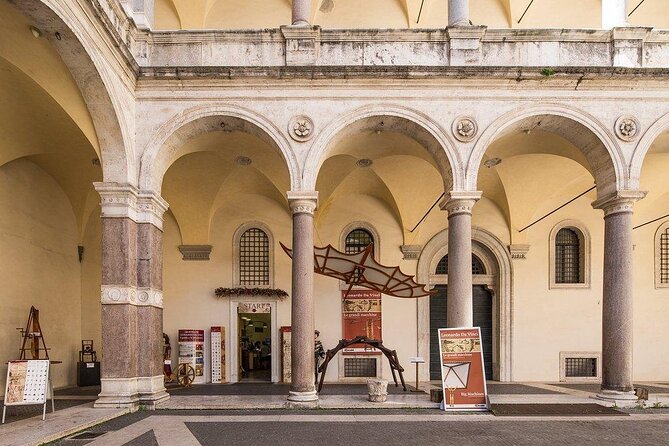
- 65+ full-size reproductions of da Vinci’s machine drawings you can touch and test
- 3D holograms and videomapping that make the concepts feel current
- Underground pond + Aulo Irzio’s tomb (43 B.C.) at the end of the exhibition
- English offered, with additional audio-guide languages available for €3.00
- Plan for 40–60 minutes, since you can move through at a good pace
Why This Leonardo Museum Feels Just Right in One Hour
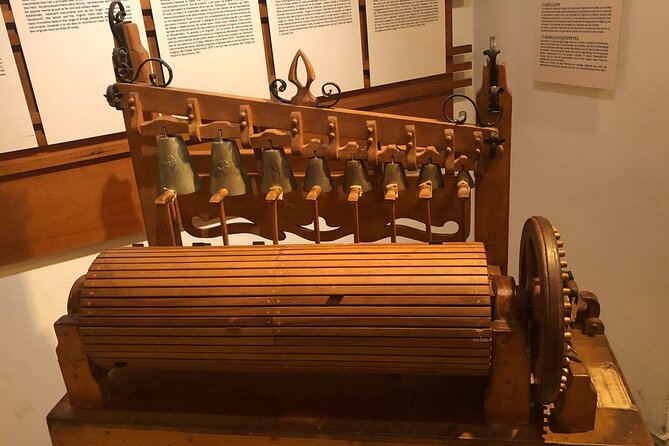
This is the kind of museum you can fit into a busy Rome day. You’re not stuck for half a day, and you’re not wandering through empty rooms waiting for something to happen. The exhibition is designed around a steady sequence: look, understand the idea, then interact with the model or multimedia display.
What makes it work for real visitors is the mix of learning styles. You can read, watch, and then get your hands on replicas. That matters because da Vinci’s inventions can look abstract on paper. Here, you’re constantly turning sketches into something physical and testable.
I also like the pacing. You don’t feel rushed, but you’re also not stuck in “museum mode” for hours. Most people will finish with enough time left to connect it to the rest of central Rome.
You can also read our reviews of more museum experiences in Rome



Finding the Place: Piazza della Cancelleria Location Advantage
The address is Piazza della Cancelleria 1. That puts you in a very walkable, sightseeing-heavy part of town. If you’re already doing stops around Campo de’ Fiori or near Piazza Navona, you’re in the right neighborhood—this museum is easy to add without a big detour.
It’s also near public transportation, which helps if you don’t want to drag yourself across Rome on a hot afternoon. And yes, it’s inside a proper Rome setting—historic walls, indoor comfort—so you can escape heat and crowds compared with open-air attractions.
One practical tip: check your exact meeting point/address before you go. Rome is full of similarly named piazzas and streets, and you don’t want to lose 20 minutes trying to match a map pin.
Your Main Stop: 65+ Full-Size Machine Replicas You Can Try
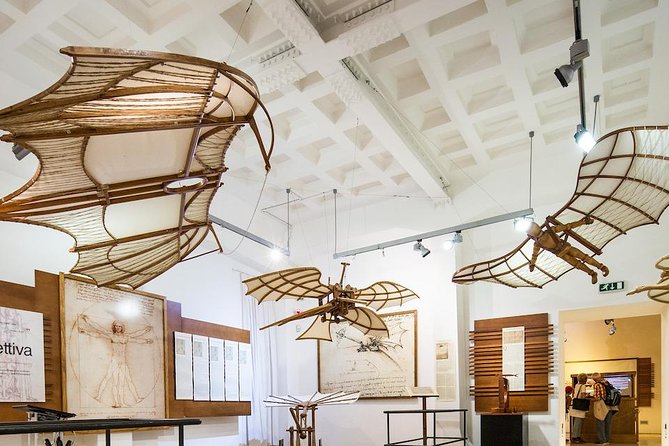
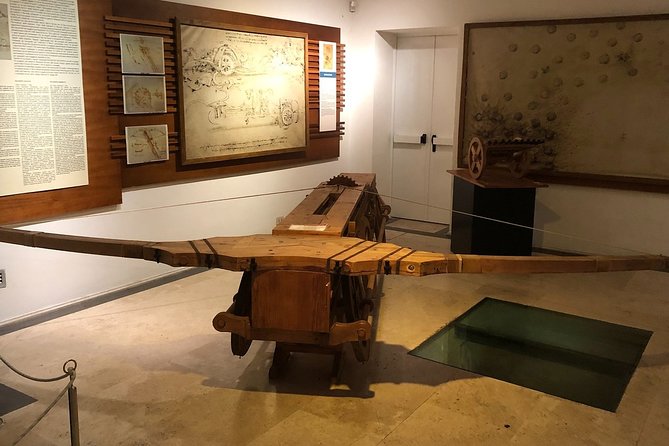
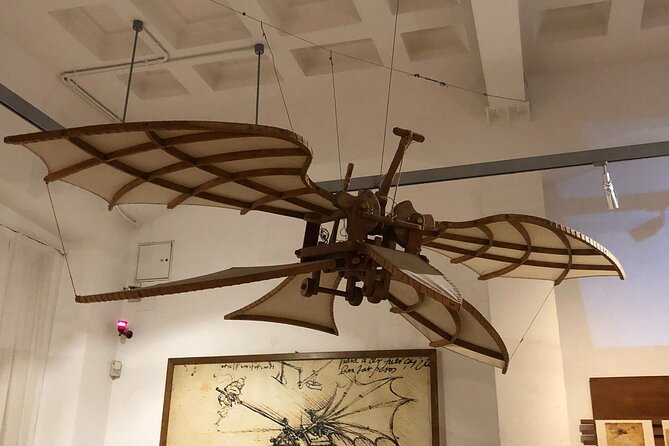
This is the core of the experience. The exhibition is devoted to da Vinci’s genius and his works, with more than 65 reproductions at real-life scale of his machine drawings. That’s the big difference from a lot of art exhibitions that mostly show images behind glass.
Here, the machines become understandable because they’re built. You can touch and try many of them, which turns passive viewing into active learning. If you’ve ever looked at a historical diagram and thought, I wish I could see how this actually works, this is exactly that feeling.
A few themes you can expect to see reflected through the display set: flight concepts, submarines, suspension-bridge ideas, ball bearings, and other practical engineering thinking. Some of the models lean toward the dramatic side too, like war-machine concepts—so it’s not just quiet “science class.”
If you’re traveling with kids, this is one of the best museum setups for keeping attention. The experience is designed to appeal to visitors of all ages, and the hands-on format naturally helps younger visitors stay engaged instead of just staring at labels.
3D Holograms, Videomapping, and the End-Twist Underground Pond
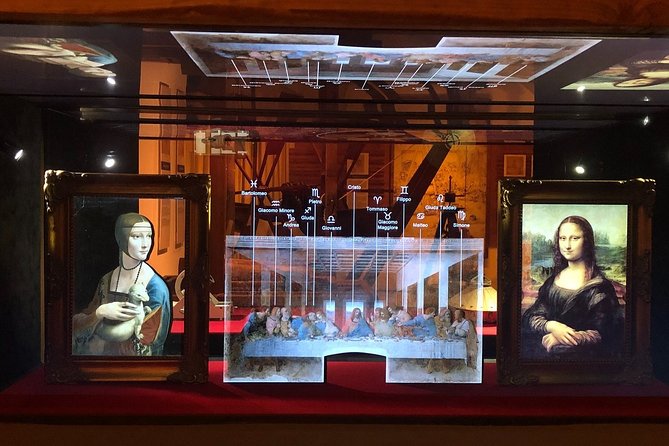
Da Vinci was obsessed with how things move and how parts interact. The multimedia side of this exhibition supports that idea, using holograms in 3D and videomapping to make the machines feel more “alive” than static replicas alone.
This is where you start connecting the dots between the drawings and the mechanics. The tech doesn’t replace the models; it explains them, in a way that’s easier to follow while you’re standing right in front of the work.
Then you reach the surprise finish: an underground pond containing the tomb of Aulo Irzio, dating 43 B.C. It’s an unexpected Roman-history bonus at the end of the da Vinci story. It also changes the mood: you go from engineering fascination to a real sense of time depth—like Rome itself is part of the narrative.
It’s also a good “save your energy” moment. If you’ve visited a few other attractions already, finishing with something visual and atmospheric helps the museum land harder than it would if everything ended in the plain gallery rooms.
Audio Guide Reality Check: When It’s Worth the Extra €3
Audio guides are available at the entrance for €3.00 per person, and they’re not included with admission. The exhibition is offered in English, but the audio guide can still be useful if you want help with details, names, or what each machine concept is meant to do.
I think the audio guide is most worth it if you tend to enjoy explanations, not just objects. Without audio, you can still have a great time—but you might “finish fast” and miss some of the context that makes da Vinci feel more coherent than a random collection of inventions.
Practical tip: if the audio guide feels confusing when you’re in the rooms, slow down and match the device track to the exhibit you’re looking at. One helpful approach is to pay attention to any numbering or room order cues on the exhibits, since the voice narration can be easier to follow that way.
Also, audio guide languages include Italian, Spanish, English, French, German, Portoghese, Russian, Dutch, Romanian, Polish, and Hebrew. If you’re traveling with a mixed group, this flexibility is a plus.





Timing: How Long You Really Need (and How to Avoid a Rush)
Plan for at least 40 minutes. The minimum time needed to visit is listed as 40 min, and in practice the experience runs about 45 minutes to 1 hour.
If you like taking photos and testing lots of models, give yourself closer to 60 minutes. That tends to make for a calmer visit where you’re not trying to sprint from one machine to the next.
Opening hours run Monday to Friday from 9:30 AM to 7:00 PM. The exhibition is closed on December 25th. If you’re traveling during the holiday season or visiting on a weekday evening, it pays to arrive with some buffer.
One more small but meaningful note: this is a place where some models might not be physically available to try at every moment. If your top priority is touching every replica, keep your expectations flexible and focus on the parts that are working.
Price and Value: Is $10.81 a Smart Buy?
At about $10.81 per person, you’re paying for admission to a short, structured experience with real interaction. That’s good value in Rome, where many attractions cost far more and still deliver mostly “look but don’t touch.”
The value comes from three things that work together:
- You get many full-size reproductions, not just a few.
- You get interactive, hands-on elements rather than only display panels.
- You get both multimedia explanation (3D holograms/videomapping) and a distinctive finale (the underground pond and Aulo Irzio).
The only extra cost you might want is the audio guide (€3.00 per person). If you choose to skip it, you’ll still likely enjoy the experience—but you may feel like you’re moving through some concepts without the extra narration that helps you connect invention to purpose.
If you’re the kind of traveler who likes quick learning stops—especially when you can touch models—this is the kind of ticket that usually feels worth it. If you need guided storytelling for your brain to lock in the details, audio becomes the smart add-on.
Who Should Book This (and Who Might Want to Think Twice)
This exhibition fits best if you want:
- A family-friendly museum with hands-on learning
- A short stop that still feels substantial
- A da Vinci theme that includes engineering concepts you can see and test
Children must be accompanied by an adult, so it’s family-ready but not a drop-off situation.
You might think twice if you’re not interested in models at all and only want artwork displays. This place leans engineering and invention, with some art-related context, but it’s not a “masterpieces in frames” experience.
Also, keep your expectations aligned with time. Even though you can spend a bit longer if you’re slow and detail-focused, this isn’t meant to be a multi-hour museum. It’s designed to move.
Should You Book This Leonardo Da Vinci Museum?
Yes—if you want a compact, interactive Leonardo experience that won’t eat your whole day, this is a strong booking. The touchable full-size replicas, the 3D multimedia, and the Roman surprise underground finale make it feel different from the usual “stand and read” attraction.
If you’re on the fence, decide based on your style:
- Choose it if you like learning by doing and you want the da Vinci ideas turned into objects.
- Add the audio guide if you want extra explanation so you leave with more than cool machines in your head.
Overall, it’s one of those Rome stops that rewards curiosity without demanding a long time commitment. Buy the ticket, plan about an hour, and give yourself time to test the models before you move on to the next piazza.
FAQ
How long does the Leonardo da Vinci exhibition take?
Most visits fit into about 45 minutes to 1 hour, and you should allow at least 40 minutes to see the museum properly.
Where is the Leonardo da Vinci museum located?
The address is Piazza della Cancelleria 1, Rome, Italy.
What is included in the ticket price?
Admission to the Leonardo da Vinci Exhibition is included.
Is an audio guide included?
No. Audioguides are not included. They are available at the entrance for an extra €3.00 per person.
What languages are available for the audio guide?
Audio guides can be rented at the entrance in Italian, Spanish, English, French, German, Portoghese, Russian, Dutch, Romanian, Polish, and Hebrew.
Is the exhibition offered in English?
Yes, it is offered in English.
Are mobile tickets used?
Yes. Mobile ticket delivery is listed.
What are the opening hours?
Opening hours listed are Monday to Friday, 9:30 AM to 7:00 PM.
Is the museum open on December 25th?
No. The exhibition is closed on December 25th.