REVIEW · HAGIA SOPHIA
Istanbul: Top Museums Guided Pass
Book on GetYourGuide →Operated by Istanbul E-pass · Bookable on GetYourGuide
Five giants of Istanbul, timed to fit reality. This guided pass strings together Hagia Sophia and Topkapi Palace with the Blue Mosque, Basilica Cistern, Hippodrome Square, and the Grand Bazaar—so you see the big names without spending your whole day plotting. I especially love how the guide turns each stop into a clear story, not just a photo-op. I also like that you get guided entry tickets for the heavy hitters (Hagia Sophia, Basilica Cistern, and Topkapi), which saves you from juggling multiple admissions. One drawback to plan for: there’s no skip-the-line at Hagia Sophia and the Blue Mosque, and security lines can run around 45 minutes in peak season.
In 2.5 to 3 hours, you’ll move at a human pace with an English live guide. You meet at the scheduled time at BUSFORUS ISTANBUL (Hop on Hop Off Tours), and there’s no pick-up or drop-off, so you’ll want to be there a few minutes early. The good news: your guided museum pass is valid for 3 days, and you can join any tour time you prefer.
Dress and rules are part of the deal. Bring comfortable shoes and a headscarf, and skip shorts/short skirts. Flash photography is off, and back packs aren’t allowed. Also, this tour isn’t suitable for wheelchair users or people with pre-existing medical conditions.
In This Review
- Key things that make this pass worth your time
- Meeting at Busforus Istanbul: your day starts fast
- Hagia Sophia: a two-faith landmark with numbers you can picture
- The one thing to watch
- Sultan Ahmed (Blue Mosque): Iznik tiles and the logic of names
- About the lines
- Basilica Cistern: the cool breath of 336 columns
- Practical note
- Topkapi Palace courtyards: why the first gate changes everything
- What’s not included
- Hippodrome Square and the Obelisk of Theodosius: ancient spectacle in modern view
- Why this stop matters
- Grand Bazaar: a guided stroll, but don’t get played
- Optional add-on: adding Dolmabahce Palace for more than 5 stops
- Price and value: does $171 buy you real convenience?
- Who this tour fits best (and who should skip it)
- Should you book this guided museum pass?
- FAQ
- How long is the Istanbul Top Museums Guided Pass?
- What’s included in the tour tickets?
- Is pick-up or drop-off included?
- Do I get skip-the-line access for Hagia Sophia and the Blue Mosque?
- What should I bring for this tour?
- What clothing or items are not allowed?
- Where can I find tour timetables and meeting points?
Key things that make this pass worth your time
- Big sights, guided entry included for Hagia Sophia, Basilica Cistern, and Topkapi Palace
- A focused loop through Sultanahmet landmarks and historic center highlights
- Guide-led storytelling that makes the mosques and palace feel understandable fast (guides like Cam, Can, and Adam are repeatedly praised for it)
- No skip-the-line at Hagia Sophia or Blue Mosque, so security waiting time is a real factor
- Basilica Cistern’s Medusa details plus 336 columns are a standout cool-down stop
- Grand Bazaar shopping with caution, especially if a shop tries to rush you into bundled buys
Meeting at Busforus Istanbul: your day starts fast
This is not a “hotel pick-up and nap until monuments arrive” kind of tour. The start point is BUSFORUS ISTANBUL (Hop on Hop Off Tours), and you meet your guide at the scheduled time. That format is actually practical. It keeps the group moving and keeps your schedule predictable.
The pass is also flexible in a useful way: it’s valid for 3 days, so you can pick a departure time that matches your energy level. If you land in Istanbul late, or your day gets derailed, you’re not trapped in one fixed slot.
One more reality check: the whole route packs a lot of walking and a lot of “stop, look, listen” into 2.5 to 3 hours. If you prefer long museum roaming with zero structure, you might find the pace brisk. If you want the highlights explained cleanly, it’s a strong fit.
Hagia Sophia: a two-faith landmark with numbers you can picture
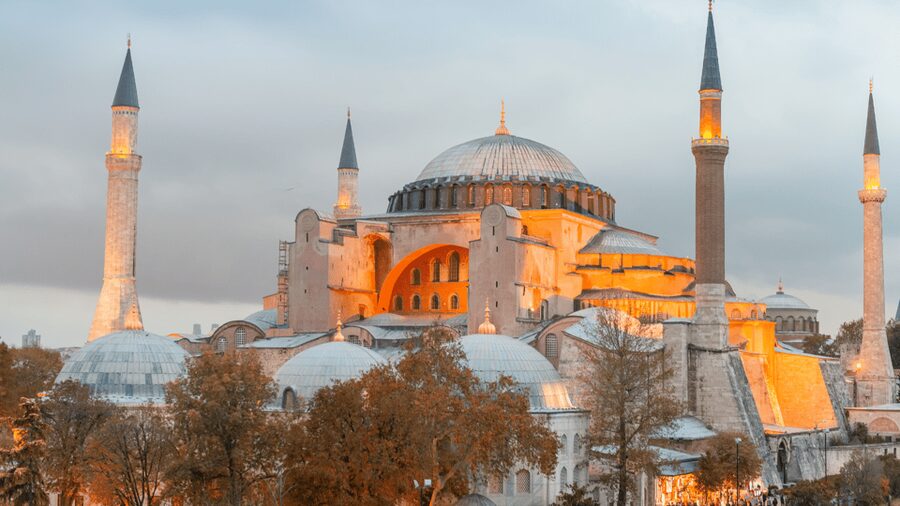
Hagia Sophia is the headline. And it’s not just because it looks dramatic. It’s because it’s a monument that keeps changing roles while staying in the same place.
The building is described as having stood there for about 1500 years and as a major temple for two religions. You’ll hear how it became the headquarters of Orthodox Christendom and later the first mosque in Istanbul. Even the construction story is meant to land in your head: it was built within only 5 years.
What I like about a guided visit here is that you don’t have to play architectural detective. The guide’s framing helps you notice the religious depictions side by side, understand how the sultan and his people met here, and grasp why it’s tied to Roman emperors through coronations. The dome details are the kind of information that makes the size feel real: it’s listed as 55.60 height and 31.87 diameter, and it was the biggest dome for 800 years.
The one thing to watch
Even with a guide, Hagia Sophia doesn’t come with skip-the-line service. During peak season, security can take around 45 minutes. The best way to handle this is mindset: treat the wait as part of the experience, not an interruption. With a good guide, that time isn’t wasted because you’ll get stories and context while you stand in line.
Sultan Ahmed (Blue Mosque): Iznik tiles and the logic of names
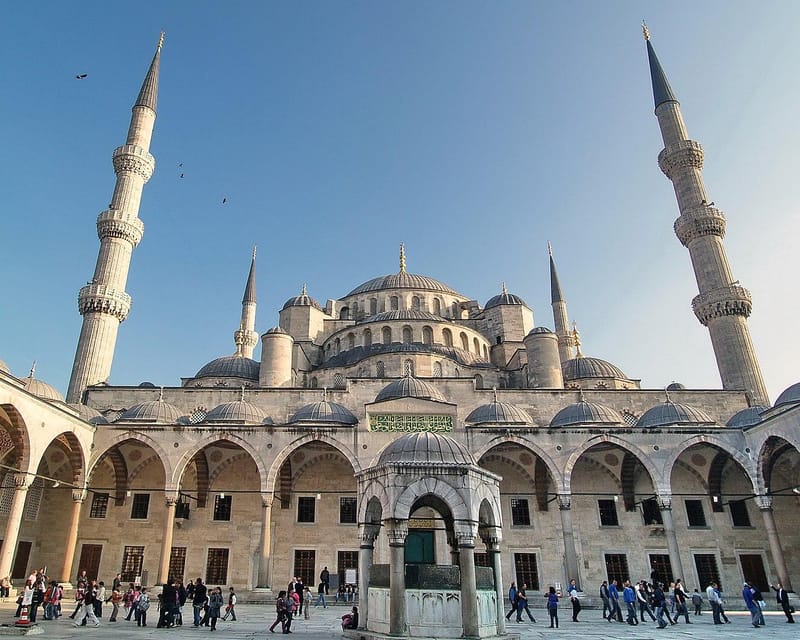
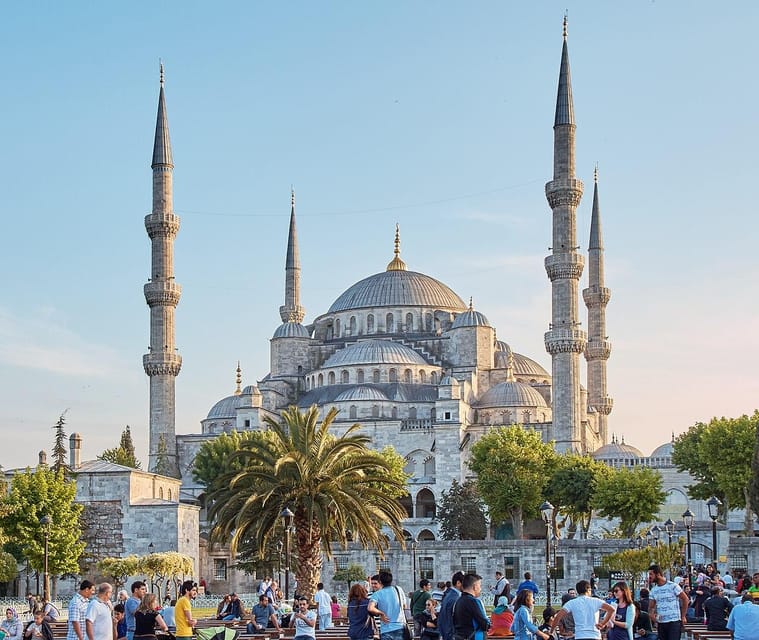
The Blue Mosque stop is where your eyes start working overtime. The interior is known for its blue-toned tilework, and the mosque’s original name is Sultanahmet Mosque.
A guided explanation matters here because the tilework isn’t just decoration—it’s a clue to how Ottoman patronage and regional identity worked. You’ll learn about the tiles coming from Iznik, the famous tile-producing city in Turkey. That gives the interior a broader “how it was made and why it mattered” layer, beyond the visual.
The guide also connects the mosque’s name to Ottoman naming customs. The basic idea: mosques were named based on the order and funding behind them, so you often see names that reflect the person who paid for construction. The second idea is regional: the area’s biggest mosque could lend its name to the neighborhood, which is why you’ll hear about three Sultanahmet references—one for the mosque, one tied to the sultan who ordered it, and one for the area.
About the lines
Like Hagia Sophia, this stop doesn’t include skip-the-line. So if your departure time lands in peak hours, plan for waiting. The upside: your guide’s job is to keep you engaged while security runs its course.
Basilica Cistern: the cool breath of 336 columns
Then you get the contrast. Basilica Cistern is the kind of place that feels like stepping into a different temperature and a different tempo.
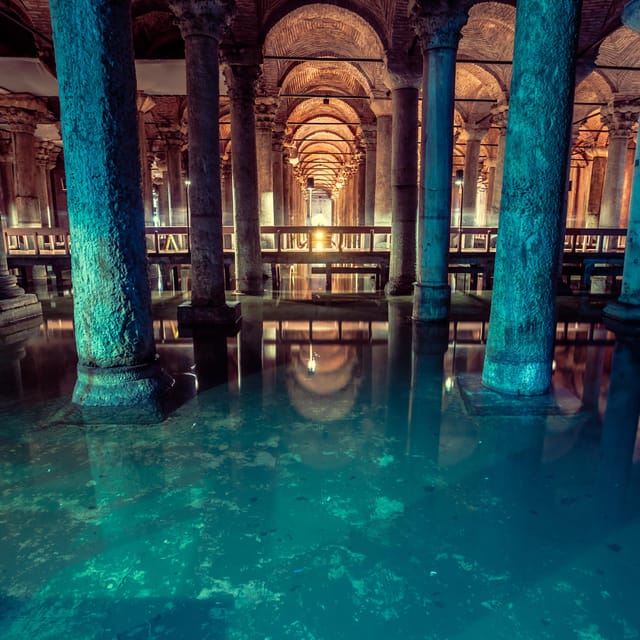
You’ll walk through an underground space with 336 columns, each about nine meters long, and you’ll see the famous Medusa heads (two of them). This is a classic “eyes meet story” site. The columns guide your sense of scale, while the Medusa imagery turns it into something more than a storage tank for water history.
What I like here is that it’s a rest stop without being boring. You’re not just cooling off. You’re seeing one of Istanbul’s most recognizable historical environments, and the guide helps you connect why it exists and what makes it memorable.
Practical note
Because it’s underground and column-heavy, comfortable shoes matter even more than usual. You’ll be on your feet for walking and stopping for explanations.
Topkapi Palace courtyards: why the first gate changes everything
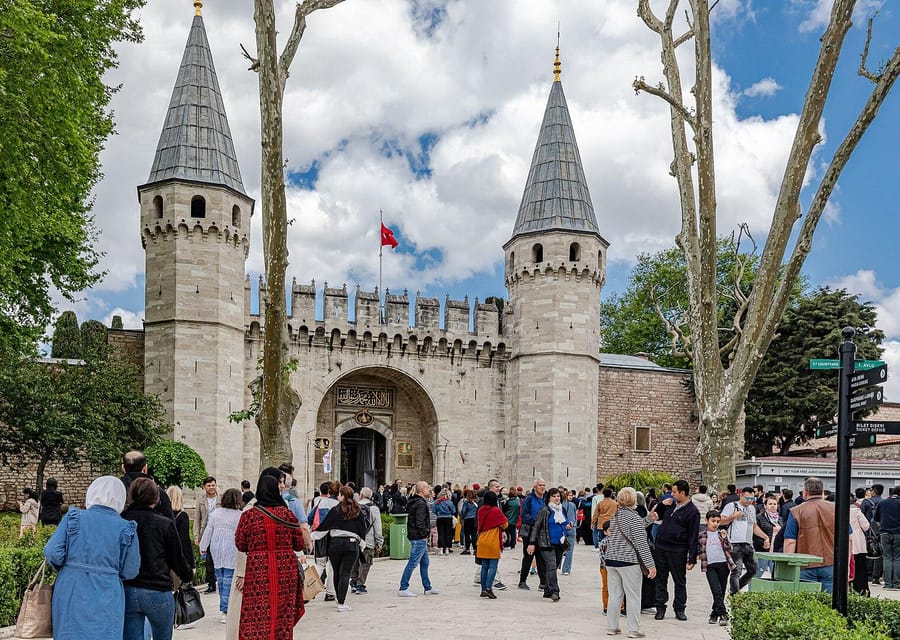
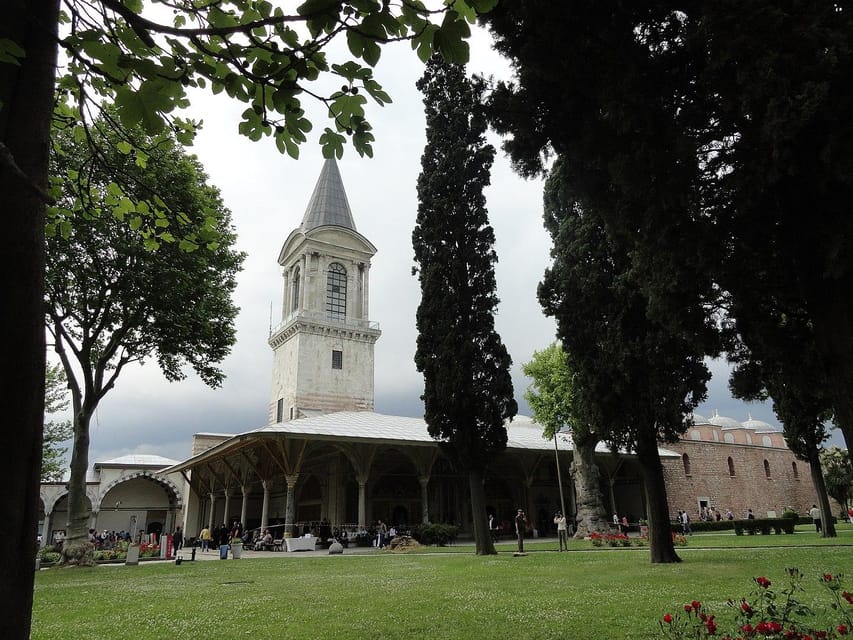
Topkapi Palace is the kind of place where you can get lost fast if you go in unstructured. The value of a guided visit is that you’re not just wandering halls—you’re learning the logic of the palace.
You’ll cover the major zones that define the complex: first, second, third, and fourth courtyards, plus the Audience Hall and Divan (the High Court). You’ll also hear about the Historical Kitchens, the Royal Stables, the Treasury, gardens, and kiosks.
One detail I really appreciate is the emphasis on the First Courtyard. It’s described as a top “commentary” on Ottoman history, art, and culture if you just come directly there and pay attention. With a guide, that courtyard stops being a random open space and becomes a map for how power moved through the palace.
What’s not included
The Harem Section isn’t included. That doesn’t make the tour a letdown—Topkapi is enormous—but it does mean you should temper expectations if the Harem is your top must-see.
Hippodrome Square and the Obelisk of Theodosius: ancient spectacle in modern view
After the palace, you shift gears toward the Byzantine stage: Hippodrome Square. This is where the story becomes public and loud, not just ceremonial.
The Hippodrome of Constantinople was originally built in the 3rd century CE and expanded in the 4th century by emperors Septimius Severus and Constantine the Great. It served as the venue for chariot races and public gatherings. The idea is to help you picture what Constantinople felt like when it was turning crowds into spectacle.
Your guide will connect this stop to standout relics, including the Obelisk of Theodosius—an Egyptian relic brought in the 4th century. The tour highlights also mention 36 grand columns, including references to Medusa imagery. Even when the full original setting is gone, the guide helps you read what you can still see.
Why this stop matters
Hagia Sophia and Topkapi can make Istanbul feel like it’s all about religion and courts. Hippodrome Square reminds you that people lived publicly, gathered intensely, and celebrated loudly.
Grand Bazaar: a guided stroll, but don’t get played
The Grand Bazaar stop is where your historical route meets your personal choices. It’s included as a guided tour, which is handy if you want a sense of how to move through the corridors without aimless wandering.
That said, the Bazaar is famous for confusing floor plans and high-pressure selling. I take this stop seriously because it can either help you find good souvenirs—or drain your budget.
A strong caution from guide-style experience in the reviews: one shopper warned not to buy anything quickly, especially from stores that make it hard to understand total pricing. Their experience included an unfortunate surprise after returning without the guide, and they described the charges as far beyond what they expected. So my practical advice is simple: decide what you want in advance, ask the total price clearly, and only buy when the numbers are straightforward.
Also, your guide may be able to help you navigate what’s reasonable and what’s not. In at least one case, a guide helped with local street food and translated to avoid overpaying. That’s the kind of support you pay for—use it.
Optional add-on: adding Dolmabahce Palace for more than 5 stops
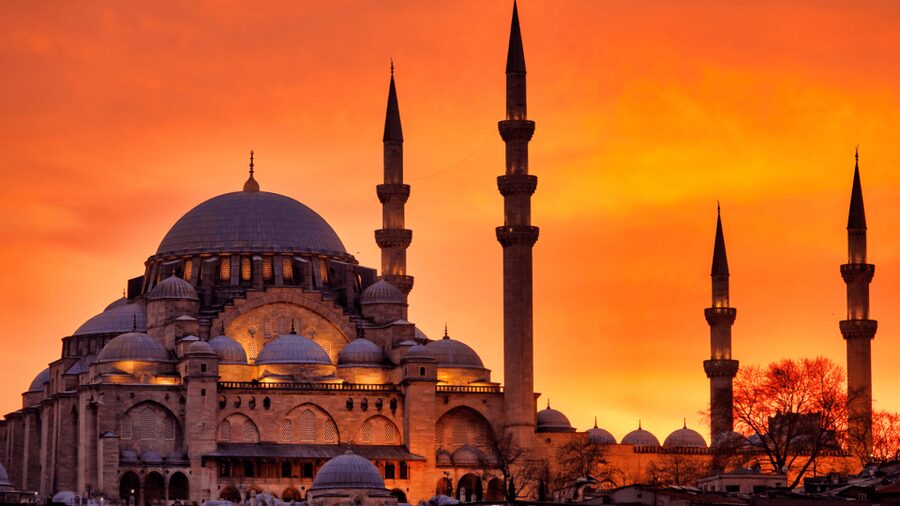
The pass can be expanded if you add Dolmabahce Palace, pushing the total number of visited places to six. If you’re the kind of traveler who likes variety—waterfront Istanbul and a newer palace style—this add-on may be worth considering.
Just remember: more stops can mean less breathing room. If you’re already feeling like your schedule is tight, keep the core route and let Dolmabahce be a separate day.
Price and value: does $171 buy you real convenience?
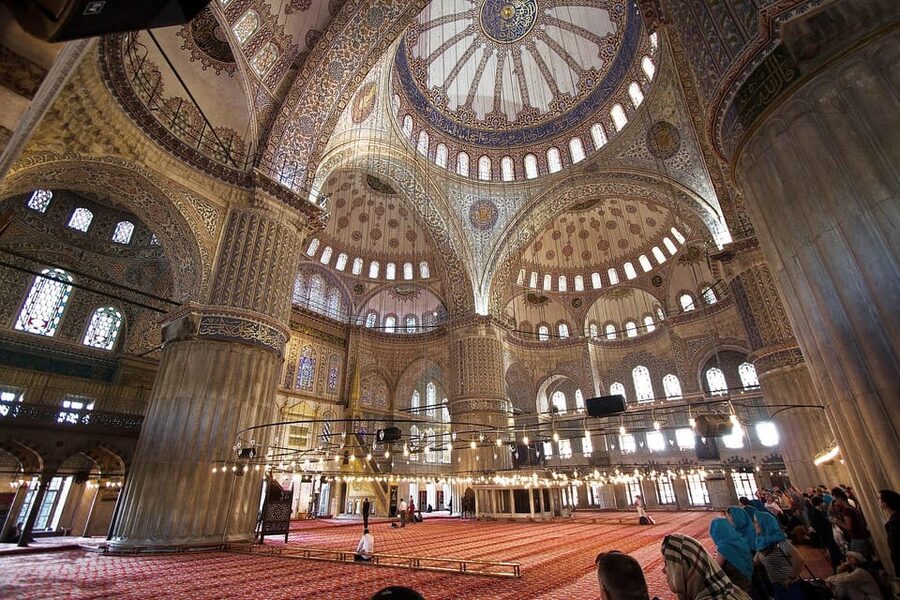
$171 per person for 2.5 to 3 hours sounds like a lot until you look at what’s included. This isn’t just a walking tour with opinions. Your guided tickets cover three major indoor sites: Hagia Sophia, Basilica Cistern, and Topkapi Palace. You also get guided experiences at the Blue Mosque, the Grand Bazaar, and Hippodrome Square.
Here’s what that value really means for you:
- You pay for someone else to handle the storytelling and sequencing.
- You reduce the time cost of coordinating several top attractions.
- You get context that makes the monuments easier to enjoy instead of just checking boxes.
The trade-off is that you’re not getting skip-the-line at Hagia Sophia or the Blue Mosque, so you’re still dealing with security timing. If you’re the type who loves spending 4–5 hours slowly reading and re-reading every sign, you might feel like a guided shortcut. But if you want the best Istanbul “signal” in a short window, this price can feel fair.
Who this tour fits best (and who should skip it)
This guided pass works best if you:
- want a tight route through top monuments without planning stress
- like guides who connect architecture to culture and daily life
- need English explanations to make sense of Ottoman and Byzantine layers quickly
- are okay with security waits at the two most popular sites
It’s less suitable if you:
- need wheelchair access (it’s listed as not suitable for wheelchair users)
- have medical conditions that make walking and museum movement difficult
- hate restrictions like no shorts/short skirts and no back packs
Group style is also worth noting. Private group options are available, and reviews highlight that guides kept groups organized and moving at a comfortable pace, including taking breaks when needed. If you’re traveling with family and want structure without rushing, that matters.
Should you book this guided museum pass?
Book it if you want Istanbul’s headline sites in one guided run, and you appreciate learning the “why” behind what you’re seeing. The guide quality comes up repeatedly, and the included guided entry tickets for Hagia Sophia, Basilica Cistern, and Topkapi are a real value.
Skip it or reconsider if your priority is deep, solo museum time or if security lines will stress you out. The no-skip-the-line rule is a deal point, and it can shape your whole mood on the day.
If you’re flexible, lean into the 3-day validity of the pass. Choose a time that feels calmer, wear comfortable shoes, bring the headscarf, and use the guide as your translator for history. That’s the smartest way to turn a short window into a memorable Istanbul day.
FAQ
How long is the Istanbul Top Museums Guided Pass?
The duration is listed as 2.5 to 3 hours.
What’s included in the tour tickets?
Included are guided museum entrance tickets for Hagia Sophia, Basilica Cistern, and Topkapi Palace, plus guided experiences for the Blue Mosque and Grand Bazaar.
Is pick-up or drop-off included?
No, pick up and drop off service is not included.
Do I get skip-the-line access for Hagia Sophia and the Blue Mosque?
No. A skip-the-lines service is not offered for Hagia Sophia and the Blue Mosque, and security lines may take around 45 minutes in peak season.
What should I bring for this tour?
Bring comfortable shoes and a headscarf.
What clothing or items are not allowed?
Shorts, short skirts, flash photography, and back packs are not allowed.
Where can I find tour timetables and meeting points?
You can view tour timetables and meeting points at https://basilicacisternticket.com/guided-tours-timetable