REVIEW · BARCELONA
Guitar Legends Hall: Entrance to the Immersive Rock Museum
Book on Viator →Operated by Guitar Legends Hall - Museu del Rock · Bookable on Viator
Guitars meet a timeline you can walk through. Guitar Legends Hall in Barcelona turns rock history into a room-by-room experience with 8 themed zones that track the sound from blues roots to stadium-era concerts. It is a smart pick when you want more than a quiet museum stop.
I love the audio guide format because it helps you move at your pace while still understanding what you are seeing. The one thing to plan around is timing: your visit can stretch from about 1 to 10 hours, so if you have a tight schedule, give yourself a clear window.
In This Review
- Key highlights you should care about
- Barcelona’s Guitar Legends Hall: a rock stop that works year-round
- 8 themed zones, one line from blues to stadium shows
- Space 1 Blues bar: where rock starts to form
- Space 2: iconic 1950s guitars and the programs behind them
- Space 3 1960s festivals: rock becomes a scene
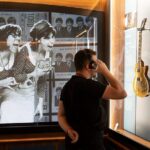
- Space 4 record store in the 70s and 80s
- Space 5 MTV and music video history: rock becomes TV culture
- Space 6 VIP room energy: a concert-feel without the ticket lines
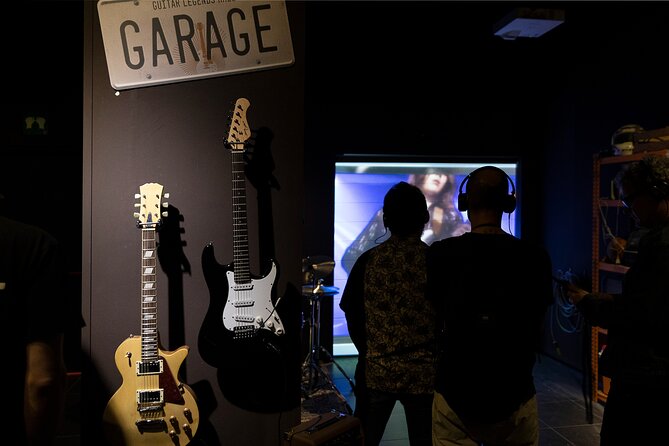
- Space 7 garage with lights and projections: the sound meets the visuals
- Space 8 hologram concert: the final stage of rock legends
- The audio guide: your pacing tool in four languages
- Shop stop for exclusive guitar and rock items
- Price and value: what $21.69 buys you in Barcelona
- Time planning: how long you should give yourself
- Where it fits in your Barcelona itinerary
- Who should book Guitar Legends Hall, and who might skip it
- Quick verdict: should you book?
- FAQ
- FAQ
- What is Guitar Legends Hall in Barcelona?
- Where is the meeting point?
- How long does the visit take?
- Is the ticket mobile?
- Is it available in English?
- Is there an audio guide?
- What is included in the price?
- Is transport included?
- How large are the groups?
- Is it refundable if I cancel?
Key highlights you should care about
- 8 themed zones that connect rock’s story from blues to big concert culture
- Guitars up close with plenty of context on eras and performers
- Interactive displays that make it easier to spend real time here
- Audio guide in four languages, so English is not your only option
- A concert-like final act featuring holograms of rock legends
Barcelona’s Guitar Legends Hall: a rock stop that works year-round
Barcelona has no shortage of museums, but Guitar Legends Hall at Museu del Rock feels different. Instead of a hushed walk through glass cases, you get themed rooms that act like scenes from different decades. Even if you are not the biggest rock fan, the way each space connects music with its era gives you something to latch onto.
The building is in Ciutat Vella, near public transportation, and the meeting point is easy to find: Carrer de la Portaferrissa, 16, 08002 Barcelona. The experience is designed for small groups, with a maximum of 10 people, which generally makes it feel less crowded and more manageable than many big attractions.
Also, you are starting and ending back at the same meeting point. That matters in Barcelona, where you often have to hustle between far-flung sites.
You can also read our reviews of more museum experiences in Barcelona



8 themed zones, one line from blues to stadium shows
The whole concept is simple: rock music didn’t appear out of thin air. It grows. It changes. And it picks up new gear, new fashion, and new media along the way. The museum’s layout follows that evolution in eight themed spaces, so you are not just looking at instruments; you are seeing how the genre shifted decade by decade.
Here’s the practical benefit: if you only have an hour, you can focus on a handful of zones. If you have a couple hours (or more), you can take your time and let the timeline land. That flexibility is why people tend to spend longer than they expect.
And yes, the guitars are a big deal here. But the point is not only the hardware. The way the rooms are arranged helps you understand what the instruments meant in each era.
Space 1 Blues bar: where rock starts to form
Space 1 sets the stage by showing blues as the root that got transformed into rock. This is a good starting point if you want the basic cause-and-effect of music history. You will see how styles that came before electric rock set up the later sound.
If you are coming in with a modern playlist mindset, this space helps reset your expectations. It’s not about judging old vs new. It’s about seeing how the musical building blocks evolved.
The upside: it gives you context fast. The possible downside: if you are only interested in later rock eras (like 80s hard rock), you may want to move a bit quicker through this opening zone.
Space 2: iconic 1950s guitars and the programs behind them
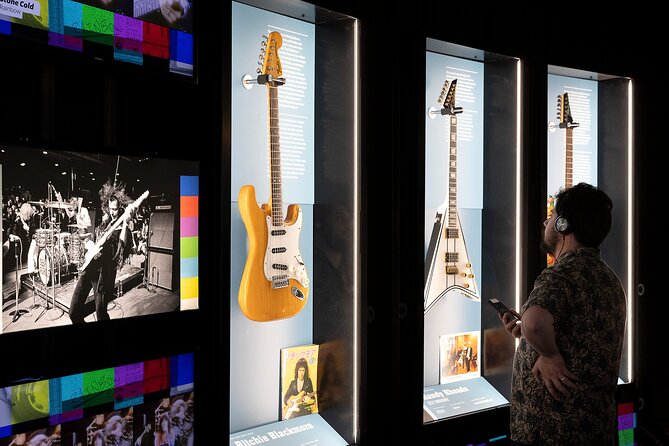
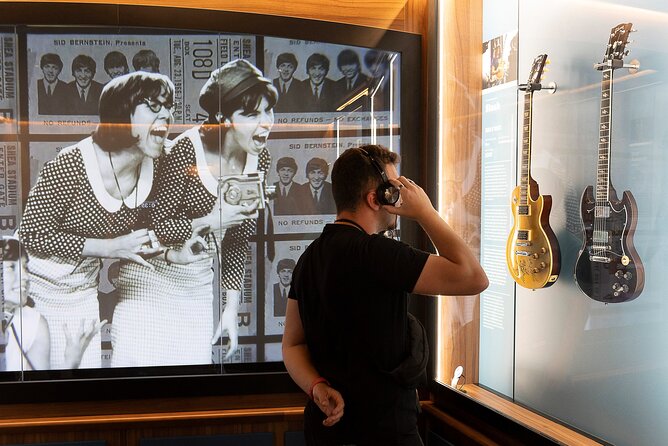
Space 2 shifts into the 50s, focusing on iconic guitars and period programs. This is where guitar lovers usually feel the strongest pull. The setup is built around both the instruments and the culture around them, so you get more than a label next to a guitar.
One useful way to approach this room: look for the changes in the guitars’ look and how that connects to what was happening musically. The museum’s design nudges you to think in terms of eras, not random facts.
This is also a natural place to notice how electric guitar became central. If early electric guitar history matters to you, this zone and the nearby eras are likely to feel like the most relevant sections of the route.
Space 3 1960s festivals: rock becomes a scene
In Space 3, the focus moves to the 60s festival era. Think of this as the moment rock starts to feel like a shared event rather than only a stage show. Festivals change the energy of music culture, and this room is built to reflect that shift.
I like using this space as a mental checkpoint. By the time you reach the 60s, you can usually see what changed: bigger audiences, more spectacle, and a clearer public identity for rock.
If you are visiting with someone who is less into guitars but more into social history, this is a great room to connect with. It’s about how music travels through time and crowds.





Space 4 record store in the 70s and 80s
Space 4 takes you to a record store setting from the 70s and 80s. This is one of those clever stops that makes rock feel everyday. Music was not just on stage; it was something you hunted down, browsed, and collected.
Even if you do not buy records, the idea works. You start thinking about how distribution and fandom shaped what bands could do next. A record store is where new styles meet old ones, and the museum uses that idea to anchor the timeline.
If you love pop culture around music—album covers, formats, and the vibe of buying music—this stop tends to land well. If you are short on time, it’s still worth popping into because it gives you context beyond sound.
Space 5 MTV and music video history: rock becomes TV culture
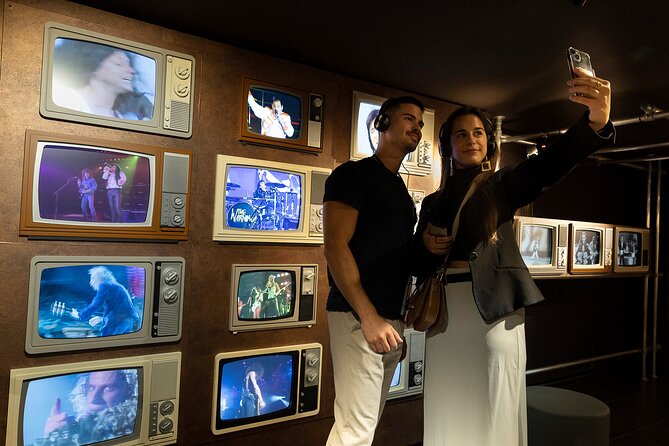
Space 5 turns the spotlight to the history of music videos and MTV. This is where you see that rock did not just evolve through musicians and guitars. It evolved through media.
You’ll likely find yourself making quick connections between what you know from modern streaming culture and what came earlier through TV. This room helps bridge that gap and makes the story feel more complete.
Practical tip: slow down here if you care about how rock became a visual identity. The museum’s framing makes it easy to notice why music videos mattered to shaping audiences.
Space 6 VIP room energy: a concert-feel without the ticket lines
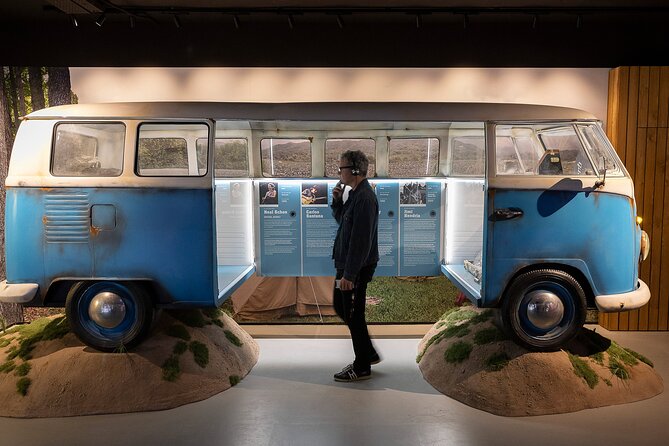
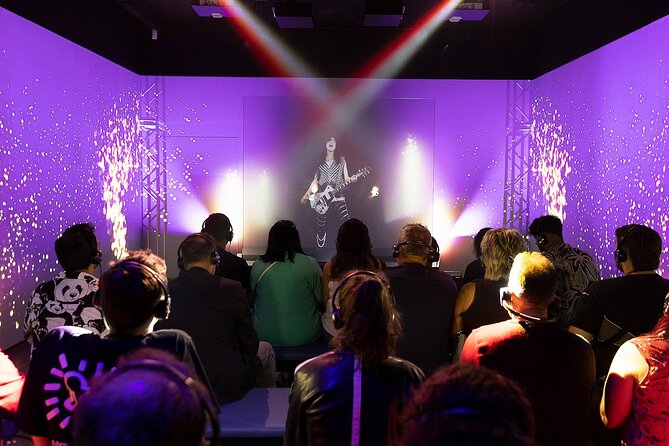
Space 6 is all about the energy of a rock concert with a VIP room setup. Instead of focusing on history only, this space leans into atmosphere—like you stepped into the backstage glow before the show.
It’s a nice balance late in the route. Earlier rooms are more timeline and era-focused. This one gives you a “feel it” moment, which is what many people want after walking through years of music evolution.
The one consideration: if you prefer strictly factual museum-style displays, you may like the earlier zones more. But for most people, this is a welcome reset.
Space 7 garage with lights and projections: the sound meets the visuals
Space 7 brings you to a garage scene with projections and lights. This room is designed to show how music is not only heard; it is staged and shaped by how it is presented.
I find these kind of rooms useful because they break up the learning blocks. After a more educational stretch, the garage setup keeps your attention and gives your brain a chance to process things through visuals and mood.
If you are traveling with kids or a non-expert friend, this kind of environment is often where you get the most smiles. It also helps you remember the story, since you are linking decades to specific scenes.
Space 8 hologram concert: the final stage of rock legends
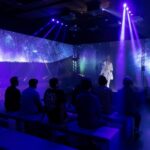
Space 8 is where the museum closes the loop with an immersive concert feel featuring holograms of rock legends. This is the biggest “wow” moment on the route, the part people tend to talk about because it feels like a modern concert experience.
Keep this in mind when planning your time: hologram-style shows can take a little longer than you think, especially if you want to watch calmly instead of rushing. If you are there during a busy period, you may want to arrive earlier in your day.
Still, it’s a strong finish. You end with the idea of rock as a legacy you can still experience, not just a history you read about.
The audio guide: your pacing tool in four languages
The experience includes an audio guide and it is available in four languages. Even though the experience is offered in English, this is important for you because it means the story is not locked behind one language path.
The biggest value of an audio guide here is control. You can spend 10 minutes in a zone you want to understand and only 2 minutes in a zone that you just want to see. That matters in a place where the timeline is the point.
If you like to learn, use the guide at the start of each zone so you know what to pay attention to. If you prefer atmosphere over facts, turn it on when you reach a room that has a lot of context, then let the rest be more free-form.
Shop stop for exclusive guitar and rock items
There is an on-site shop with exclusive guitar and rock items. This is not just a typical souvenir add-on. It’s tied to what you saw, so if you are the kind of person who likes to take home something music-related, this is the natural place to do it.
I usually recommend deciding in advance what you want: a poster, a small collectible, or a guitar-themed item. Otherwise, it can be easy to get tempted by too many cool things.
Price and value: what $21.69 buys you in Barcelona
At $21.69 per person, this is priced like a ticketed attraction, not an all-day museum pass. The value comes from how much content you get for that money: eight themed zones, audio support, and a route that can stretch from about 1 up to 10 hours depending on how you experience it.
A few practical value points:
- You get an included audio guide, which makes the ticket feel more useful than a basic entry pass.
- The route structure helps you avoid that common museum problem where you rush because you do not know what matters.
- With a small group size limit of 10, the experience tends to feel more comfortable than huge venues.
The ratings back up the general experience quality. It averages 4.8 out of 5, with 96% of people recommending it. That is a strong signal, especially for an attraction that mixes history with staged moments.
Time planning: how long you should give yourself
Duration is listed as about 1 to 10 hours, which is a huge range. Here’s how I suggest you choose your time:
- If you only want the highlights, aim for closer to 1–2 hours and choose 4 to 5 zones.
- If you want the full story, plan for 2–4 hours and use the audio guide actively.
- If you are a serious guitar or music-history fan and want to linger, allow more time because the route can keep you engaged longer than expected.
Also, the meeting point is at Carrer de la Portaferrissa, 16, in Ciutat Vella. Factor that in if you are pairing this with another central activity.
Where it fits in your Barcelona itinerary
This is a great choice for a day when you want something indoors, especially if you have limited time in central Barcelona. It also pairs well with other “music or culture” stops nearby because the experience is self-contained—you don’t need to travel across the city mid-visit.
Try this timing approach:
- Go earlier if you want more relaxed viewing.
- Leave some buffer afterward, since the last zones can take time.
If you are building a Barcelona day around neighborhoods, keep this in Ciutat Vella and pair it with a nearby walk or a meal afterward. The experience ending back at the start point makes your afternoon easier to manage.
Who should book Guitar Legends Hall, and who might skip it
You’ll probably love this if you:
- are a rock and electric guitar fan
- enjoy interactive, decade-by-decade pop culture storytelling
- want a music-themed activity that is still meaningful even if you are not a hardcore expert
You might not get as much out of it if you:
- only want quiet, traditional museum displays
- dislike audio guides and prefer purely self-guided reading
- have very tight timing and can’t spare enough hours to follow the route fully
One nice thing: it is designed for most people to participate, and service animals are allowed. That makes it easier to plan confidently for a range of visitors.
Quick verdict: should you book?
If you want a guitar-focused experience in Barcelona that also connects music to media, fashion, and social change across decades, this is an easy yes. The mix of guitars, themed rooms, interactive moments, and an audio guide makes the ticket feel like more than just entry—it feels like a structured story you can experience at your own speed.
If you are on the fence, the deciding factor is simple: do you want a rock timeline you can walk through with sound and light? If the answer is yes, book it. If you only need a quick stop or prefer strictly traditional museums, consider trimming your time or choosing a different attraction.
FAQ
FAQ
What is Guitar Legends Hall in Barcelona?
It is Guitar Legends Hall at Museu del Rock, an attraction built around rock history across multiple themed areas.
Where is the meeting point?
The start point is Rock Museum Barcelona, Carrer de la Portaferrissa, 16, Ciutat Vella, 08002 Barcelona, Spain.
How long does the visit take?
The duration is listed as approximately 1 to 10 hours, depending on how much time you spend in each area.
Is the ticket mobile?
Yes. You receive a mobile ticket.
Is it available in English?
The experience is offered in English.
Is there an audio guide?
Yes. The visit includes an audio guide, available in 4 languages.
What is included in the price?
Museum entrance and the audio guide are included.
Is transport included?
No. Transport is not included.
How large are the groups?
The experience has a maximum group size of 10.
Is it refundable if I cancel?
It is non-refundable and cannot be changed for any reason. If you cancel or request an amendment, the amount paid will not be refunded.