REVIEW · ROME
Fast track: Vatican Museums, Sistine Chapel Guided and St. Peter’s Basilica Tour
Book on Viator →Operated by Enjoy Rome · Bookable on Viator
Rome can overwhelm you at the Vatican.
This fast-track tour bundles Vatican Museums, the Sistine Chapel, and St. Peter’s Basilica into one guided circuit, using pre-booked entry to cut down waiting. I also like that headsets are included, so the guide’s narration stays in reach even when the crowd is loud. The main drawback to consider: headset fit and guide clarity can make or break the experience in the busiest rooms.
The format works best when you want the highlights without losing your day. You’ll move quickly, you’ll be told where to look, and you’ll hit the big artistic moments that most first-timers come for. Just go in with realistic expectations: 3 hours means you see top masterpieces, not every corner of the Vatican.
In This Review
- Key things I’d plan for
- Fast-Track Vatican Entry From Via Germanico: How the 3-Hour Plan Works
- Vatican Museums in 2 Hours: Top Art Without Getting Overwhelmed
- Sistine Chapel in 15 Minutes: Michelangelo, Papal Traditions, and Dress Code Reality
- St. Peter’s Basilica in 45 Minutes: Pietà, Bernini, and a Touch of Luck
- Headsets and Hearing: The Real Make-or-Break Factor
- Crowd Flow, Security, and What to Wear Without Stress
- Guide Quality Can Vary: Maria, Marco, Alexander, and Rudy
- Is It Worth Paying for Fast-Track at $84.36?
- Who This Tour Suits Best (and Who Might Prefer a Slower Day)
- Should You Book This Fast-Track Vatican Tour?
- FAQ
- How long is the Vatican Museums, Sistine Chapel, and St. Peter’s Basilica tour?
- Is the tour offered in English?
- What is included in the tour price?
- What dress code rules apply for the Sistine Chapel?
- Where do I meet the tour group?
- When is St. Peter’s Basilica closed for this tour?
Key things I’d plan for
- Fast-track entry helps you beat the worst queues across multiple Vatican sites.
- Headsets are included, but audio can be tricky in thick crowds.
- Tight timing means the Vatican Museums get a curated “best of” slice.
- Sistine dress code is strict year-round, so plan clothing before you arrive.
- St. Peter’s priority access targets the key stops like Michelangelo’s Pietà and Bernini’s altar area.
- Group size is capped at 25, which usually keeps the pacing manageable.
Fast-Track Vatican Entry From Via Germanico: How the 3-Hour Plan Works
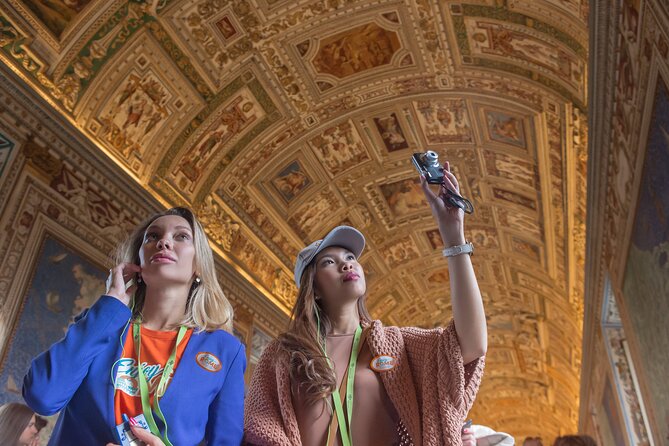
This tour is built for one thing: reducing the time you spend stuck in lines at one of the world’s most crowded art and church complexes. Starting at Via Germanico, 8 (00192 Roma RM), you’ll meet a group that’s capped at 25 travelers and then move through three major stops on a roughly 3-hour schedule.
At $84.36 per person, the price feels more reasonable when you look at what’s bundled in. You’re not only buying entry. You’re buying an expert guide, a narrated route, admission for the museum and chapel sections, plus St. Peter’s Basilica guided time—along with headsets to help you follow the commentary. If you’ve ever tried to do the Vatican solo on a tight trip, you know why a guided, timed plan matters.
One practical note: the meeting area includes free Wi-Fi, which is useful if you need to confirm where to stand before you enter the security flow. And since the tour ends back at the meeting point, there’s no puzzle of how to get yourself out at the far end.
You can also read our reviews of more guided tours in Rome
Vatican Museums in 2 Hours: Top Art Without Getting Overwhelmed
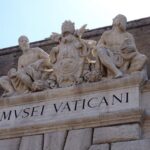
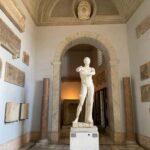
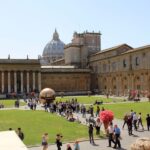
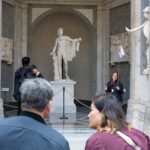
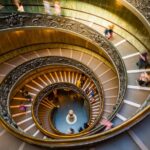
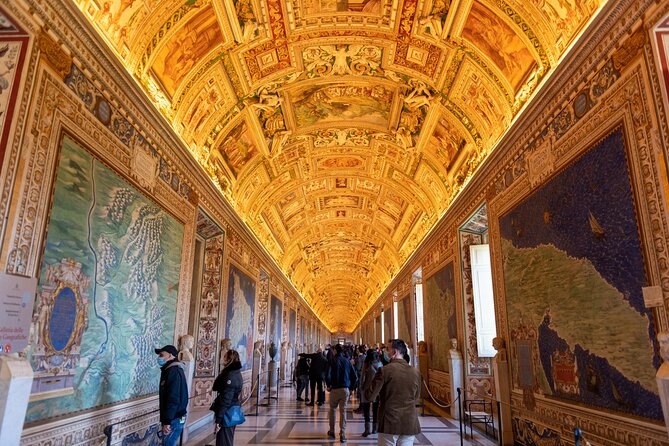
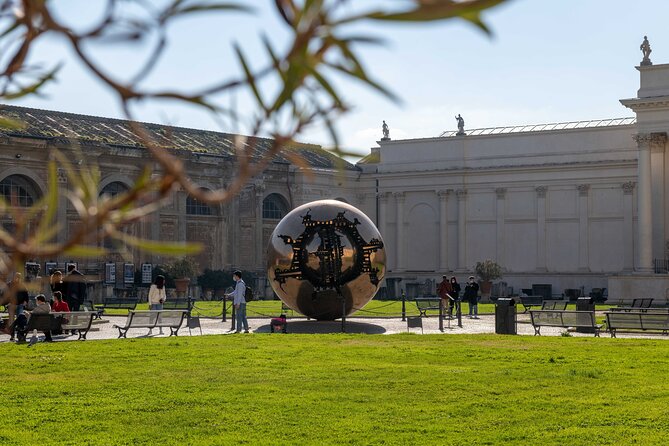
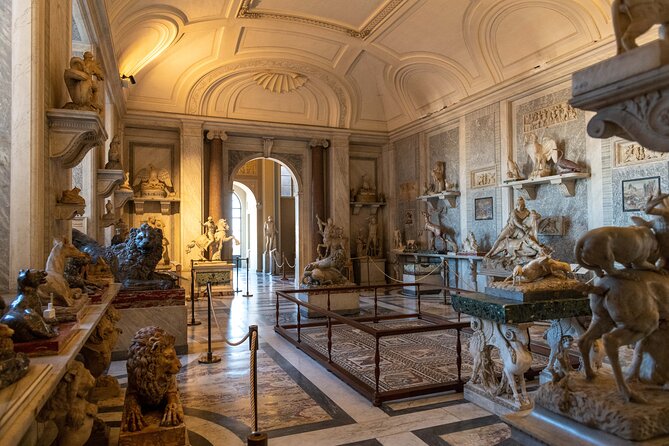
The Vatican Museums stop is where this tour earns its value. With about 2 hours inside, you’re not expected to see everything—because you simply can’t in a single day. Instead, the guide focuses on the museums’ most important works, so you leave with a coherent understanding of what you just saw, not just a pile of random rooms.
The big win here is direction. The Vatican Museums are huge and easy to wander through aimlessly. A guided route helps you spend your limited time looking at the art that most people later recognize in photos and stories. You also get narration that connects the works to the Vatican’s long history of collecting art through the centuries, which makes the rooms feel less like a checklist and more like a story.
A possible drawback is also built into the schedule. Two hours can feel fast, especially if you like to read every label, zoom in on details, or pause often. If you’re the type who wants to linger in front of a single painting until it fully absorbs you, this stop may feel like a highlight sprint.
Also, plan your bodily needs early. One note from real-world experience: restrooms tend to be a bigger issue because you may have fewer chances mid-route. If you can, use the restroom before the tour begins so you’re not hunting for a break after you’re already in the flow.
Sistine Chapel in 15 Minutes: Michelangelo, Papal Traditions, and Dress Code Reality
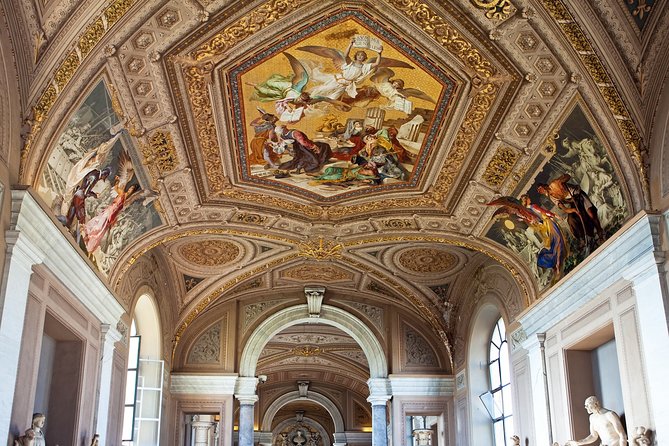
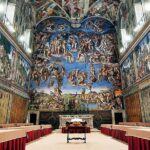
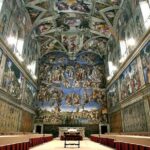
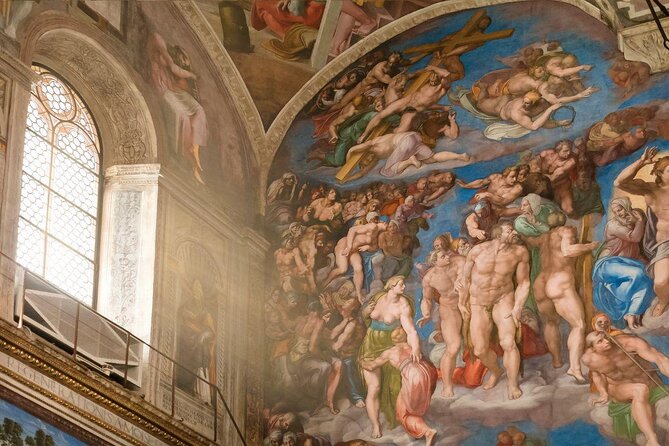
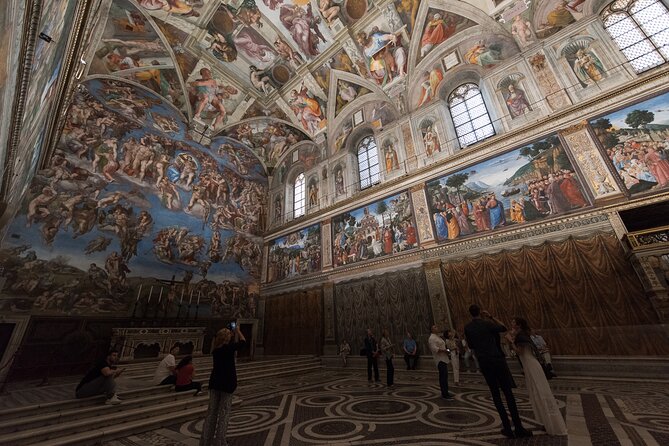
Then comes the Sistine Chapel, where time tightens and expectations spike. You’ll spend about 15 minutes in the chapel area, which is just enough to look up, absorb the ceiling work, and catch the most important context from the guide.
Two things make this stop special. First, Michelangelo’s frescoes are the reason many people come—faces, gestures, and biblical scenes that look even more powerful in person when you’re standing where viewers have stood for centuries. Second, the chapel still holds major religious and cultural importance, including its role in the election of a new pope.
Here’s the practical part that can’t be skipped: the Sistine Chapel has a strict dress code year-round. Shoulders must be covered, and pants/skirts must come to knee level. Comfortable shoes matter because you’ll be moving with the group through busy corridors and then into a crowded interior.
Because the time is short, it helps to know what you’re aiming to see before you arrive. In a guided format, you can’t treat the Sistine Chapel like a museum gallery you move through slowly. You treat it like a moment you watch carefully—then you move on.
St. Peter’s Basilica in 45 Minutes: Pietà, Bernini, and a Touch of Luck
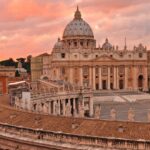
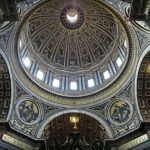
St. Peter’s Basilica is the grand finish, with about 45 minutes on site and priority access for the group. If you only have a few hours in the Vatican area, this is one of the highest-impact places to spend them. The building is enormous, full of Renaissance and Baroque masterpieces, and it feels different the moment you step inside.
This tour’s focus is specific: you’ll get guided attention on Michelangelo’s Pietà and Bernini’s altar area, including the famous covering structure. You’ll also hear context that helps you understand why these works matter to the church and to art history.
There’s also a playful tradition you’ll likely see mentioned on the ground: the chance to rub the toes of the statue of St. Peter for good luck. It’s touristy, yes, but it’s also part of the lived-in feel of the basilica.
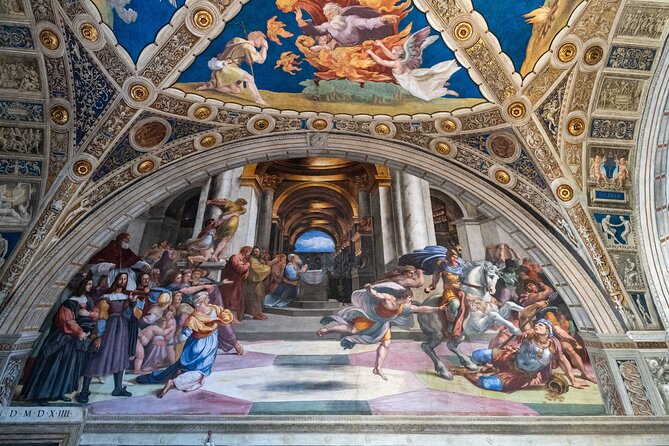
The timing can matter because the basilica isn’t always open on the same schedule. St. Peter’s Basilica is closed Wednesdays from 8:00 AM to 12:00 PM, and it’s also closed on December 24 and 31. If your day hits one of those closures, the tour will shift to other parts of the museums instead (and you may visit additional areas like the Raphael Rooms).
Headsets and Hearing: The Real Make-or-Break Factor
Headsets are included, and that’s a huge plus in theory. In practice, this is also where a lot of people’s experiences differ.
The most important thing to know is that the Vatican is loud with crowd noise, and the guide’s ability to speak clearly affects everything. Some groups report difficulty hearing or understanding the guide, including issues with thick accents or volume. Others have mentioned that the headset design can be finicky and may slip out if you turn your head or move frequently.
If you rely on hearing aids or you’ve had headset compatibility problems before, I’d treat this as a key decision point. Don’t assume “headset included” automatically means “easy to hear.” If this is you, confirm headset compatibility with the operator before booking, and plan to sit close when you can.
One simple strategy: don’t be shy about adjusting your position. When the guide pauses to explain something, the best listening usually happens closer to the front of the group.
You can also read our reviews of more museum experiences in Rome
Crowd Flow, Security, and What to Wear Without Stress
The Vatican’s security rules are strict, and they affect your experience even before you start enjoying it. Metal detectors are used at entrances at most attractions, so there are clear restrictions on what you can bring. Avoid weapons, blunt objects, glass bottles, and sprays. Also, leave luggage or pets at home.
This matters because it’s one more reason fast-track entry helps. You’re not skipping security, but you’re often reducing the time you spend waiting in the wrong place at the wrong moment.
What you wear can make or break the Sistine Chapel portion. Since shoulders must be covered and legs must meet the knee requirement, it’s smart to bring a light layer if you’re traveling in warm weather. Comfortable shoes also matter because you’re doing a lot of walking across museum and church corridors.
And since this is a guided format, you’ll follow the guide’s pacing more than your own. If you’re prone to getting anxious in crowded spaces, plan to breathe through the bottlenecks and focus on what the guide is pointing out.
Guide Quality Can Vary: Maria, Marco, Alexander, and Rudy
A guided Vatican tour lives and dies on the guide. The good news is that this tour often gets high praise for lively explanation and storytelling. Guides like Maria, Marco, Alexander, and Rudy show up in real experiences as names tied to strong performances—fun pacing, clear directing of attention, and answers to questions.
But there’s also a reality check. Some people report that certain guides were hard to understand due to accent or sound issues, or that the headset setup made the audio less reliable. A few experiences also describe the guide as feeling rushed, looping on certain topics, or not reading the room well.
So how do you protect yourself? Go in expecting a mix of art, church context, and logistics talk. Then give the guide room to lead. If the audio is failing, quickly reposition toward the guide and listen for the key points about what you’re seeing—like the Michelangelo and Bernini highlights that define this itinerary.
Is It Worth Paying for Fast-Track at $84.36?
For me, the value comes down to time. The Vatican Museums are a time sink, and St. Peter’s Basilica is both high-demand and high-impact. This tour uses fast-track tickets and priority access so you spend your limited Rome hours actually in the spaces, not waiting behind barriers.
You’re also paying for structure. The tour doesn’t try to make you an expert on everything in the Vatican. It aims to keep you oriented: what you’re looking at, why it matters, and where the next “must-see” moment is.
That said, the price is only “worth it” if the guiding audio works for you. If you already know you struggle to hear guides in noisy settings, or you’re sensitive to tight time limits, you might decide a different format fits better. This is a fast-paced route, not a slow, read-every-placard museum day.
Who This Tour Suits Best (and Who Might Prefer a Slower Day)
This tour is a strong match if:
- You’re a first-time visitor and want the main masterpieces without getting lost.
- You’re short on time and want a one-session route through Vatican Museums + Sistine Chapel + St. Peter’s Basilica.
- You enjoy narration that points out what to notice instead of scanning labels for hours.
It may be less ideal if:
- You’re the type who needs long stops to fully process art (the Vatican Museums portion is about 2 hours, Sistine is about 15 minutes).
- You expect quiet. The Vatican is crowded by default, and even with headsets, you may find it hard to hear every word.
- You have special hearing or mobility needs. The operator asks that individuals with disabilities note it during booking, and you’ll want the route and access to work for you before you arrive.
If your top priority is reading, lingering, and going deep in one museum wing, you may want to shift to a longer, more focused plan.
Should You Book This Fast-Track Vatican Tour?
If you want a practical, high-coverage Vatican day with less waiting, I’d book it—especially if you’ve got limited time in Rome and you don’t want to stress about lines. The combination of fast-track entry, guided highlights, and a route that ends at St. Peter’s Basilica is exactly what makes a short visit work.
But I’d also go in with eyes open. This is a timed circuit. The Sistine Chapel dress rules are strict. Audio quality can be uneven in real life. And if you’re someone who needs to linger or you’re sensitive to hearing issues, you should plan your expectations carefully.
If you can handle a highlight pace and you’re ready for crowds, this is a solid way to check the Vatican’s biggest art moments off your Rome list without wasting hours in queues.
FAQ
How long is the Vatican Museums, Sistine Chapel, and St. Peter’s Basilica tour?
It runs for about 3 hours, including time in the Vatican Museums (2 hours), the Sistine Chapel (15 minutes), and St. Peter’s Basilica (45 minutes).
Is the tour offered in English?
Yes. This experience is offered in English.
What is included in the tour price?
You get an expert tour guide, fully narrated tour, headsets, admission ticket coverage for the Vatican Museums and Sistine Chapel, and a St. Peter’s Basilica tour. Free Wi-Fi is available at the meeting point.
What dress code rules apply for the Sistine Chapel?
Shoulders must be covered, and pants/skirts must come to the knee. Wear comfortable shoes.
Where do I meet the tour group?
The meeting point is Via Germanico, 8, 00192 Roma RM, Italy. The tour ends back at the meeting point.
When is St. Peter’s Basilica closed for this tour?
St. Peter’s Basilica is closed on Wednesdays from 8:00 AM to 12:00 PM, and on December 24 and 31. If closed, the tour will visit other parts of the museums instead.