REVIEW · ROME
Da Vinci Museum: Discover a World of Genius in the Heart of Rome
Book on Viator →Operated by Museo Leonardo da Vinci · Bookable on Viator
Leonardo’s ideas are easier to grasp here. This museum turns codex notes, sketches, and Renaissance art into life-size machines you can actually understand, plus multimedia explanations that connect the dots. I like the pre-booked admission setup because it keeps your Rome day moving, not stuck in ticket lines. One real catch to plan around: there are no restroom facilities in or around the museum, so go before you head in.
The museum sits inside Basilica Santa Maria del Popolo in central Rome, and it is an easy add-on to the area around Piazza del Popolo. You get enough structure to make it feel purposeful, while still having room to go at your own pace for about 1 to 2 hours.
Expect English-language support and a mostly self-guided experience with optional help. Many visitors find it well-paced for families, but the building footprint is small, so if you’re expecting a giant museum, you’ll want to treat it as a focused visit, not a half-day plan.
In This Review
- Key things to know before you go
- Entering Santa Maria del Popolo: Finding the right spot fast
- Price and logistics: Is $14.38 worth it?
- Your 1 to 2 hour plan: How the visit actually flows
- Leonardo’s inventions, built to make sense of the drawings
- A note on hands-on expectations
- Art, anatomy, and multimedia stories that connect the dots
- Audio guide, VR, and screens: Spend time where it helps
- The VR flight: fun, but don’t let it steal your time
- Small friction points to consider
- Family-friendly without turning into a kid circus
- Comfort and practical tip
- Piazza del Popolo after the museum: Make it a half-day loop
- Who should book this Da Vinci museum (and who might skip it)
- So should you book it?
- FAQ
- Where is the Museo Leonardo da Vinci located?
- How long should I plan for the visit?
- What’s included with the ticket price?
- Is an audio guide included?
- Is the experience offered in English?
- Can you interact with the exhibits?
- Are there restrooms at the museum?
- Is this museum good for kids and families?
- Are service animals allowed?
- What is the cancellation window?
Key things to know before you go
- Inside Santa Maria del Popolo: the museum is housed within the basilica area by Piazza del Popolo.
- Pre-booked admission: you save time at the door and avoid hunting for tickets last minute.
- Life-size machine recreations: built from concepts found in Leonardo’s codices and studies.
- Art + engineering together: you’ll see connections between paintings, anatomical ideas, and inventions.
- Short visit length: plan about 1–2 hours, not all afternoon.
- No onsite restrooms: use facilities before you arrive.
Entering Santa Maria del Popolo: Finding the right spot fast
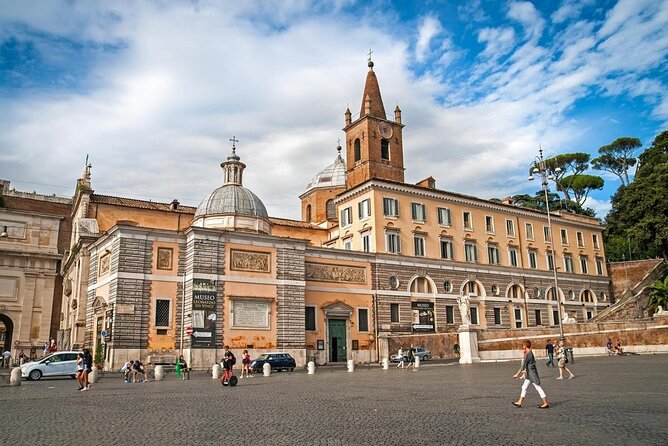
The Museo Leonardo da Vinci is set inside Basilica Santa Maria del Popolo, which is a big help. You’re not searching a maze of Rome neighborhoods—you’re aiming for a landmark you can recognize, then stepping into a museum space built around Leonardo’s world.
This location is also convenient because Piazza del Popolo is one of those hubs where you can make a day plan without much effort. You can pair the museum with a walk around the square and then keep moving to nearby sights. The museum is described as a short walk from the Spanish Steps and Villa Borghese, so it fits well into a classic Rome itinerary even if your days are already packed.
You can also read our reviews of more museum experiences in Rome
Price and logistics: Is $14.38 worth it?
At $14.38 per person for admission (with English offered), the value comes from what’s included and how predictable the visit feels. Your ticket covers entry, and you’re not required to add anything else to enjoy the core exhibits.
A good way to think about it: you’re paying for a tightly focused museum that is designed to explain Leonardo through models, visuals, and a guided storyline. Several visitors report minimal or no lines when swapping vouchers for tickets, which is where pre-booking tends to pay off most. Even if you could often walk in, pre-booking reduces the risk that you lose time on a day when you want to keep momentum.
Two potential “extras” you might consider:
- Audio guide is not included. It’s available to purchase for about €3 per person.
- There is mention of a VR flight in the museum experience, but it may involve waiting since it’s only one setup.
If you’re trying to keep costs down, you can still enjoy the museum without the audio guide. If you like context and detail, the audio guide is the one add-on that can turn a quick visit into a deeper one.
Your 1 to 2 hour plan: How the visit actually flows
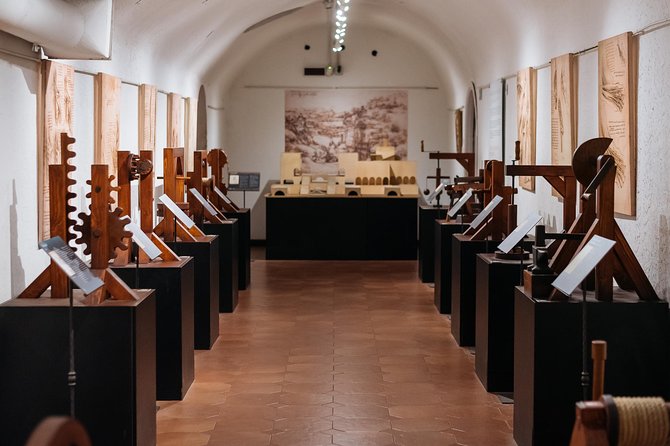
This is not a sprawling museum day. The experience is meant to be doable in about 1–2 hours, which is great if you’re touring Rome in high season or you’re traveling with kids who do best with clear time blocks.
When you enter, you’ll see exhibits arranged to build Leonardo’s story from ideas to execution. The pacing matters: you’re not just looking at static displays. You’re moving through different themes—machines, art, anatomy, and explanations—so the genius doesn’t feel random or overwhelming.
A practical tip: since the museum footprint is relatively small, you’ll get the most satisfaction if you treat it like a focused learning stop. Spend your time at the pieces that match your interests, then leave room to wander around Piazza del Popolo afterward while the museum memory is still fresh.
Leonardo’s inventions, built to make sense of the drawings
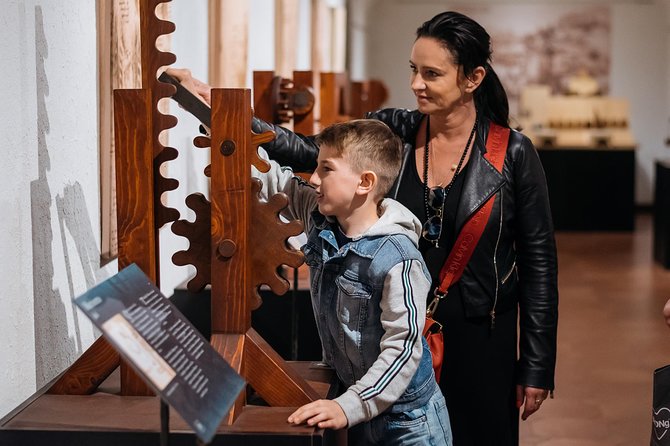
The standout strength here is how the museum takes Leonardo’s written and visual concepts and turns them into understandable objects. You’ll see machines crafted from Leonardo’s codices, along with studies that help explain where the ideas came from.
This is ideal if you like “show me the mechanism” learning. Leonardo wasn’t only an artist. He was an engineer in the broad sense: he sketched tools, imagined systems, and worked through the logic of how things could move and function. The museum’s recreations help you see the thought process behind the engineering, not just the final idea.
One of the themes you’ll likely notice is that the displays don’t only focus on famous inventions. They also cover Leonardo’s thinking in areas like anatomy and even military concepts, which surprises some people who expect only art and famous paintings.
A note on hands-on expectations
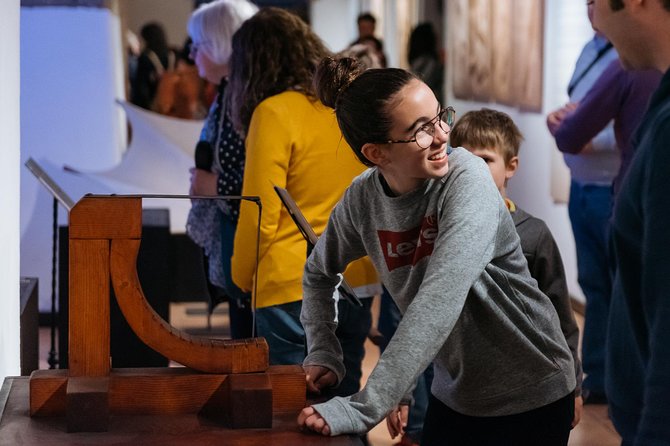
The museum is described as interactive, and there are interactive sections where you can manipulate some of Leonardo’s inventions. That said, do keep your expectations realistic. Some visitors found that “interactive” doesn’t mean constant hands-on action everywhere. You’ll get moments of participation, but you’re still in a museum, so there will be a lot of looking, reading, and watching screens too.


Art, anatomy, and multimedia stories that connect the dots
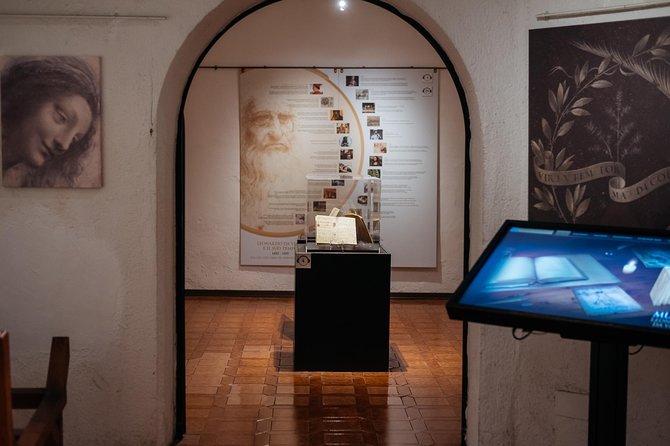
Leonardo’s power was that he didn’t separate disciplines. The museum reflects that by pairing:
- reproductions and studies tied to his most famous Renaissance art,
- anatomical sketches,
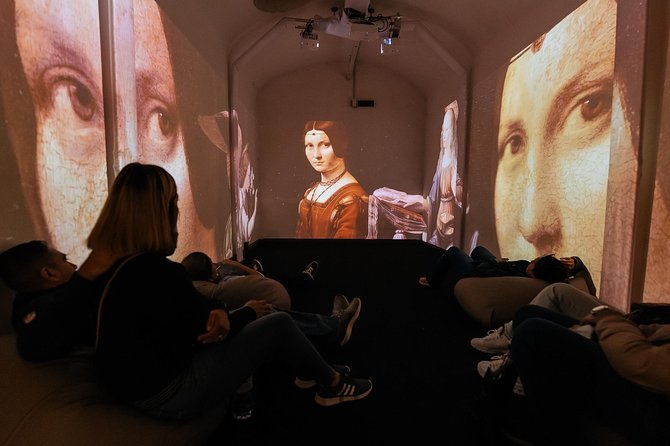
- and multimedia explanations that tell stories behind key works.
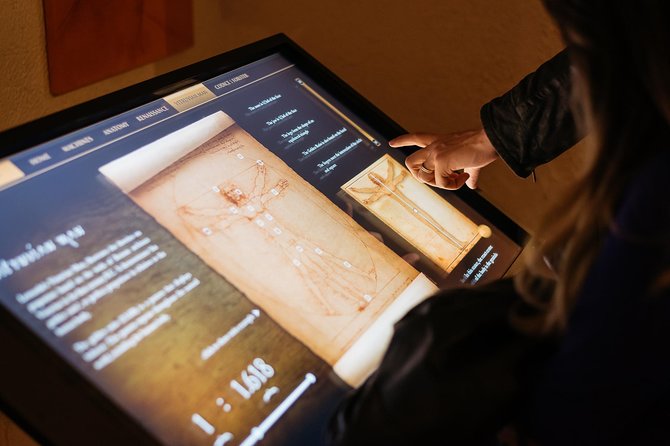
You’ll encounter multimedia animations that connect his ideas to famous references like The Last Supper, Vitruvian Man, and the Sforza equestrian sculpture. Even if those names are already familiar, the museum framing helps you see Leonardo’s creativity as a single system: observation, drawing, engineering, then invention.
Anatomy is a major theme. If you enjoy the science side of Renaissance art, this is one of the best parts of the museum. One of the more memorable exhibits for many visitors is the Vitruvian Man display, which reinforces how Leonardo used drawing to understand structure and proportion, not only to create pretty images.
Also, you may find a case with a few actual notebook pages. That moment changes the energy in the room because it reminds you the sketches are not just inspiration—they’re original records of Leonardo’s thinking.
Audio guide, VR, and screens: Spend time where it helps
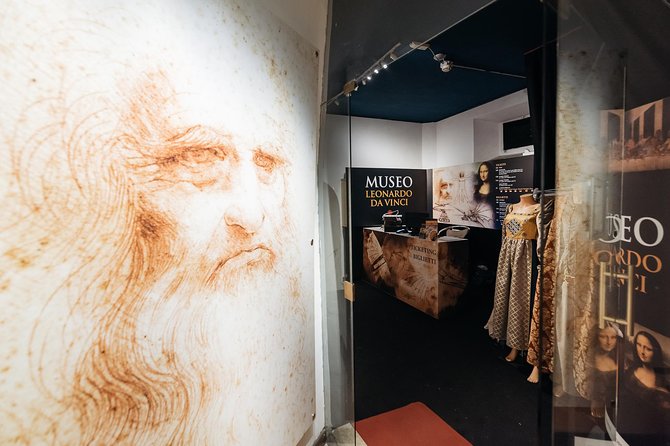
This visit is designed so you can go self-guided, but the audio guide is often the difference between a quick pass and a more satisfying learning loop.
The audio guide is optional and costs about €3 per person. If you choose not to buy it, you can still get value from the English descriptions and the multimedia elements. If you do buy it, focus on the parts you care about most: machines, anatomy, or art.
The VR flight: fun, but don’t let it steal your time
There is a VR experience mentioned by visitors as a virtual reality flight. People who like technology may enjoy it, but there are tradeoffs:
- it can be overpriced compared to the rest of the exhibits,
- and it may have lines since there’s only one VR setup.
So my advice is simple: if there’s no wait, go for it. If there is a line, skip it and spend that time with the models that you can revisit on your own pace.
Small friction points to consider
A few practical issues pop up in visitor notes:
- Some found the audio handset a bit annoying or wanted headphones instead.
- Others felt the exhibits weren’t perfectly ordered, so a self-guided visit can feel a little jumpy if you’re expecting a strict chronological route.
None of this ruins the experience, but it helps to know what kind of visitor style this suits. If you love wandering and picking favorites, you’ll be fine. If you want a museum that reads like a perfectly choreographed timeline, you might prefer the audio guide.
Family-friendly without turning into a kid circus
The museum is positioned as enjoyable for all ages, and it has features that work well for children: interactive sections, displays where kids can engage with concepts, and explanations that connect invention to art and the human body.
That said, it’s not an arcade. It’s still a learning museum, and the content will land best when kids can handle short bursts of information and are curious about how things work.
If you’re traveling with younger children, keep your expectations focused: think of it as a 60–90 minute “science and art sprint,” not a long sightseeing marathon.
Comfort and practical tip
One very practical note from visitor experience: the museum can feel warm, so bring water. Also, remember the big logistical point again—there are no restrooms in or around the museum—so plan your timing carefully.
Piazza del Popolo after the museum: Make it a half-day loop
One of the smartest parts of this museum is what it gives you afterward. Since you’re in the heart of Piazza del Popolo, leaving the museum doesn’t mean you have to “find the next thing” from scratch.
You can:
- walk around the square,
- browse nearby shops,
- and keep eating and people-watching like a normal Rome evening.
If you want a sit-down meal close by, one suggestion that came up is the restaurant at the Canova Hotel in Piazza del Popolo, with people praising the carbonara there. Even if you choose a different spot, the location makes it easy to keep things simple after your museum visit.
Who should book this Da Vinci museum (and who might skip it)
Book this if you want a short, high-value museum that connects Leonardo as an inventor and artist. It’s especially good for:
- people who like engineering ideas explained in plain terms,
- families who can handle a museum that’s part interactive and part explanatory,
- art-and-science lovers who don’t want to choose one side of Leonardo.
You might skip it if:
- you’re expecting a massive museum with lots of original artworks,
- you want long hours of galleries,
- or you strongly need restroom facilities on-site.
Also, some visitors note that there are replicas rather than original artwork, which matters if you’re collecting “original masterwork” stops. Here, the strength is in the concept-to-model storytelling.
So should you book it?
Yes, I think this is a smart booking choice if you want a focused Leonardo stop with pre-booked admission and a visit that won’t eat your whole day. The price is reasonable for a central Rome museum experience, and the exhibits are built to help you understand Leonardo’s thinking rather than just admire names on labels.
If you’re in the Piazza del Popolo area anyway, it’s an easy add. Just plan around the lack of restrooms, and be ready for a museum that’s compact but thoughtful.
FAQ
Where is the Museo Leonardo da Vinci located?
It’s located inside Basilica Santa Maria del Popolo in Rome, near Piazza del Popolo.
How long should I plan for the visit?
Most visits run about 1 to 2 hours.
What’s included with the ticket price?
Your admission ticket to Museo Leonardo da Vinci is included.
Is an audio guide included?
No. The audio guide is available to purchase separately for about €3 per person.
Is the experience offered in English?
Yes, the tour/activity is offered in English.
Can you interact with the exhibits?
There are interactive sections, including life-size machine recreations that visitors can manipulate, plus screens and other multimedia elements.
Are there restrooms at the museum?
According to visitor notes, there are no restroom facilities in or around the museum. Plan to use facilities before you arrive.
Is this museum good for kids and families?
It’s described as suitable for visitors of all ages, and visitors specifically mention it as a fun, educational place for kids who enjoy science and art.
Are service animals allowed?
Yes, service animals are allowed.
What is the cancellation window?
You can cancel for a full refund up to 24 hours before the experience start time, and cancellation within 24 hours is not refunded.