REVIEW · CANCUN
Cancun: Musa Underwater Museum & Reef Discover Scuba Diving
Book on GetYourGuide →Operated by SCUBA & ADVENTOURS · Bookable on GetYourGuide
Some places feel like a movie scene underwater. This one pairs MUSA’s sculptures with a reef outing, guided for first-time scuba learners. I like that the day is structured around safety and skill-building, not just getting you in the water. One thing to consider: you must know how to swim, and your group depends on conditions since weather can cancel the trip.
What makes this experience work for beginners is the ramp-up. You get a real safety briefing, plus theoretical and pool skills work before you spend time underwater, with instructors like Rene and Ian being specifically praised for patience and calm coaching. The underwater part is also thoughtfully planned: you see the MUSA art installations and then shift to marine life on the reef, with guides pointing out animals as you go. The only drawback I’d flag is cost for optional extras like photos or additional video, which can add up.
If you’re coming to Cancun for one memorable water day that’s equal parts art and marine biology class (with good odds of seeing turtles and rays), this is a strong pick. Just be honest about your comfort level in open water and your swim ability.
In This Review
- Quick hits
- MUSA sculptures: modern art you can swim alongside
- Aquafun Marina morning: how the day is paced
- 105-minute safety briefing: where first-timers get real confidence
- Pool training: the part you feel grateful for later
- The two underwater sessions: MUSA first, then reef life
- What you might see: turtles, rays, eels, and colorful fish
- Gear and included fees: where your money actually goes
- Price and logistics: the practical trade-offs
- Who should choose this program (and who should skip)
- A note on depth, comfort, and flying plans
- Tips to make your day go smoothly
- Should you book this MUSA + reef scuba program?
- FAQ
- How long is the experience?
- Where do I meet the group?
- What time does the tour run?
- How deep will we go?
- Is it for beginners?
- Do I need to know how to swim?
- What ages can participate?
- Are there health conditions that disqualify you?
- What is included in the price, and what costs extra?
- Is there a refund if bad weather cancels the trip?
Quick hits
- Safety-first training with a long briefing and pool practice before you go in
- MUSA underwater sculptures plus a second reef session for more than just art
- Beginner-friendly coaching highlighted by instructors like Rene and Ian
- Small group vibe and close supervision for new equipment users
- Value math: gear, guides, conservation fees, and two underwater sessions are included
MUSA sculptures: modern art you can swim alongside
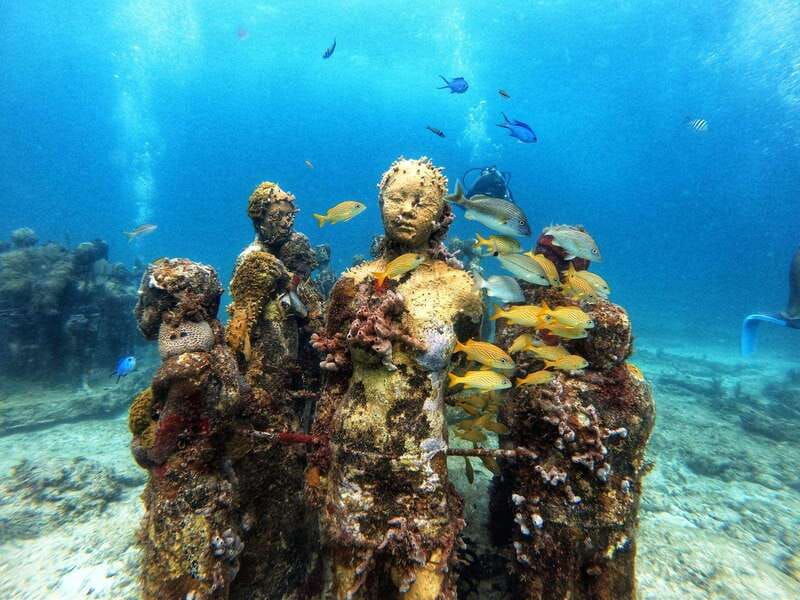
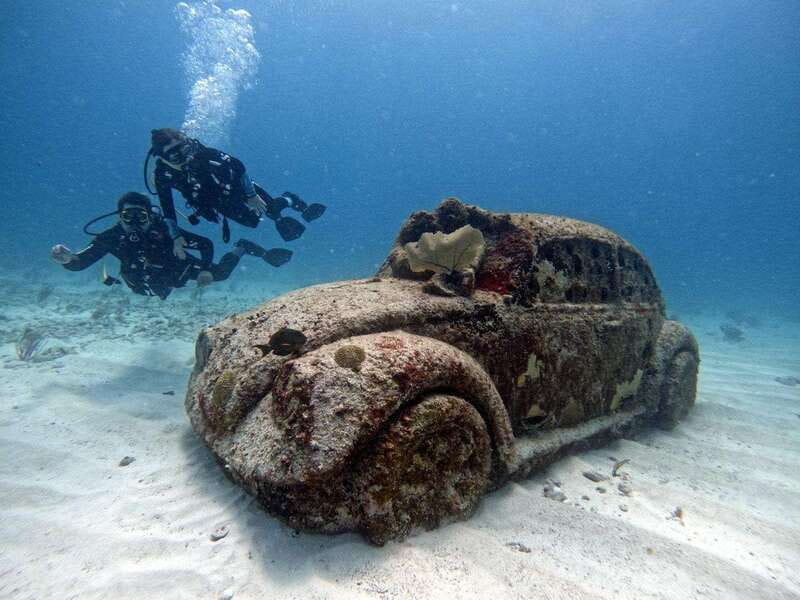
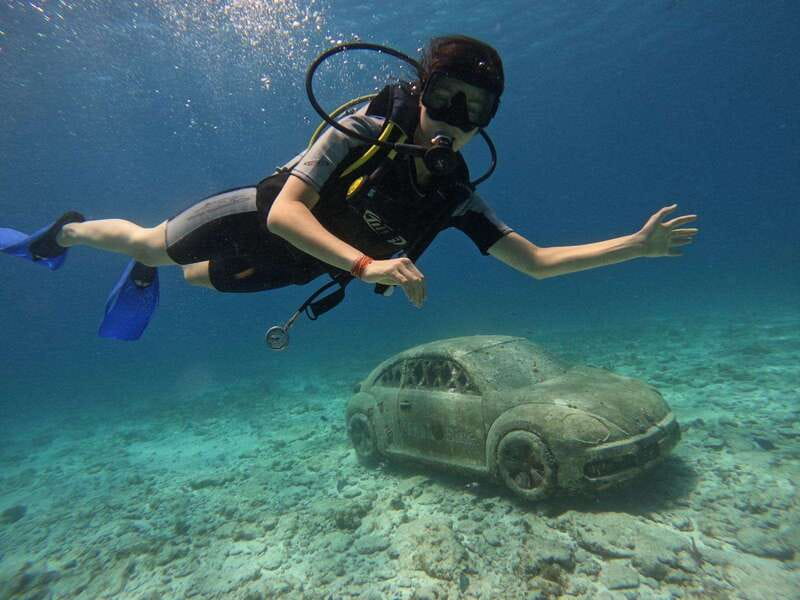
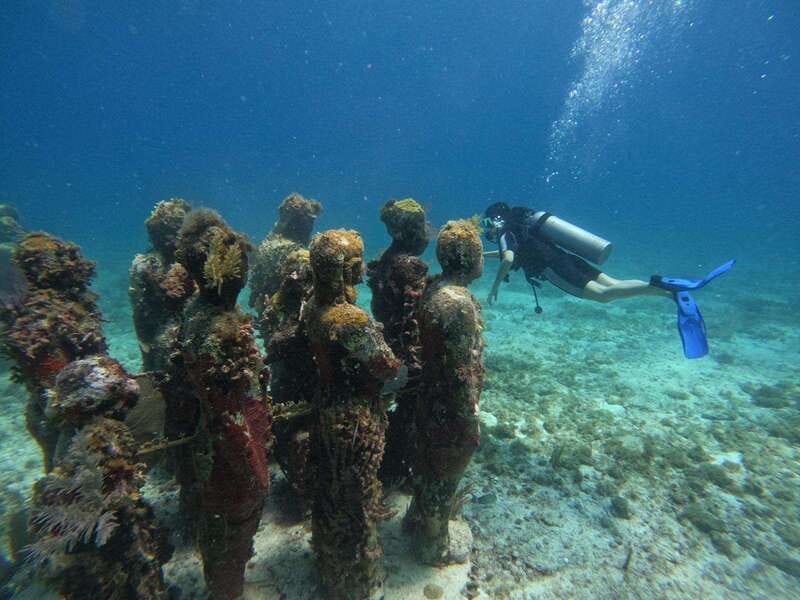
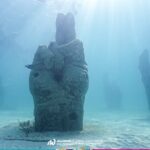
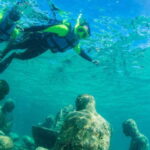
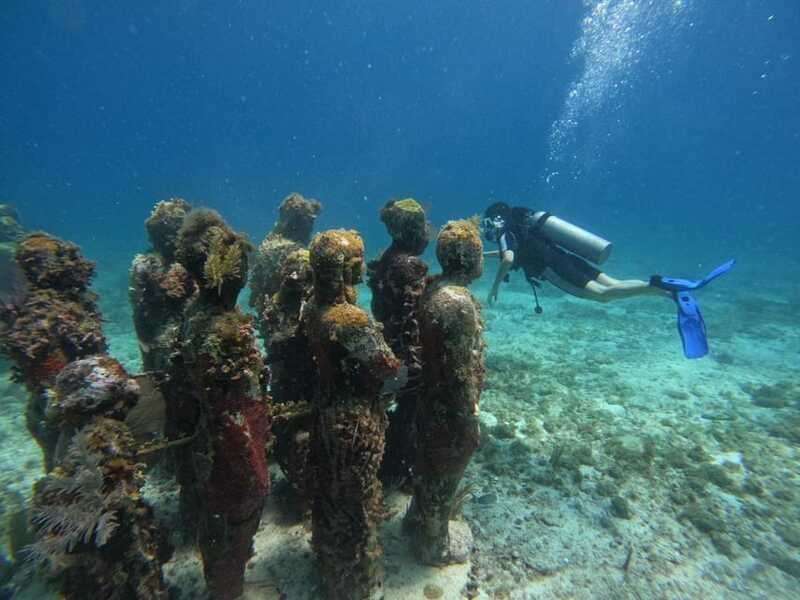
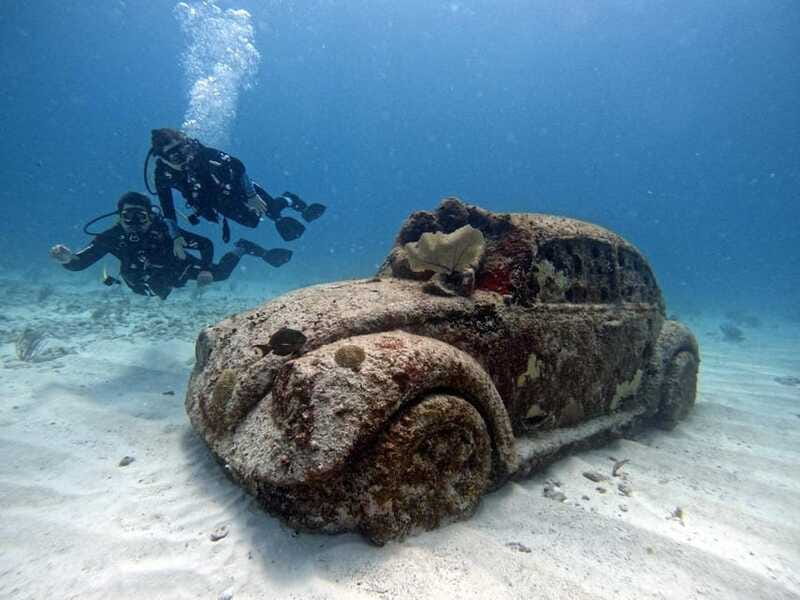
The MUSA Underwater Museum is the main reason people plan a half-day around it. Instead of looking at fish from the surface, you move through a gallery of installations placed on the seabed. It’s a strange feeling in a good way: your brain expects a museum hallway, then the hallway becomes a reef-like environment.
I love how this turns a beginner scuba day into more than a checklist. You’re not only learning buoyancy and basic breathing; you’re also surrounded by recognizable shapes, textures, and forms. That makes the learning curve easier because you have something to focus on besides equipment.
And because it’s an actual underwater museum, you also get a different kind of marine-life experience. You can see animals using the structures for cover and feeding. That often leads to those classic sightings people come for—turtles, rays, and eels—without you needing advanced skills.
You can also read our reviews of more museum experiences in Cancun
Aquafun Marina morning: how the day is paced
Your morning starts at Aquafun Marina, where the dive desk is near the dock. Then the schedule builds in buffer time so you’re not rushed from check-in straight into the water.
You check in at 8:00 AM, with boat departure at 9:30 AM. That gap matters. It gives you time to get fitted with gear, ask questions, and mentally switch from Cancun beach mode to scuba learning mode.
Then you head out on a speedboat for about 30 minutes. For me, this is a good sign of a well-run operation: the travel time is long enough to reach the dive area, but short enough that first-timers aren’t spending the entire morning seasick and stressed.
105-minute safety briefing: where first-timers get real confidence
The biggest difference between an okay scuba day and a great one is how the briefing is handled. Here, you get an extended safety briefing at the visitor center—listed at 105 minutes. That’s not “watch a video and go.” It’s time for people to understand equipment, rules, and what to do if something feels off.
This is also where the instructors set expectations about depth and comfort. The tour caps your experience at a maximum depth of 33 feet (10 meters), which keeps it firmly in beginner territory. You get a defined ceiling, not a mystery.
One practical note: the program requires you to rest between 18 and 24 hours after diving before getting on a plane. If you’re flying the same day back home, double-check your itinerary first. This one detail can save you from scrambling on travel day.
Pool training: the part you feel grateful for later
Before you go underwater, you’ll do theoretical class and pool training. Even if you’re a confident swimmer, this matters because scuba gear changes how you move, breathe, and stay balanced.
I like that the training is built into the tour—so you’re not hunting for a separate course. You’re learning the basics in a controlled setting with instructors committed to keeping you safe.
From the feedback, instructors such as Rene are praised for taking extra time with nervous first-timers. That shows the operation isn’t just about logistics; it’s about teaching. When your brain is calm, your body learns faster.
The two underwater sessions: MUSA first, then reef life
Your total time in the water is about 3 hours, which is where the day’s big moments happen. The experience includes two underwater sessions: one at MUSA and another around the reef.
Here’s why that order works. MUSA gives you an immediate visual payoff. You can enjoy the art installations while you’re still getting used to buoyancy and basic underwater movement. Then the reef portion shifts the focus to wildlife behavior—so you’re not only watching sculptures, you’re also watching animals do what they do.
Both sessions include equipment and a certified guide, so you’re not managing your whole day alone underwater. For first-time scuba learners, this is the difference between trying to interpret the ocean while also fighting nerves—and actually learning.
Also, you’ll spend time learning to identify what you’re seeing. Guides will help you recognize marine life, which makes your photos and memories more meaningful later.

What you might see: turtles, rays, eels, and colorful fish
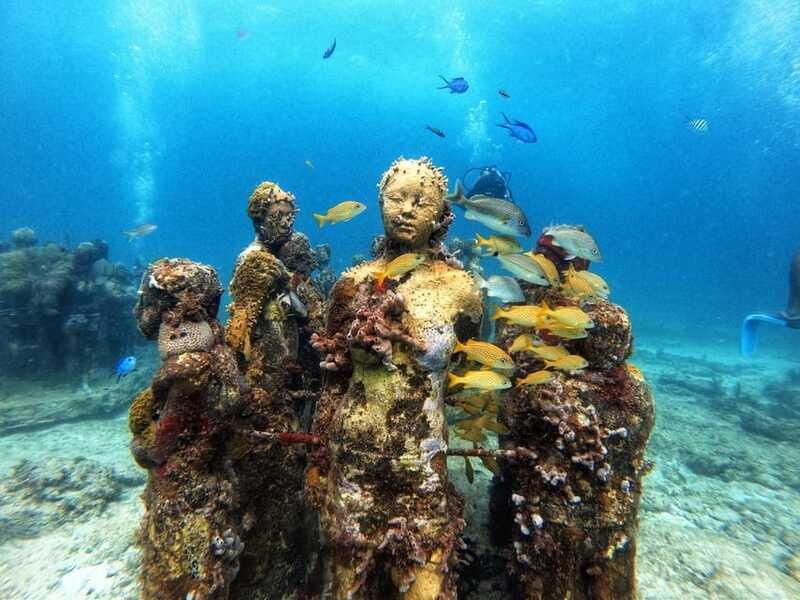
This is a Caribbean area with a good chance of classic sightings. The highlights specifically call out colorful fish, rays, sea turtles, eels, and other aquatic species. The reef session especially is where you tend to notice more movement and hunting behavior.
The best part is the guided identification. When an instructor points out a species and explains what to look for, you start noticing details you’d miss on your own. You’ll stop seeing the ocean as a single view and start seeing it as layers: the structure (MUSA and reef), the swimmers, and the occasional surprises.
And it’s not only the animals. The MUSA structures themselves act like habitat. So you get the feeling you’re exploring an environment that supports marine life, not just viewing it.
Gear and included fees: where your money actually goes
The price listed is $195 per person, and the tour includes a lot of what usually becomes add-on cost elsewhere. You get:
- All dive gear
- A certified guide
- Conservation and dock fee
- Theoretical class plus pool training
- Two underwater sessions
- Drinking water on board
That’s what I mean by value. You’re paying for instruction time, equipment, and the operational costs that keep the day running. You’re not just paying for a boat ride and a quick start.
What’s not included: photos and videos. Those are available, and feedback suggests they can be pricey. You might also see optional video capture offered by some instructors. In one case, an instructor named Ian brought a GoPro for extra footage with a small additional charge, which can be worth it if you want a keepsake without editing your own clips later.
If you want the best cost control, decide ahead of time whether you want photos. If you think you’ll be tempted at the end, set a budget now.
Price and logistics: the practical trade-offs
For a beginner program, the $195 rate makes sense because it includes training and gear, not just the underwater portion. Still, the schedule isn’t designed for a quick in-and-out.
You’ll be out from roughly 8:00 AM check-in until returning to the dock around 1:00 PM. That means you should plan your Cancun day around it. If you’re the type who wants to eat, shop, swim, and nap between activities, this still can work—but you’ll want to keep evening plans flexible.
There’s also a hard limit on snorkeling-style sun habits. The tour says no sunscreen, and it also bans alcohol and drugs. That’s more about water safety and reef protection than inconvenience, so pack accordingly and plan to use reef-safe practices before you meet the group.
Who should choose this program (and who should skip)
This is built for beginners / first-time scuba learners. The training focus, equipment support, and capped depth all point toward a learning-first experience.
You must be able to swim. And you need to fit within the age window: children must be at least 10 years old, and the maximum age is 65 years old.
It’s not suitable for several categories listed clearly, including:
- Pregnant women
- People with asthma, high blood pressure, heart or brain problems, lung lesions, diabetes, epilepsy
- Anyone with surgery within the past year unless you bring a medical authorization signed by a physician who specializes in your condition
- People with respiratory issues
- People over 65
- Non-swimmers
If any of those apply, don’t gamble with it. The rules are there for a reason, and an authorization process is better started early rather than at the last moment.
A note on depth, comfort, and flying plans
The maximum depth is 33 feet (10 meters). For many beginners, that depth is manageable because it stays within the lower range where instruction and breathing control feel steadier.
But your comfort still matters. The tour emphasizes personalized guidance and close supervision, which is exactly what you want when your brain is learning how to stay calm while wearing gear.
Also, remember the flight timing rule: rest 18 to 24 hours after diving before flying. If you have a late flight out of Cancun, it might still be okay—but check your exact schedule so you don’t end up delaying travel.
Tips to make your day go smoothly
This kind of day rewards preparation. Here are practical steps that match the tour’s rules and beginner focus.
First, bring the swim basics you’ll need and respect the no sunscreen rule. If you use sunscreen at all, plan for it before you meet the group and follow what your operator allows.
Second, be honest about nerves. Several instructors are praised for extra time in the pool and patient coaching, like Rene for first-timers who feel nervous. If you’re anxious, say so early. You’ll usually get more time on technique and more reassurance.
Third, manage your expectations about photos. If you want video or high-quality shots, ask what options exist and whether your instructor can capture extra footage. It sounds like different instructors offer different approaches, and that can affect cost.
Finally, eat and hydrate smartly. The tour includes drinking water, but you’re still traveling, suiting up, and out in the sun. A light breakfast is usually a better move than a heavy meal right before going out on the boat.
Should you book this MUSA + reef scuba program?
Book it if:
- You want a beginner-friendly scuba experience with training built in
- You’re drawn to the unusual mix of underwater art and real marine life
- You prefer an operation that emphasizes safety and calm instruction, with instructors like Ian and Rene specifically praised for making first-timers comfortable
Skip it or think twice if:
- You don’t swim confidently
- You’re in any of the categories the tour lists as not allowed (respiratory, heart, recent surgery, and similar issues)
- You’re very sensitive to schedule constraints, since the day is about five hours and returns by early afternoon
If you fit the requirements, this is one of the better ways to spend your Cancun time. You get structured learning, a museum-like underwater environment, and a reef experience designed to keep your eyes on marine life—not just on your gear.
FAQ
How long is the experience?
The total duration is listed at 5 hours.
Where do I meet the group?
You meet at Aquafun Marina. The dive desk is in the area near the dock.
What time does the tour run?
Check-in is at 8:00 AM, the boat departs at 9:30 AM, and you return to the dock at around 1:00 PM.
How deep will we go?
The maximum depth is listed as 33 feet (10 meters).
Is it for beginners?
Yes. It includes theoretical class plus pool training, with a beginner-focused safety briefing and personalized guidance.
Do I need to know how to swim?
Yes. You must know how to swim for this activity.
What ages can participate?
Children must be at least 10 years old, and the maximum age listed is 65 years old.
Are there health conditions that disqualify you?
Yes. The activity lists asthma, high blood pressure, heart or brain problems, lung lesions, diabetes, epilepsy, or surgery within the past year as not allowed unless you bring medical authorization signed by a physician who specializes in your disease.
What is included in the price, and what costs extra?
Included: theoretical class, pool training, two underwater sessions (MUSA and reef), all dive gear, certified guide, conservation and dock fee, and drinking water. Not included: photos and videos (available), and round-trip transportation from your accommodation (available).
Is there a refund if bad weather cancels the trip?
Yes. The activity includes a bad weather refund warranty, and you also have free cancellation up to 24 hours in advance for a full refund.