REVIEW · GIZA
All Inclusive – Giza Pyramids , Sphinx, Cairo Museum and Lunch
Book on Viator →Operated by Egypt Smile Touring · Bookable on Viator
The pyramids deserve an easier day plan. This private full-day Giza and Cairo route strings together the Giza Pyramids and Sphinx, the Egyptian Museum, and the Khan el-Khalili souks with pickup and smooth, timed stops in an air-conditioned vehicle.
I love the included camel ride and how the Egyptologist guide turns fast stops into clear, story-driven viewpoints. I also like that lunch is handled for you at Abou Tarek, so the day doesn’t derail by 2 p.m. One consideration: it’s a tight schedule—about 30 minutes at each pyramid stop and just 1 hour in the museum—plus extra fees can come up if you want to go inside certain areas.
In This Review
- Key highlights you’ll feel right away
- A one-day Giza and Cairo plan that doesn’t waste your daylight
- Pickup, the Cairo leg, and why air-conditioning matters
- Khafre’s Pyramid: a 30-minute stop with unusually specific drama
- The Great Pyramid of Cheops: when scale turns into math
- Menkaure and the Great Sphinx: two different kinds of wow
- Egyptian Museum (Cairo): the best use of an hour
- Abou Tarek lunch and the value of not hunting for food
- Khan el-Khalili souks: browse with time limits (on purpose)
- What you’re paying for: why $25 can be a smart deal
- Guides that make the day feel smooth (and easy to follow)
- Tips to get the most from the fast pace
- Should you book this all-inclusive Giza and Cairo day tour?
- FAQ
- How long is the tour?
- What’s included in the all-inclusive package?
- Is a camel ride included?
- What entrance fees are not included?
- Do I need a passport for this tour?
- Is it only for my group?
Key highlights you’ll feel right away
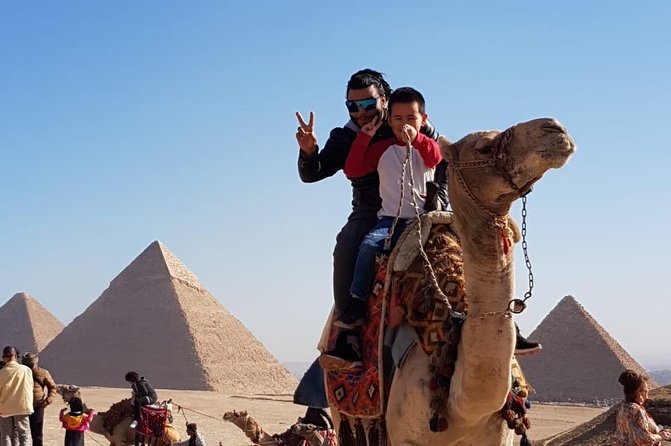
- Camel ride around the Pyramids area without you having to organize it
- Egyptologist guidance that gives meaning to what you’re actually seeing
- Abou Tarek lunch built in, with Egyptian koshary at a well-known spot
- Door-to-door air-conditioned transport to cut Cairo/traffic stress
- One-day hit list: Giza highlights + Egyptian Museum + Khan el-Khalili souks
A one-day Giza and Cairo plan that doesn’t waste your daylight
Cairo and Giza can swallow a lot of time if you try to piece everything together yourself. You end up negotiating schedules, waiting on tickets, or losing half your morning to back-and-forth travel. This tour is designed to be a full-day shortcut: you get an air-conditioned vehicle, timed stops, and a guide who keeps the day moving.
It runs about 7 to 8 hours, which is about right for a “first time in Egypt” day where you want the big photos and some context. The tour is also described as private, meaning it’s only your group, not a free-for-all with random additions. You’ll even have a mobile ticket, which is useful when you’re moving through multiple entry points.
The real value here is not just comfort. It’s mental comfort. When you don’t have to map the route, figure out what to skip, or chase tickets, you can actually look at the monuments—rather than just speed-scroll in your mind.
You can also read our reviews of more museum experiences in Giza

Pickup, the Cairo leg, and why air-conditioning matters
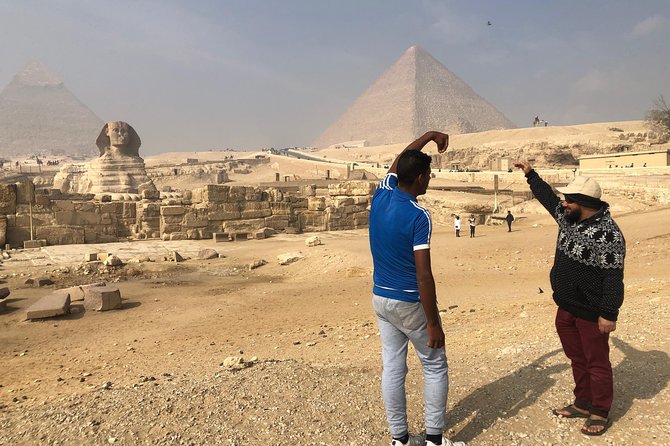
The day starts with pickup offered (door-to-door style), plus transport by air-conditioned vehicle. In Cairo, that’s not a luxury. It’s how you keep your energy for the sights instead of spending the day cooling off in line.
The route also includes Tahrir Square as part of the Cairo portion. Even if you don’t stay there long, it helps you understand you’re in the center of modern Cairo while your day heads toward ancient Giza. You’re not just “going to pyramids.” You’re connecting the city’s present to the landscape that sits just outside it.
You can think of this as a guided pacing plan. Your vehicle moves you between major stops; your guide handles the story; you handle the camera, walking, and questions.
Khafre’s Pyramid: a 30-minute stop with unusually specific drama
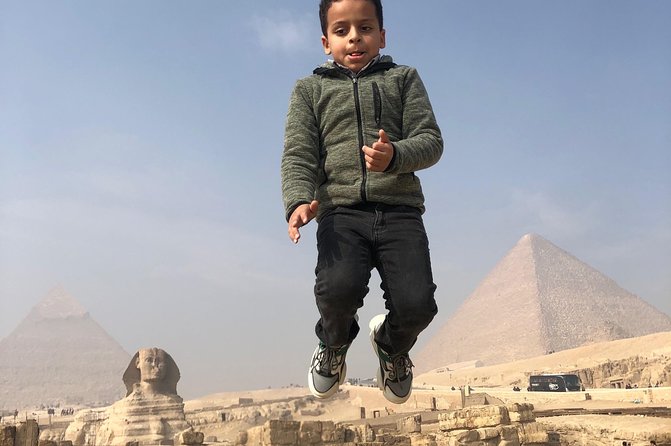
Khafre’s Pyramid is your first Giza stop. The tour keeps it to about 30 minutes, which is just enough time to get your bearings on the plateau and hear the backstory without being stuck in one spot forever.
Here’s the kind of detail this stop is built around: the pyramid was likely opened and robbed during the First Intermediate Period. Later, during the Nineteenth Dynasty, an overseer of temple construction took casing stones on Ramesses II’s orders to build a temple in Heliopolis.
That’s a lot of history for a short visit, and it changes the way you look. Instead of seeing a pyramid as a static monument, you start noticing it as material that people used, reused, and transported. You’ll see the structure—but you’ll also “feel” how long it has been involved in human plans.
If you want more time for photos from multiple angles, you might feel a little rushed. But if your goal is to hit the main Giza landmarks in one day, this timing makes sense.
The Great Pyramid of Cheops: when scale turns into math
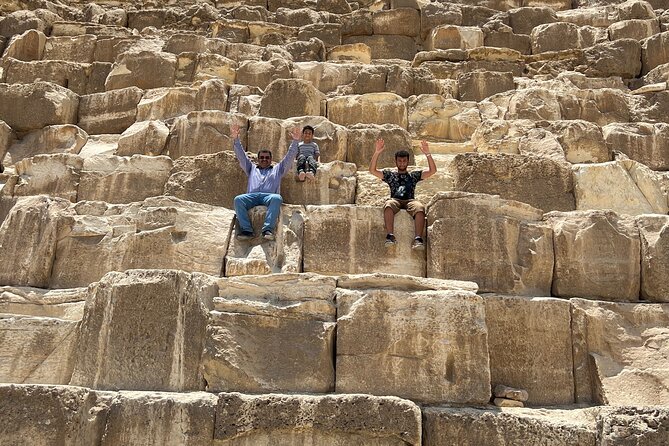
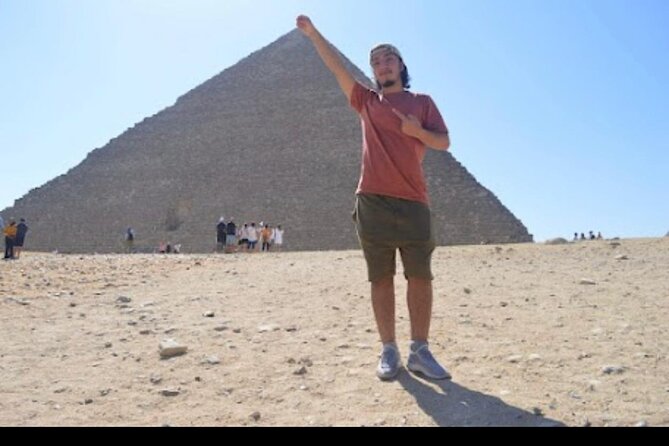
Next is the Great Pyramid of Cheops (Khufu), also with about 30 minutes. This is the one most people dream about. The trick is not letting the visit turn into a blur of “I was there” photos.
This tour gives you a scale-heavy explanation to anchor your imagination. The pyramid was built by quarrying an estimated 2.3 million large blocks, totaling around 6 million tonnes of stone. You also learn that the stones are not uniform in size or shape, and many are only roughly dressed.
That matters because it makes the pyramid feel less like a perfect machine and more like a giant construction effort done with real labor, real rough edges, and serious limitations. It’s not just awe—it’s understanding.
Practical note: since the visit is time-boxed, focus on getting at least one good wide shot and one close detail shot where you can see stone texture. Your guide’s context will make those details more meaningful, even when you’re moving quickly.
Menkaure and the Great Sphinx: two different kinds of wow
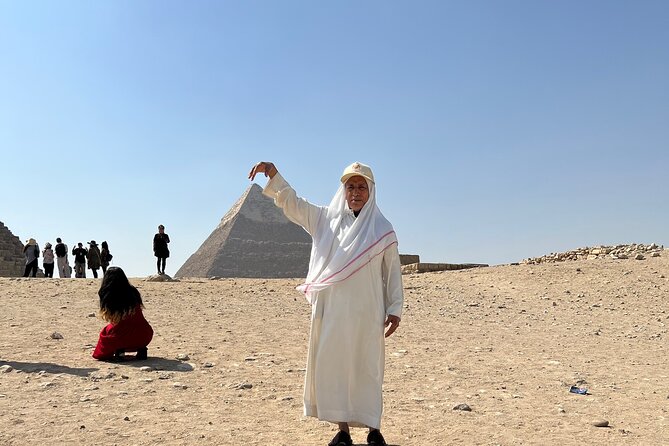
After Khufu, you shift to the Pyramid of Menkaure (about 30 minutes). It’s the smallest of the three main pyramids in the Giza complex. Even in a short stop, that helps you appreciate the “family resemblance” on the plateau—then notice what’s different.
The tour frames Menkaure’s pyramid as the likely tomb for the Fourth Dynasty Pharaoh Menkaure. Again, the time is short, but the message is clear: this isn’t random stone. It’s a designed burial space for a specific ruler and dynasty.
Then comes the Great Sphinx, with another 30 minutes. The Sphinx is described as a limestone statue of a reclining creature: a mythical creature with a human head and a lion’s body. That image is so iconic that you may think you already know it. But once you’re standing there, it hits differently—especially when your guide ties the form to the broader idea of symbolic power in Egyptian culture.
The main tradeoff is that both pyramid stops and the Sphinx stop are short. You’ll want to be ready to look fast. Comfortable shoes and quick photo decisions help a lot here.
A few more Giza tours and experiences worth a look
Egyptian Museum (Cairo): the best use of an hour
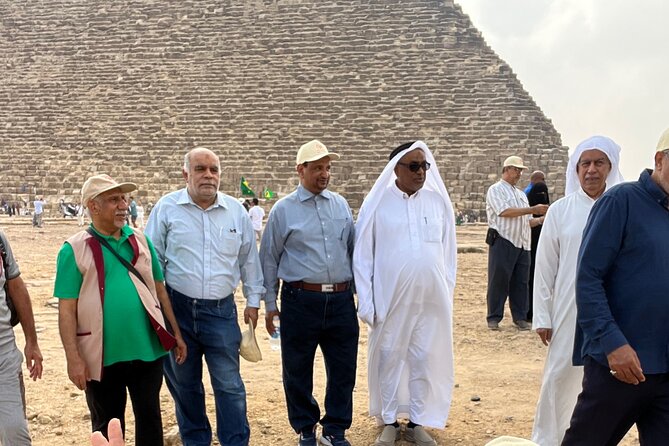
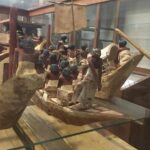
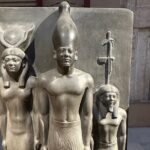
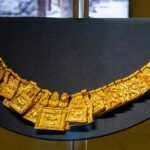
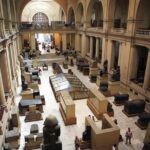
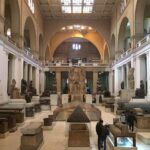
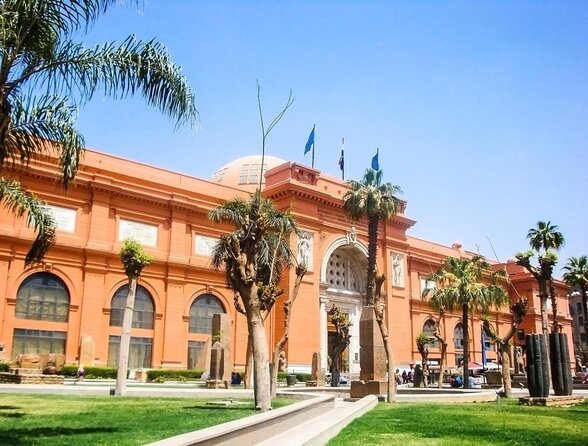
The Egyptian Museum stop is about 1 hour, with admission ticket included. The museum is described as the oldest archaeological museum in the Middle East and as housing the largest collection of Pharaonic antiquities in the world.
One hour doesn’t sound long, and it isn’t. But for a first-time, full-day route, it’s actually a smart compromise. You’re not trying to see everything. You’re trying to see enough to connect the dots between the monuments outside and the artifacts inside.
Here’s what you’ll want from the museum time: a guide who tells you what to prioritize so the visit doesn’t become “wandering and hoping.” With an Egyptologist, you’re more likely to get a clear storyline—where objects help explain what you saw at the pyramids and Sphinx.
The drawback is simple: if you love museums and want a slow, deep tour, you’ll probably wish you had a longer museum block. But for this all-in-one day, the museum stop is designed to inform, not exhaust.
Abou Tarek lunch and the value of not hunting for food
Lunch is included and takes about 1 hour. The tour says it’s an Egyptian-originated dish—koshary—served at the famous restaurant Abou Tarek. It’s positioned as an all-inclusive restaurant lunch, and that’s a big deal on a day that’s mostly outdoors and between major sites.
Why I like this setup for you: koshary-style meals are typically easy to eat while traveling, and the included lunch removes a whole category of stress. You don’t have to decide between searching for something safe, finding a place that works with the tour timing, or paying extra time and transport just to eat.
The only caution is that your day is packed. If you’re very sensitive to crowds or wait times at popular restaurants, you’ll still be eating in a scheduled window, so it helps—but it won’t magically eliminate peak-hour pressure in a popular Cairo spot.
Still, it’s a strong value choice for a $25 day that otherwise bundles multiple major entrances and professional guiding.
Khan el-Khalili souks: browse with time limits (on purpose)
Khan el-Khalili is your final major stop, about 1 hour, with entry included. This bazaar and souq sits in the historic center of Cairo and was established as a center trade in the Mamluk era. It’s also named for historic caravanserais in the area.
You’ll like Khan el-Khalili most if you treat it as a browsing sprint. One hour sounds short, but it’s enough to get a feel for the place, see the variety, and buy a few souvenirs without letting shopping swallow the whole day.
This is also where having the guide helps. You’re not spending your time figuring out what’s what—you’re spending it deciding what’s worth your attention. If you’re the kind of person who loves crafts, spices, textiles, or small gifts, you’ll probably leave with more than you came for.
The main consideration: it’s easy to get overstimulated in busy markets. With a set time and a plan to head back out, you can enjoy it instead of feeling trapped in “just one more alley.”
What you’re paying for: why $25 can be a smart deal
At $25 per person, this tour is priced like a budget-friendly way to see a lot. The real question is whether it’s “cheap” in a bad way—or cheap because someone is handling the logistics.
Here’s what’s included, based on the tour details:
- Lunch at a restaurant (Abou Tarek)
- Entrance fees for the listed stops
- A qualified Egyptologist guide
- Transport by air-conditioned vehicle
- Khan el-Khalili entry
- The timed circuit across the main Giza points
- A camel ride around the Pyramids of Giza (explicitly included)
That bundle is the value. You’re not paying separately for guide + transport + multiple admissions + lunch. In a city where that combo can add up fast, this price can feel surprisingly efficient.
What’s not included:
- Extra entrance fees if you want to go inside parts of the Giza complex (the tour notes extra entrance fees for interior of the pyramids)
- Tips for the tour guide are mentioned, especially in the context of Japanese and Chinese travelers
So my advice is simple: if you’re the type who wants to do optional interior access, set aside extra cash. If you’re happy with viewing the outside major structures and letting the guide do the heavy interpretation lift, this package can be a bargain.
Guides that make the day feel smooth (and easy to follow)
The biggest recurring strength in the day’s experience is the guide. Names show up in feedback like Taha Ahmed (often referenced for Japanese-language support), Taha, Mohamed, Mimo, and Abu Yaseen. A driver named Yasser also comes up.
What matters for you isn’t the name on the paper. It’s what those guides are repeatedly described doing:
- keeping the experience organized from start to finish
- answering questions in a friendly, direct way
- helping people stay on track even when timing gets messy
- adjusting communication when language needs change
One especially practical detail from feedback: when someone was running late, the team made an effort to find them at a hotel restaurant and waited for them to get coffee before heading out. That tells me the company isn’t just handing you a guide and walking away. They’re paying attention to the day’s flow.
If you book and you care about understanding what you’re looking at (not just standing in front of stones), you’ll appreciate this approach. An Egyptologist guide turns “30 minutes” into “I actually learned what I saw.”
Tips to get the most from the fast pace
This tour is built for limited time. That means you’ll get more out of it if you plan your own role in the day.
Here’s how I’d prep:
- Wear shoes you can walk in for long stretches. The Giza plateau and market areas add up.
- Have your questions ready for the Egyptologist. Ask for the one or two points you’re most curious about.
- For photos, decide before you go: one wide shot, one close detail, one for scale.
- Keep your expectations realistic on the museum. One hour is for highlights, not for finishing the whole collection.
Also, remember the tour is described as a private activity, so your group pace matters. If your group likes slower browsing, you may want to ask the guide how to prioritize—especially near Khan el-Khalili, where time is fixed.
Should you book this all-inclusive Giza and Cairo day tour?
I’d book this tour if:
- you want the main Giza sights plus Egyptian Museum and Khan el-Khalili in one day
- you’d rather spend your energy looking than handling tickets, timing, and transport
- you like the idea of an Egyptologist guide giving context during short stops
- you want lunch built in, at Abou Tarek, so your day stays on schedule
I’d be cautious if:
- you know you want lots of interior access in the Giza complex (the tour notes extra entrance fees for interiors)
- your ideal museum visit is slow and detailed rather than highlight-based
- your group has trouble keeping pace with a 7 to 8 hour plan
FAQ
How long is the tour?
The tour is listed as lasting about 7 to 8 hours.
What’s included in the all-inclusive package?
It includes lunch, entrance fees (for the included stops), a qualified Egyptologist guide, air-conditioned vehicle transport, and entry to Khan el-Khalili.
Is a camel ride included?
Yes. The tour includes a camel ride around the Pyramids of Giza.
What entrance fees are not included?
The tour notes extra entrance fees for the interior of the Giza pyramids.
Do I need a passport for this tour?
Yes. You’ll need the passport name, number, expiry, and country at booking, and you need a current valid passport on the day of travel.
Is it only for my group?
Yes. It’s described as a private tour/activity, so only your group participates.