REVIEW · BEIJING
Beijing Half Day: National Museum of China In-depth Tour with Subway Transfer
Book on Viator →Operated by Beijing Meitu Travel Agency Co., Ltd. · Bookable on Viator
One visit, and 5,000 years start talking. This half-day National Museum of China tour pairs an English guide with subway/taxi transfer and pre-booked tickets, so you can focus on the objects instead of ticket stress.
I especially love the clear highlight path through the big Ancient China galleries, where you’ll see standout works like the Si Mu Wu Ding and the jade dragon. I also like how the guide handles the real-world problem: the museum can be extremely crowded, and you still get context instead of just shoulder-to-shoulder viewing.
One drawback to plan for: the museum is massive. At about 4 hours, you’ll hit major stops, but it still feels like a curated sprint, not a full museum week.
In This Review
- Key things to know before you go
- The National Museum of China: why this half-day works
- Getting to the museum: hotel pickup and subway/taxi transfer
- Stop 1: Ancient China Exhibition Hall and the “big picture” treasures
- Stop 2: Ancient Buddha statues, including Song Dynasty Guan yin
- Crowds and pace: what your guide does when the museum is packed
- Price and value: $114 for a half-day, and what you get for it
- Who this tour is best for (and who should DIY)
- What to expect on the ground (timing, tickets, and your group)
- Should you book this National Museum half-day tour?
- FAQ
- What time does the guide meet me?
- How do we get from the hotel to the National Museum of China?
- How long is the tour?
- Are museum tickets included?
- What exhibitions will we see?
- Do I need to speak Chinese to enjoy the tour?
- Can I cancel for a refund?
Key things to know before you go

- Hotel pickup plus an English-speaking guide keeps the morning (or afternoon) simple and focused
- Subway or taxi transfer gets you to the museum without guesswork
- Ancient China Exhibition Hall highlights include major relics and big storylines from prehistory through dynasties and up to 1911
- Ancient Buddha Statue room includes a careful look at the Song Dynasty painted wooden Guan yin
- Ticket booking help is a big deal because dates can be hard to manage on your own
- Private group format means you don’t have to share the guide’s time with other groups
The National Museum of China: why this half-day works
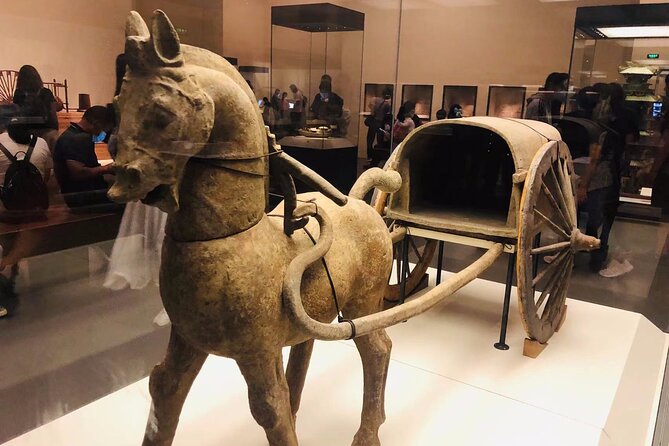
Beijing has museums that feel like warehouses of stuff. This one, if you go with a guide and a plan, feels like a storyline you can actually follow. You get a museum visit that’s built around understanding Chinese civilization across time, from prehistoric artifacts to later historical periods.
The museum’s scale is part of the appeal. The collection is huge, and the tour focuses you on the sections that best show the sweep of Chinese history. You’re not just looking at objects; you’re learning what to notice first.
You can also read our reviews of more museum experiences in Beijing
Getting to the museum: hotel pickup and subway/taxi transfer
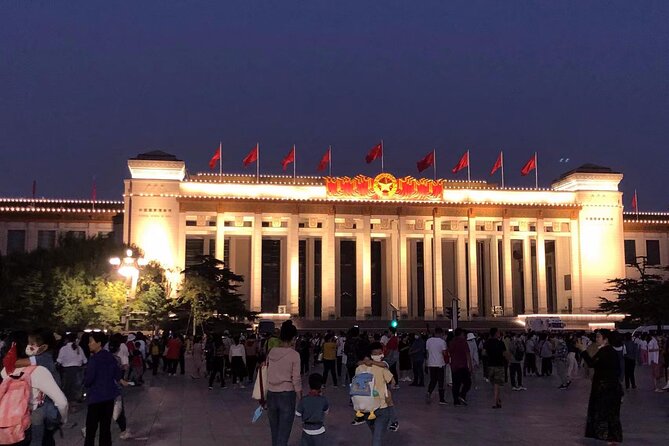
Your guide meets you at your hotel lobby at 8:30am or 1:00pm. Then you’ll travel to the museum by subway or taxi, depending on what makes sense for your group and the day. This matters in Beijing, because transfers can eat up the energy you’d rather spend inside.
You also get hotel pickup and a single-way taxi transfer included. That combination is useful if you’re not feeling confident with the transit system, or you want to arrive with your head clear and your camera ready.
Stop 1: Ancient China Exhibition Hall and the “big picture” treasures
This first part is where the tour earns its keep. You get about 2 hours in the Ancient China Exhibition Hall with guided stops through the key displays, which are designed to show how cultures and craftsmanship evolved over thousands of years.
You’ll see objects that feel both strange and familiar. Expect things like painted pottery jars tied to early unsolved mysteries, and the museum’s reputation-making jade dragon. There’s also mention of a “refrigerator” concept from about 2,000 years ago, which is the kind of detail that makes history click fast.
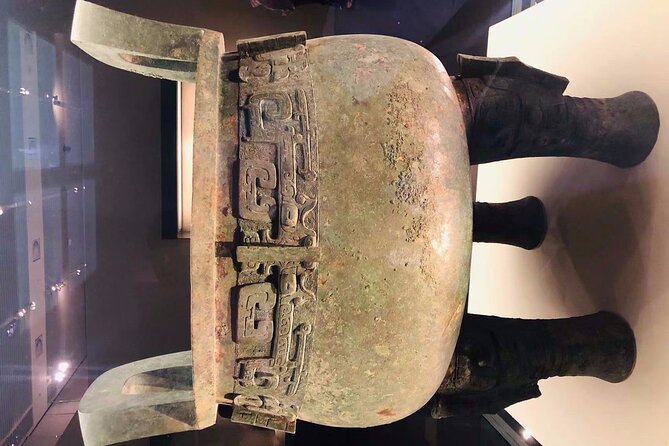
The guide also points you to major works that anchor the storyline. One of the most emphasized highlights is Si Mu Wu Ding, unearthed in 1939 from Henan province. This kind of specific origin information is what turns “cool bronze” into “oh, I see why this matters.”
Another standout is Siyang Fangzun, described with horn sheep imagery facing the four directions. Even if you don’t read every label, the explanation gives you a framework for what you’re looking at: symbols, motifs, and what that might say about the people who made them.
You’ll also hear about the Sanxingdui civilization. That stop is valuable because it connects different ancient cultures and reminds you that early China wasn’t one single, identical everything. It was regional, experimental, and full of local styles.
And the tour doesn’t stop at ancient prehistory. You also get guided coverage that reaches forward through later eras, including relics tied to the period up to 1911. That timeline jump helps you place the museum’s artifacts in the broader sweep of Chinese historical change.
Practical note: the museum can be extremely crowded. In that situation, the guide’s route planning matters. Your best benefit is not just what you see, but the order you see it in, and the way the guide helps you avoid spending your time stuck in lines or dead-end corridors.
Stop 2: Ancient Buddha statues, including Song Dynasty Guan yin
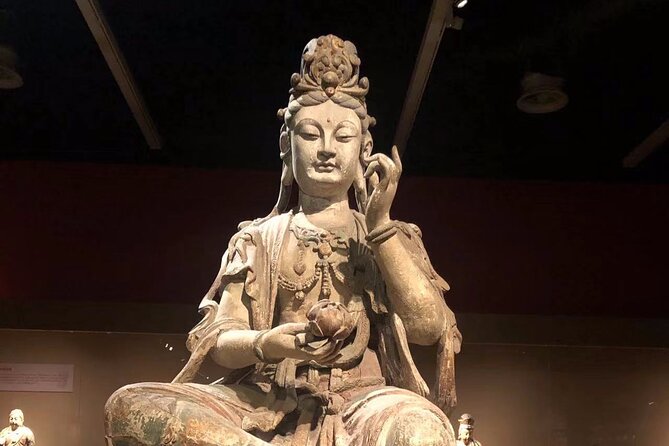
After the first gallery, you shift to the Ancient Buddha Statue exhibition room for about 1 hour. This part changes the mood. Instead of “ancient civilizations as objects,” it becomes “spiritual and artistic traditions expressed through sculpture and painting.”
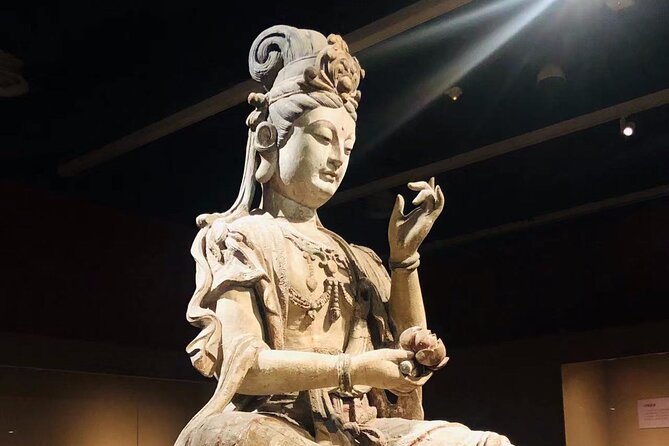
A key highlight here is the painted wooden statue of Guan yin from the Song Dynasty. One description compares its visual impact to the Mona Lisa idea: exquisite details and that calm, readable smile. Even if you’ve seen many Buddhist images before, this is the type of piece where the guide’s attention to materials and stylistic choices helps you see why it’s singled out.
This stop is also where you’ll likely feel the tour’s intelligence. If you only had time for one museum room, you’d miss the way the museum connects art with belief systems across time. This portion gives you a different lens on what “history” means in a museum like this.
You may also see other related displays in the same general visit window, such as a food culture exhibition. That kind of add-on is helpful because it broadens what you think the museum visit is “about.” Not everything is bronze, jade, or sculpture. Culture is also daily life, taste, and ritual.
Crowds and pace: what your guide does when the museum is packed
On a crowded day, a guided tour is basically a stress-management tool. People pack in, phones get raised, and your attention can scatter. A good guide keeps it tight.
The clearest theme from the tour experience is that the guides work around the crowd instead of fighting it. You get directed movement, smart pauses, and explanations that keep you from reading every label to understand what matters.
If your guide is strong—names you may hear associated with the tour include Mike, Cathy, Diana, William, and Herbie—you’ll notice a few things fast. English is clear, explanations connect objects to history, and the guide answers questions patiently rather than rushing you along.
You should also plan to stay flexible in your own pace. Even with guidance, the museum’s popularity can change the timing of what you can linger on. The benefit is you won’t lose the thread of the story.

Price and value: $114 for a half-day, and what you get for it
At $114 per person for about 4 hours, this is priced like a true guided experience, not just a museum ticket with a name tag. What makes it feel worth it is the bundle: English guide, hotel pickup, ticket booking, and transfer help.
The ticket part matters more than you might think. Getting tickets on your own can be tricky because the ticket system can open only a limited number of days ahead, and the in-site process can be difficult if you’re not reading Chinese comfortably. Booking through the agency reduces that last-minute scramble and gives you a plan that fits your trip.
You’re also paying for interpretation. In a museum this large, self-guided visits often turn into “I saw things” rather than “I understand what I saw.” Here, the tour’s focus is structured, with key relics and themes used to build your understanding quickly.
Does it cover everything in the museum? No. It’s a half-day. But it covers the kinds of highlights that make a first visit feel meaningful, not overwhelming.
Who this tour is best for (and who should DIY)
This tour is a great match if you want a smart first visit to the National Museum of China without spending your brain on navigation and ticket systems. It’s also ideal if you like history but don’t want to do the heavy work of translating every label and deciding where to go.
It’s especially helpful if you travel with limited time. A half-day is a realistic block for many itineraries, and you still get a real sense of the museum’s major storylines.
If you’re the type who wants to drift through every room at your own speed—take photos, read every placard, stay in front of the same statue for a long time—then you might feel limited. The museum is huge, and this tour intentionally selects the stops that fit within its time window.
Still, even for museum-lovers, guided context can be a win. You can come back later knowing what to look for.
What to expect on the ground (timing, tickets, and your group)
This is a private tour in the sense that it’s only your group participating, not random strangers crammed together from different schedules. That matters because the guide can pace to your comfort level and questions.
The schedule is anchored around the two meeting times: 8:30am or 1:00pm. The tour lasts about 4 hours, with the major visit split into 2 hours for the Ancient China exhibition and 1 hour for the Buddha statue room. The remaining time covers transit, orientation, and moving between sections.
Admission tickets are included, and your booking is handled for you. That reduces the most stressful part of the visit, especially if you’re trying to match your museum day to limited opening windows.
Should you book this National Museum half-day tour?
Yes, if you want a first Beijing museum visit that feels guided, organized, and actually explanatory. The combination of English guide + ticket booking + hotel pickup + transfer help is a practical one, especially if you’re visiting on a date when ticketing gets tight.
Book it if you care about major highlights like Si Mu Wu Ding, the jade dragon, and the Song Dynasty Guan yin statue, and you want the “why” behind them. You’ll get more out of the time because the tour is built around the museum’s strongest storytelling sections.
Skip (or consider a different format) if you’re planning a long museum day and you want total freedom. At about 4 hours, this is best thought of as a targeted “best of” visit, not an everything pass.
FAQ
What time does the guide meet me?
Your guide meets you in your hotel lobby at 8:30am or 1:00pm, depending on the tour you book.
How do we get from the hotel to the National Museum of China?
You’ll travel by subway or taxi with your guide. A single-way taxi transfer is included.
How long is the tour?
The tour runs for about 4 hours.
Are museum tickets included?
Yes. National museum tickets booking is included, along with admission tickets for the featured parts of the visit.
What exhibitions will we see?
You’ll visit the Ancient China Exhibition Hall and the Ancient Buddha Statue exhibition room. The tour also mentions related displays such as food culture.
Do I need to speak Chinese to enjoy the tour?
No. The tour includes a professional English-speaking guide, and the guide explains the exhibits during your visit.
Can I cancel for a refund?
Yes. You can cancel for a full refund up to 24 hours before the experience starts. If you cancel less than 24 hours before, the amount paid is not refunded.