REVIEW · VATICAN MUSEUMS
Vatican: Museums & Sistine Chapel Entrance Ticket
Book on GetYourGuide →Operated by Distributor: GetYourGuide Tours & Tickets GmbH · Bookable on GetYourGuide
The Vatican has a way of grabbing you fast. With skip-the-ticket-line entry, you get into the Vatican Museums on your chosen time and push right toward the Sistine Chapel. It’s one of those rare sightseeing plans where time saved really matters.
I especially like that you can explore at your own pace inside a museum this huge. And I like having an audio guide ready to pick up inside the Museums, which makes stops like the Greek Cross Gallery, the Raphael Rooms, and Michelangelo feel way less random.
One thing to plan around: this is a long, one-way walking route in a very crowded building. Even with fast entry, the Sistine Chapel can be loud and packed, and in early 2026 you may notice restoration scaffolding affecting views.
In This Review
- Key highlights worth planning around
- Price and logistics: what the $38 skip actually buys you
- Entering at Viale Vaticano: the moment you should be ready
- The museum route that makes the Vatican Museums feel doable
- Greek Cross Gallery: where the scale hits you
- Cabinet of the Masks and Sala degli Animali: quick surprises
- Upper Galleries and the Gallery of Maps: seeing how people pictured the world
- Raphael Rooms: the Renaissance surge
- Borgia Apartments: when art turns into atmosphere
- Sistine Chapel: how to see Michelangelo’s Creation of Adam without losing the moment
- Plan for crowd physics and choose where to pause
- Restoration starting Feb 1, 2026: what you should expect
- St. Peter’s Basilica: easy if it works, stressful if it doesn’t
- Tips that make the whole day work (instead of just surviving it)
- Go early if you can
- Budget enough time for a real visit
- Don’t start without using the restroom
- Wear walking-friendly shoes and expect stairs
- Expect signage challenges
- Who this ticket is best for
- Should you book this Vatican Museums and Sistine Chapel ticket?
- FAQ
- Does this ticket include access to the Sistine Chapel?
- Is an audio guide included?
- What about St. Peter’s Basilica—will I be able to go in?
- What should I bring for entry?
- Are there dress restrictions?
- What age is this suitable for?
Key highlights worth planning around
- GetYourGuide dedicated entrance at Viale Vaticano to avoid the worst ticketing line
- Audio guide pickup inside the Museums so you can start listening as soon as you want
- Greek Cross Gallery and carved sarcophagus displays that turn ancient Rome into something you can actually picture
- Raphael Rooms + Borgia Apartments for a shift from “big wow” art to stories of power and belief
- Sistine Chapel timing inside your visit so you can choose where to pause and sit
- Sistine Chapel restoration window (Feb 1, 2026 for 3 months) possible visual changes, but it stays open
Price and logistics: what the $38 skip actually buys you
At around $38 per person, you’re not just buying entry. You’re buying the chance to avoid the long ticket lines and move through security with your time slot ready. In a place like the Vatican, that time advantage is the whole point.
This ticket is self-paced. That sounds simple, but it changes how the day feels. Instead of rushing with a group, you can linger where your curiosity pulls you—then spend less time where you’d rather keep walking. The trade-off is that you’re doing the navigation and pacing yourself, which can be tricky in a maze of halls.
Also note what you’re not paying for. St. Peter’s Basilica ticket is not included (and access isn’t guaranteed), and the dome is not included. If St. Peter’s Basilica is a must for you, you’ll want to think of it as a hopeful bonus, not part of the guaranteed core plan.
A few more Vatican Museums tours and experiences worth a look
Entering at Viale Vaticano: the moment you should be ready
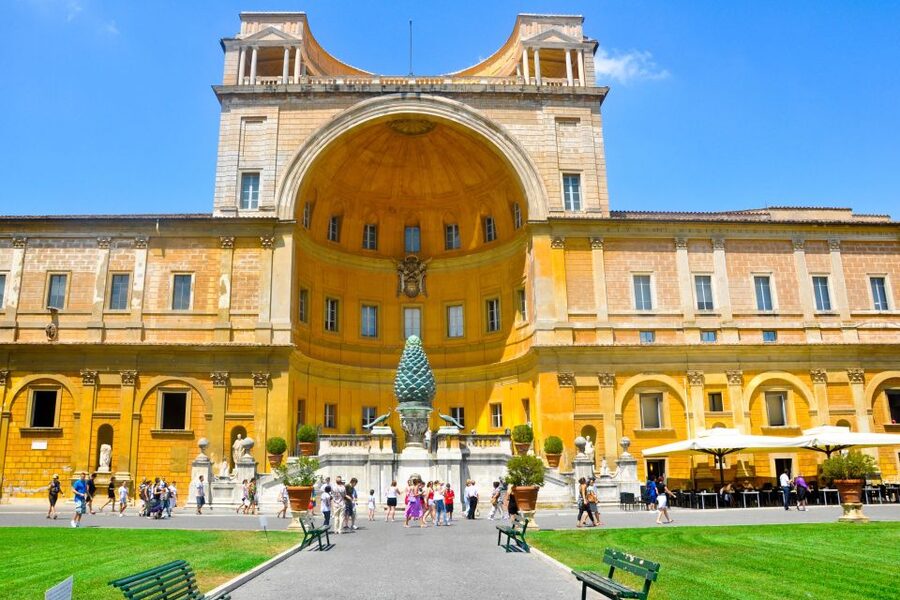
Your job on arrival is straightforward: go directly to the Vatican Museum entrance on Viale Vaticano using the GetYourGuide dedicated entrance. Show your ticket (paper or mobile voucher is accepted) to the security guards, then scan at CASSA ONLINE E GRUPPI after security.
The timing rule matters more than people expect: don’t arrive outside your assigned time slot. If you show up too early, you may get held; too late, and you risk losing your entry window.
The Vatican uses airport-style security. You can be through faster than the big public queues, but during peak season you might still face a security wait of 30+ minutes. My practical advice: treat the slot as the time you want to be scanning in, not the time you want to be standing around looking for the entrance.
The museum route that makes the Vatican Museums feel doable
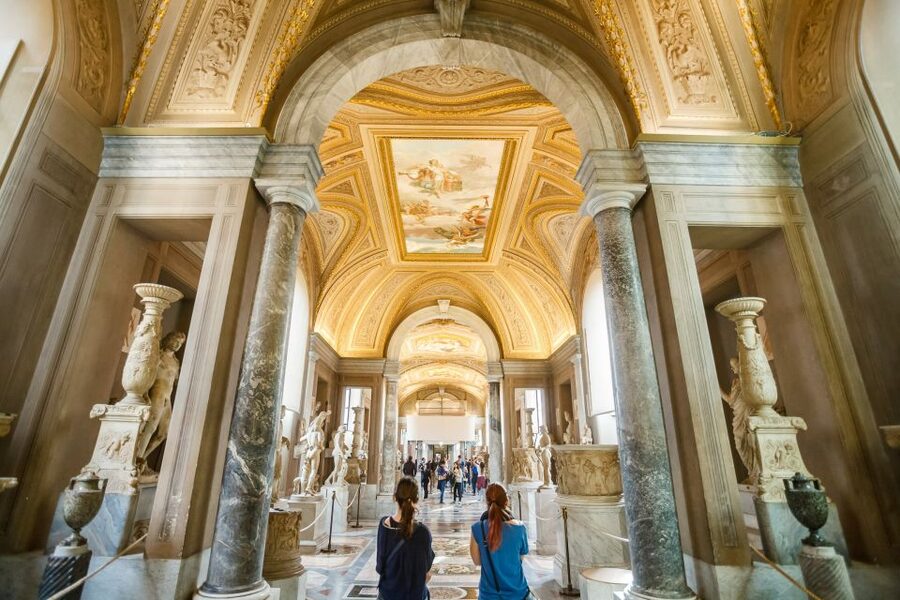
The Vatican Museums are massive, and the layout can make them feel endless. What helps is knowing the “shape” of the visit: ancient galleries and themed rooms, then Renaissance highlights, then the Sistine Chapel finale.
Greek Cross Gallery: where the scale hits you
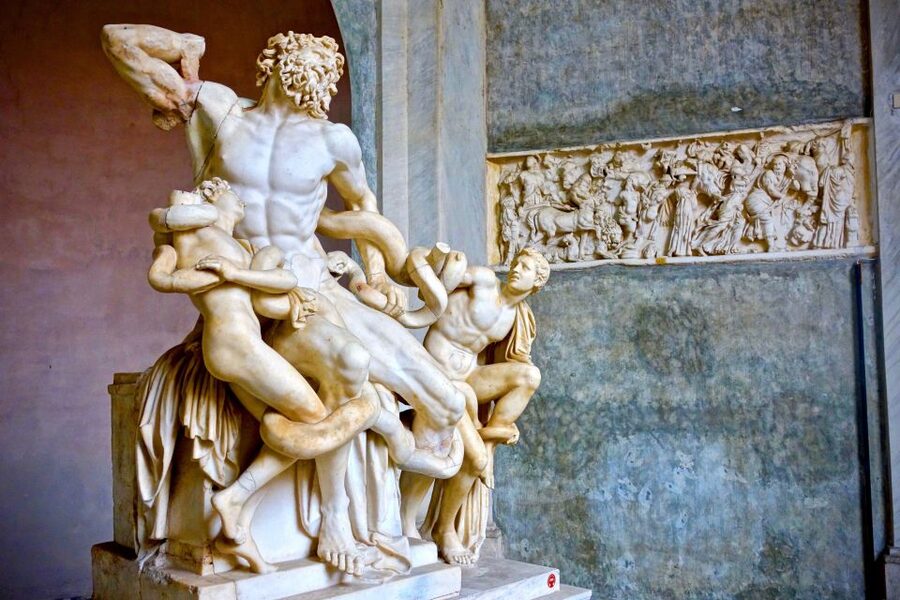
Start with the Greek Cross Gallery. It’s memorable because the display style makes ancient Rome feel intimate—Greek-cross shaped spaces that highlight sculpture and funerary art. The sarcophagi here are so elaborately carved that they stop being “objects behind glass” and start feeling like real history.
This is one of the best places to slow down, even if your feet want to keep going. If you’re the type who can’t help reading, you’ll love how this gallery turns mythology and power into physical detail. If you skim, you’ll still get the emotional impact: it’s hard not to look up when the craftsmanship is that intense.
Cabinet of the Masks and Sala degli Animali: quick surprises
Next, you’ll pass through smaller themed stops like the Cabinet of the Masks. Even if you’re not obsessed with Roman-era symbolism, it’s a good mental reset. These rooms break up the “straight line” feeling you get in huge museums.
Then there’s Sala degli Animali, which is listed as a virtual menagerie of fantastic beasts—real and imagined. This is the kind of room that makes the museum feel playful, not just solemn. It’s also a smart pause if you’re conserving energy before the long haul toward the Sistine Chapel.
You can also read our reviews of more museum experiences in Vatican Museums
Upper Galleries and the Gallery of Maps: seeing how people pictured the world
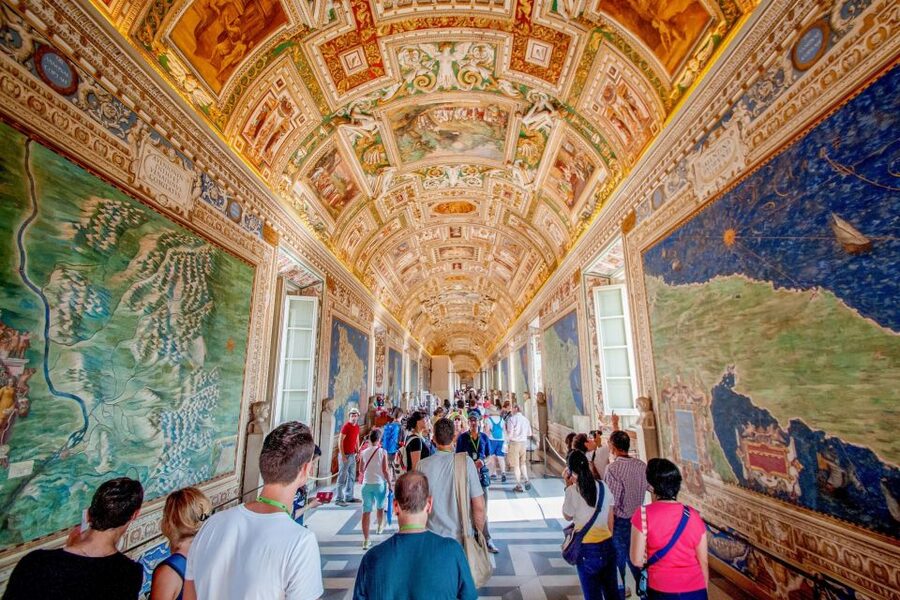
In the Upper Galleries, you can take on the long corridors with a different kind of attention. The Gallery of Maps is a standout here because it reminds you that “cartography” wasn’t always objective. People depicted the world through their own era’s knowledge, imagination, and limitations.
If you like history beyond art history, this is where the Vatican Museums show another side of power: the ability to represent the world and shape how people understand it.
Raphael Rooms: the Renaissance surge
Then you reach the Raphael Rooms. This is a major turning point in many visitors’ experiences. The art feels like it’s designed to pull you into stories—religious themes mixed with politics, learning, and symbolism.
If you enjoy Renaissance craft, this is where your day starts to feel less like “a museum marathon” and more like a focused set of masterpieces. If you’re tired, it’s also where a short pause helps, because the details reward looking slowly.
Borgia Apartments: when art turns into atmosphere
The Borgia Apartments provide another shift. Reviews often describe the Vatican as awe-inspiring and overwhelming. This area helps balance that by giving you a different mood—another chapter of the museum’s bigger “art and power” theme.
A practical note: this is a good place to take a breather if you’ve been walking for a few hours. Even short rests help you enjoy the final push.
Sistine Chapel: how to see Michelangelo’s Creation of Adam without losing the moment
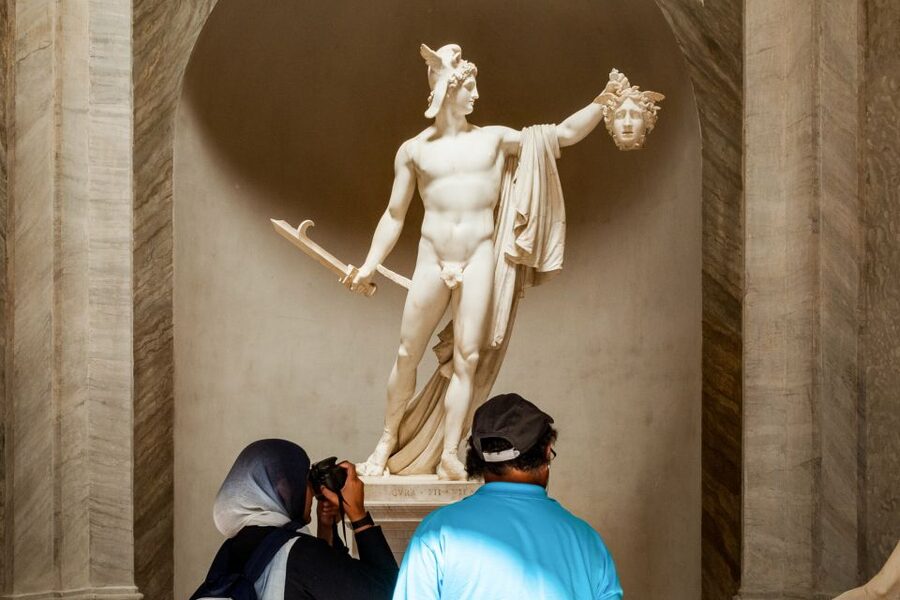
The Sistine Chapel is the endgame. It’s where Michelangelo’s The Creation of Adam lands hardest, not because it’s just famous, but because it’s painted at an experience scale. When you finally look up at the ceiling, it doesn’t feel like a picture. It feels like you’re in the middle of an event.
Plan for crowd physics and choose where to pause
The chapel can be very busy and very loud. One useful approach is to aim for seats toward the side so you can listen to your audio guide while still taking in what’s around you. The audio helps because the Sistine Chapel is meant to be understood as a whole sequence, not just as “that one ceiling.”
Even if you don’t care about religious art specifically, the ceiling tells stories with gestures, movement, and emotion you can read without needing a sermon. Still, the audio guide is a big assist here.
Restoration starting Feb 1, 2026: what you should expect
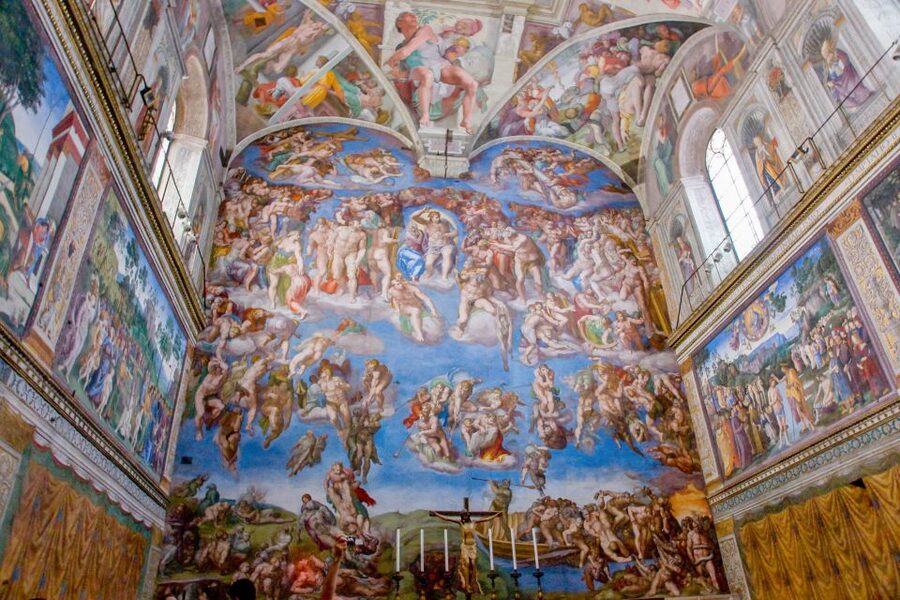
Important schedule detail: from February 1, 2026, restoration works at the Sistine Chapel begin for about three months. The chapel remains open and visitable, but some visitors have noted the presence of scaffolding and disappointment when they expected a perfect view.
So go in with a realistic mindset. You’ll still be able to experience the chapel, but your angle and what you see might not match the classic postcards.
St. Peter’s Basilica: easy if it works, stressful if it doesn’t
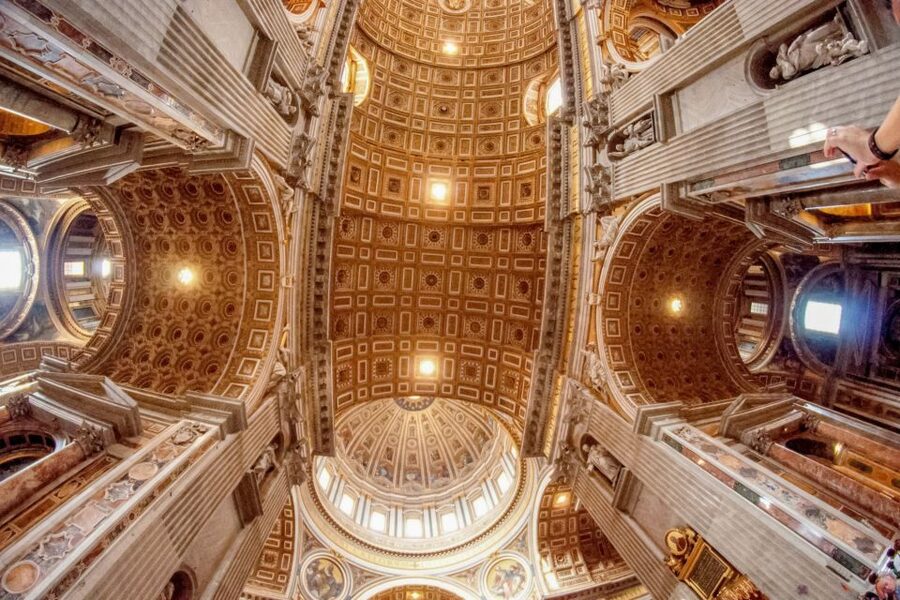
Your ticket here does not include St. Peter’s Basilica entry. Access is described as free of charge but not guaranteed, and crowd control can affect whether you can get in. The dome is also not included, so don’t plan your “must do” day around climbing it.
My advice is simple: if you want St. Peter’s Basilica, treat it like a separate decision at the end of your Vatican Museums visit. You might arrive ready to go, then find you’re redirected or blocked. Or it might be smooth. Either way, don’t let it destroy your mindset for the museums portion, because the Museums + Sistine Chapel are the core value of this ticket.
Tips that make the whole day work (instead of just surviving it)
Go early if you can
More than anything, your entry time affects how you feel. People strongly recommend choosing an earlier time slot. The museum is huge, and one afternoon slot can still leave you feeling rushed and tired by the end.
If you pick a later slot, build in the possibility that you’ll need to prioritize. You can’t see everything unless you’re built like a marathon runner. Even then, you’ll need breaks.
Budget enough time for a real visit
Expect to spend several hours. Some experiences fit around 2.5 to 3 hours, but others take 4 to 5 hours (especially if you actually want to look). The Sistine Chapel is reached later in the route, so if you rush, you’ll feel it right where you want to slow down.
Don’t start without using the restroom
A surprisingly common practical tip: eat and use the restroom before entering. Inside, you may spend more time walking between points than you expect, and stopping mid-route isn’t always convenient.
Wear walking-friendly shoes and expect stairs
This is a place where comfort matters. You’ll do a lot of walking, and there are stairs. Lifts exist, but you still need to plan on moving nonstop through changing levels.
Expect signage challenges
The Vatican Museums are not designed like a simple modern attraction. Some people note that navigation can be confusing, with signage not always clear in English. Also, the flow can be one-way, so once you pass a point, going back can be difficult.
That means your “strategy” should be attention-based: if there’s something you don’t want to miss, stop and look when you find it. Don’t assume you’ll loop back.
One more comparison stop before you decide between ticket-only and guided: therometraveler.com sorts every current Vatican Museums and Sistine Chapel option by review count, which settles the ticket-versus-tour question with numbers rather than guesswork.
Who this ticket is best for
This works well if you want:
- Self-paced freedom inside two of Rome’s biggest draws
- A way to avoid long ticket lines and gain entry with your time slot
- Optional audio guide listening across galleries so the day feels connected
It’s also a good fit if you’re not sure how to handle Vatican ticketing on official sites. The skip-the-ticket-line approach is specifically meant to take the uncertainty out of day-of entry.
It may not be the best fit if:
- You need a guided narrative all the way through (this product is not listed as a guided tour)
- You have very limited mobility or you want to avoid a one-way museum flow
- You’re traveling with children under 7 (under 7 is free, but the listing says it’s not suitable for children under 7)
Should you book this Vatican Museums and Sistine Chapel ticket?
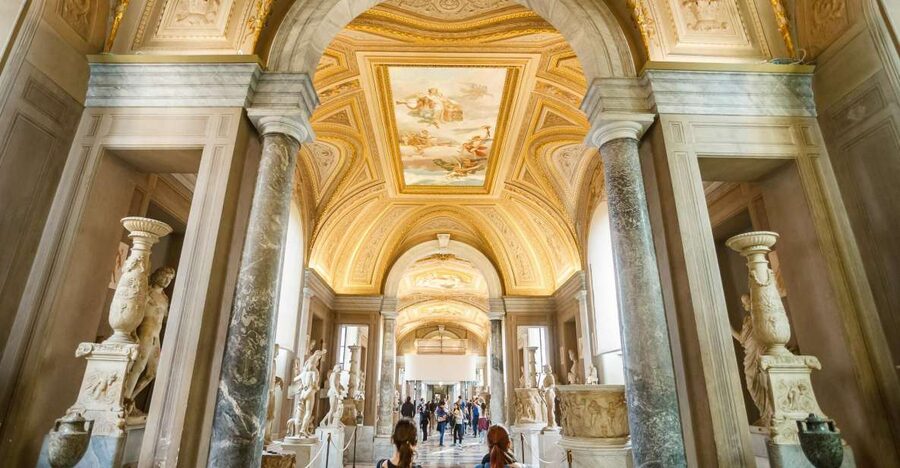
I’d book it if your priority is getting in fast and having the ability to explore on your schedule. At $38, you’re paying mainly for the time-saver and a smoother entry experience, and that value is strongest during busy months.
Book it early in the day if you can. If you go later, you’ll need to choose what matters most because the museum route can swallow hours. Also go in knowing that the Sistine Chapel restoration period in early 2026 may affect what you visually take in, even though the chapel stays open.
Bottom line: this is a smart choice when you want the Vatican Museums and the Sistine Chapel as your main event, not as a chaotic add-on squeezed between other plans.
FAQ
Does this ticket include access to the Sistine Chapel?
Yes. This experience includes entrance to the Vatican Museums and the Sistine Chapel.
Is an audio guide included?
An audio guide for the Vatican Museums is included only if you select the option. Audio guides are available in multiple languages.
What about St. Peter’s Basilica—will I be able to go in?
St. Peter’s Basilica is not included with this ticket. Access is free but not guaranteed and may change due to crowd control. The dome is also not included.
What should I bring for entry?
You should bring a passport or ID card for children (and standard ID is typically needed for verification).
Are there dress restrictions?
Yes. Shorts, short skirts, and sleeveless shirts are not allowed.
What age is this suitable for?
It is not suitable for children under 7 years. Youth tickets are available for ages 7–18 (inclusive) with a valid ID card, and children under 7 go free with a valid ID.