REVIEW · TUNIS
Tunis: Carthage, Bardo Museum, Sidi Bou Said & Medina Group Tour
Book on Viator →Operated by SAHARANSKY · Bookable on Viator
Carthage, coast, and souks in one long day. This tour is interesting because it links UNESCO-listed Carthage with two Tunisian atmosphere stops: Sidi Bou Said and the Medina. I like the included hotel pickup and I also like that entry fees are built in for major sites, so you spend less time figuring out tickets. The tradeoff: it’s a 7 to 8 hour day with real walking and some uphill, so plan your energy and shoes.
One reason this works so well is the human factor. Many guides—like Boutheina Derouiche, Bouhdid, and Luce—tend to turn stone ruins and mosque architecture into clear, story-driven context, and the small group size (max 19) helps the pace feel manageable. And yes, weather can change everything in Tunis—wind, storms, even dust—so keep a light layer and a scarf handy.
In This Review
- Key things that make this Tunis highlights tour worth it
- The big-picture plan: what a 7–8 hour “highlights” day really means
- Carthage’s Site Archeologique: where the Phoenician and Punic story clicks
- Baths of Antoninus: the Roman “day job” of a bath complex
- The Carthage Aqueduct: Roman engineering that still feels real
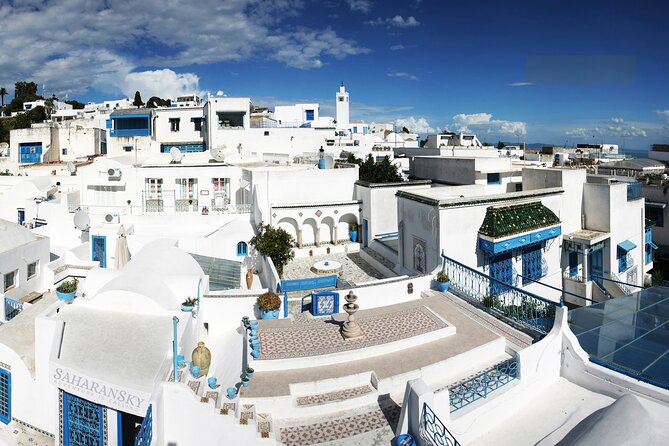
- Sidi Bou Said: blue-and-white charm, with real uphill walking
- Café des Délices break: a short pause that keeps the day from burning out
- National Bardo Museum: a top Tunis museum stop, with a plan for closures
- Tunis Medina essentials: Bab Bhar, Zitouna Mosque (from outside), and souks on foot
- Lunch and energy management: what to expect when the day is packed
- Price and value: why $45 can work (and when it won’t)
- Group size, guide quality, and hearing the story
- Who should book this tour?
- Final call: should you book?
- FAQ
- What time does this tour start?
- How long is the experience?
- Is hotel pickup and drop-off included?
- Are entry fees included?
- Can I enter Zitouna Mosque as a non-Muslim?
- Does the tour include lunch?
- Do they offer vegetarian food?
Key things that make this Tunis highlights tour worth it
- A UNESCO day loop: Carthage + Medina of Tunis in one structured outing
- Roman stops with contrast: major ruins, then the Baths of Antoninus for scale and detail
- Sidi Bou Said includes views, not just photos: expect narrow streets and some uphill
- Bardo Museum flexibility: if the museum is closed, the day still gets filled with sightseeing
- Small-group touring: max 19 people, with guides who keep commentary moving
- Zitouna Mosque and Bab Bhar add context: big-city landmarks that frame how the Medina works
The big-picture plan: what a 7–8 hour “highlights” day really means
This is a full-day circuit starting at 8:00 am from your hotel area, with a car and guide handling the driving between sites. The schedule is tight by design. Carthage takes time, Sidi Bou Said needs walking (plus views), and the Medina of Tunis is best enjoyed slowly even when you’re on a clock.
So think of it like this: you’re not trying to master Tunisia in a day. You’re getting your bearings fast—how the ancient world ties to the modern city, how the coast-town vibe differs from the old Medina, and where to go next on your own once you’re oriented.
A small but important note: the tour uses a mobile ticket. That’s helpful if you like traveling light—just keep your phone charged and your ticket handy for entry points.
You can also read our reviews of more museum experiences in Tunis
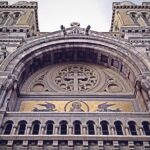

Carthage’s Site Archeologique: where the Phoenician and Punic story clicks
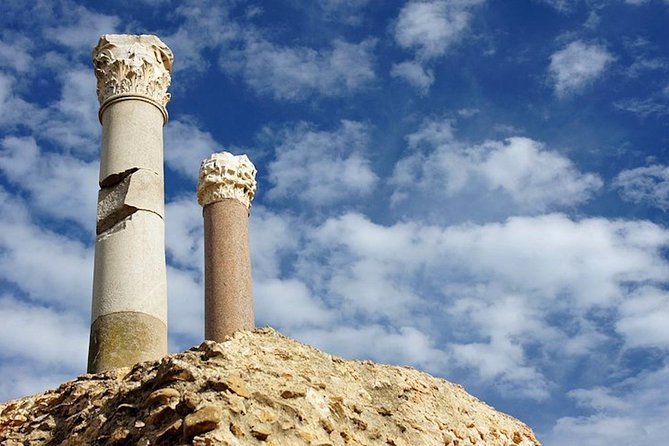
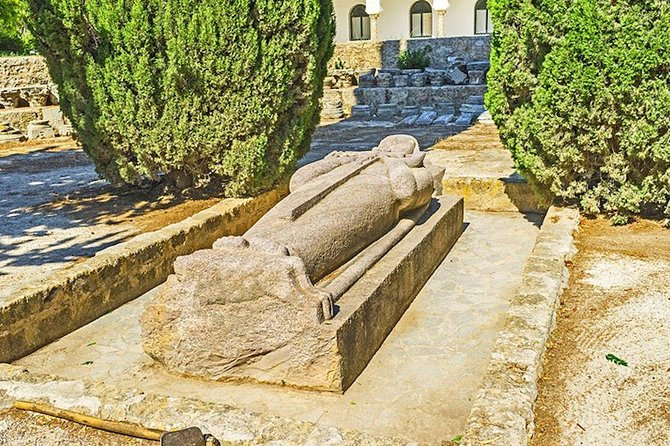
The day begins at Site Archeologique de Carthage, the core stage for everything you’ll later connect in Tunis. This area isn’t just a pile of ruins. It’s a place where you can see how an ancient city was laid out and how different civilizations left their mark.
You’ll spend about 2 hours here, with time to see major named highlights such as:
- Byrsa Hill
- The Punic ports
- The Baths of Antoninus (covered in more depth right after)
Carthage’s appeal comes from layers. You’re seeing the remains of a city that once sat at the center of the Phoenician/Punic world, then later got Roman-era rebuilding and expansion. And the story ends with destruction—Romans in 146 BC—which helps explain why so much is rubble and why what survives feels both dramatic and fragile.
Practical tip: at Carthage, it’s easy to get distracted by the “wow” of big stone. Your guide’s job is to slow you down just enough so the places start making sense—walls, elevations, and why certain structures matter.
Baths of Antoninus: the Roman “day job” of a bath complex
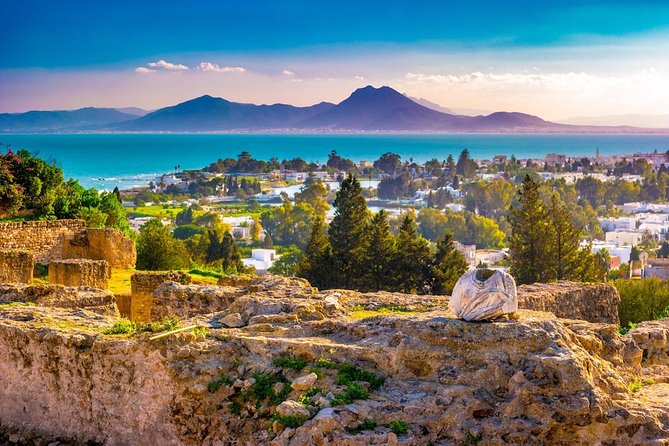
Right after the main archaeological walk, you’ll spend around 20 minutes at the Baths of Antoninus. This is one of those sites where 20 minutes can either feel rushed or exactly right—if you know what you’re looking for.
The big value here is scale. These are among the best-preserved Roman bath complexes in North Africa, built in the 2nd century AD. You’ll see massive arches and Roman-style architecture cues, plus features like courtyards and mosaic work that show how Roman public life operated.
This stop also balances the tone of the Carthage area. Instead of only thinking about conquest and ruins, you get a snapshot of daily life: heating systems, communal spaces, and the “big public building” mindset Romans brought to their provinces.
The Carthage Aqueduct: Roman engineering that still feels real
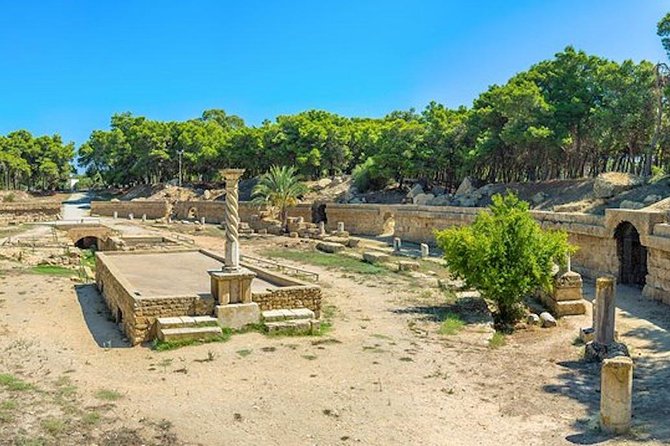
Another 20-minute stop is the Carthage Aqueduct, a Roman-built water system designed to transport water to the city. The impressive detail is distance and function—over 130 km—which turns the aqueduct from a short ruin into a whole-world infrastructure project.
What you’ll notice when you walk around it is how Roman engineering shaped where people could live. Water management wasn’t a side quest. It was what made a large city possible in the first place. Even if you’re not a construction nerd, this is the kind of stop that changes how you interpret the rest of the ruins.
Quick practical note: take a moment to look beyond the arches and think about the terrain the water had to cross. That’s where the “wow” becomes understanding.
Sidi Bou Said: blue-and-white charm, with real uphill walking
Next comes Sidi Bou Said, about 1 hour of wandering. This is the coast-town contrast to Carthage’s ruins: narrow streets, blue-and-white buildings, and Mediterranean views that turn photos into memories fast.
The practical truth: you’ll do some walking uphill. That’s not a dealbreaker, but it’s why this stop feels “pretty” and also why it can feel tiring if you didn’t expect it.
Here’s how I’d plan it:
- Wear shoes you can trust on uneven ground.
- Bring water and a light layer for wind off the sea.
- If the group is moving quickly, slow down at the viewpoints. You’ll want time to actually see, not just glance.
If you only have one “scenic” moment today, Sidi Bou Said is usually the one that lands.
Café des Délices break: a short pause that keeps the day from burning out
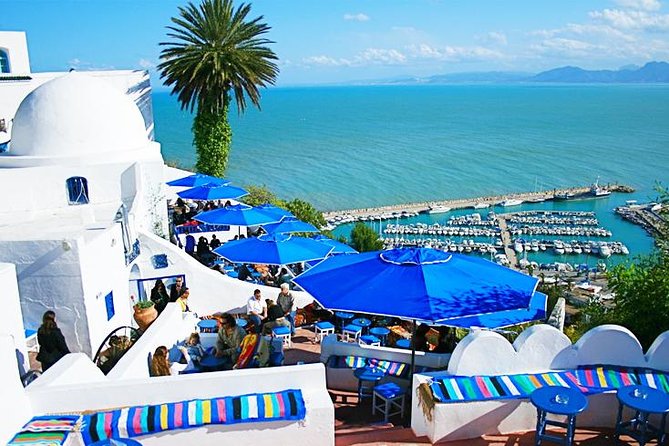
You’ll also pass by Café des Délices, with time for a refreshing tea or drink and photos. This is one of those small breaks that matters more than it looks on paper.
A short stop like this helps you reset before the next cultural swing into museums and the Medina. In a long day, that kind of pause is what separates a smooth outing from a cranky one.
National Bardo Museum: a top Tunis museum stop, with a plan for closures
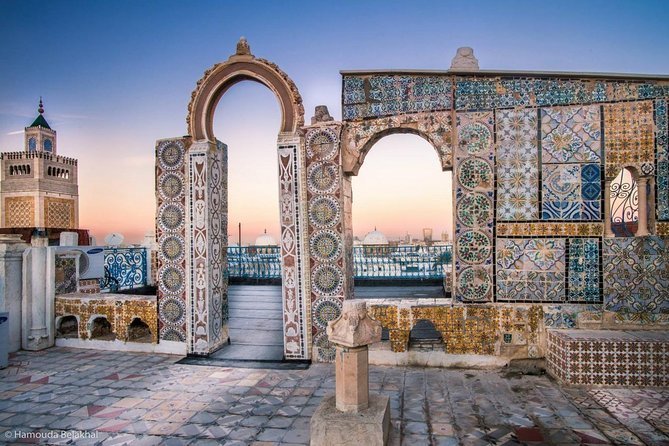
The tour includes time at the National Bardo Museum (entry ticket included) for about 2 hours. Even without getting lost in art talk, Bardo is valuable because it’s a central place to understand what the region has collected and preserved from its ancient past.
A heads-up from real-world scheduling: the museum can be closed on some dates, yet the tour still keeps the day full. So don’t assume you’ll always get the exact same museum experience. But do assume you’ll still move through Tunis highlights rather than sitting around waiting.
If you’re the type who loves museum time, keep your pace steady at Bardo. Don’t rush the rooms just to “check it off.” Give yourself enough time to notice how objects connect back to the kind of Roman and Punic sites you just saw at Carthage.
Tunis Medina essentials: Bab Bhar, Zitouna Mosque (from outside), and souks on foot
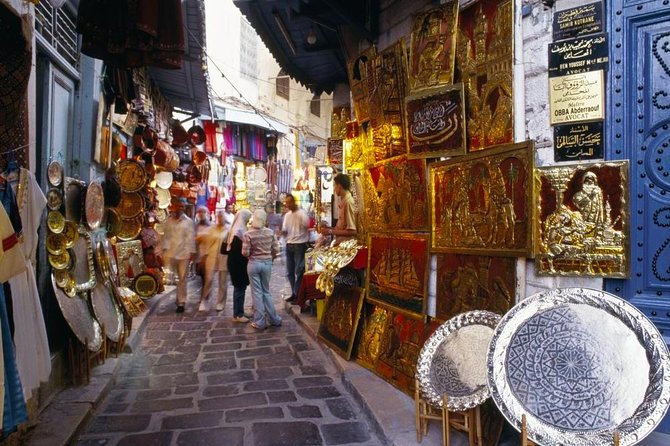
The Medina of Tunis is where the city feels alive in a totally different way than the ruins. You’ll spend about 1 hour here, and it’s structured enough to keep you from wandering in circles.
Before you go deeper into the old lanes, you’ll pass Bab Bhar, a historic city gate with Ottoman architectural elements dating back to the 16th century. It’s a useful landmark because it marks the transition between the modern city flow and the old Medina’s logic.
Then you’ll see Zitouna Mosque from the outside. Non-Muslims cannot enter, but the exterior architecture and the setting around the mosque are a strong visual anchor for understanding the Medina’s religious center. If you’re a Muslim traveler, you can enter to view the interior.
At street level, the Medina stops are about orientation and flavor:
- how the lanes funnel people
- where markets cluster
- how landmarks act like navigation points
This is also a spot where you might notice Sunday effects. Some retail areas and shops may be less active depending on the day, so think of it more as walking and soaking in the old-city feel than as a guaranteed shopping spree.
Lunch and energy management: what to expect when the day is packed
Lunch is included, and the style can be simple. The practical value of lunch being included is obvious: you don’t lose time hunting for food between major sites.
At the same time, scheduling can affect the lunch experience. In a full-day loop with multiple stops, lunch service can be slower or more “assembled” than you’d get at a restaurant with a dedicated rhythm. If you’re picky about timing, set your expectations accordingly.
If you’re vegetarian, the tour offers a vegetarian option—just request it at booking. That matters, because Tunisia can be very accommodating when you’re planned for, and much less fun when you arrive with no backup.
Pro move: bring a small snack for the late-afternoon push. Even with lunch included, a packed day means you’ll work up an appetite.
Price and value: why $45 can work (and when it won’t)
At $45 per person, this tour competes well for first-timers. You’re not just paying for a guide and a car. The value comes from bundled pieces:
- hotel pickup and drop-off
- transport between scattered highlights
- major entry fees included (with some stops free)
- a structured day that reduces planning stress
Is it a luxury tour? No. At this price point, lunch won’t be fine dining, and the pacing has a “see it, then see the next thing” rhythm.
So I’d treat it like this: if you want the big Tunis anchors in one day—Carthage ruins, Sidi Bou Said views, Medina orientation—this price is a smart shortcut. If you want unhurried, deep-dive museum time and a flexible schedule with long sit-down breaks, you’ll likely feel rushed.
Group size, guide quality, and hearing the story
Small groups change how the day feels. Here, the group tops out at 19 travelers, and some experiences have run even smaller, which makes it easier to ask questions and keep your place.
Guide quality is the biggest multiplier. Guides such as Boutheina Derouiche, Bouhdid, Luce, Mohamed, and Younis have been praised for turning the places into understandable stories rather than a “walk and look” circuit. If you care about history and context, that matters.
One more practical note from similar van dynamics: if you’re sitting farther back, and there isn’t a clear way to project audio, you may miss details during transfers. Your best fix is simple—choose a seat where you can hear, and ask the guide to repeat key points if needed.
Who should book this tour?
This is a strong fit if:
- you want a first visit orientation to Tunis
- you want UNESCO-listed Carthage and the Medina in one day
- you’d rather have a guide handle the “what you’re looking at” part
- you’re okay with 7 to 8 hours of moving, including uphill
It may be less ideal if:
- you hate walking and steep paths (Sidi Bou Said can be tiring)
- you need a very slow schedule with lots of free time
- you’re extremely sensitive to weather or long outdoor stretches
If you’re traveling with mobility concerns, you should still consider the tour because a guide and driver help with the flow, but plan extra caution for uneven ground and stairs.
Final call: should you book?
Yes, if your goal is to get your bearings fast and leave Tunis knowing exactly where to go next. Carthage plus Medina plus Sidi Bou Said is a powerful combo, and the included transport and entry fees make the day efficient.
Skip it only if you truly want a relaxed pace or you’re hoping for a museum-only day. This one is for highlights—big sights, guided context, and a full day that starts at 8:00 am and ends with you tired in the best way.
FAQ
What time does this tour start?
It starts at 8:00 am.
How long is the experience?
Plan on about 7 to 8 hours.
Is hotel pickup and drop-off included?
Yes. Pickup is offered, and you’ll be dropped back after the tour.
Are entry fees included?
Yes for key sites. The tour includes admission tickets for major stops like Carthage and the National Bardo Museum, while some stops like Sidi Bou Said and Cafe des Délices are listed as free.
Can I enter Zitouna Mosque as a non-Muslim?
From the outside is included for all visitors. Non-Muslims cannot enter, but the outside architecture is part of what you’ll see.
Does the tour include lunch?
Yes, lunch is included as part of the day.
Do they offer vegetarian food?
Yes. A vegetarian option is available if you advise at booking.