REVIEW · MUSEUM OF ILLUSIONS SPLIT
Split: Museum of Illusions Entrance Ticket
Book on GetYourGuide →Operated by Museum of Illusions Split · Bookable on GetYourGuide
Your eyes start arguing with your brain. That is the whole point of Split’s Museum of Illusions: hands-on rooms that mess with vision and the senses, plus play areas that feel like games you can actually learn from. I like the grow-and-shrink photo setup and the maze of mirrors because they turn a quick stop into something you can do, not just watch. One possible drawback: the information is delivered via captions in several languages, but if you’re expecting French on everything, you may need to work with what’s available.
This is an entrance ticket for 1 day at $14 per person, so it’s easy to slot into a Croatia day without committing to a long tour schedule. Show your voucher at the museum’s main entrance, bring a camera, and you’re set to test your perception from start to finish.
In This Review
- Key highlights you’ll care about
- Split’s Museum of Illusions: the idea behind the ticket
- Where to go: main entrance entry with your voucher
- What to expect in the illusion rooms (and how to enjoy them)
- The grow-and-shrink photo moment: why it’s a crowd-pleaser
- Mirror maze and the feeling of wrong space
- Impossible gravity and sensory tricks that bend rules
- Rooms with theatrical surprises: trays, ceilings, and brain games
- Playrooms with games and puzzles (not just free time)
- Captions and languages: what that means for your experience
- What to bring for the best photos
- Price and value: is $14 worth a full day?
- Who should book this ticket?
- Should you book the Museum of Illusions in Split?
- FAQ
- How long is the Museum of Illusions ticket valid?
- Where do I show my voucher?
- What’s included with the ticket?
- Is the museum wheelchair accessible?
- What languages are available?
- What should I bring?
- Can minors visit without an adult?
- FAQ
- Is free cancellation available?
- Can I reserve and pay later?
- Are service animals allowed?
Key highlights you’ll care about
- Pre-book entrance for smoother timing: You can reserve your spot and then use your voucher at the main entrance.
- Photo illusions where you change size: The grow-and-shrink photo moment is a repeat favorite.
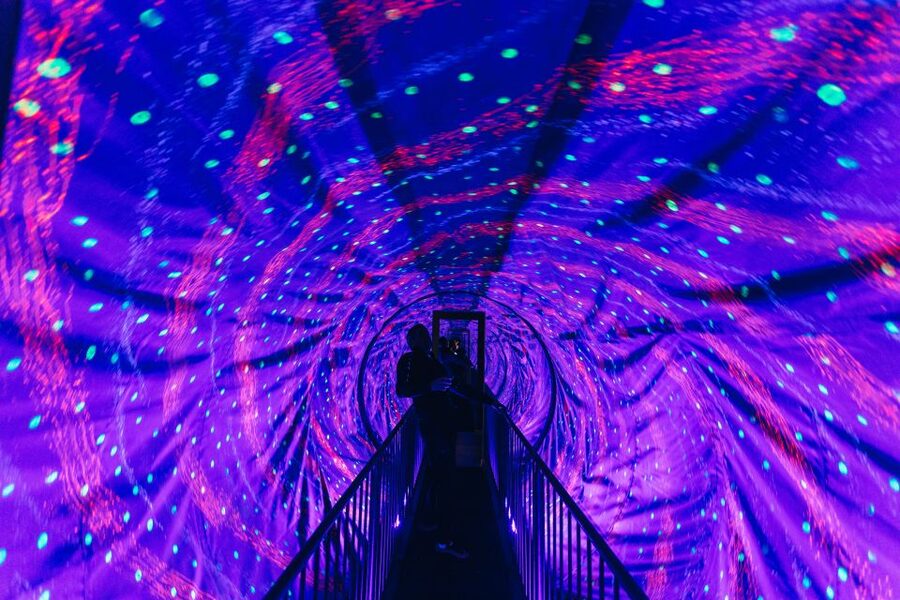
- Mirror mazes that make you question your depth: Great for photos and for the fun of solving what you’re seeing.
- Classic perception tests: Rooms built around optical tricks like impossible movement and visual distortions.
- Playrooms with games and puzzles: It’s not only spectacle; there are hands-on challenges that keep kids and adults engaged.
Split’s Museum of Illusions: the idea behind the ticket
This ticket is simple: one day inside the Museum of Illusions in Split, Dalmatia, Croatia. You’re not following a strict route with a checklist. Instead, you’re free to move room to room, slowing down when something makes you do that annoying head-tilt.
What you’ll get is a mix of optical illusions, sensory experiments, and play-focused areas with puzzles. It’s designed for people who like science explanations, but it also works if you just enjoy poking at how your brain makes sense of the world.
And the value angle is pretty clear: at $14, this is an affordable activity that can still feel like a full “thing” for a day. It also has an easy start point: the museum entrance, with your voucher ready.
Where to go: main entrance entry with your voucher
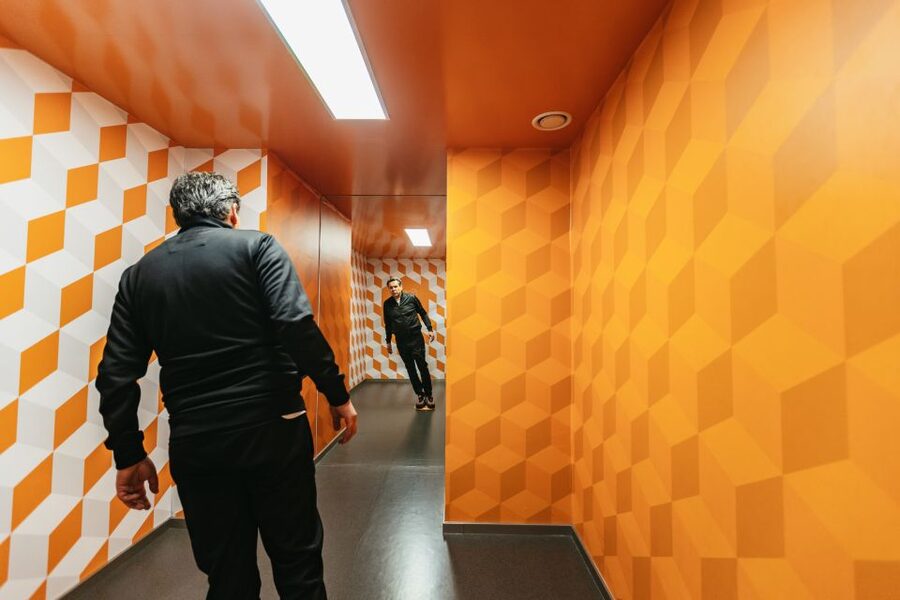
You’ll meet the experience at the museum’s main entrance. That means you don’t need to hunt for a specific time window with a guide standing nearby, at least not based on what’s provided.
Your job is straightforward:
- Bring your voucher
- Show it at the main entrance
- Head inside and start with whatever room pulls you in first
The host or greeter can help in English and Croatian, so you’re not stuck if you have a quick question at the desk.
What to expect in the illusion rooms (and how to enjoy them)
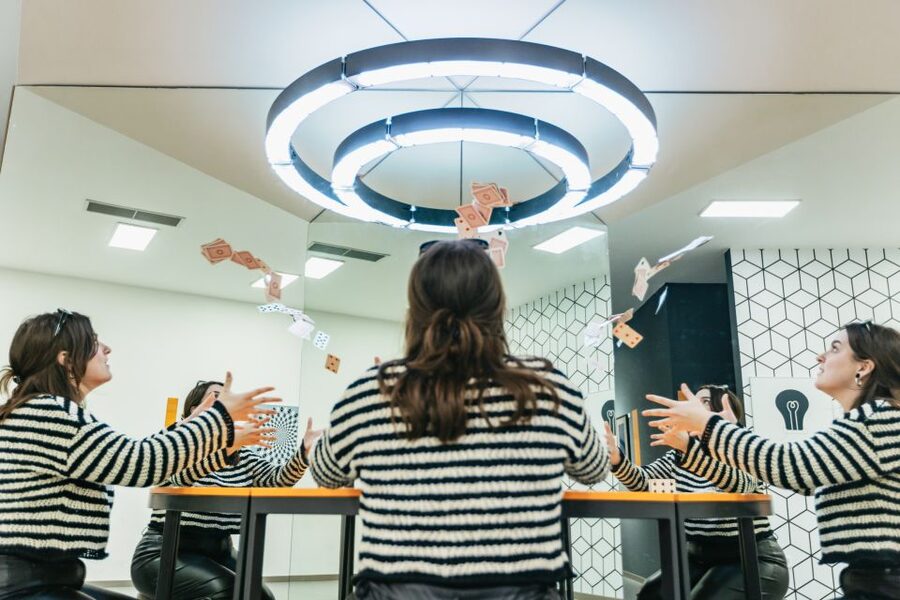
The museum’s core strength is that the exhibits aren’t just visual tricks. They’re visual tricks plus physical participation. That matters, because perception is not only something you see. It’s something you do.
Expect rooms that mess with:
- Vision and depth (especially with reflective setups like mirror mazes)
- Motion and gravity (there’s a gravity-defying concept with water flowing uphill)
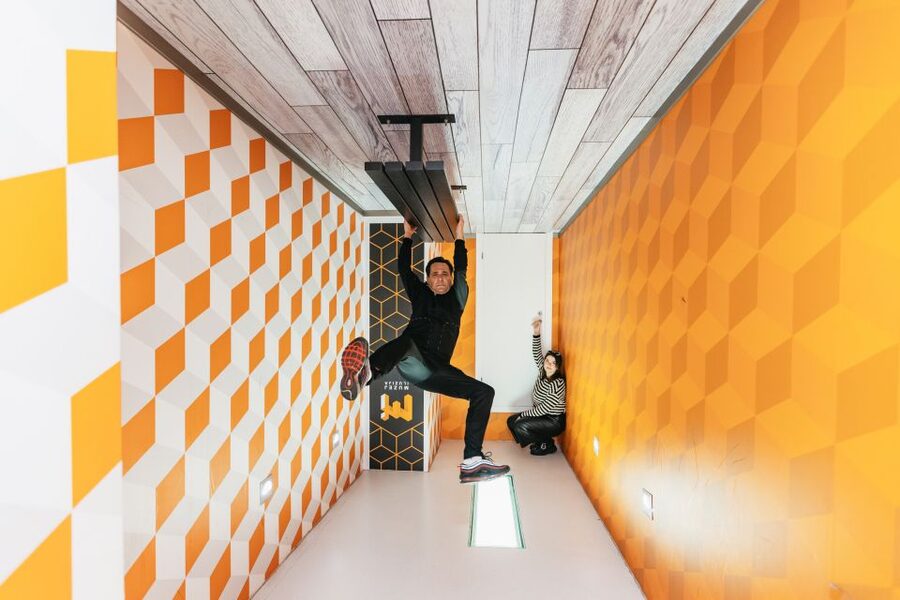
- Scale and proportion (there are effects where you and others appear to grow or shrink)
- Context and “what is real” cues (you’ll see installations built to make your brain second-guess normal expectations)
A good tip is to slow down for the most photo-friendly spots. The first photo pass is usually fun. The second pass, with a different angle or stance, is where the illusion really lands.
The grow-and-shrink photo moment: why it’s a crowd-pleaser
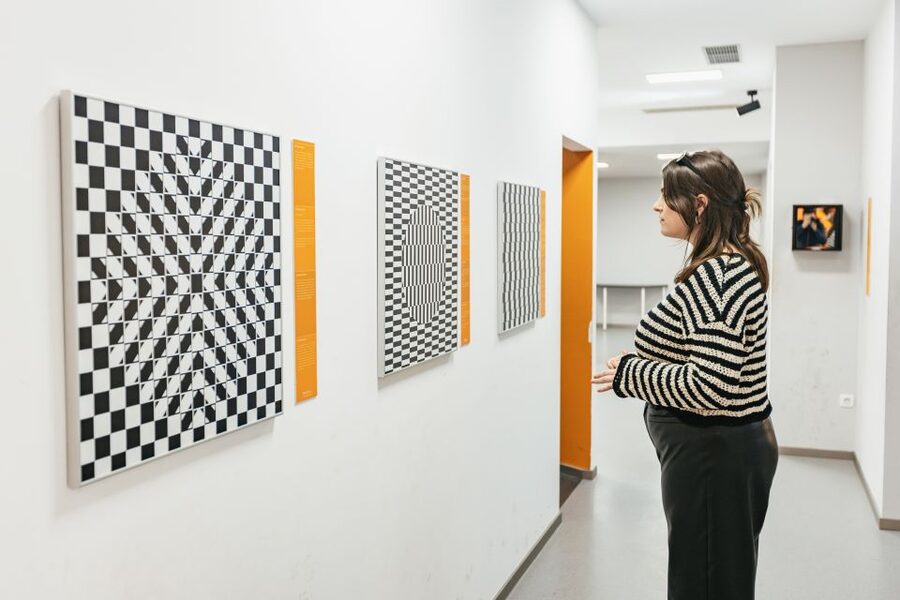
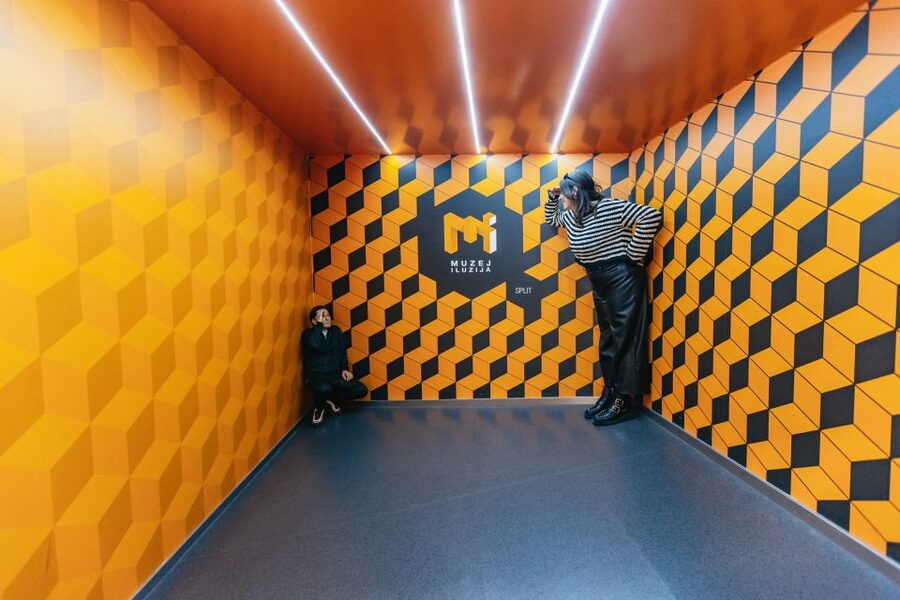
One highlight that clearly resonates is the photo area where you look big and small. This is the kind of exhibit that works instantly, even if you don’t know the science behind it. Your brain gets a clear visual message, and then the installation provides an equally clear contradiction.
Here’s how to get better results:
- Start by positioning yourself as the exhibit instructs (even if the instructions are just minimal text or captions)
- Take a full-body shot first, then move slightly for a second perspective
- Try a friend shot too, if the space allows it, since scale tricks often look more dramatic with two people in frame
If you’re thinking of this as a family activity, this photo moment is the low-effort, high-reward stop. It’s also the easiest way to “prove” the illusion to yourself in images, which makes the visit feel more satisfying later.
Mirror maze and the feeling of wrong space
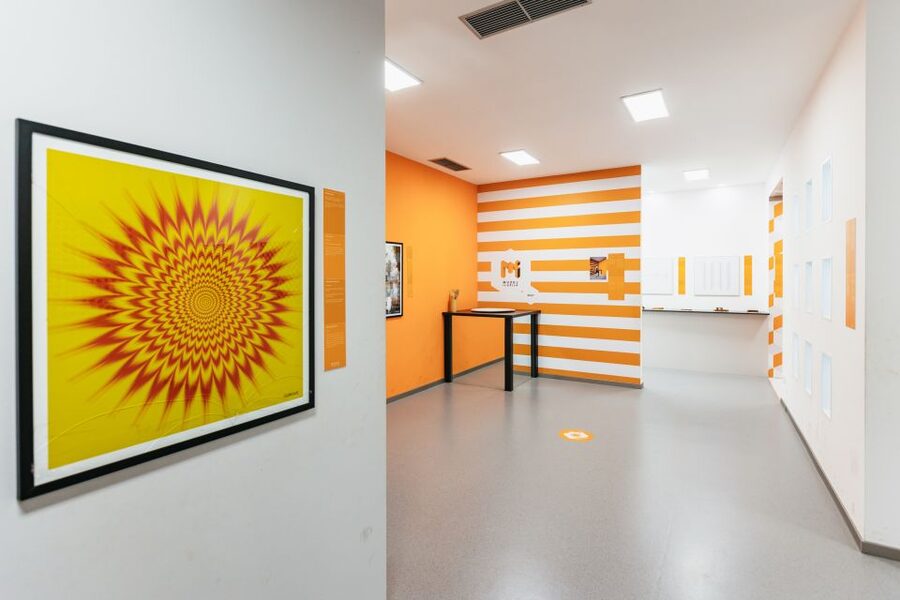
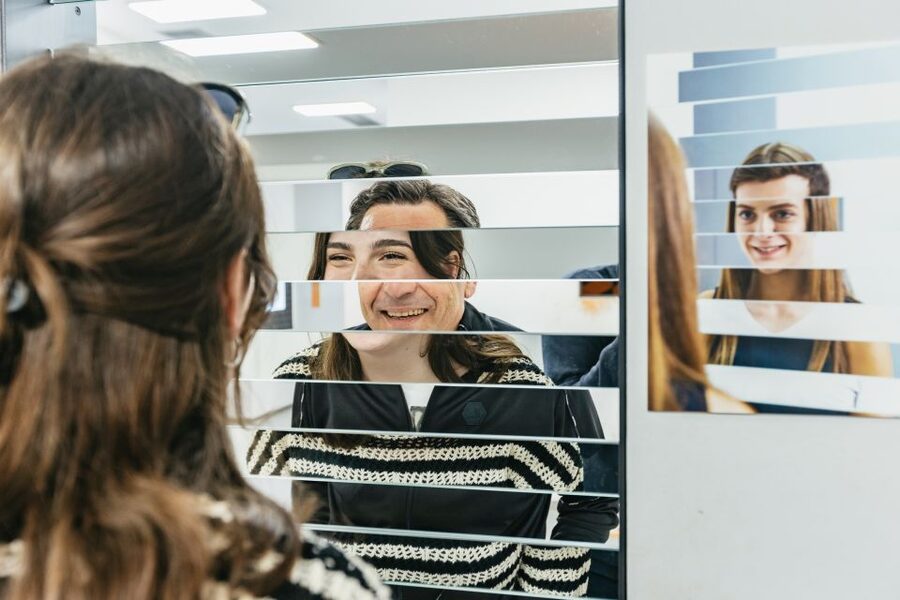
There’s a maze of mirrors experience in the museum lineup. If you like optical illusions that mess with your sense of distance, this is the one.
Mirror mazes work because your brain tries to create one stable version of the room. When reflections multiply and angles shift, your perception gets confused in a way that’s fun instead of frustrating. You’re basically playing a short visual puzzle with every step you take.
For practical enjoyment, give yourself a little time here. The first few turns can feel chaotic. A minute later, your brain starts to pattern-match what’s happening. And if you’re photographing, move slowly. Mirrors can trick autofocus, and a steadier shot keeps the illusion sharper.
Impossible gravity and sensory tricks that bend rules
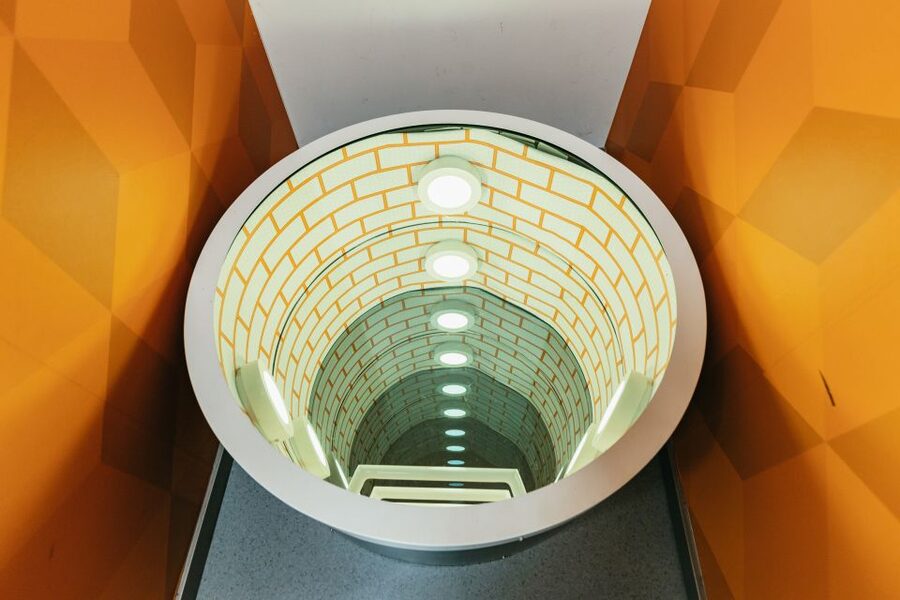
The museum includes an exhibit concept where you can see water flowing uphill. That’s a great example of how the museum treats “impossible” as a hands-on lesson.
The value of this kind of installation is that it shows you how quickly your brain assumes physics is happening the way you expect. Then it offers a setup that breaks the expectation, usually through engineering or carefully designed visual cues.
To make this enjoyable rather than confusing:
- Watch once without filming
- Watch again while standing slightly to the side
- Then take photos if you want proof
You’ll usually understand more after you change your viewing angle. Optical illusions love angles.
Rooms with theatrical surprises: trays, ceilings, and brain games
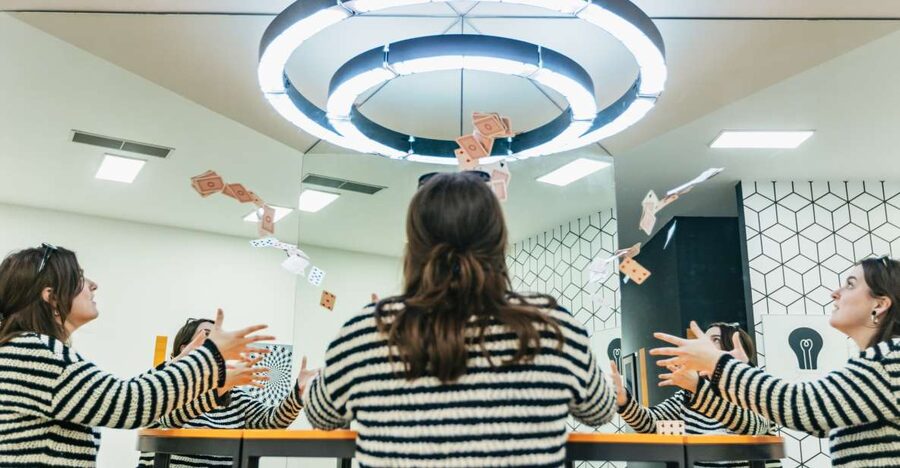
The museum’s lineup also includes playful, slightly theatrical installations. The kind of examples you can expect from the description include serving somebody’s head on a tray and an option where you climb up toward the ceiling.
Even if those specific moments aren’t all the exhibits you’ll see, the museum’s pattern is consistent: it uses surprise and humor to keep you participating. That matters for two reasons.
First, it keeps the visit from feeling like a science museum where you only watch. Second, it turns perception into a game. You stop thinking like a spectator and start thinking like a participant.
If you’re traveling with kids, these “wow” zones are often where the energy stays high without needing constant explanation. If you’re traveling solo, they’re a chance to have fun without needing a plan.
Playrooms with games and puzzles (not just free time)
The ticket experience includes playrooms with intriguing games and puzzles. This is a big deal for families because it gives the younger set something to do that feels interactive and educational at the same time.
Even for adults, a puzzle-based area can slow you down in a good way. Instead of walking from one visual trick to the next, you get a mental break. And because perception is a brain process, the museum’s mix of sensory exhibits and puzzle play fits together nicely.
The practical move: do the playrooms after a couple of heavier illusion rooms. If you start with puzzles, you might rush through the visual stuff because you’re eager to do the games. If you save the puzzles for later, you end the day with variety.
Captions and languages: what that means for your experience
The museum offers captions in English, German, Italian, and Croatian. That is helpful if you want context behind why an illusion works.
Here’s the practical reality: captions won’t always satisfy every language preference, and they may not feel like full, detailed explanations in your native tongue. One visitor noted that French wasn’t included for explanations, which is a real consideration.
So ask yourself before you go: do you need deep written explanations, or do you mainly want to see the effects? If you’re happy with “look, test, and react,” captions become a nice bonus rather than a requirement.
What to bring for the best photos
Bring a camera. That’s the only item explicitly listed, and it makes sense because many of the exhibits are built for photo moments.
A simple photo strategy:
- Take one shot at normal eye level
- Take one shot from a lower angle if the illusion involves scale or distance
- Use slow movement and steady framing near mirror areas
Also, if you’re sensitive to crowds, be patient. Photo rooms can attract attention fast, especially the ones that change your size.
And yes, service animals are permitted, which is worth knowing if you need that support.
Price and value: is $14 worth a full day?
At $14 per person for a 1-day entrance ticket, the value depends on what kind of activity you want.
If you like hands-on attractions, this price makes sense. You get multiple illusion styles: visual distortions like mirrors, perception-bending moments like gravity and uphill water, and fun interactive stops like the grow-and-shrink photo area. Add the playrooms with games and puzzles, and it stops feeling like a quick gimmick.
If you expect a guided, lecture-style museum with long-form explanations, you might find the ticket is better used as an interactive experience than as a deep academic one. In that case, prioritize the rooms that look most engaging, then treat captions as optional context.
Either way, it’s an easy decision to keep things flexible. The ticket includes free cancellation up to 24 hours in advance for a full refund, and you can reserve now and pay later.
Who should book this ticket?
This entrance ticket is a good fit if you:
- Want a fun, science-flavored stop without a heavy time commitment
- Like optical illusions and want to experience them firsthand
- Travel with kids who enjoy games and puzzles
- Enjoy photo moments where the illusion changes how you look in the frame
It may be less ideal if you:
- Need full explanations in a specific language not listed in the captions
- Prefer quiet, low-stimulation activities (this museum is built for interaction and visual impact)
- Are planning to bring minors without an accompanying adult, since unaccompanied minors aren’t allowed
Should you book the Museum of Illusions in Split?
Yes, if you want an activity that feels playful but still has a real brain-and-vision angle. This is one of those tickets that can make an ordinary day in Split feel different, because you’re not only looking. You’re testing what your mind thinks is true.
My call: book it if you’re curious about optical illusions, want at least one “wow” photo moment, and can enjoy a mix of visual rooms plus playrooms with puzzles. Skip it only if you strongly need deep written explanations in a language outside the listed captions or if your group won’t enjoy hands-on exhibits.
FAQ
How long is the Museum of Illusions ticket valid?
The entrance ticket is valid for 1 day. Check availability to see starting times.
Where do I show my voucher?
Show your voucher at the museum’s main entrance.
What’s included with the ticket?
The ticket includes entrance to the Museum of Illusions Split.
Is the museum wheelchair accessible?
Yes, the museum is wheelchair accessible.
What languages are available?
Captions are available in English, German, Italian, and Croatian. The host or greeter also speaks English and Croatian.
What should I bring?
You should bring a camera.
Can minors visit without an adult?
No. Unaccompanied minors are not allowed.
FAQ
Is free cancellation available?
Yes, you can cancel up to 24 hours in advance for a full refund.
Can I reserve and pay later?
Yes. The option says reserve now and pay later, so you can book your spot and pay nothing today.
Are service animals allowed?
Yes, service animals are permitted.