
REVIEW · SPICY S GEWURZMUSEUM
Spicy’s Gewürzmuseum Entry Ticket and Audio Guide
Book on GetYourGuide →Operated by Spicy's Gewürzmuseum · Bookable on GetYourGuide
Your nose becomes your ticket here. Spicy’s Gewürzmuseum turns a simple walk into a hands-on lesson where you touch and smell spices as you go, using a free audio guide on your phone or tablet. For me, the payoff is how quickly it makes spice knowledge feel practical, not like a textbook.
I especially love the museum’s focus on interaction. More than 50 spices are presented for touch and smell, and you’ll also get an adult pepper spice sample (plus gummy bears for kids), so you’re not just looking at labels.
One thing to consider: it isn’t set up for wheelchair users. If that affects your group, plan another hands-on food stop instead.
In This Review
- Key highlights to look for
- Spicy’s Gewürzmuseum in Hamburg: a hands-on spice walk
- Tickets and value: is $8 worth 90 minutes?
- Before you enter: your phone becomes the guide
- The heart of it: touch and smell 50+ spices
- How old storage builds new spice knowledge
- Production history: from cultivation to finished spice
- Tasting corner: pepper samples and the gummy-bear moment
- What to expect from the pacing (and why 1.5 hours works)
- Who should book this spice ticket?
- Should you book Spicy’s Gewürzmuseum Entry Ticket?
- FAQ
- How long is the Spicy’s Gewürzmuseum entry ticket experience?
- What does the ticket include?
- Do I need to bring headphones for the audio guide?
- What languages are available for the audio guide?
- Where do I go when I arrive?
- What should I bring with me?
- Is the museum suitable for wheelchair users?
- What is the cancellation policy?
Key highlights to look for
- Phone audio guide in German, English, and French you can use as you wander
- Touch-and-smell stations featuring 50+ herbs, seeds, and classic spices
- Pepper spice sampling for adults and gummy bears for children
- Over 900 exhibits tracing spice history across the last five centuries
- Original storage building that the museum is built on, not a generic showroom
Spicy’s Gewürzmuseum in Hamburg: a hands-on spice walk
Spicy’s Gewürzmuseum is exactly what it sounds like: a museum about herbs and spices where your senses do the heavy lifting. In a city like Hamburg, it’s a nice break from the usual sights, because it invites you to slow down and use your hands and nose. You’ll get a guided feel to the experience without being locked into a rigid route.
What makes it click is the museum’s structure. You’re not asked to memorize facts before you get to the good part. You start exploring and the knowledge comes as you meet each spice, each taster table, and each display case. If you like interactive places, this one has real substance: it’s built around more than 50 spices you can touch and smell, not just a few photo ops.
And yes, you’ll have to use your phone. The audio guide is downloadable and meant to pair with what you’re seeing, which keeps the whole 90-minute loop from feeling scattered.
Tickets and value: is $8 worth 90 minutes?
At $8 per person for about 1.5 hours, this museum is priced like a casual activity, not a big-ticket attraction. The value comes from two things you can feel right away.
First, the museum gives you interaction. A lot of small museums rely on glass cases and reading text. Here, you’re encouraged to touch and smell, then taste a pepper spice sample. That means you’re paying for an experience, not just information.
Second, the audio guide adds “guiding power” at no extra cost. You can listen in German, English, or French, which is a big deal if you don’t want to rely on your own reading speed. If you’ve ever felt frustrated in museums where explanations are only in one language, this setup is a straightforward fix.
So who will feel the best value? People who like sensory learning and food culture. If you only want broad history summaries with no hands-on stations, the experience might feel a bit too “practice-first.” For most visitors, though, the price-to-activity ratio is hard to beat.
Before you enter: your phone becomes the guide
Your first job is simple: exchange your voucher at the ticket counter at Spicy’s Gewürzmuseum before you begin. After that, you’ll want a quick moment to sort out your audio guide app and headphones before you start.
The museum experience is designed to work with your device. The audio guide is accessible on your phone or tablet, and it’s included with your ticket. With English and French available alongside German, you can pick the language that makes the history and production details actually stick.
Practical tip: go in with a charged smartphone. The museum explicitly calls out bringing a charged device, and it matters here. A 90-minute run is long enough to drain a battery if you forget to charge and you’re using audio continuously.
The heart of it: touch and smell 50+ spices
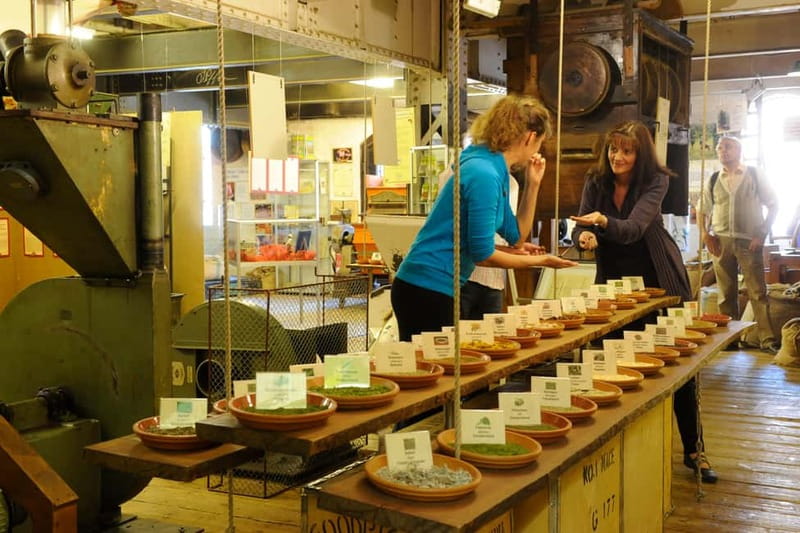
The most praised part of Spicy’s Gewürzmuseum is also the easiest to understand once you’re there: you get to explore spices through touch and smell. More than 50 spices are set up so you can interact with them, including kitchen herbs, spice seeds, and classic spices.
This matters because scent is half the story. A label won’t teach you how pepper behaves in your mind. But smelling the real thing right after hearing the explanation gives you a clear mental map: plant → scent → flavor idea.
As you move through the rooms, spices are shown partly in containers and partly presented in clay bowls on taster tables. That clay-bowl approach isn’t just aesthetic. It makes the tasting stations feel like a hands-on workshop instead of a formal exhibition. You’re meant to spend a little time with each station, not just pass through.
What I think you’ll like most is the pace. The museum isn’t trying to rush you through a warehouse of facts. It’s guiding you to make small discoveries—then confirming what you noticed with the audio track.
How old storage builds new spice knowledge
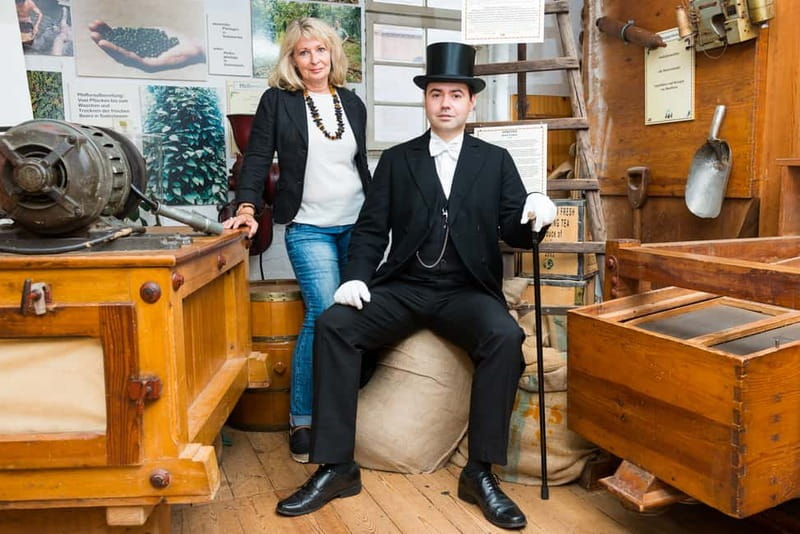
One of the clever touches here is the setting. The museum is generously built on an original storage floor, and that original building element shows up in the way the space feels. You’re not walking through a modern retail display. You’re in a place that was meant to hold goods, and it adds weight to the story of spices as trade commodities.
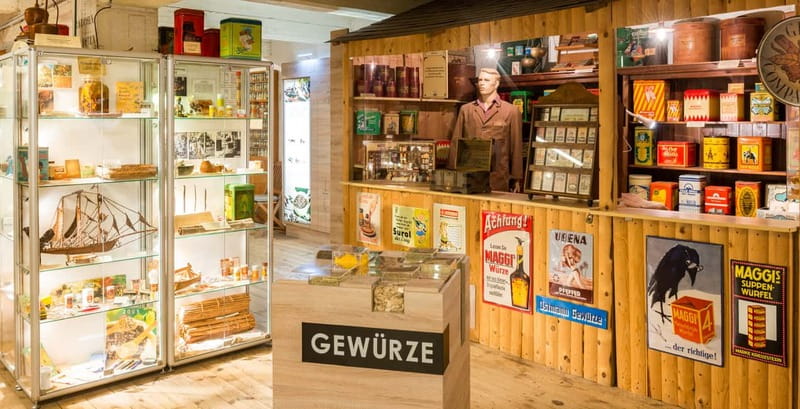
The museum also frames spices across centuries, with over 900 exhibits spanning the last five centuries. That’s a lot of items, but the way it’s presented helps you avoid getting overwhelmed. Instead of a single wall of information, you get audio support and a pattern of sensory interaction: you meet a spice, then you learn what it is and how it relates to cooking and commerce.
If you’re the kind of person who likes understanding how food products travel through time, this building context can help. Spices weren’t just ingredients; they were preserved, traded, and stored. Walking through a space that once functioned like a storage facility makes that idea feel more real.
Production history: from cultivation to finished spice
The museum goes beyond “here’s what it smells like” and gets into process. You can learn about the entire production process for a variety of international spices, from cultivation through to the finished product.
The key here is the use of antique equipment and machinery. Seeing older tools tied to spice production makes the history feel tangible. You understand that spices weren’t always produced with modern shortcuts and that processing methods mattered for quality and consistency.
In a museum like this, the process section is where the audio guide earns its keep. If you only had static labels, it would be harder to connect the steps. With the audio explanation, you can make sense of why certain spices were processed the way they were, and how that relates to what you smell and taste later.
Tasting corner: pepper samples and the gummy-bear moment
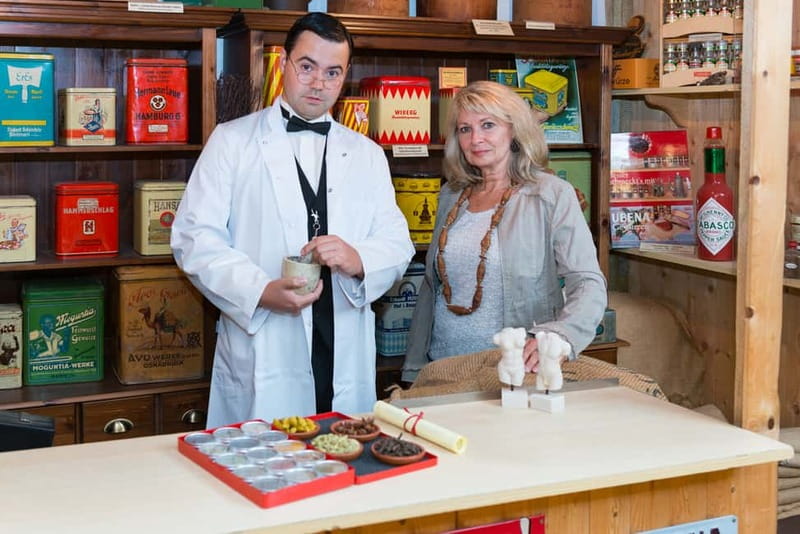
The included tasting part is straightforward and fun: adults get a pepper spice sample, and children get gummy bears. That doesn’t sound like a huge “food experience” on paper, but it changes the mood of the museum.
Why? Because taste makes the whole session more memorable. You smell a spice, hear how it’s used, then get a small sample so you can connect your senses to a flavor result. It’s not a long tasting tour with multiple courses; it’s a targeted experience that keeps your time on track for the 1.5-hour duration.
Also, the museum’s taster setup is described as a probierecke, a tasting corner concept. That signals a space that’s meant for trying things, not just reading about them. If you’re traveling with kids, the gummy bears are a helpful incentive for attention. If you’re traveling solo or as a couple, the pepper sample gives you that small but satisfying “I did something” moment.
A note worth thinking about: tasting means you’ll want to take it at a pace that feels comfortable. If strong smells are an issue for you, you can still enjoy the learning—just spend less time at the stations that hit the hardest.
What to expect from the pacing (and why 1.5 hours works)
This is built as a 1.5-hour experience. That time box is actually a benefit. You’ll have enough time to cover multiple spice stations and the historical/exhibit sections without it turning into an all-day mission.
Here’s how the flow tends to feel once you’re inside:
1) You start with the sensory stations and audio guidance.
2) You move through exhibits and production-related displays, supported by the guide.
3) You reach the tasting moments that connect your senses to real flavor.
Because everything is designed to fit within that timeframe, you don’t need to stress about “missing” something. You can do the experience in a relaxed way and still finish without feeling rushed.
Who should book this spice ticket?
Spicy’s Gewürzmuseum is a great match if you want:
- Hands-on learning that uses touch and smell, not just reading
- A compact activity in Hamburg that fits a morning or afternoon slot
- A food-and-history stop that explains spice culture in an approachable way
- An audio guide experience in English, French, or German
It’s less ideal if you need wheelchair access. It also might be a tougher sell if you hate sensory experiences—strong scents are part of how the museum teaches, so plan your comfort level.
For families, it’s one of the friendliest museum concepts around, mainly because it includes gummy bears for children and offers interaction through touch and smell.
Should you book Spicy’s Gewürzmuseum Entry Ticket?
If you’re looking for a low-cost, high-satisfaction activity where you actually interact with what you’re learning, I’d book it. At $8, the ticket price matches the time and the value comes from the included audio guide plus the touch-and-smell setup and tasting moments.
Book it if you want a museum that feels like a workshop. Skip it if your ideal museum day is quiet, text-only, and fully accessible in a way that doesn’t rely on sensory stations.
If you decide to go, do one simple thing: bring a charged smartphone so the audio guide works smoothly from start to finish.
FAQ
How long is the Spicy’s Gewürzmuseum entry ticket experience?
The duration is about 1.5 hours.
What does the ticket include?
Your ticket includes entry to Spicy’s Gewürzmuseum, a pepper spice sample for adults, gummy bears for children, and a downloadable audio guide.
Do I need to bring headphones for the audio guide?
The audio guide is accessed on your phone or tablet. The provided info also says to bring a charged smartphone, but it does not specify headphones—so you should plan to use whatever audio setup you prefer.
What languages are available for the audio guide?
The audio guide is available in German, English, and French.
Where do I go when I arrive?
You must exchange your voucher at the ticket counter at Spicy’s Gewürzmuseum before the experience begins.
What should I bring with me?
Bring a charged smartphone.
Is the museum suitable for wheelchair users?
No. It is not suitable for wheelchair users.
What is the cancellation policy?
Free cancellation is available up to 24 hours in advance for a full refund.