REVIEW · SANTIAGO DE COMPOSTELA
Santiago de Compostela: Cathedral & Museum Private Tour
Book on GetYourGuide →Operated by We Galicia · Bookable on GetYourGuide
This place has gravity, and the tour gives it direction. I like how the experience starts with the apostle Saint James story so the Cathedral’s art makes sense fast, and I love the added focus on the Cathedral Museum collection instead of treating it like a side stop. I also appreciate guide skill I’ve seen called out clearly by people, including Ticino and Lucia, who explain what you’re looking at without rushing.
One thing to consider: the $88 price isn’t the full picture, because official entrance fees for the Cathedral complex can be separate. If you want a true all-in budget, you’ll need to factor in those on-site prices.
In This Review
- Key points worth centering
- A two-hour private look at Santiago’s Cathedral Museum
- Start at Plaza do Obradoiro: how the tour unfolds
- Ground-floor Museum rooms and the excavations you can picture
- Iconography and the three versions of Apostle Santiago
- The Codex Calixtinus library: where the manuscript story clicks
- Third-floor tapestries and that Madrid-made Goya set
- Balcony views over Plaza do Obradoiro
- Back to the cloister: entering the Cathedral without waiting in line
- Chapels, holy door, and the tomb area: the emotional center
- Price and value: is $88 worth it?
- Who this tour suits best (and who should rethink it)
- Quick tips before you go
- Should you book this private Cathedral & Museum tour?
- FAQ
- How long is the private Cathedral & Museum tour?
- Where do we meet the guide?
- What languages are available for the guide?
- Is this tour private?
- Do we skip the line?
- Are there stairs in the museum?
- Is it suitable for wheelchair users or mobility impairments?
- Is shorts clothing allowed?
Key points worth centering
- Private, authorized guidance: you get an official guide authorized by the Cathedral’s dean.
- The museum first, then the temple: you see excavations, iconography, and major exhibits before you step into the church spaces.
- Codex Calixtinus library time: the tour includes the library where this key manuscript is kept.
- Three Saint James identities: you’ll learn the pilgrim, soldier, and saint versions and what they’re meant to communicate.
- Tapestries on the third floor: you’ll see works linked to the Flanders school plus the Goya Tapestries made in Madrid’s Royal Tapestry Factory.
- A balcony payoff: you’ll end with views from the balcony overlooking Plaza do Obradoiro.
A two-hour private look at Santiago’s Cathedral Museum
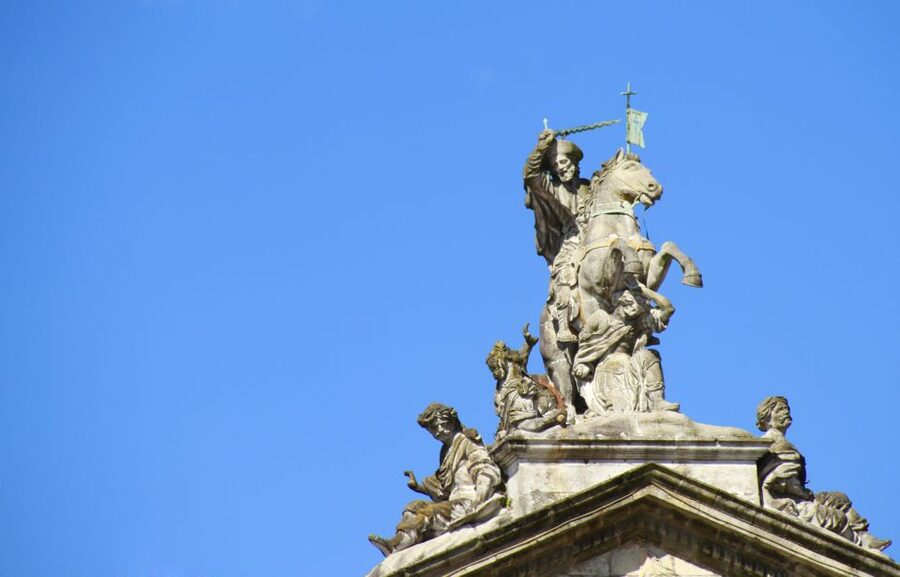
Santiago de Compostela is famous for faith, pilgrimage, and serious art. What makes this private tour especially useful is that you’re not just staring at objects and guessing. You’re given a simple path through the Cathedral complex that turns details—like icon types, chapel focus, and manuscript significance—into something you can actually follow.
At $88 per person for about two hours, the value isn’t just the museum access. It’s the way an official guide helps you connect the dots between the Museum rooms, the library, and what you’ll later see inside the Cathedral itself. If you’re short on time, that structure matters.
This is also a good “first night in town” option. You get oriented fast to Plaza do Obradoiro, the Cathedral layout, and the kind of symbolism Santiago is known for—especially around Saint James.
You can also read our reviews of more tours and experiences in Santiago De Compostela.
Start at Plaza do Obradoiro: how the tour unfolds
You meet at Plaza do Obradoiro, in front of the Cathedral’s Museum door. Your guide will be carrying a blue umbrella, so you can spot them quickly without playing guessing games.
From the start, I like the fact that you’re beginning at the Museum side. That matters because the Cathedral can feel like a blur if you enter first. Here, you learn what you’re looking at—then the big church spaces land with more meaning.
The tour pacing is designed for about two hours. Still, the route involves both indoor rooms and outdoor time, and the balance between those can vary. If you’re the type who hates running late, go into it with a calm schedule buffer.
Ground-floor Museum rooms and the excavations you can picture
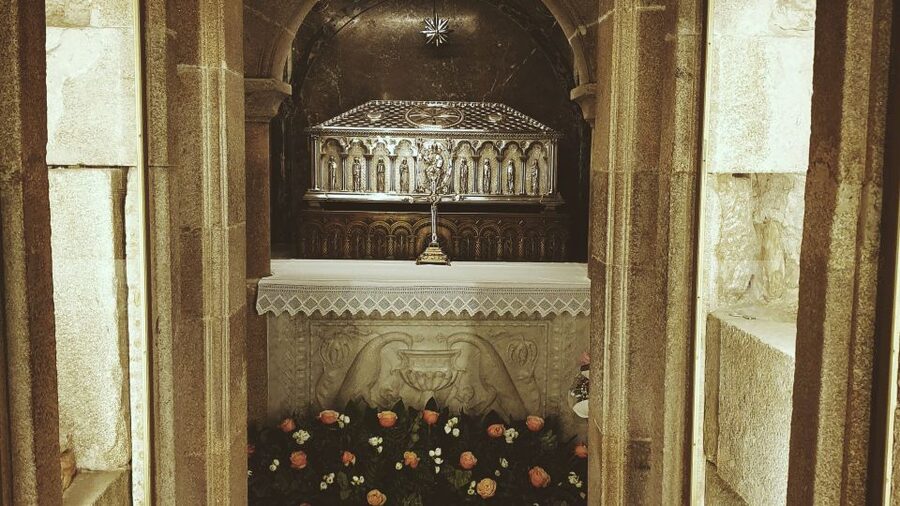
The tour begins in the Cathedral Museum’s ground-floor area. You’ll encounter four rooms with remains uncovered by archaeological excavations. These are the kind of exhibits that reward attention. Even if you don’t read every caption, a guide can point out what changed over time—what stood there before the Cathedral shape you see today.
One practical plus: there’s a map where you can see what was on the site prior to the current Cathedral. That helps you picture the layering effect, which is a big theme in historic religious sites.
You’ll also spend time on major sculptural and devotional pieces, including the stone choir of Master Mateo. This is one of those works where your eyes want a clear guide: where to look, what details are symbolic, and why the craftsmanship is the point.
If you’re into art with context—iconography, devotional objects, and the meaning behind design—this ground-floor start gives you a strong foundation.
Iconography and the three versions of Apostle Santiago
After you’ve set the scene with excavations and core exhibits, the tour shifts into iconography—how Saint James is represented across time and tradition.
You’ll see religious images in multiple forms such as busts, statues, and wooden carvings. Then comes one of the most helpful parts for first-timers: depictions of Apostle Santiago in three versions—pilgrim, soldier, and saint. A good guide will explain what each version is trying to communicate and how it ties to the story around Saint James.
You’ll also hear about other biblical characters connected to the narrative being shown through these artworks. The goal isn’t academic trivia. It’s to help you read what you see in the Cathedral later, instead of treating everything as separate “random sights.”
The Codex Calixtinus library: where the manuscript story clicks
On the second floor, you move from the cloister area to focus on the library where the Codex Calixtinus manuscript is kept.
This is a standout stop because the Codex Calixtinus is described as the main witness for the Book of Saint James. That phrasing matters. It tells you the manuscript isn’t just a fancy artifact behind glass—it’s a key document shaping the story people associate with Saint James and the pilgrimage.
In real terms, this library visit is your chance to connect three ideas: the saint’s story, the art around him, and how written tradition supports the “why” of pilgrimage. Even if you only absorb parts of what’s explained, the manuscript context changes how you interpret the rest of the Cathedral complex.
One practical note: there is no elevator inside the museum, so you’ll be taking stairs. Comfortable shoes aren’t optional here.
You can also read our reviews of more museum experiences in Santiago De Compostela
Third-floor tapestries and that Madrid-made Goya set
On the third floor, the museum presentation shifts into textiles: tapestries from the Flanders school and the so-called Goya Tapestries. These are associated with production at the Royal Tapestry Factory of Madrid, and that fact alone helps you understand these works as more than decorative hangings.
A guide’s job here is to help you look for meaning in patterns, subjects, and how the tapestry tradition supports the larger religious world you’ve already been walking through. If you tend to skip tapestry rooms because they feel like “too much wall,” this stop can change your mind because you’ll understand what to notice.
This is also where the pacing becomes important. Tapestries take time to look at properly, and you’ll want your guide to keep the group moving at a good tempo.
Balcony views over Plaza do Obradoiro
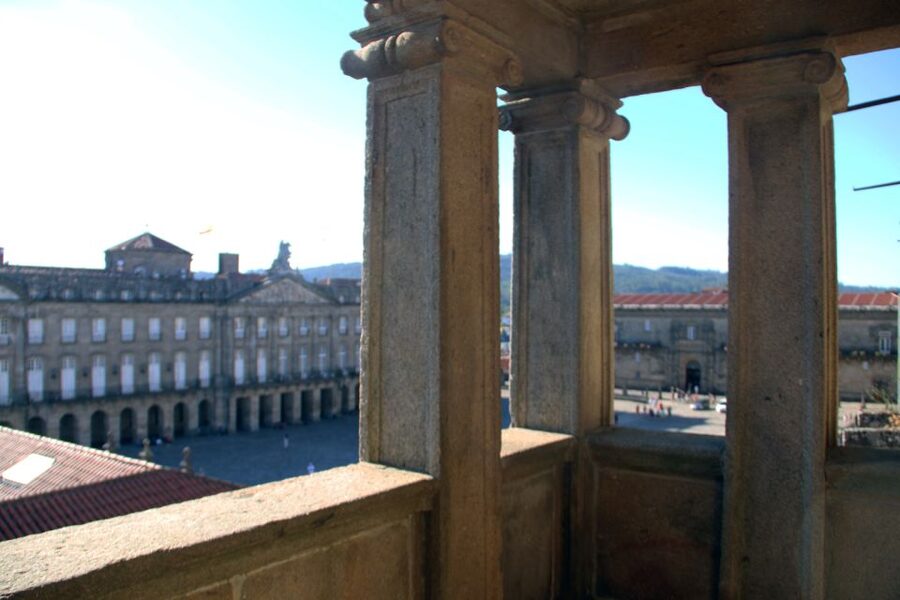
After the interior museum time, you’ll head to the balcony. This is one of those stops that feels like a breather and a reset. You’re looking down (and across) toward Plaza do Obradoiro, with the Cathedral setting all around.
I love balcony moments on sightseeing tours because they give you orientation. Once you’ve seen the Cathedral’s surroundings from above, the ground-level facades make more sense, and the Cathedral complex stops feeling like a maze.
Bring your camera. Even if you don’t care about photos, the views help you remember the trip.
Back to the cloister: entering the Cathedral without waiting in line
After the balcony, you go back to the second floor to visit the cloister. Then you access the Cathedral using a separate route designed to help you avoid waiting in line.
This part can be a big quality-of-life upgrade. If you’re on a tight schedule, line-free entry means more time in the spaces that matter most to you.
Inside the Cathedral, you’ll have time to enjoy chapels and then follow your guide to key points: the main altar, the holy door, and the area said to be the tomb of the apostle Saint James.
This is the “payoff” segment. The earlier Museum stops turn into context. The religious art and the manuscript significance don’t feel random when you’re standing inside the temple spaces they connect to.
Chapels, holy door, and the tomb area: the emotional center
The Cathedral spaces are where everything becomes personal, even if you’re not the type who prays. You’ll see the chapels, then your guide will lead you to the main altar and the holy door.
Finally, you’ll arrive at the tomb site area connected with Saint James. The tour is framed around the location where the apostle is thought to be buried, and that framing matters. Even if you keep your mind open rather than fully convinced, you’ll understand why pilgrims treat this spot as the center of the story.
This is also where your guide’s pace matters. If the group time feels short, the tomb segment might be the most important place to focus. If your goal is to linger, keep an eye on timing earlier in the tour so you don’t feel rushed at the end.
Price and value: is $88 worth it?
For many people, the deciding factor is simple: is the guide time worth paying for? In this case, I think it often is, because the Cathedral complex is visually stunning but also easy to misunderstand on your own.
At $88 per person for about two hours, you’re paying for an official, structured route through the Museum and Cathedral. That route includes the Codex Calixtinus library, major iconography, Master Mateo’s stone choir, third-floor tapestry highlights, and the balcony viewpoint—plus access designed to help you skip the line.
Just don’t assume the total price is fully inclusive. The tour information notes that entrance tickets are not included and official Cathedral prices can apply, including museum-related fees depending on the exact setup. If you want a clear budget, confirm what’s covered and what you’ll pay on-site.
Who this tour suits best (and who should rethink it)
This is a strong fit if you want:
- a guided route through both Museum and Cathedral
- clear explanations for the symbolism behind images of Saint James
- a good balance of art, architecture, and pilgrimage context
- a short, efficient plan that avoids a long self-guided wandering session
It may not be a great fit if:
- you have mobility impairments or use a wheelchair (the tour notes it is not suitable for these needs)
- you don’t handle stairs well (there’s no elevator in the museum)
- you’re picky about a rigid schedule and hate any risk of outdoor time cutting into museum time
If you’re visiting with kids, the info notes children under 12 have an age-related price category of 0€, but the tour still isn’t designed around mobility flexibility. For anyone with stiff knees or balance issues, do plan carefully.
Quick tips before you go
Bring:
- comfortable shoes for stairs
- a camera
- passport or ID card (a copy is accepted)
Avoid:
- shorts and short skirts
- sleeveless shirts
- smoking indoors
- mobility scooters and non-folding wheelchairs or strollers
Also keep in mind that entry to the Cathedral could be limited during special events, such as a royal visit of the king and queen of Spain. If your dates line up with a big schedule, having a guide can help you deal with what’s possible.
And if you want the best experience, go with one clear mindset: your guide isn’t just showing you sights. They’re helping you read them.
Should you book this private Cathedral & Museum tour?
If you want a tight, high-impact plan, I’d book it. This tour is built around meaningful stops: the Museum’s excavations, Master Mateo’s choir, iconography of Saint James in three forms, the Codex Calixtinus library, major tapestry displays, and then the Cathedral’s chapels, holy door, and tomb area.
Skip this only if stairs and possible schedule compression would make you uncomfortable, or if you hate paying separate entrance fees on top of the tour rate. Otherwise, this is one of the best ways to turn Santiago de Compostela’s most famous site into something you can understand and remember.
FAQ
How long is the private Cathedral & Museum tour?
The tour lasts 2 hours.
Where do we meet the guide?
Meet at Plaza do Obradoiro in front of the Cathedral’s Museum door. The guide will be carrying a blue umbrella.
What languages are available for the guide?
The live tour guide is available in French, English, Galician, Spanish, Italian, Portuguese.
Is this tour private?
Yes, it’s listed as a private group.
Do we skip the line?
Yes. You enter the Cathedral using a separate entrance to help you avoid waiting in line.
Are there stairs in the museum?
Yes. There is no elevator inside the museum, so you’ll need to take the stairs.
Is it suitable for wheelchair users or mobility impairments?
No. The tour is not suitable for people with mobility impairments and is not suitable for wheelchair users.
Is shorts clothing allowed?
No. Shorts are not allowed.