REVIEW · DERRY LONDONDERRY
Peacemakers Museum Entry Ticket
Book on Viator →Operated by Peacemakers Museum · Bookable on Viator
A museum visit with real stakes in Derry. Peacemakers Museum walks you through how the Troubles shifted into the peace process from August 1972 to May 2007, using artefacts, oral history, and archive footage. I love the way the exhibits keep the story grounded in real people and real local impact.
I also like the museum’s clear focus on how key figures helped shape the 1998 Good Friday Agreement and the consent-based idea of a future determined by agreement. The main downside is simple: there’s a lot to read and listen to, so if you rush, you’ll miss the nuance that makes this place matter.
In This Review
- Key highlights to know before you go
- Peacemakers Museum’s timeline: how the story moves from conflict to peace
- Inside the exhibits: artefacts, voices, and archive footage that make it feel immediate
- The Bogsiders and the Good Friday Agreement: why those names keep coming up
- Plan your 1.5 hours: a museum you should not sprint through
- Audio guide and guide materials: the fastest way to keep the story straight
- Price and value: what $10.97 really buys you
- Who should book this ticket, and who should set expectations
- Should you book Peacemakers Museum entry?
- FAQ
- What does the Peacemakers Museum ticket include?
- How long should I plan to spend?
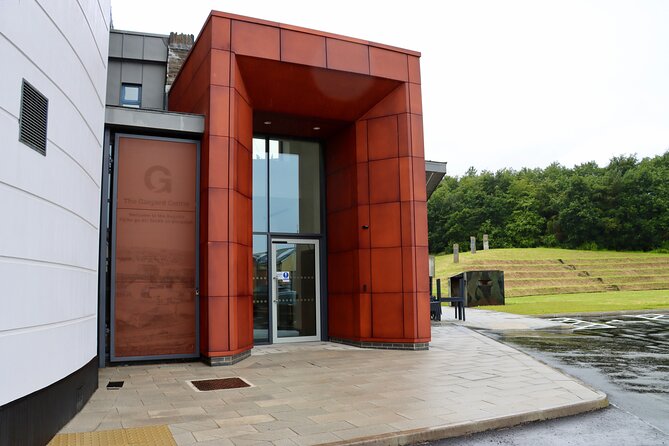
- Where is the museum located?
- What language options are available?
- Can I use a mobile ticket?
- Is food or drink included?
- What are the opening hours?
- Is it close to public transportation?
- Are service animals allowed?
- Is the ticket refundable or changeable?
- Is the museum suitable for most travelers?
Key highlights to know before you go
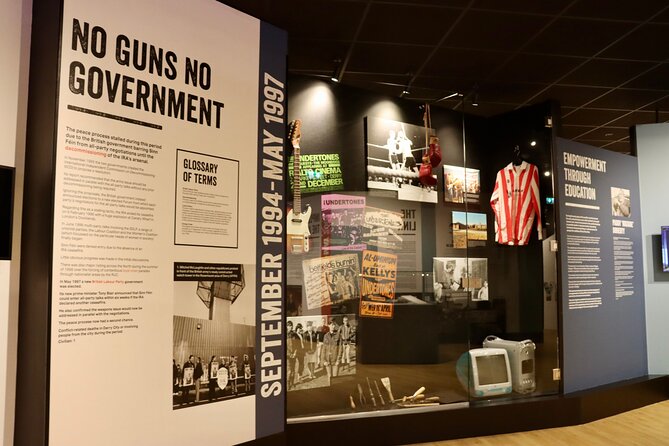
- A timed story from 1972 to 2007: you’re not just staring at objects; you’re following the conflict’s change over decades.
- Artefacts + oral history + archive video: multiple ways to learn, so you’re not stuck with only text.
- Interactive elements: useful if you learn better by doing than by reading.
- The Bogsiders connection: John Hume, Martin McGuinness, and Mitchel McLaughlin are treated as central to the peace conditions.
- Agreement, implementation, and what comes next: it doesn’t stop at the signing moment.
- Multilingual audio guide: English plus Spanish, French, German, and Italian.
Peacemakers Museum’s timeline: how the story moves from conflict to peace
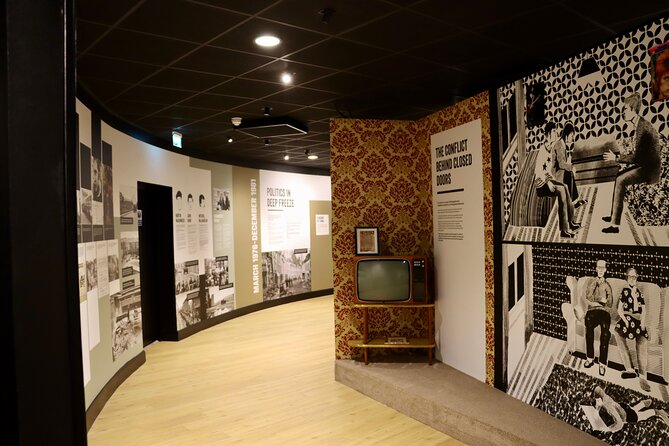
Peacemakers Museum is built around a long, specific stretch of time—August 1972 through May 2007—which is a smart choice. A lot of places in Northern Ireland give you the big events, then move on. Here, you get a sense of how the conflict evolved, why peace became possible, and what followed after the Agreement.
That timeline matters because the Troubles didn’t just happen in one dramatic burst. They changed in shape, in geography, and in how communities were affected. The museum’s layout helps you see that shift, so the peace process doesn’t feel like an abrupt miracle. Instead, it looks like a gradual, difficult construction—built through decisions, political pressure, and changing realities on the ground.
If you’re visiting Derry/Londonderry, this museum also plays a useful role in your day. It gives context for why local life looks the way it does now, including how people talk about reconciliation and the future of the island. And because the exhibits reference both the conflict and the peace process, you’re not asked to pick one side of the story—you’re asked to understand how both periods affected the same neighborhoods.
Inside the exhibits: artefacts, voices, and archive footage that make it feel immediate
The museum uses a mix of media so you can choose your pace. You’ll see artefacts, which gives the story physical anchors—things you can imagine being handled by someone, used in daily life, or tied to a moment in time. That’s often more powerful than photos alone because it pulls you into the everyday texture of the period.
Then there’s the oral history and archive video. Those sections help you connect the dates to human experiences. If you’re the type who needs context before you feel something, this format works well: you get background, then you get voices. If you’re the type who needs emotion first, the oral history and footage help you process the events as lived reality, not just political talking points.
The museum also includes interactive features. I like these because they prevent “museum fatigue.” When you’ve been reading for too long, interactive parts can reset your attention and make the information stick. That said, you should still be ready for text. One of the most common practical notes is that you’ll encounter plenty of reading throughout the galleries.
The exhibits include how the Agreement was reached, how it was implemented, and what implications it might have for the future. That structure is valuable for anyone who feels confused about what peace in Northern Ireland actually means in practice. A lot of visitors know the headline story of the Good Friday Agreement, but fewer people know what came after—how the political template gets tested in real life, and how consent is supposed to work.
The Bogsiders and the Good Friday Agreement: why those names keep coming up
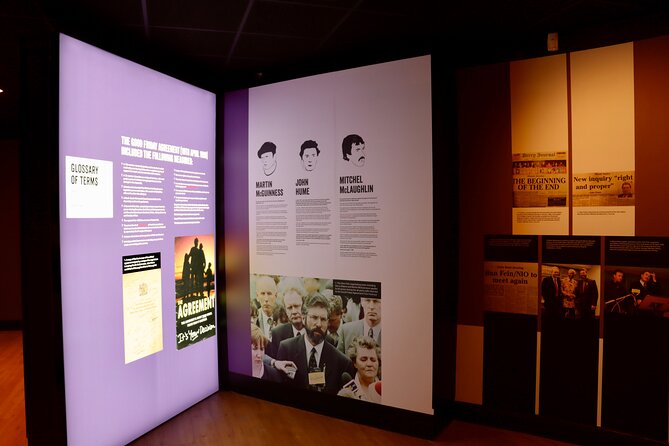
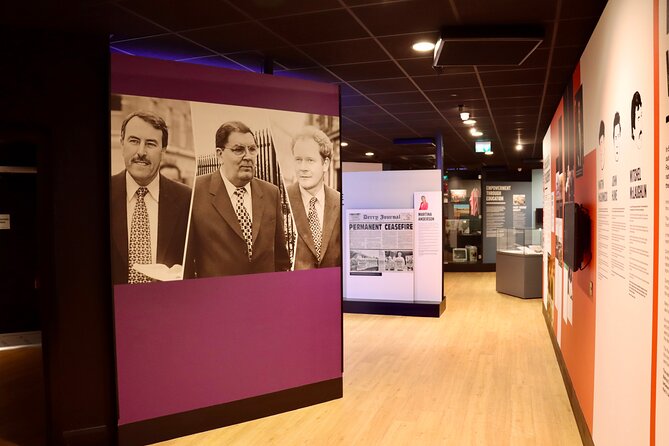
A big reason this museum is worth your time is that it clearly highlights the role played by John Hume, Martin McGuinness, and Mitchel McLaughlin. It doesn’t treat them like distant politicians in a history book. Instead, it ties them to the conditions that helped make peace possible.
If you walk in with only a casual understanding of Northern Ireland politics, you’ll leave with a more organized mental map. The museum explains how the Good Friday Agreement in 1998 created a political framework for resolving the conflict. It also connects that framework to the idea of consent—meaning the future shouldn’t be imposed by force, but determined by agreement.
This matters because peace processes are easy to reduce to one signing date. Here, the exhibits help you see the Agreement as a point in an ongoing process—something built on groundwork and continued negotiation. That’s the kind of context that makes your conversations later in Derry/Londonderry feel sharper. You’ll be able to ask better questions instead of just repeating what you already knew.
And because the museum spans decades, you’re also better prepared for the complexity of how people think about reconciliation. The point isn’t to make everything feel simple. The point is to show the path from conflict into a political process aimed at long-term stability—plus the reality that the future still depends on people’s decisions.
Plan your 1.5 hours: a museum you should not sprint through
The ticket experience is about 1 hour 30 minutes (approx.). That’s long enough to understand the core story, but short enough that you can accidentally rush if you’re not careful.
My practical advice: decide in advance what kind of visitor you are.
- If you like reading and absorbing detail, give yourself the full time and move slowly through the sections with artefacts and oral history.
- If you prefer visuals, spend your energy on the archive footage and interactive parts first, then circle back to fill gaps.
The museum also offers a written guide in English and a multilingual audio guide (English, Spanish, French, German, Italian). That means you don’t have to rely on one format. If you find yourself getting stuck in text-heavy areas, the audio can keep your momentum—and if you’re hard of hearing or prefer reading, the written guide helps you stay oriented.
Also, remember the museum is open Monday–Friday, 9:30 AM to 5:00 PM during the currently posted schedule window (through February 16, 2027). If you’re visiting on the weekend or arriving late in the day, you may need to adjust your plan.
Audio guide and guide materials: the fastest way to keep the story straight
The included materials are part of what makes this ticket feel like good value. You get:
- An audio guide in English plus Spanish, French, German, and Italian
- A written guide in English
- And a mobile ticket for admission
Why this matters: the museum covers a long timeline and repeats key themes (conflict, peace process, Agreement, implementation). Audio plus text helps you keep your footing. You don’t have to choose between learning and “keeping up.”
If English is your language, the audio still helps because it structures your attention. You’ll be less likely to bounce randomly from exhibit to exhibit and miss the museum’s logic. If you’re traveling with someone whose preferred learning style differs from yours, the combination of formats makes it easier to follow the same storyline without everyone struggling equally.
One more tip: if you want to understand the full arc of Derry’s story, consider pairing this with the free Derry museum first. That approach makes sense because the free museum focuses on an earlier slice (from the 1960s to the early 1980s), while Peacemakers Museum picks up the conflict evolution after that period. Together, they give you a more connected timeline instead of two separate chunks.
Price and value: what $10.97 really buys you
At $10.97 per person for admission, this isn’t a budget-breaking museum stop. More importantly, it’s priced in line with what you actually get inside: a structured experience, guides, and entry included fees.
What you receive with the ticket:
- Admission itself
- Audio guide in multiple languages
- Written guide (English)
- All fees and taxes included
What you don’t receive:
- Food or drink
So the value equation is pretty straightforward. You’re paying for guided learning time, not just access to a room of exhibits. With around 90 minutes to spend, you’re getting a meaningful block of interpretation rather than a quick photo stop.
One small practical note from real-world pacing: you may want to plan a meal around your visit. If you’re staying nearby and get hungry, the museum area can make it easy to take a break. (Some visitors also note they’ve had lunch on site and felt it was good value.)
Who should book this ticket, and who should set expectations
This museum is a strong fit if you:
- Want to understand the Troubles and peace process with clear structure
- Like museums that use voices, archive footage, and original artefacts
- Are interested in the political conditions behind reconciliation—not just the headline events
- Prefer a balance of context and reflection
It’s also a good choice if you’re the kind of traveler who likes to learn the “why” behind a place. Derry/Londonderry has a story people carry. Peacemakers Museum helps you understand it in a way that feels grounded and human.
If you’re short on time or hate reading in museums, don’t assume this will feel light. The core experience includes plenty of information, and the best approach is to slow down rather than treat it like a checklist.
And if you’re sensitive to heavy topics: it’s a museum about conflict and reconciliation in the recent past. You should go with care for your own emotional bandwidth and plan for a calmer moment afterward.
Should you book Peacemakers Museum entry?
Yes—if you want the peace process explained with names, timeframes, and real local impact. The ticket gives you a focused 1.5-hour learning experience with audio and a written guide, and the museum’s timeline approach (1972 to 2007) helps you make sense of how conflict transformed into a political path toward consent.
If you’re the type who only wants the single headline event, this might feel like more information than you need. But if you want understanding you can carry into the streets of Derry/Londonderry, this is one of the most useful places to start.
FAQ
What does the Peacemakers Museum ticket include?
Your entry ticket includes all fees and taxes, plus an audio guide offered in English, Spanish, French, German, and Italian, and a written guide offered in English.
How long should I plan to spend?
The experience duration is about 1 hour 30 minutes (approx.).
Where is the museum located?
The museum is in Derry-Londonderry, Northern Ireland.
What language options are available?
The experience is offered in English. The audio guide is also available in Spanish, French, German, and Italian. The written guide is offered in English.
Can I use a mobile ticket?
Yes, the ticket is a mobile ticket.
Is food or drink included?
No. Food or drink is not included.
What are the opening hours?
The posted opening hours are Monday through Friday, 9:30 AM to 5:00 PM, within the schedule dates shown (07/29/2024 to 02/16/2027).
Is it close to public transportation?
Yes, it is near public transportation.
Are service animals allowed?
Yes, service animals are allowed.
Is the ticket refundable or changeable?
No. The experience is non-refundable and cannot be changed for any reason.
Is the museum suitable for most travelers?
Most travelers can participate.