REVIEW · SALERNO
Paestum: Private Tour of Greek Temples and Archaeological Museum
Book on Viator →Operated by Askos Tours · Bookable on Viator
Paestum feels real the moment you see the stones. This private tour pairs a certified archaeological guide with a tight two-hour walking route, and you can pick the time of day that fits your schedule. It is designed so you do not just see the temples, you understand what you are looking at.
I especially like the stop mix: a focused run through the Archaeological Park of Paestum plus an hour inside the National Archaeological Museum. The museum’s biggest draw is the fresco program, including the famous Tomb of the Diver, which makes the ancient world click faster than staring at ruins alone.
The main thing to plan for is that the tour is short and on-foot, so you’ll want comfortable shoes and a moderate fitness level. If you want a slow, do-everything-in-depth Paestum day, you may feel slightly rushed without adding time before or after.
In This Review
- Key things that make this Paestum tour worth your time
- Paestum temples, explained fast (and not in a lecture way)
- Archaeological Park of Paestum: your first 30 minutes matter
- Tempio di Hera II (Poseidonia): the name mix-up you should know
- Temple of Athena (Temple of Ceres): a smaller stop with real context
- Museo Archeologico Nazionale di Paestum: Tomb of the Diver does the heavy lifting
- Guides and pacing: why names keep coming up for a reason
- Price and value: $202+ for admissions plus a real guide
- Timing, meeting point, and what to wear
- Best fit: who will enjoy this tour the most
- A smart lunch plan right after the temples
- Should you book Paestum: Private Tour of Greek Temples and Archaeological Museum?
- FAQ
- How long is the Paestum private tour?
- What stops are included in the tour?
- Are admission tickets included?
- Is this tour private or shared?
- What language is the tour offered in?
- How large can the group be?
- Where do we meet, and where does it end?
- What cancellation terms should I expect?
- What should I wear or prepare for?
Key things that make this Paestum tour worth your time
- Private, guided pacing across the key sights without the usual wandering
- Admission included for the park and the museum, plus free entry for the two temple stops
- Museum time is real: about an hour for the Museo Archeologico Nazionale di Paestum
- Temples explained in context (including why Hera II is often misnamed)
- English-guided experience with guides praised for clear explanations and good pacing
- Group size flexibility up to 15 and group discounts
Paestum temples, explained fast (and not in a lecture way)
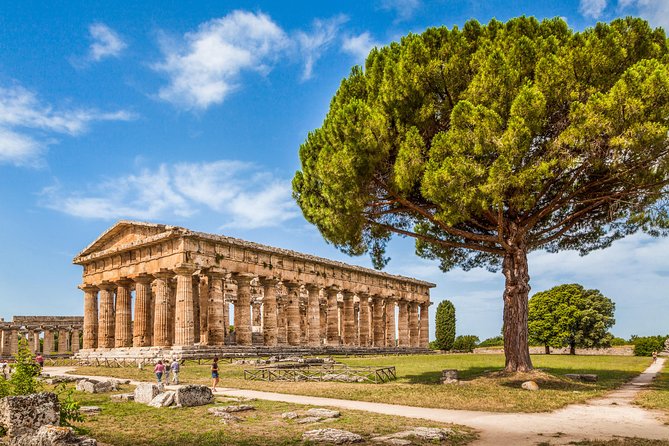
Paestum is one of those rare places where the ruins still feel physical. You are not dealing with scattered stones in a field—you’re walking through a Greco-Roman site where key structures still hold their shape. The tour’s format matters because Paestum can overwhelm you if you try to self-guide. Here, you get a guide to translate what you’re seeing into why it matters.
I like the practical feel of the route: short temple stops first, then a museum stop that gives your eyes something to connect to. And because it’s private, your group can move at a comfortable pace and ask questions without turning every explanation into a traffic jam.
The duration also shapes the experience. Two hours is enough time to get the core sights and the main story, but it is not meant to replace a full-day Paestum trip. If you are pairing Paestum with Naples or the Amalfi Coast, this tour often fits nicely as your “temples + museum” hit.
Archaeological Park of Paestum: your first 30 minutes matter
You start at the Archaeological Park of Paestum, which is where you get oriented fast. This is the big stage: the area often called the best-preserved Graeco-Roman city setup, and it’s the part where your guide’s storytelling will make the most difference. You’ll spend about 30 minutes here, and admission is included.
In practical terms, those 30 minutes are a guided way to get your bearings:
- You learn how to read the site layout rather than just chasing the most photogenic views.
- You get context for the later temple details, so the names and dates do not feel random.
One reason this park stop works well in a shorter tour is that Paestum’s temples can look similar until you know what to look for. A guide can point out the features that separate one temple from another and explain why different temples get linked to different gods and eras.
Also, Paestum is often not as overpacked as the headline sites. That can help you see more clearly, especially if you arrive at a calmer time of day. Even with a short tour, you’ll likely get a better visual feel than you would in a place where you’re constantly edging around crowds.
Tempio di Hera II (Poseidonia): the name mix-up you should know
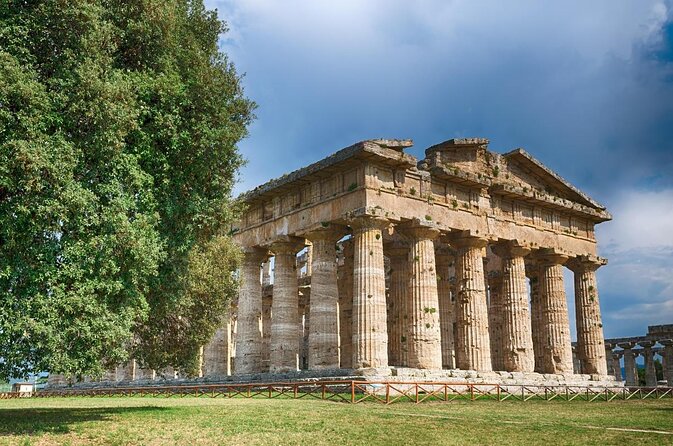
Next comes Tempio di Hera II, sometimes still called the Temple of Poseidon—or even the Temple of Neptunus—because of historical misidentification. Your guide will help clear up that confusion, which is a big part of making Paestum rewarding. Getting the right attribution turns the architecture into an actual historical clue, not just a pretty ruin.
This stop lasts about 15 minutes, and admission is free for this part. That short timing is exactly right in a private tour because you’ll already have context from the park. Your guide can focus on the key takeaway points and then you move on rather than standing too long in one spot.
If you care about accuracy, this stop is a highlight. It also gives you a built-in quiz for your own sightseeing later. After the explanation, you’ll start spotting details that remind you why the earlier identification happened—and how modern scholarship corrected it.
Temple of Athena (Temple of Ceres): a smaller stop with real context
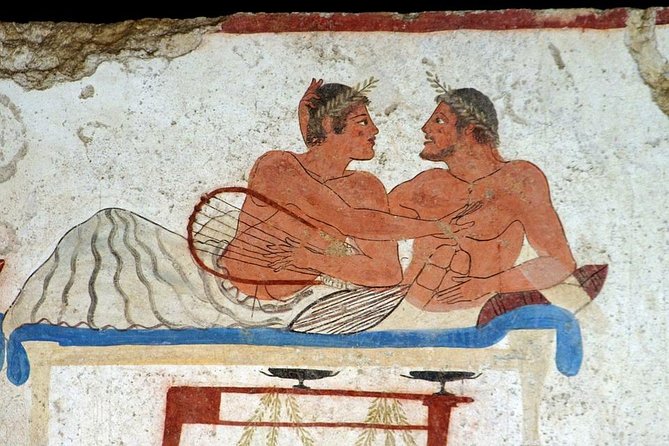
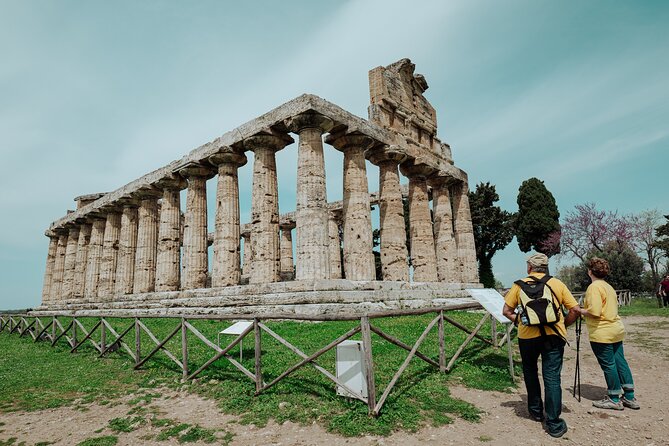
Then you head to the Temple of Athena, sometimes referred to as the Temple of Ceres. This temple is dated around 500 BC, and it sits near the Basilica, which is larger. That proximity is the kind of detail that matters for orientation, and in a short tour, it’s the sort of thing you only catch when someone points it out.
This is another 15-minute stop, with admission free. The value here is not length—it’s interpretation. A guide can explain how these temples fit into the broader layout, so your eyes learn the “map logic” of Paestum rather than just collecting images.
I like that the tour does not overstay here. You get the core moment, then you transition to the museum where the stories become much easier to picture. If you’re building an understanding in two hours, this sequencing helps.
Museo Archeologico Nazionale di Paestum: Tomb of the Diver does the heavy lifting
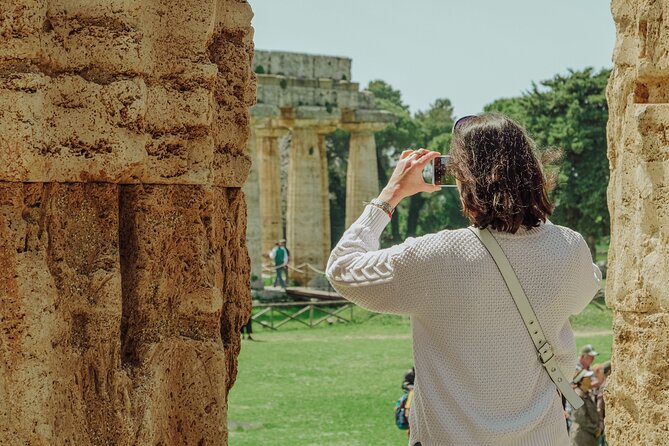
The final stop is the Museo Archeologico Nazionale di Paestum, with about one hour inside and admission included. This is where Paestum stops being only stone.
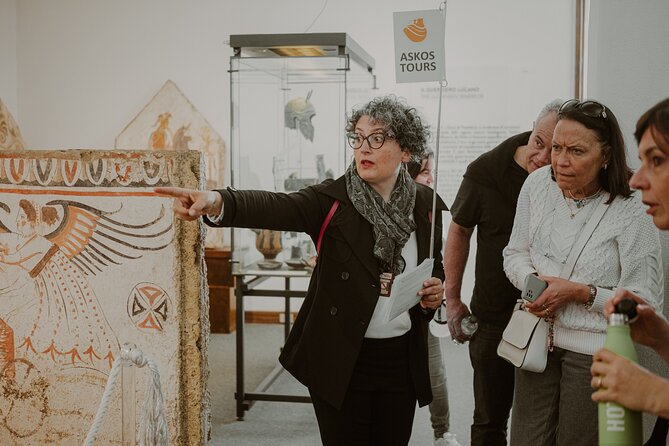
The museum’s headline is the fresco program from the Tomb of the Diver. Even if you are not a museum person, frescoes like this tend to pull your attention because they show daily life cues, artistic choices, and the kind of symbolism you don’t get just from columns and walls. A guided hour helps you focus on what to see rather than getting lost in the scale of objects.
One of the reasons I recommend a guided museum stop is that you can walk through displays and still miss the story thread. With a guide, you learn which pieces connect to what you saw outside. Then the temples stop feeling like isolated monuments and start feeling like parts of a whole civic and cultural system.
If you’ve got any artistic curiosity at all, you’ll likely leave the museum wanting to look at Paestum again from a more human angle.
Guides and pacing: why names keep coming up for a reason
The biggest repeat theme across this tour experience is the guides. People highlight names like Maria, Mario, Ivan, Carmen, Sergio, and Silvia, and the common threads are clear communication and thoughtful pacing.
What that means for you:
- You’re more likely to get explanations that match your questions, not a rigid script.
- If you’re working with time limits, a good guide can adjust the emphasis so you still get the meaning of the site.
- English clarity matters here because Paestum details can get technical. Strong guidance keeps you from feeling left behind.
Some guides are also praised for being patient, and that matters when you’re reading architectural features that are not obvious to beginners. And at least a few guides are described as fun and down-to-earth, which is useful because a temple tour can turn dry if the tone is wrong.
So if you’re deciding whether to spend money on a private guide, this is where it pays off. The guide is the difference between seeing buildings and understanding them.
Price and value: $202+ for admissions plus a real guide
At $202.14 per person for about two hours, this tour is not the cheapest way to see Paestum. But value here comes from what is bundled.
You’re paying for:
- a certified archaeological guide for the full duration
- admission tickets included for the park and the museum
Meanwhile, two temple stops are free for the tour route. That means your money is mostly buying guide time and reducing your mental workload: you’re not juggling which tickets you need, where lines are, or whether you’ve missed the important context.
Also, it’s private for your group only. That can make the price feel more reasonable if you’re traveling with family, friends, or others who will ask questions and want the guide’s full attention.
If you are traveling solo on a tight budget, you might decide to self-guide. But if you want the “why” behind Paestum—especially the Hera II naming confusion and the museum connections—this private format is the kind of spending that tends to pay back in understanding.
Timing, meeting point, and what to wear
This is a private tour that ends back at the meeting point, and you choose the time of day that works best for you. That flexibility helps a lot because light and crowd levels change how temples feel.
Your meeting point is Via Magna Graecia, 919, 84047 Santa Venere SA, Italy. There’s also a map link provided for getting there—use it. Paestum area navigation can be confusing if you rely only on guesswork.
Wear comfortable shoes. Even though the walk time is modest, you’ll still be on uneven ground across an archaeological setting. Bring water if you tend to run warm, especially for the museum hour when you might not want to carry too much.
Physical level is listed as moderate, and travelers with service animals are allowed. If you have mobility concerns beyond moderate walking, you’ll want to plan extra time or check with the provider before booking.
Best fit: who will enjoy this tour the most
This tour works best if you want:
- a short, structured Paestum experience (temples plus museum)
- guidance in English
- a route that prioritizes core highlights without long detours
- a group up to 15 where everyone benefits from the same explanation
You’ll probably love it most if you’re pairing Paestum with nearby stops like Naples or along the Amalfi Coast. Two hours is a practical window.
If you want to spend half a day just wandering in quiet, take photos from every angle, and stop for repeated snack breaks, you might prefer a longer private arrangement or add extra unguided time. This one is built to be efficient, not slow.
A smart lunch plan right after the temples
Once the walking portion wraps up, you may find you’re ready for food. There are restaurants around the site area, often near the parking area. One helpful idea from people who’ve done this route is to look behind the first restaurant you see and choose something a bit farther off the most direct path. That can mean fewer bottlenecks.
If you’re hungry, don’t wait until you’re “too late.” Paestum days go smoother when you treat lunch like part of your schedule, not an afterthought.
Should you book Paestum: Private Tour of Greek Temples and Archaeological Museum?
If you want a guided overview that hits Paestum’s key story beats in a short window, I think this is a strong choice. The admissions included for the park and museum reduce hassle, and the guide-led pacing helps you see the temples in context instead of as disconnected landmarks.
I’d skip it only if you’re the type who wants an unstructured, long, wandering day with no time pressure. Otherwise, the private format, the museum focus, and the consistent praise for guide clarity make it a practical way to get real value out of Paestum—especially if this is your only serious stop for Greek temples on your trip.
FAQ
How long is the Paestum private tour?
It lasts about 2 hours.
What stops are included in the tour?
You visit the Archaeological Park of Paestum, then Tempio di Hera II, then the Temple of Athena, and finally the Museo Archeologico Nazionale di Paestum.
Are admission tickets included?
Yes. Admission is included for the Archaeological Park of Paestum and for the Museo Archeologico Nazionale di Paestum. Admission is free for Tempio di Hera II and for the Temple of Athena on this tour route.
Is this tour private or shared?
It is private. Only your group participates.
What language is the tour offered in?
The tour is offered in English.
How large can the group be?
Tour options are available for groups of up to 15 people.
Where do we meet, and where does it end?
You meet at Via Magna Graecia, 919, 84047 Santa Venere SA, Italy. The tour ends back at the meeting point.
What cancellation terms should I expect?
Free cancellation is available. You can cancel up to 24 hours in advance for a full refund, based on local time.
What should I wear or prepare for?
You should have a moderate physical fitness level and wear comfortable shoes, since the experience involves walking on the site. Service animals are allowed.