REVIEW · ARNHEM
Oosterbeek: Airborne Museum Hartenstein Entry Ticket
Book on GetYourGuide →Operated by Airborne Museum Hartenstein · Bookable on GetYourGuide
War history gets personal fast in Oosterbeek. At the Airborne Museum Hartenstein, you track the Battle of Arnhem inside the former British headquarters at Villa Hartenstein, using a free audio tour that keeps you moving at your own pace. Along the way, you meet British, Polish, and German perspectives, plus civilian eyewitness stories that hit hard.
What I like most is the way the museum mixes military events with human details. The child eyewitness angle is especially powerful, because it shows what war looked like from inside daily life rather than from a battlefield map. Second, the underground Airborne Experience turns the battle into a guided, step-by-step journey instead of a pile of names and dates.
One thing to plan for: the subject matter is heavy. If you want a light, family-friendly history stop that mostly stays “safe,” this museum will not match that mood. Expect emotion and seriousness, and go in with that in mind.
In This Review
- Key highlights to know before you go
- Villa Hartenstein: why the building matters as much as the exhibits
- Your route through the museum: from headquarters rooms to the Airborne Experience
- What you might find less satisfying
- Meet soldiers and civilians: the museum’s strongest emotional thread
- Eyewitness audio tours: how to use the free guide without getting lost
- The kids’ mission with Soldier Tommy (and how it changes family visits)
- Price and value: does $19 for 1 day make sense?
- Who should book this museum ticket
- Should you book Airborne Museum Hartenstein in Oosterbeek?
- FAQ
- What is included in the Oosterbeek Airborne Museum Hartenstein entry ticket?
- How long should I plan for this experience?
- Are the audio guides available in English and other languages?
- Is there an activity for children?
- Is the museum wheelchair accessible?
- Can I pay later and cancel if plans change?
Key highlights to know before you go

- Villa Hartenstein is the setting, not just a backdrop, tying the Battle of Arnhem directly to the building’s real wartime role.
- British, Polish, and German stories are part of the core route, so you get more than one viewpoint.
- A dedicated Underground Airborne Experience helps you follow the battle in a more guided way.
- Eyewitness accounts from children bring the war closer to home.
- Kids can join an interactive audio mission with Soldier Tommy during the visit.
- A temporary exhibition adds extra depth, including a strong basement exhibition focusing on the BIDKL.
Villa Hartenstein: why the building matters as much as the exhibits
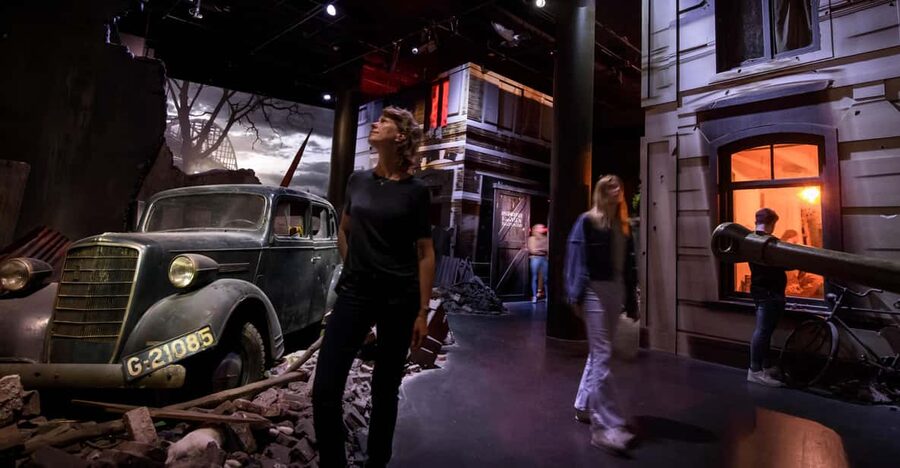
Oosterbeek doesn’t feel like a generic “WWII museum town.” The Airborne Museum Hartenstein lives in a real wartime location: Villa Hartenstein, which served as headquarters for British General Urquhart in September 1944. That location link changes how you experience the galleries. You’re not just reading about events that happened nearby. You’re walking through the same kind of space where decisions were made and chaos unfolded.
This is one of those museums where the architecture supports the story. Halls and rooms make the timeline easier to grasp because the layout gives you a natural flow. Even if you only skim labels, the place helps you understand that this was an active command point, not a calm historical site.
And since the museum’s themes revolve around the Battle of Arnhem, the setting keeps pulling you back to the same central question: what did this moment mean for the rest of the war and for Europe afterward? The museum’s framing is direct, and it helps you connect personal accounts to the bigger outcome.
Your route through the museum: from headquarters rooms to the Airborne Experience
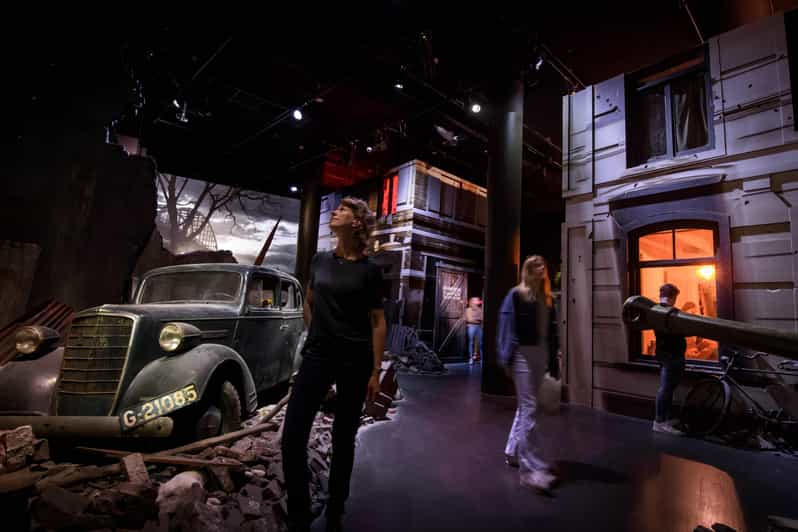
The ticket gives you entry to the museum and its main experiences, and I’d treat this as a one-day loop you can pace yourself through. You start with the exhibition areas that walk you through the Battle of Arnhem step by step, then you move into the Airborne Experience, which is located underground.
That underground section matters. Being below ground changes the feeling immediately. You’re in a more focused environment, and it helps the museum present the battle as a sequence rather than a static display. If you’ve ever left a museum feeling like you saw a lot but absorbed little, this is the part designed to fix that. The experience structure pushes you from one stage of the story to the next.
After the Airborne Experience, there’s also a temporary exhibition included. The extra stop is worth it because it adds a different angle to the overall narrative. From what the museum’s visitors highlight, the basement exhibition on the BIDKL is particularly strong work, and it gives you something to think about beyond the main battle storyline.
If you like museums that guide you gently but keep your independence, the pacing here is built for that. The audio tour (free and multi-language) helps you decide how much time to spend in each room without feeling rushed.
What you might find less satisfying
The museum covers multiple perspectives and includes heavy personal stories. If you prefer a museum that stays strictly chronological with less emotional content, you may feel the tone shifts toward the intense more often than you expect.
Also, because there’s a self-paced audio component, your experience depends partly on how you listen. If you read only the basics and skip the audio, you’ll still get the key themes, but you’ll miss the “connected” feeling that the museum is going for.
Meet soldiers and civilians: the museum’s strongest emotional thread
One of the best reasons to buy this ticket is the mixture of viewpoints. The museum doesn’t focus only on one side or only on the famous command structure. Instead, it brings together stories of British, Polish, and German soldiers, and it also makes room for citizens and eyewitnesses.
That matters because the Battle of Arnhem wasn’t one clean story. It was a tangle of different units, different languages, and different lived realities. Seeing those perspectives side by side helps you notice the gaps you’d otherwise overlook if you only learned one national version of events.
The museum also highlights what war felt like from the viewpoint of children. This isn’t just an extra detail. It’s a core part of the experience. That child perspective adds a blunt realism: fear, confusion, and disruption aren’t abstractions when a child is trying to understand what’s happening around them.
Visitors often respond strongly to these eyewitness elements, and it makes sense. Written history can be distant. Eyewitness narration (especially from a young age) pulls the story into the present tense.
If you’re traveling with teens, this is often where the conversation starts. Even when kids don’t know the full background, the human stories give them an entry point.
Eyewitness audio tours: how to use the free guide without getting lost
You get a free audio tour included, and it’s available in Dutch, English, German, and Polish. You’ll also see host or greeter staff in those languages, which helps if you want quick orientation before you start.
A smart way to use audio tours is to treat them like a route planner, not like a lecture you have to finish in one go. Pause when you see something that connects to what you just heard. Spend extra time on the rooms that match your interest—soldier stories, civilian accounts, or the underground sequence.
One practical advantage here is language choice. If you’re traveling as a group with mixed reading comfort, you can usually line up everyone with a language that feels natural. That keeps the visit from turning into a split experience where half the group is waiting while others catch up.
Also, because the museum is designed as a guided journey through the battle, the audio tour helps you avoid the common museum problem: walking from room to room without a clear sense of what comes next.
The kids’ mission with Soldier Tommy (and how it changes family visits)
This museum isn’t only for adults who love WWII facts. It includes an interactive element for younger visitors: children go on a mission with Soldier Tommy during the audio tour.
That’s a big deal for families. When kids are “just walking,” history becomes a chore. A mission format gives them a job, which usually means better focus. It also gives adults a break from explaining every label, because the audio structure gives kids something to do inside the story.
I’d plan the timing around where kids tend to lose patience. If your children are energetic, starting early helps because you’re more likely to stay ahead of restlessness. If your kids are sensitive to serious topics, consider taking extra breaks during the emotional eyewitness parts so you can keep the visit from becoming overwhelming.
Bottom line: if you have kids who can handle audio-based activities, this museum gives them a role, not just a viewing experience.
Price and value: does $19 for 1 day make sense?
At about $19 per person for a one-day visit, this ticket looks like good value when you factor in what’s included. You’re not just paying for entry into a single room or exhibit. The ticket covers:
- Entrance to Airborne Museum Hartenstein
- The Airborne Experience
- The temporary exhibition
- A free audio tour in multiple languages
For many museums, audio guides are an add-on or feel optional. Here, it’s part of the experience. That matters because it pushes you toward a fuller understanding of the story, especially in areas where the emotional weight comes through best when you hear it, not just read it.
The one-day duration also helps. You can plan this as a standalone museum block without needing a half-day backup plan. If your schedule is tight in Arnhem or nearby areas, this can function as your main WWII stop.
Are there places where a cheaper museum might give you “more stuff” per dollar? Sure. But this isn’t positioned as quantity-only. It’s built to guide your attention and shape your understanding of the Battle of Arnhem through people’s lives, not just dates.
Who should book this museum ticket
I think this is a strong fit if you:
- Want a WWII museum with multiple national perspectives (British, Polish, German).
- Like history told through human stories, not only military documents.
- Appreciate audio guidance that helps you follow a complicated sequence.
- Are visiting with kids and want at least one built-in activity (Soldier Tommy).
It might be less ideal if you:
- Want a purely upbeat or light cultural outing.
- Prefer a museum that focuses only on your preferred side of the story.
- Dislike emotionally intense content tied to eyewitness accounts.
If you’re already planning time in the Arnhem area, this is the kind of stop that adds meaning fast. It doesn’t feel like background. It feels like a central piece of the local wartime story.
Should you book Airborne Museum Hartenstein in Oosterbeek?
Yes, I’d book it if you want a WWII visit that feels specific and grounded in place. The museum’s biggest strengths are the eyewitness focus, the step-by-step Battle of Arnhem journey, and the contrast between the overhead museum spaces and the underground Airborne Experience.
If you’re deciding between a quick read-only museum and one that guides you, this one rewards attention. The audio tour is included, the storytelling is structured, and the family option with Soldier Tommy gives kids a reason to participate.
Just be honest with yourself about the tone. This is war history presented with real human weight. If you’re ready for that, it’s a powerful use of a one-day stop in the Netherlands.
FAQ
What is included in the Oosterbeek Airborne Museum Hartenstein entry ticket?
Your ticket includes entrance to Airborne Museum Hartenstein, a visit to the Airborne Experience, a visit to the temporary exhibition, and a free audio tour.
How long should I plan for this experience?
The ticket is valid for 1 day, so you should plan a full museum visit within that time window.
Are the audio guides available in English and other languages?
Yes. The audio tour is available in Dutch, English, German, and Polish.
Is there an activity for children?
Yes. Children go on a mission with Soldier Tommy during the interactive audio tour.
Is the museum wheelchair accessible?
Yes, the museum is wheelchair accessible.
Can I pay later and cancel if plans change?
You can reserve now and pay later, and you can cancel up to 24 hours in advance for a full refund.