REVIEW · ARCHAEOLOGICAL SITE OF OLYMPIA
Olympia Archaeological Site and Museum Private Guided Tour
Book on GetYourGuide →Operated by Guide me in Greece Tours · Bookable on GetYourGuide
Olympia hits fast, even if you know nothing first. I like that this tour gives you skip-the-line access so you spend your limited time where it matters: the ancient training grounds and the stadium tied to the Olympics story. You’ll also hear how the Olympic flame connects the old site to modern Games.
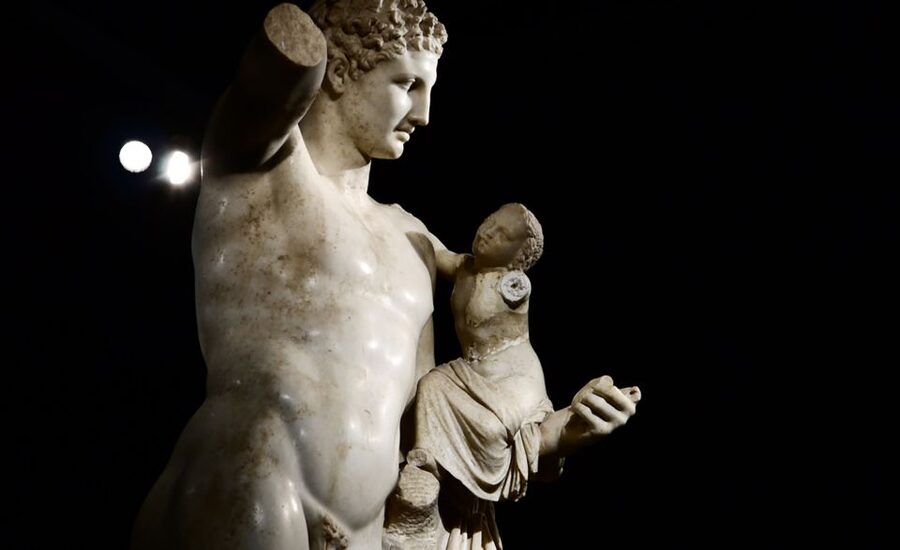
My favorite part is the pairing of museum artifacts with the exact ruins you’re standing in. The guide points out major masterpieces, including the famous Hermes of Praxiteles, and you’ll understand what you’re looking at instead of just snapping photos.
The main drawback is the 2-hour timebox. Once you move on from the site, you generally can’t go back, so you’ll want to pace your walking and decide early what you want pictures of most.
In This Review
- Key Things You’ll Notice
- Olympia’s Stadium and Sacred Ground: Why This Tour Feels So Immediate
- Museum First at the Archaeological Museum of Olympia: The Shortcut to Understanding
- The Stadium and Training Area: Where the First Athletes Would Have Run
- Temple of Zeus and the Seven Wonders Angle: Worth Your Time, But Ask the Right Questions
- The Olympic Flame Connection: How Olympia Links Past and Present
- Skip-the-Line Entry, Private Pace, and the Real Value of 2 Hours
- What the Two Stops Feel Like on the Ground: A Guided Walk That Moves
- Tips to Make the Most of Your Time at Olympia
- Who This Olympia Private Guided Tour Is Best For
- Should You Book This Private Olympia Tour?
- FAQ
- FAQ
- How long is the Olympia archaeological site and museum private guided tour?
- Where does the tour start?
- Is there skip-the-line access included?
- What’s included in the tour besides entry tickets?
- What will we see at the archaeological site?
- What’s included at the museum?
- Is this a private tour or a shared group?
- What group size is allowed?
- Is the tour wheelchair accessible?
- Are pets allowed?
Key Things You’ll Notice
- Skip-the-line entry for both the Archaeological Site and the Archaeological Museum of Olympia
- Museum-first flow that makes the stadium and sanctuaries easier to follow
- Marble starting-line photo moments on the stadium floor
- Temple of Zeus context, including its connection to the Seven Wonders idea
- Hermes of Praxiteles is a standout stop in the museum
- Private, small-group pace with room for your questions
Olympia’s Stadium and Sacred Ground: Why This Tour Feels So Immediate
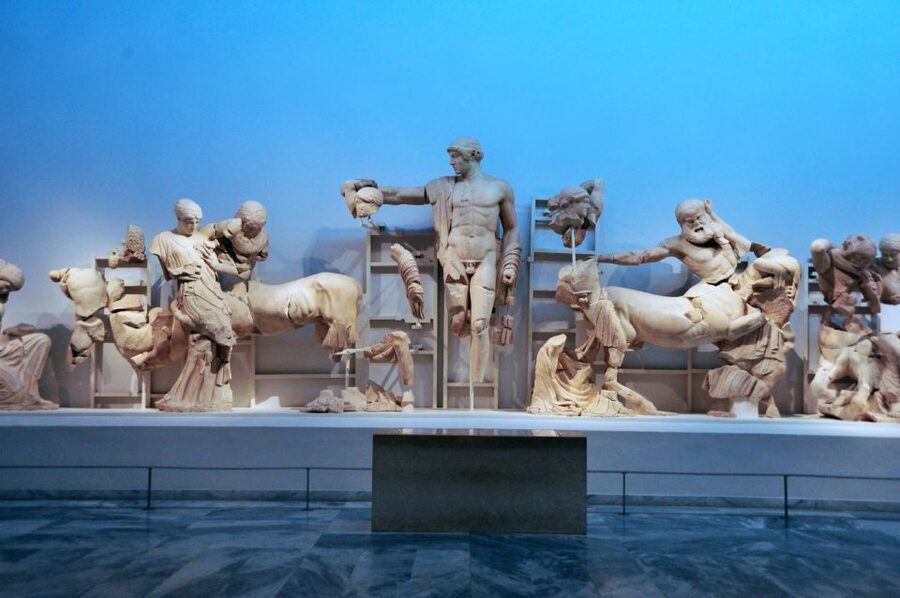
Olympia was built for both competition and ceremony. Athletes trained, people watched, and sacrifices were made to the gods—so the place isn’t just stone ruins. It’s an organized space made to control movement, attention, and meaning. Walking through it, you get why the Olympic tradition still matters: this wasn’t random sports theater. It was religion, politics, and sport in one carefully arranged setting.
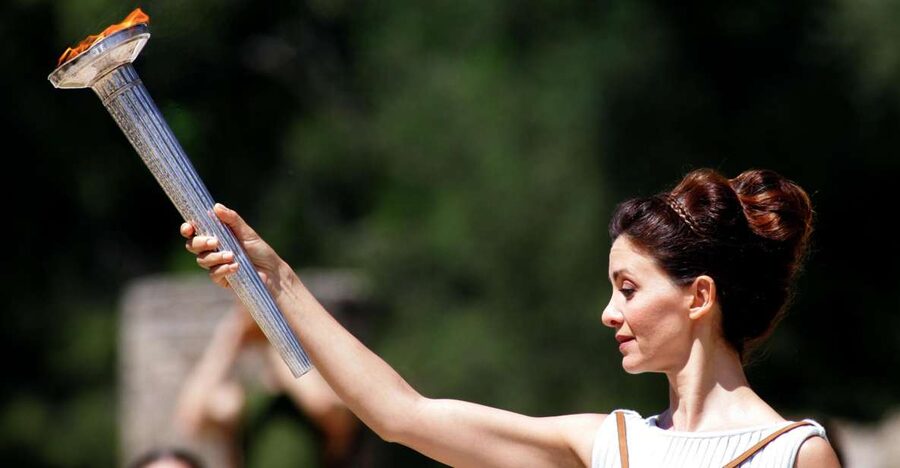
This is also a site where the story loops across time. The modern Olympic flame is ignited at Olympia every four years, which is the kind of detail that makes the ancient landscape feel less distant. You’ll be guided through what to look for, not just where to walk, and that changes the experience.
I also like the way the tour focuses on the big anchors. You’re not trying to memorize dozens of scattered points. Instead, you build a mental map: the sanctuary world, the stadium world, and the museum world that explains what you’re seeing outside.
You can also read our reviews of more tours and experiences in Archaeological Site Of Olympia.

Museum First at the Archaeological Museum of Olympia: The Shortcut to Understanding
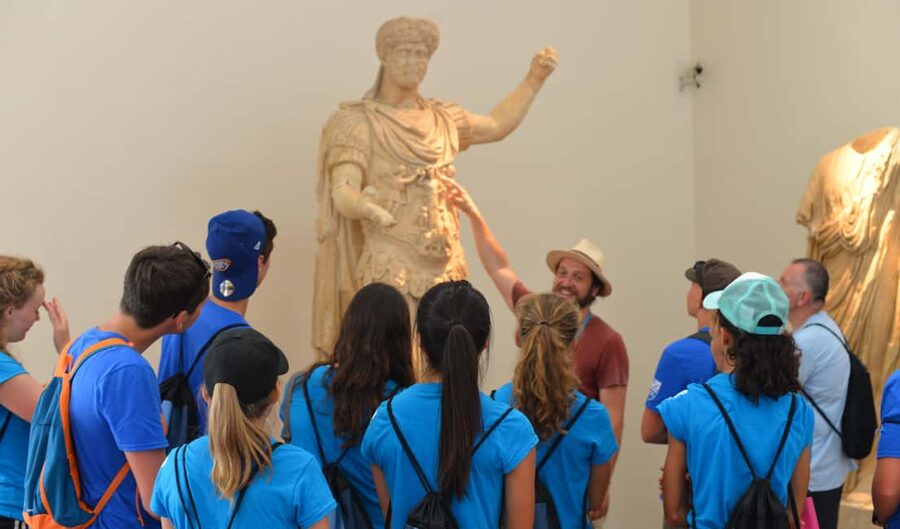
Starting at the museum is smart. If you enter the archaeological site without context, you spend more energy guessing. A short museum introduction fixes that. You’ll see major artifacts and learn what they represent, so the sculptures and architectural fragments outside make more sense right away.
The museum stop matters for one big reason: Olympia’s art and offerings are the key to understanding the people who came here. You’re not only looking at buildings; you’re looking at what audiences valued and what athletes and worshippers wanted to be remembered for. This is where the tour earns its second half.
A standout named in your experience is Hermes of Praxiteles. Seeing it in the museum setting helps you appreciate why ancient sculpture was treated like something close to living presence. From there, you can connect the artistic quality to the wider Olympic sanctuary culture.
One practical note: the museum portion is guided for about an hour, so it’s not an all-day museum crawl. You’ll have time for the main pieces and the story glue, but you won’t get to read every label in perfect peace.
The Stadium and Training Area: Where the First Athletes Would Have Run
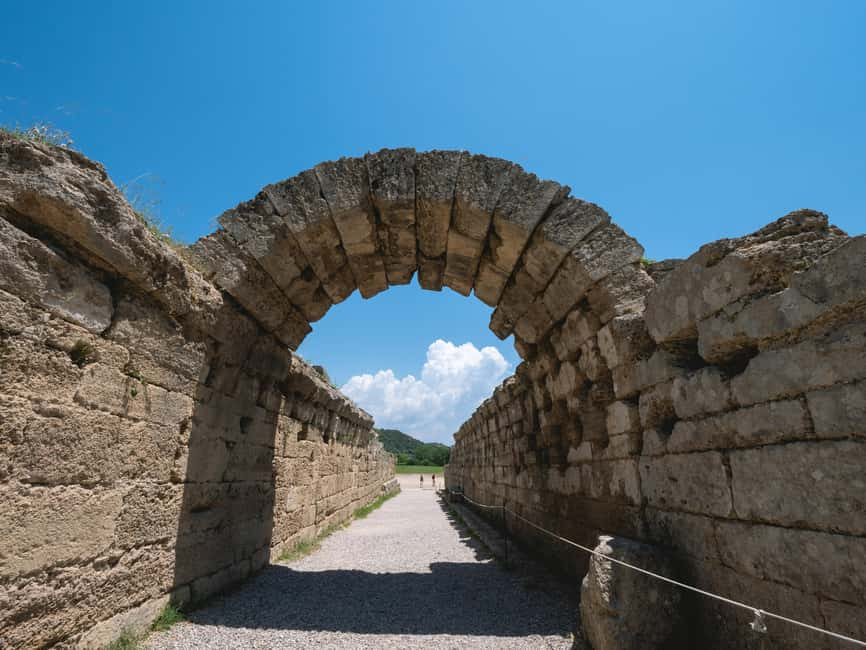
The ancient stadium is the headline, and it’s for a good reason. This is tied to the world’s first stadium idea—meaning you’re standing in a space designed for foot races when organized sport was still young. The guide helps you understand the layout and how it would have worked for athletes and spectators.
You’ll be able to take your own pictures on the marble starting line that still exists today. That’s not just a photo opportunity; it’s a chance to orient yourself physically. When you stand at a starting position used by athletes in antiquity, the scale clicks. You stop thinking of the stadium as a sketch and start thinking of it as a place with rhythm: callout, movement, run, finish, crowd.
It also helps that the tour frames the stadium as part of a broader sacred landscape. Athletes didn’t train like modern track stars in a vacuum. They trained in a cultural system tied to offerings and festivals. When your guide connects the dots, the ruins stop being separate sights and start feeling like one event space.
Temple of Zeus and the Seven Wonders Angle: Worth Your Time, But Ask the Right Questions
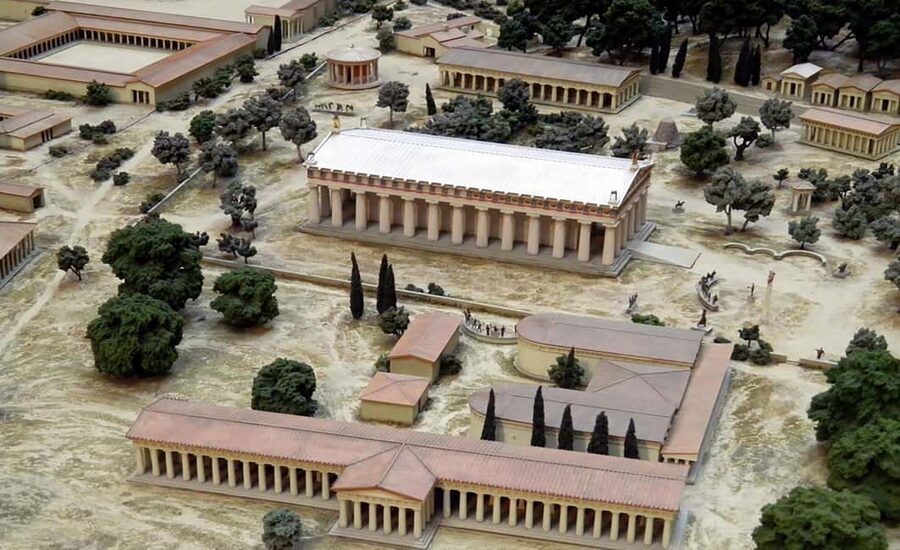
You’ll also visit the temple of Zeus area, once linked with the Seven Wonders of the Ancient World idea. Even if you’ve heard the name before, the value here is seeing how that kind of legend maps onto real stone remains. Legends float; sites anchor them.
A guided walk is helpful because temple areas can be confusing at first glance. You may see foundations, parts of columns, or scattered elements and wonder what’s missing. A good guide points out what those pieces were designed to do and where you’re standing relative to the original plan. That’s where your time pays off.
If you’re the kind of person who likes to know what mattered most to the builders, this stop is a good match. Ask your guide what visitors likely focused on visually from key viewpoints. Ask what would have been the center of attention during major ceremonies. You’ll get more out of the ruins with two or three targeted questions than with ten minutes of aimless wandering.
The Olympic Flame Connection: How Olympia Links Past and Present
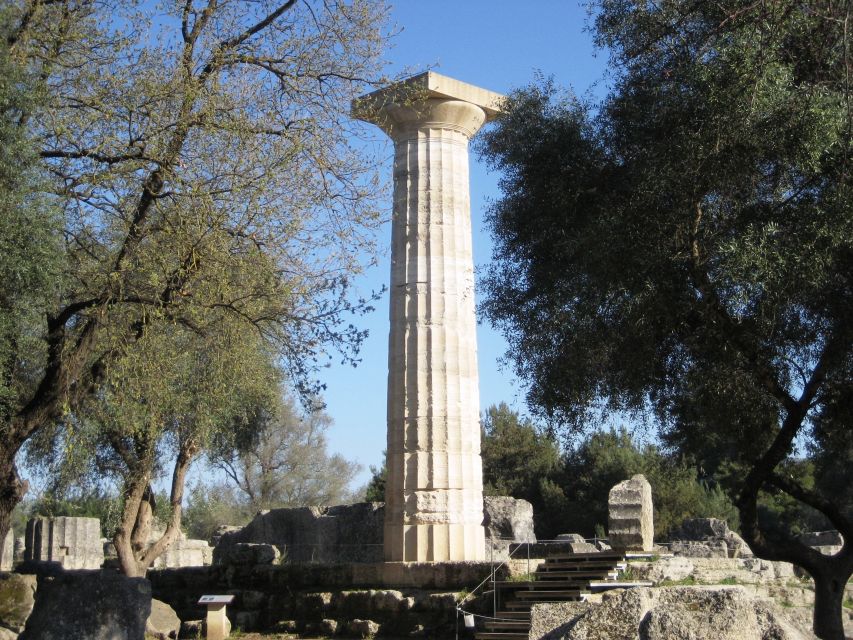
This tour doesn’t treat modern Olympics as a marketing slogan. The Olympic flame detail is placed in the larger context of Olympia’s ceremonial identity. Hearing that the flame is ignited at Olympia every four years makes the sanctified meaning of the site feel more direct.
Here’s why I think this matters: it gives you a reason to care beyond archaeology. You’re not only looking at what’s old. You’re looking at how a tradition chooses one location to represent continuity. That helps you spot the “through-line” the guide is aiming for as you move between stadium and museum.
If you plan to watch any future Olympic coverage, this kind of context tends to stick. You’ll recognize references and understand why Olympia is repeatedly used as a symbolic starting point.
Skip-the-Line Entry, Private Pace, and the Real Value of 2 Hours
Let’s talk money and what you get. The price is listed as $352 per group up to 2 people for a 2-hour private guided experience. That sounds steep until you compare it to the friction you’re avoiding: long waits and the time cost of figuring out what’s worth your attention at Olympia.
Skip-the-line entry is the practical win. Olympia can get busy, and you’re not doing a full-day plan here. If you lose time in a line, you basically lose part of the guided value you paid for. So the skip-the-line piece isn’t just a convenience. It’s how you protect the core structure of the visit.
The private group format is the other big value. With just your group, you can ask questions, adjust your pace, and spend a little extra time at the parts you care about. One person could want more explanation on stadium layout; another might want more focus on sculpture and museum artifacts.
A real-world example from the guide quality: I’ve seen comments that Georgio was a standout Olympia guide—very patient, kind, and able to answer questions in a way that kept the conversation interesting. That matters because Olympia isn’t a place you “get” only from signage. You get it from interpretation.
One more practical consideration: the site-to-museum flow works as a one-way visit. If you leave the ancient site, you can’t typically come back to linger as if it were an open-ended walk. So decide ahead of time what you want your “must photo” moments to be. The marble starting line is an obvious one.
What the Two Stops Feel Like on the Ground: A Guided Walk That Moves
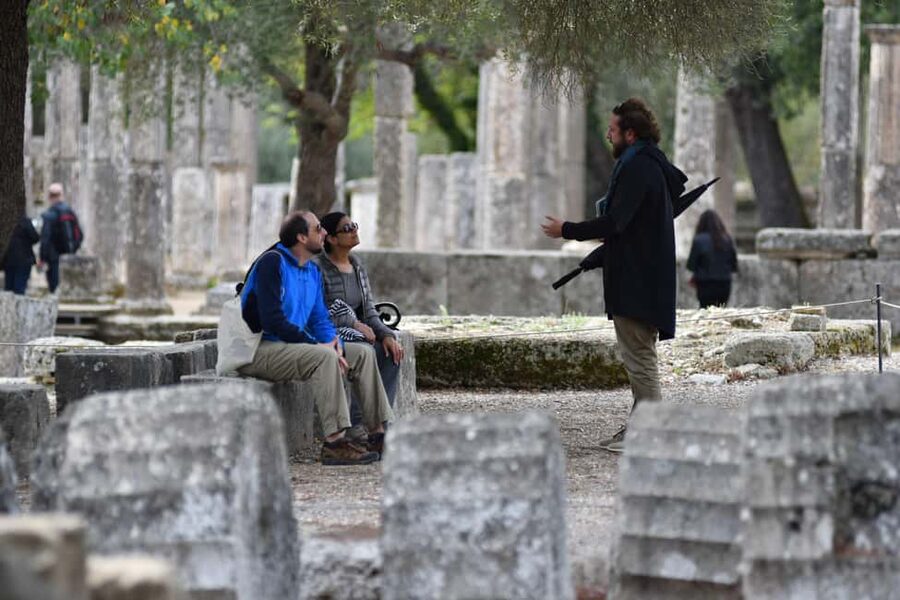
The tour is structured as two guided blocks: about one hour at the ancient site and about one hour in the museum. That split is useful because it prevents the classic mistake of doing only ruins or only exhibits. You get the landscape first, then the objects that explain the landscape—or you get objects first, then the ruins that put them back into place.
In plain terms, the flow helps you build understanding quickly. You don’t need to be an expert before you arrive. Your guide turns the place into a guided story with a few anchor facts you can remember.
The pace is also practical for a short stop in the Peloponnese. If Olympia is one of several destinations in your trip, a two-hour guided plan is easier to fit than a half-day self-guided day where you might end up walking a lot without clarity.
Still, if you love slow museum time, you might feel the limits. This is a focused guide tour, not an unlimited roam.
Tips to Make the Most of Your Time at Olympia
Because the visit is short and one-way for the site, you’ll get better results with a little strategy.
- Choose your photo priorities before you arrive. The marble starting line is a key one, and the temple area may offer a second set of memorable angles.
- Ask your guide where to stand for the best perspective shots. You’ll save time versus wandering for “the perfect spot.”
- If sculpture is your thing, make time for the museum highlights and ask what to look for in the form and style.
- If you’re more into stadium mechanics, ask how the layout would have shaped viewing and racing.
This tour works best when you treat it like a guided briefing followed by a short walk-through. You’re not trying to conquer the entire site; you’re trying to leave with a strong mental picture of what made Olympia Olympia.
Who This Olympia Private Guided Tour Is Best For
I’d book this if you:
- want expert guidance rather than sorting out ruins on your own
- have limited time in Olympia but still want both the site and the museum
- enjoy art and sculpture alongside athletic history (Hermes of Praxiteles is a major draw)
- prefer a private, small-group pace so your questions get answered
You might skip it if you’re someone who wants to spend long hours reading every museum label and sitting in the open air without a timed structure. A self-guided visit can work better if you plan to return later or if you’re staying nearby with flexibility.
Should You Book This Private Olympia Tour?
If you’re trying to make Olympia make sense fast, this is a strong pick. The combination of skip-the-line entry, museum-and-site pairing, and a private guide format is built for efficient value. You’ll leave with the main story beats: the sanctuary world, the stadium world, the Zeus connection, and a clearer view of why Olympia mattered then and still matters now.
My simple decision rule: if you want guidance and clarity more than you want endless wandering, book it. If you want an all-day slow museum experience with repeated visits back to the same spots, plan a different kind of day.
FAQ
FAQ
How long is the Olympia archaeological site and museum private guided tour?
It runs for 2 hours total, split between the archaeological site and the museum.
Where does the tour start?
The guide meets you at the main entrance of the Archaeological Museum of Olympia.
Is there skip-the-line access included?
Yes. You get skip-the-line entrance for both the archaeological site and the museum.
What’s included in the tour besides entry tickets?
You’ll have a professional live English-speaking tour guide.
What will we see at the archaeological site?
You’ll explore the archaeological site of Olympia, including the stadium area and the temple of Zeus.
What’s included at the museum?
You’ll visit the Archaeological Museum of Olympia with guided time focused on major artifacts from the site, including Hermes of Praxiteles.
Is this a private tour or a shared group?
It’s a private group experience.
What group size is allowed?
The pricing is per group up to 2 people.
Is the tour wheelchair accessible?
Yes, it is wheelchair accessible.
Are pets allowed?
Pets aren’t allowed, but assistance dogs are allowed.