REVIEW · NATIONAL MUSEUM OF ANTHROPOLOGY
Mexico City: Anthropology Museum Tour with Historian
Book on GetYourGuide →Operated by Walk Mexico · Bookable on GetYourGuide
A museum that reads like a puzzle. This 3-hour Mexico City Anthropology Museum tour connects cultures across Mesoamerica, so the symbols and myths stop feeling random and start making sense. You’ll also get the kind of talk that turns big galleries into a guided narrative.
I love how the historian style focuses on interpretation, not just objects. You’ll spend time decoding Mesoamerican visual storytelling (think Sun Stone and the Olmec colossal head), and you’ll come away with a clear sense of how different peoples shared ideas.
One thing to keep in mind: 3 hours moves fast in a museum this size. If you want to linger at Maya writing or Pakal’s tomb replica for longer questions, plan extra time.
In This Review
- Key things I’d prioritize
- Why this historian-guided Anthropology Museum tour works
- Meeting at the main lobby near the ticket booth
- The museum design: how architecture becomes a guide
- What “Mesoamerica” means in plain language
- Agave, textiles, and natural pigments: everyday tech with cultural meaning
- Olmec colossal head: the mother-culture idea in context
- Mexica highlights: Templo Mayor, chinampas, and the Sun Stone
- Teotihuacán: a multicultural metropolis, not a single-city story
- Maya writing, art, and Pakal’s tomb replica finale
- Price and value: what $175 really covers
- Who this tour fits best (and who should plan differently)
- Final call: should you book this Walk Mexico tour?
- FAQ
- Where do I meet the guide?
- How long is the tour?
- What’s the group size?
- What language is the tour offered in?
- Does the price include museum entry?
- Are headsets provided?
- Is food or drinks included?
- Is there pickup or drop-off?
- Is the museum tour wheelchair accessible?
Key things I’d prioritize
- Small group pacing (up to 10) that keeps the tour from turning into a shuffle.
- Headsets for clearer audio when the museum is crowded.
- Agave, textiles, and natural pigments explained as everyday tech, not just museum pieces.
- A symbol-first route that ties Olmec, Mexica, Teotihuacán, and Maya together.
- Pakal’s tomb replica plus the Christmas Eve heist story for a dramatic, memorable finale.
Why this historian-guided Anthropology Museum tour works
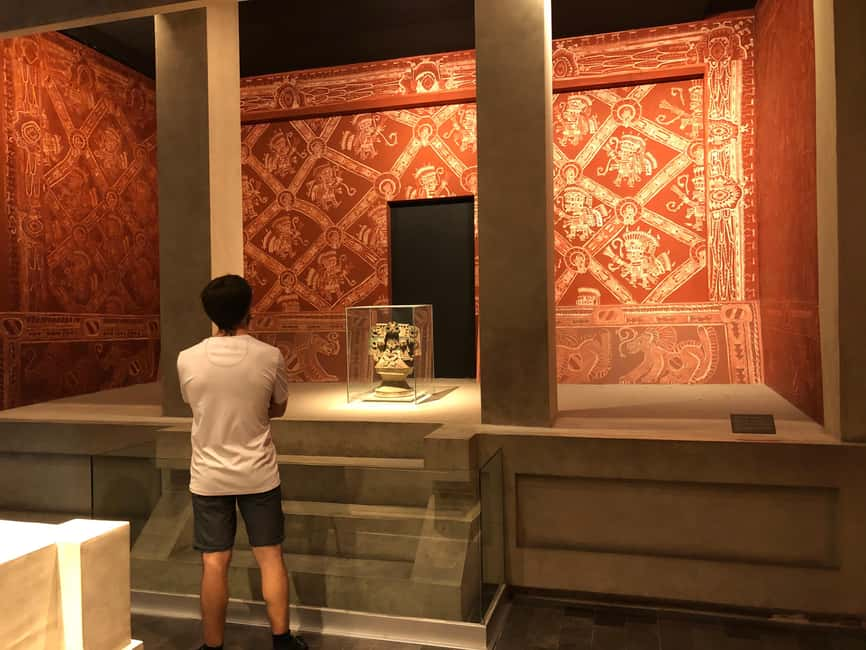
The Museo Nacional de Antropología is world-class, but it’s also huge. Without a guide, you can get stuck doing the museum shuffle: walk in, spot a famous object, then move on before it clicks. With this tour, you’re not chasing highlights. You’re learning the “how to read” part—how myths, gods, dates, and materials become visual language.
I like that the guide is either an art historian or a historian with a graduate academic degree. That matters here because the museum isn’t just archaeology displays. It’s also architecture, interpretation, and context. When the conversation is led by someone trained to read symbols and images, you see more than the obvious famous faces.
You’ll also get a small-group setup capped at 10 people. That keeps questions realistic, and it helps the guide tailor pacing. If your Spanish is basic or your English is rusty, you’re covered either way: the tour runs in English and Spanish.
Meeting at the main lobby near the ticket booth
You meet at the Anthropology Museum’s main lobby, near the ticket booth. Your guide waits there with the project logo, WALK MEXICO, so you can spot them without guesswork.
This start matters because it sets the tone. The tour doesn’t treat the museum like a checklist. It begins with a quick framework for what you’re about to see, then each gallery adds another layer. If you’ve ever entered a major museum and felt instantly lost, this tour’s setup is designed to prevent that.
The museum design: how architecture becomes a guide
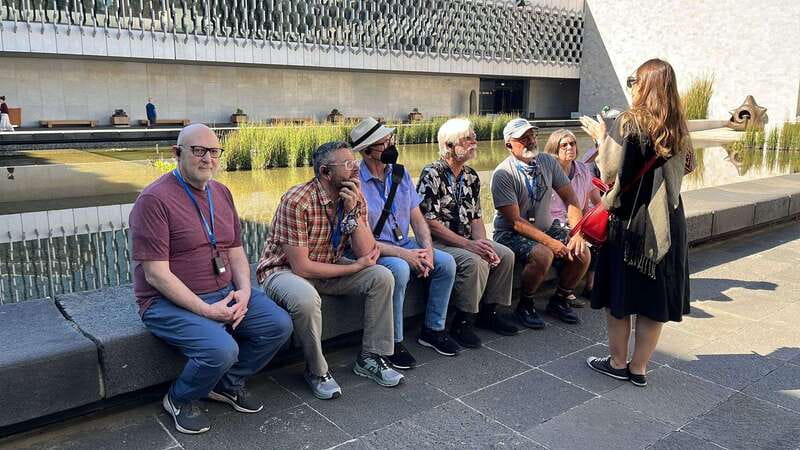
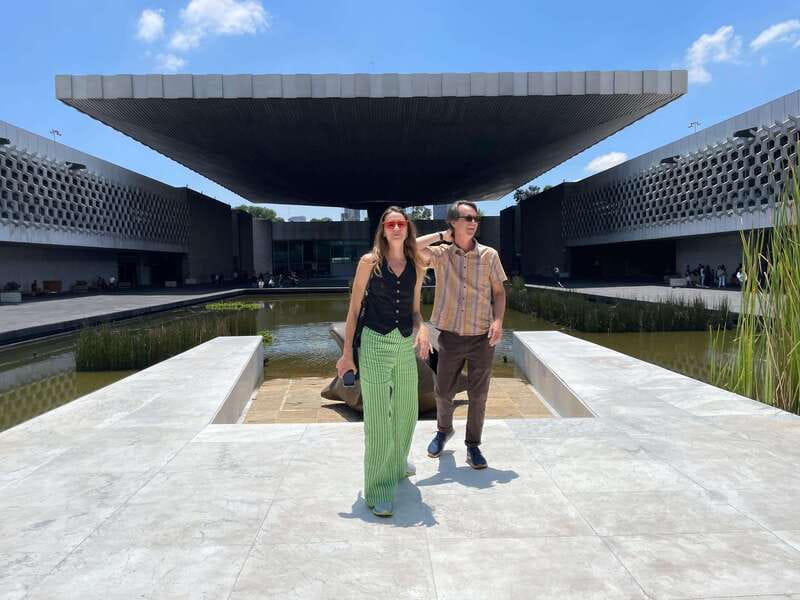
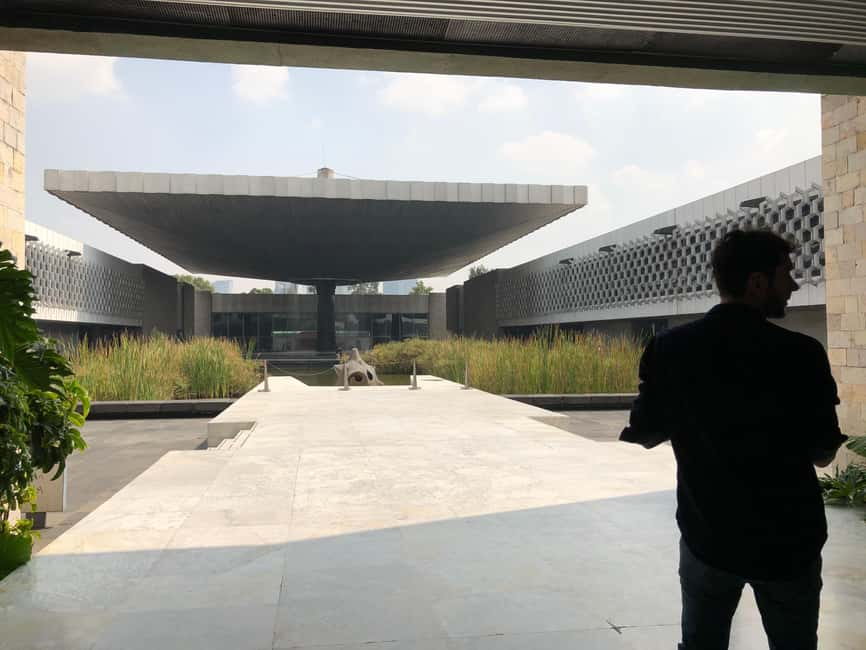
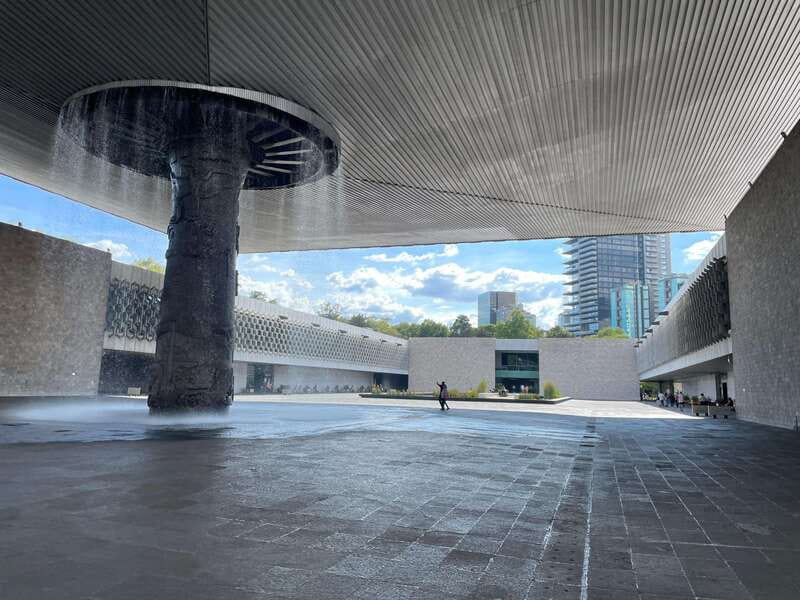
One of the smartest parts of the experience happens before you even get lost in artifacts. You begin with the museum’s groundbreaking design and how architects and artists worked together to create a space honoring Mesoamerican cultures through murals, symbolism, and monumental replicas.
Here’s why I think that’s valuable for you: it changes how you move. When the building itself is part of the storytelling, the galleries feel connected instead of separate rooms with separate eras. Even the museum’s layout starts to feel like a slow reveal.
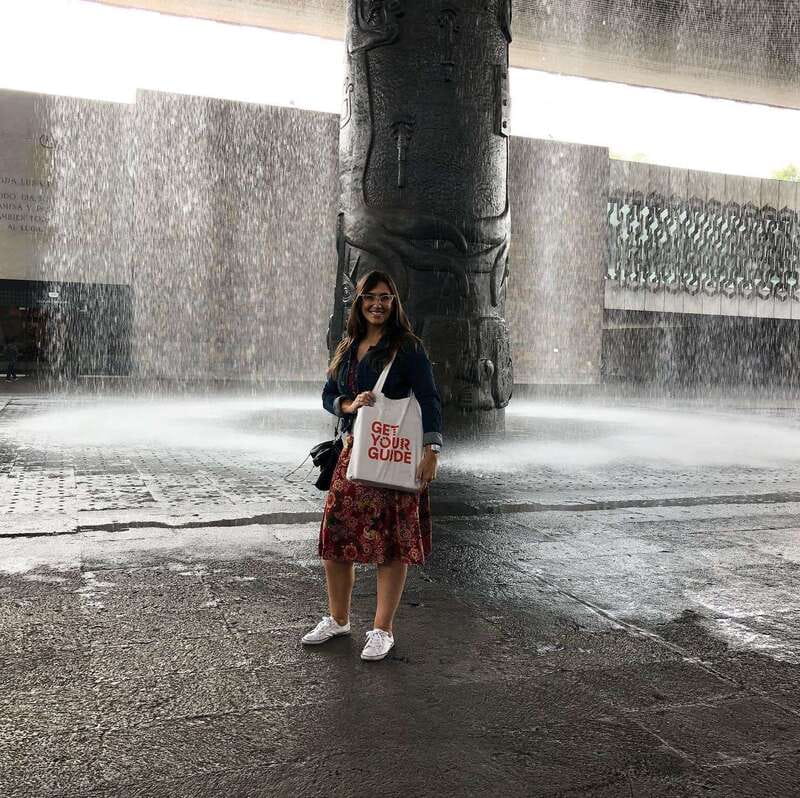
Then you step into the courtyard to see the famous water feature. It’s not just a pretty fountain. The guide explains the meaning and symbolism behind the monumental structure, and suddenly you’re looking at it like a cultural object, not a backdrop.
What “Mesoamerica” means in plain language
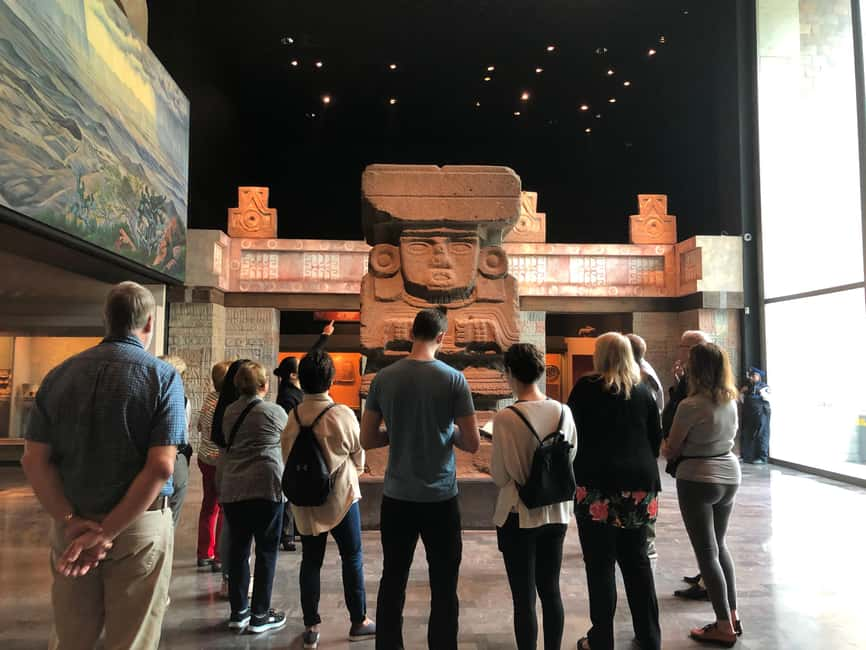
The tour takes you into a hall where you learn Paul Kirchhoff’s definition of Mesoamerica—a shared cultural region with common threads across time. That doesn’t mean everyone used the same language or worshipped the same gods. It means they shared enough cultural DNA—agriculture, cosmology, traditions, and visual ideas—to recognize patterns between distant places.
For you, this framing is the secret to enjoying the rest of the tour. Without it, it’s easy to treat Olmec, Maya, Mexica, and Teotihuacán as isolated “eras.” With it, you start spotting what traveled: symbol systems, art conventions, and even how knowledge got encoded into objects.
Agave, textiles, and natural pigments: everyday tech with cultural meaning
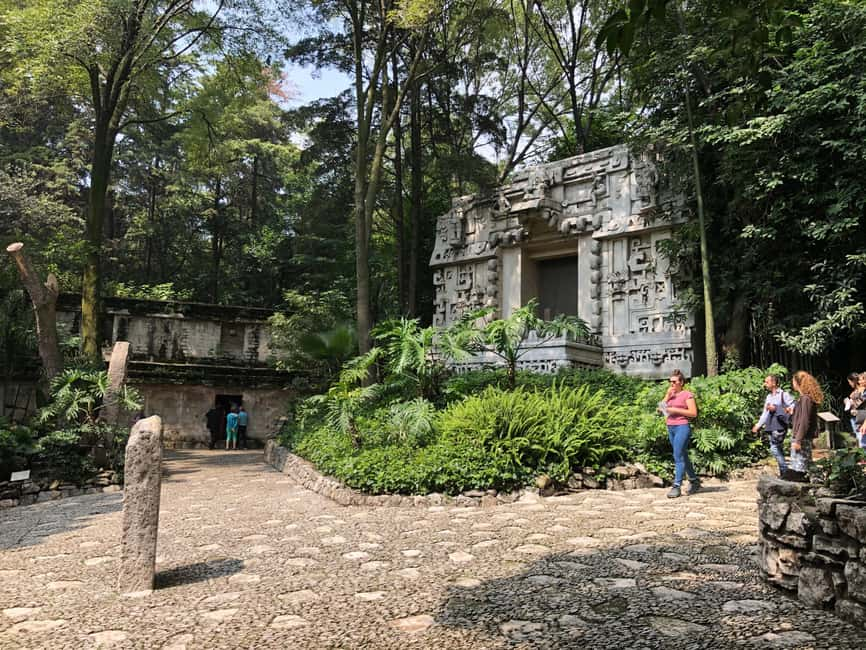
This stop is where the museum becomes tactile in your mind. You’ll admire looms, textiles, garments, and the real-world craft behind them. The guide also explains how people used agave in many ways—fibers, tools, and household items.
You’re not just seeing finished cloth. You’re learning processes like spinning, weaving, and dyeing with organic pigments. That turns the gallery into a story about labor, skill, and resources—how a plant became clothing, how color became message, and how materials shaped status and ritual.
If you like culture you can picture—what hands did, what materials enabled—this section is a standout. It also helps you understand later religious and ceremonial objects because textiles and pigments are part of how identities show up in ritual life.
Olmec colossal head: the mother-culture idea in context
Next you encounter an iconic Olmec colossal head. The guide explains why the Olmec are often considered a “mother culture” of Mesoamerica—mainly because later societies inherited and transformed earlier artistic styles and religious ideas.
This isn’t taught as a simple hierarchy of who came first. It’s explained as influence. You’ll hear how Olmec concepts and aesthetics show up later in broader forms, so the colossal head feels less like a strange oddity and more like a start of a long visual conversation.
Mexica highlights: Templo Mayor, chinampas, and the Sun Stone
The Mexica portion is packed with big names and big context, including the Templo Mayor and key features tied to how the city worked.
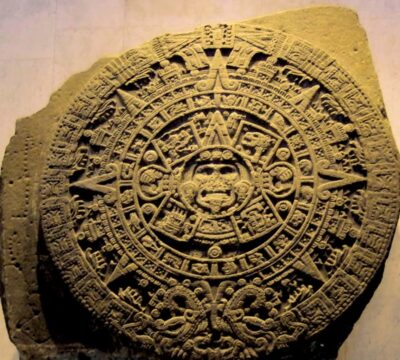
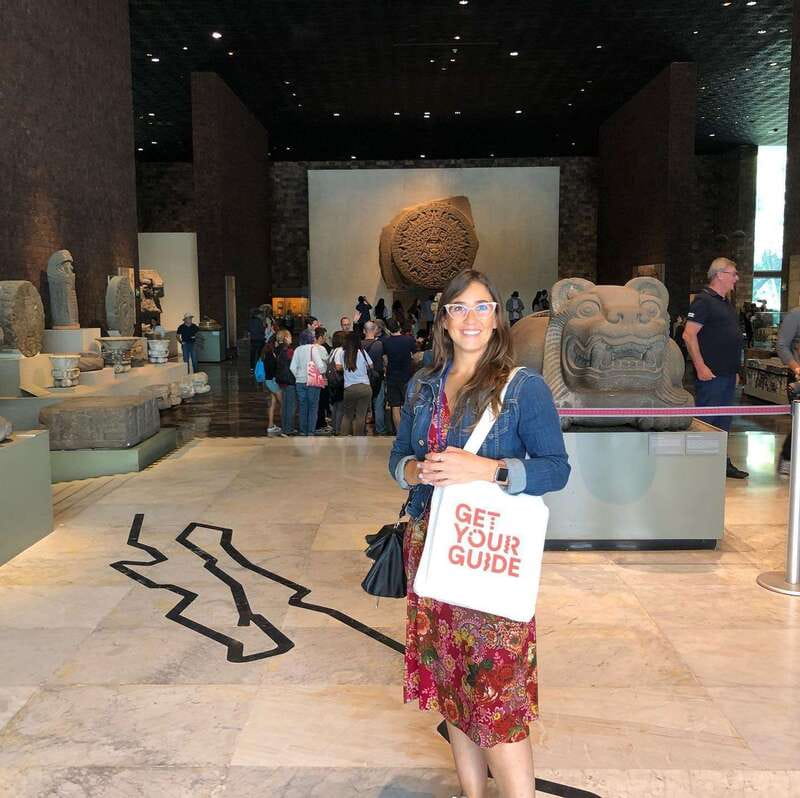
One highlight is the famous “Aztec Calendar,” which the tour treats as a misnamed object. You’ll learn its correct identification and meaning—one of those moments where the guide clears up a long-standing shortcut many people repeat.
Then comes the chinampas story. You’ll learn how the Mexica built their city on artificial islands supported by bridges, aqueducts, and a sophisticated hydraulic system. The tour includes a detailed scale model that helps you understand how this ancient city still sits beneath colonial Mexico City.
Why that’s powerful for you: it connects the past to the streets you’re standing on. Instead of thinking of ancient Mexico as a separate world, you learn how engineering and land management shaped daily life—and how the modern city grew where it grew.
You’ll also explore the Sun Stone as part of this symbolic network. The key shift is that you’re not just viewing it as a famous disc. You’re reading it as a visual system of meaning tied to time and belief.
Teotihuacán: a multicultural metropolis, not a single-city story
In the Teotihuacán gallery, the tour reframes the site as a multicultural metropolis—a place shaped by many peoples. That helps you understand why the art and objects can feel mixed. Instead of treating the variety as confusion, you learn to see it as evidence of contact, movement, and shared urban life.
You’ll examine refined ceramics, obsidian masterpieces, mural fragments, and colorful architectural replicas. The guide also shares theories about Teotihuacán’s rise and its mysterious decline.
This part is a great fit if you enjoy detective-style history. The objects don’t just sit there; they’re used to argue what might have happened and why. And because the tour has already explained “Mesoamerica” as a connected region, you’re primed to notice how ideas traveled.
Maya writing, art, and Pakal’s tomb replica finale
The tour ends in the Maya hall, and it’s a strong finish. You’ll see ceramic portraits, vibrant vessels, and jade carvings, but the main thread is how the Maya encoded information in writing and imagery.
One of the most memorable stories is how Maya writing was deciphered. You’ll hear a narrative that spans colonial archives, lost manuscripts, and the work of a WWII Russian soldier who played a role in the breakthrough. Even if you never studied epigraphy, the tour keeps it understandable and focused on the big achievement: a world of signs became readable again.
Then you reach the replica of Pakal’s tomb, which the tour treats as one of the museum’s most dramatic spaces. The setting alone makes people slow down, but the guide adds the story behind the space—especially the 1985 Christmas Eve museum heist, when Pakal’s mask and other treasures were stolen.
That last sequence is why I like this tour’s structure. Earlier galleries teach you how to read symbols. The final gallery gives you a symbol that people still fight over, protect, and study. It lands as a human story, not just a famous artifact.
Price and value: what $175 really covers
At $175 per person for a 3-hour experience, this is not a bargain-basement add-on. But it also isn’t priced like a quick walk-through.
Here’s what you’re paying for, based on what’s included:
- An expert guide with a graduate academic degree (art historian or historian)
- Headsets (helpful for sound and crowd levels)
- The museum ticket
In a museum as large and interpretive as this one, the “value” is time and clarity. If you go on your own, you can spend hours guessing what you’re looking at. If you hire a historian, you get frameworks—like how Mesoamerica is defined, why chinampas mattered, and how Maya writing became decipherable. That turns your museum visit into something that feels complete, not just busy.
If you’re traveling as a couple or a small group, the capped size (10) also makes the cost feel easier to justify because you’re not sharing attention with a huge swarm.
Who this tour fits best (and who should plan differently)
This tour fits you best if:
- You like turning big museum objects into real meaning
- You enjoy asking questions and getting straight answers
- You want a single route that connects Olmec, Mexica, Teotihuacán, and Maya without getting lost
It’s also a good choice for families, especially since the tour is designed to engage both kids and adults (and guides have handled mixed ages well). If children are in your group, an adult must accompany them.
If you’re the type who only wants one or two famous objects and doesn’t care about context, you might feel constrained by the guided route. In that case, you might prefer a more flexible visit and pick your own pace.
One practical note: the museum experience can run longer than you expect if you’re actively engaged with questions and details. Build a little breathing room around your day.
Final call: should you book this Walk Mexico tour?
I’d book this tour if you want your museum time to feel like a guided story with clear takeaways. The combination of a small group, expert-level interpretation, and a symbol-to-symbol connection across Mesoamerica is exactly what keeps the Anthropology Museum from becoming overwhelming.
Skip it only if you’re looking for a short, casual browse with no interpretation, or if you have strict timing that can’t handle extra questions.
If you’re serious about understanding what you’re seeing—and you’d rather spend your hours learning than wandering—this is one of the best ways to experience the museum in a single sitting.
FAQ
Where do I meet the guide?
You meet your guide at the Anthropology Museum’s main lobby, near the ticket booth. Your guide will be waiting with the WALK MEXICO logo.
How long is the tour?
The tour lasts 3 hours.
What’s the group size?
It’s a small group limited to 10 participants.
What language is the tour offered in?
The live guide offers tours in English and Spanish.
Does the price include museum entry?
Yes. The museum ticket is included, along with the expert guide.
Are headsets provided?
Yes, headsets are provided to help you hear the guide, especially for larger groups.
Is food or drinks included?
No. Food and drinks aren’t included.
Is there pickup or drop-off?
No. Transportation, pickup, and drop-off are not included.
Is the museum tour wheelchair accessible?
Yes, it’s wheelchair accessible.