REVIEW · GREECE
Lychnostatis Open Air Museum : Grape-Feast every Wednesday
Book on GetYourGuide →Operated by Cretan Open-air Museum LYCHNOSTATIS · Bookable on GetYourGuide
Put your feet to work in the grapes. At Lychnostatis Open Air Museum, you step into a traditional wine vat for grape treading, then keep moving with Cretan dancing and live music. The food and drink tasting is fun and easy, but the activity is physical, and it’s not suitable for pregnant women.
I like how the program mixes hands-on tradition with clear, simple context. You’ll get short pieces of storytelling (plus a guided museum visit and a film), without turning it into a lecture. If you’re expecting a full meal, plan for snacks and tastings only.
One more practical note: this starts early, right at 11:00 a.m. on Wednesdays. Arrive by 11:10 a.m., bring comfortable shoes, and pack a towel so you can join in without thinking too hard.
In This Review
- Key things I’d plan around
- Grape treading at the Lychnostatis open-air wine vat
- The tasting lineup: garden fruit, baked food, grape by-products
- Cretan music and dancing: voluntary participation with real energy
- Guided museum tour and short film: turning the experience into context
- Timing, meeting point, and how to use the extra time afterward
- Price and value: is $17 worth your time?
- Who should book this Wednesday grape feast
- Should you book the Lychnostatis Grape-Feast?
- FAQ
- What day of the week is the grape-feast?
- What time does the event start?
- Where do I need to show my voucher?
- How long does it last?
- What’s included in the ticket price?
- What language options are available?
- Is it wheelchair accessible, and are there restrictions?
Key things I’d plan around
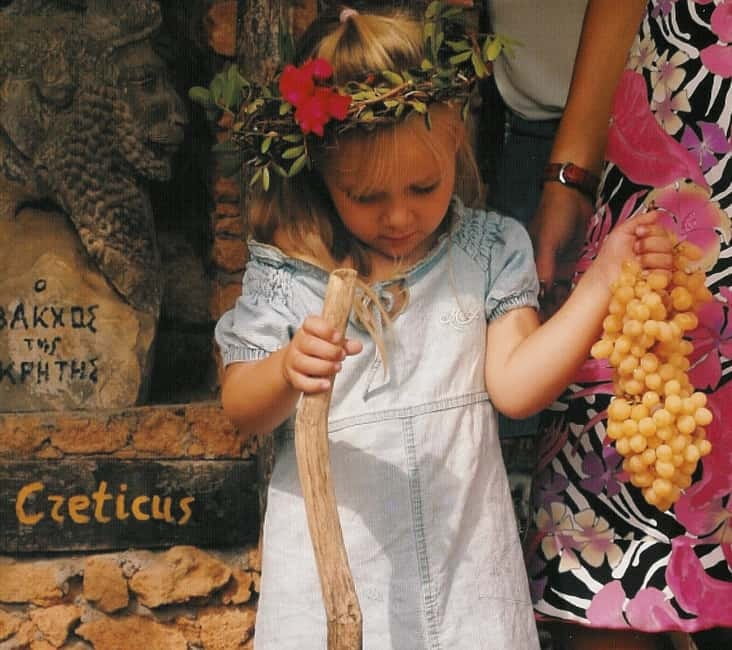
- Grape treading in the museum wine vat gives you a real feel for the work behind Cretan winemaking
- Tastings from the garden and grape by-products (including tsikoudia and wine) keep the experience moving
- Music and dancing are yours to join—participation is voluntary and guided by the mood of the group
- A guided museum tour plus a short multilingual film adds context after the fun
- Beach-bar time after the program lets you slow down and enjoy the setting at your own pace
Grape treading at the Lychnostatis open-air wine vat
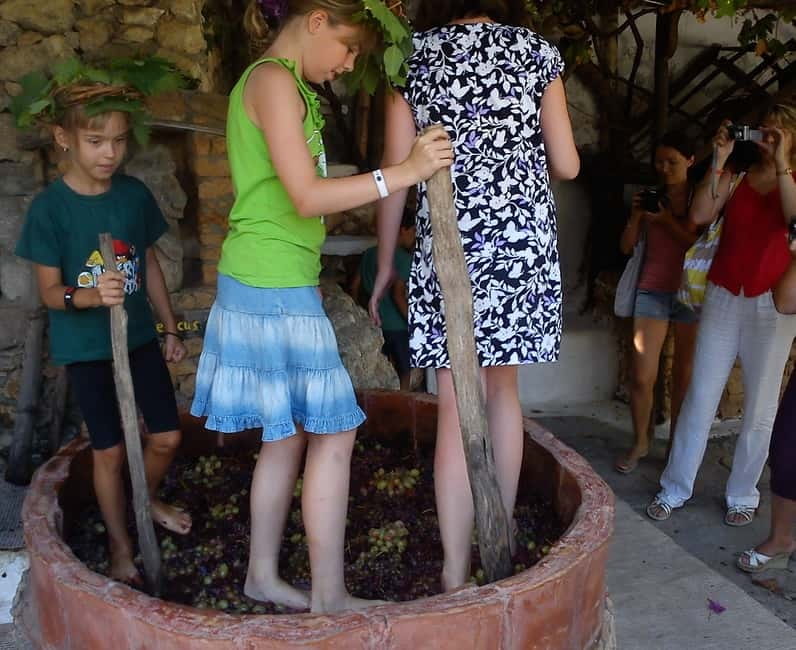
This is the part you’ll remember. The event kicks off with grape treading using your own feet in the museum’s wine vat, in the traditional way. You’re not just watching from the sidelines—you’re doing the action, close up, with the setting and staff designed to make it approachable.
What makes this worthwhile is the timing. You start with the hands-on part, before the tasting and music. That order matters because you learn what grapes become while your brain is still in the “this is real work” mode. After you’ve stood there and pressed the juice out, the later flavors and by-products make more sense.
The practical side: wear comfortable shoes, and bring a towel. This is not the day for slick sandals or shoes you’ll regret getting a little wet or dirty. You’re moving around and standing, so you’ll want footwear that feels stable.
Also, this activity isn’t for everyone. It’s listed as not suitable for pregnant women, and it has a weight limit of 287 lbs (130 kg). If you’re above that limit or have any concerns about standing or participation, you’ll be better off choosing a different museum visit time.
The tasting lineup: garden fruit, baked food, grape by-products
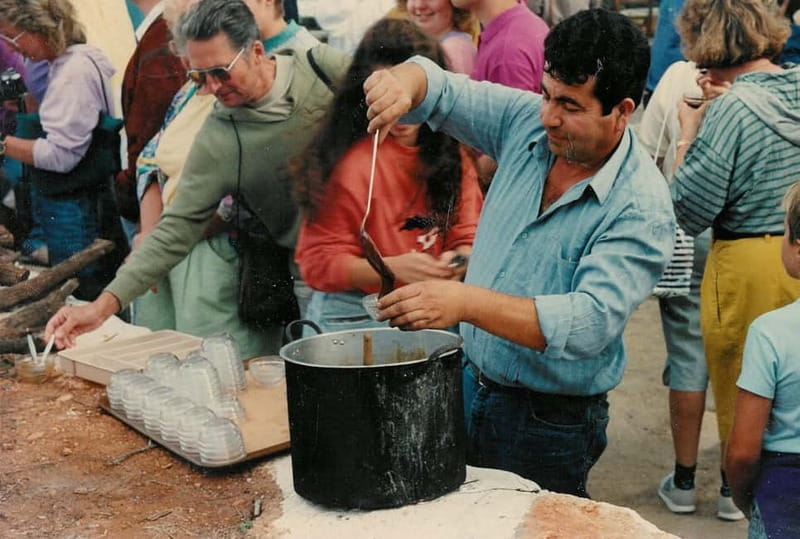
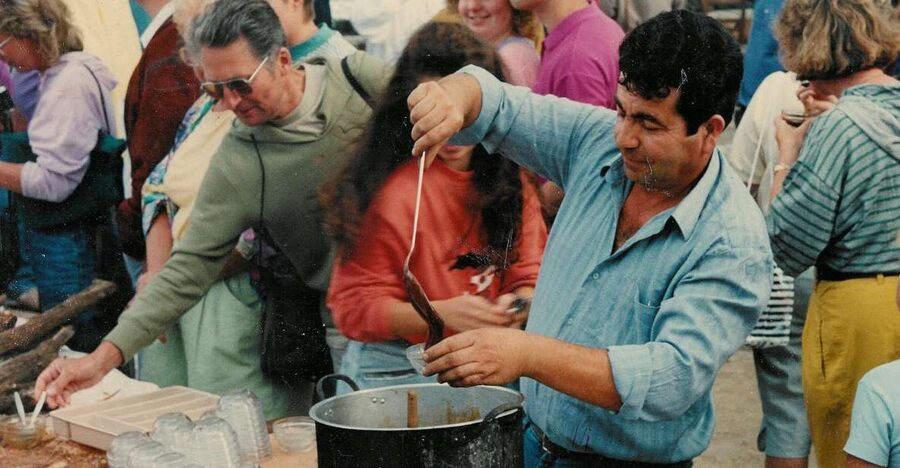
Once the treading is done, the program shifts into tasting mode. You’ll sample several local products, including items that come straight from the garden and other foods made in a home-style tradition.
Here’s what’s included:
- cheese-pies
- potatoes baked in the oven
- grapes, plus figs and watermelon from the garden
- grape by-products such as Cretan wine and tsikoudia (often called raki)
- the healthy dessert Moustalevria, made from grape juice with no added sugar or preservatives
This tasting list is smart because it covers different parts of the same seasonal story. You’re not just drinking wine and moving on. You get:
- fruit (fresh grapes, figs, watermelon),
- savory bites (cheese-pies and oven-baked potatoes),
- and the “what happens after pressing” category (wine and tsikoudia),
all followed by a grape-juice dessert that keeps things tied to the theme.
If you’re the type who likes to learn by eating, this format works well. Each bite is a piece of how people used grapes beyond just making wine. And the dessert is a neat change of pace—especially because the description emphasizes no sugar or preservatives, so you’re not stuck with only rich, sweet flavors.
Do keep expectations practical: the tastings are included, but food and beverages from the museum cafe are not part of this ticket.
Cretan music and dancing: voluntary participation with real energy
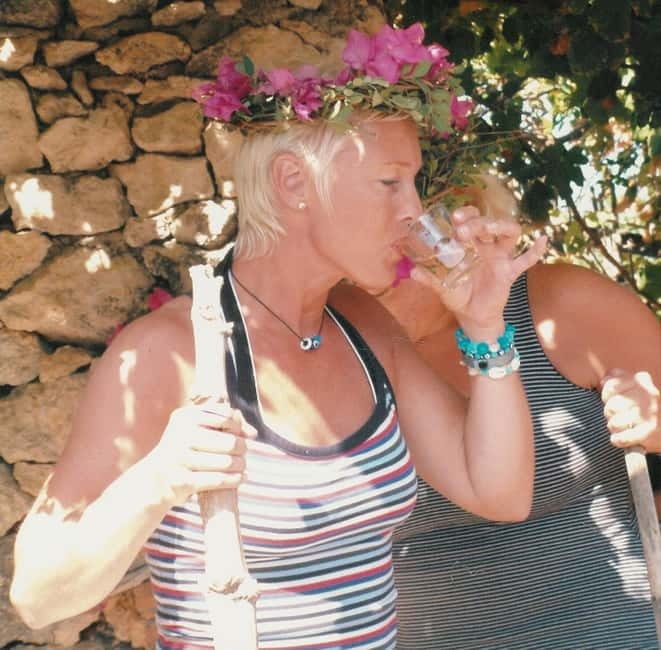
The program includes Cretan traditional music with local dancers, and this is where the event turns social. You’ll watch the dancing, and you can join in too, but participation is marked as voluntary—so you can try it without feeling like you must perform.
What I like about this style of cultural activity is that it’s not just a staged show. The dancers and musicians set the rhythm, and your job is to follow the flow. If you’ve never danced Greek-style before, you’re not expected to be a pro. You’re expected to have fun and keep time.
A useful detail from the overall experience: the atmosphere is described as light-hearted and friendly, with information that’s clear but not heavy-handed. That matters if you’re traveling solo or want something that doesn’t feel like school.
For planning, expect some standing and movement. Bring that towel if you worked in the vat, and keep your shoes in mind again if you’re joining in on the dance floor.
Guided museum tour and short film: turning the experience into context
After dancing and tastings, the experience ends with a museum guided tour (with an English or German guide) plus a short film. The film is shown in several languages, which is helpful if you’re traveling with friends or family who don’t all share one language.
This portion is valuable because it helps you connect what you just did to a bigger picture—how winemaking and rural life fit into Cretan culture. The tour/audio-guided approach also keeps the pacing comfortable. You’re not trapped in a long, fast-moving museum sprint; you get a guided segment, then you can explore afterward.
The timing is also friendly. The whole event lasts about 2 hours, starting at 11:00 a.m. That means you’re not losing an entire morning. You’ll likely finish around early afternoon, leaving time to wander the museum at your own pace.
Timing, meeting point, and how to use the extra time afterward
This is a Wednesday-only event, running 15 July–28 October 2026. The start time is 11:00 a.m., and you should arrive no later than 11:10 a.m. If you’re the kind of traveler who likes a buffer (you should be), give yourself time for parking, walking, and the simple stress of finding the entrance.
Meeting point is straightforward but important: you must show your voucher at the ticket counter at the museum’s Lychnostatis entrance before the event begins. This is the step that makes everything run smoothly, including skipping the ticket line.
After the program ends, you’re free to:
- explore the museum on your own,
- take photos,
- relax at the museum’s beach,
- and enjoy drinks and snacks from the museum’s beach-bar.
This part is underrated value. A lot of activities stop the moment the structured portion ends. Here, you get a built-in reason to linger. If the weather is good, the beach time can be your payoff after the grape-treading effort.
One more “heads up” for your planning: pets aren’t allowed. If you’re traveling with an animal companion, this ticket won’t work.
Price and value: is $17 worth your time?
At $17 per person for about 2 hours, this works out as good value if you want a hands-on cultural experience, not just another museum entry. The ticket includes:
- grape treading,
- traditional music with local dancers,
- tastings of multiple products (including grape by-products and Moustalevria),
- a guided museum tour (English or German),
- and a short film.
You’re paying for three things at once:
1) physical participation (the grape vat moment),
2) a themed food and drink tasting (more than just “a sample”),
3) a guided cultural wrap-up (tour + film).
What’s not included is also clearly defined: cafe food and beverages, plus museum beach services. In practice, that just means you might want extra cash or a card if you decide to have a drink after the program at the beach-bar. But the core experience is complete inside the ticket price.
So if your goal is a genuine taste of Cretan seasonal traditions—without having to coordinate a multi-stop wine plan on your own—this is priced like a smart shortcut.
Who should book this Wednesday grape feast
You’ll like this most if:
- you enjoy interactive activities where you do something, not just watch,
- you like food experiences tied to a theme,
- you want Cretan music and dancing as part of the package,
- and you prefer a compact format (about 2 hours) instead of a half-day commitment.
It’s also ideal if you’re visiting the Lychnostatis area and want a reason to show up on the right day of the week. Since it runs only on Wednesdays during the listed season, timing your visit matters. If you’re there outside those dates, you may have to choose a different museum option.
If you’re traveling with someone who prefers calm, seated activities only, grape treading plus dancing may feel like “too much motion.” But if your group is open to trying one messy, fun tradition, this becomes the kind of story you’ll share later.
Should you book the Lychnostatis Grape-Feast?
Yes—if you want a hands-on Cretan tradition packaged into a tidy 2-hour experience with tastings, music, and a guided follow-up. The grape treading is the main draw, and it’s supported by food and cultural context rather than being a one-off gimmick.
I’d skip it only if you know you can’t participate comfortably in a standing, active event, or if you’re traveling during the season window and can’t match the Wednesday schedule. Otherwise, $17 buys you more than a ticket—it buys you an experience that connects grapes, labor, music, and everyday life in a way a standard museum visit usually can’t.
FAQ
What day of the week is the grape-feast?
It runs every Wednesday during the season 15 July–28 October 2026.
What time does the event start?
The event starts at 11:00 a.m., with the latest possible arrival time listed as 11:10 a.m.
Where do I need to show my voucher?
You must show your voucher at the ticket counter at the Lychnostatis entrance before the event begins.
How long does it last?
The duration is about 2 hours.
What’s included in the ticket price?
Included are grape treading, Cretan traditional music with local dancers, tasting traditional products, a guided museum tour (English or German), and a short film.
What language options are available?
The experience lists languages including English, Dutch, Russian, French, German, and Greek.
Is it wheelchair accessible, and are there restrictions?
It’s listed as wheelchair accessible. However, it’s also listed as not suitable for pregnant women and for people over 287 lbs (130 kg). Pets are not allowed.
If you tell me your travel dates (and whether you’ll be with kids or anyone who prefers low-activity experiences), I can help you decide if Wednesday is a good fit and how to pair it with the rest of your Crete day.