REVIEW · GENOA
Genoa: Galata Maritime Museum and Nazario Sauro Submarine
Book on GetYourGuide →Operated by Genova Cultura · Bookable on GetYourGuide
Genoa teaches the sea from the inside. The Galata Maritime Museum plus the Nazario Sauro Submarine gives you two angles in one day: how ships were built and used, and what sailors actually lived with. I especially like the combination of hands-on feeling in the submarine and the museum’s walk-through path across maritime eras, from oars and galleys to sailing ships and steamships. One drawback to plan around: the experience leans on Italian, Spanish, and English, and you may find French support limited and audio guidance not available.
You’ll also end with some of the best payoff in the whole area. The outdoor Belvedere and Mirador terrace give a 360° sweep over the old town and the harbor arch, and the route includes art-minded stops like a sea-painting collection (1800s to 1900s) before the Andrea Doria story. If you’re short on time, you’ll want to pace yourself, because it’s easy to spend longer than you expect in the submarine and then feel rushed through the museum.
In This Review
- Key highlights you should notice
- Why this Genoa maritime visit feels different: museum + submarine in one place
- Nazario Sauro Submarine: restoration details you can actually feel
- The museum’s chronological route: Columbus to migrations, then the age of ships
- Paintings of the sea (1800s to 1900s) and the Andrea Doria stop
- Mirador and Belvedere terraces: the port-city view payoff
- Pacing for a 1-day plan: how to avoid the rushed-feeling trap
- Language and signage: what to expect if you don’t speak Italian
- Facilities that make the day easier: lockers, tactile stations, and nursing areas
- “Is it worth $22?” A value check that actually matches what you get
- Should you book the Galata Maritime Museum and Nazario Sauro Submarine?
- FAQ
- What’s included in the ticket price?
- How long is the visit?
- How much does it cost?
- Is the museum and submarine visit wheelchair accessible?
- Are tactile activities available?
- Are there restrictions during the visit?
Key highlights you should notice
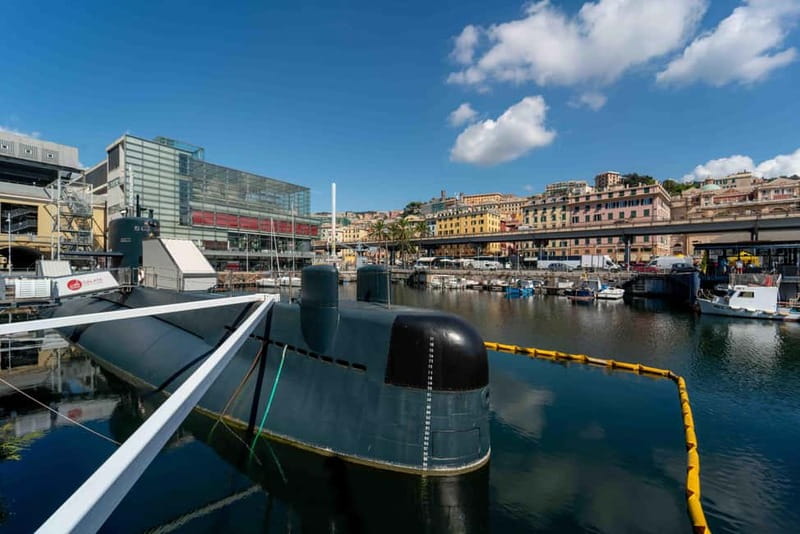
- A real submarine (Nazario Sauro) with restored compartments and simulated operational sound effects
- Galata Maritime Museum, 31 halls on 5 floors, organized around man-and-sea themes
- Mirador terrace 360° views over Genoa’s old town and port
- Sea paintings from the 1800s and 1900s, plus a dedicated stop on the Andrea Doria (1956)
- Tactile stations and clear accessibility features, including ramps, lifts, and requested wheelchairs
- Facilities that keep the day sane, like lockers and a nursing/pit stop area
Why this Genoa maritime visit feels different: museum + submarine in one place
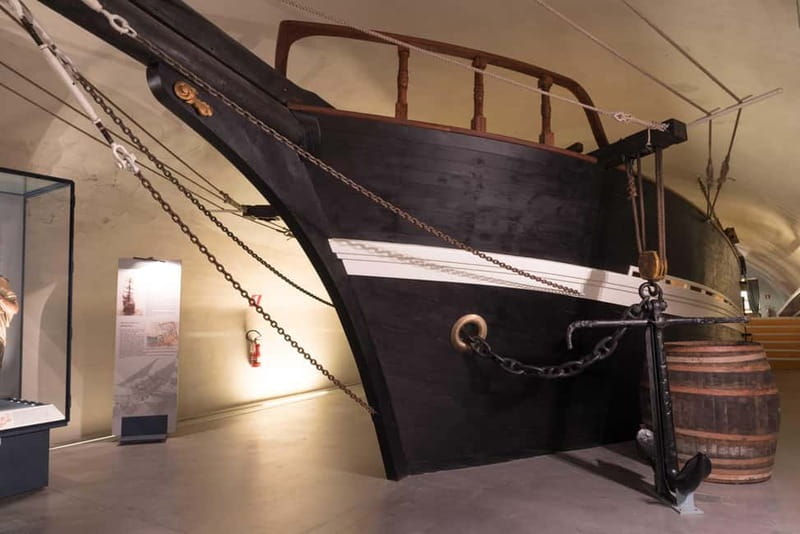
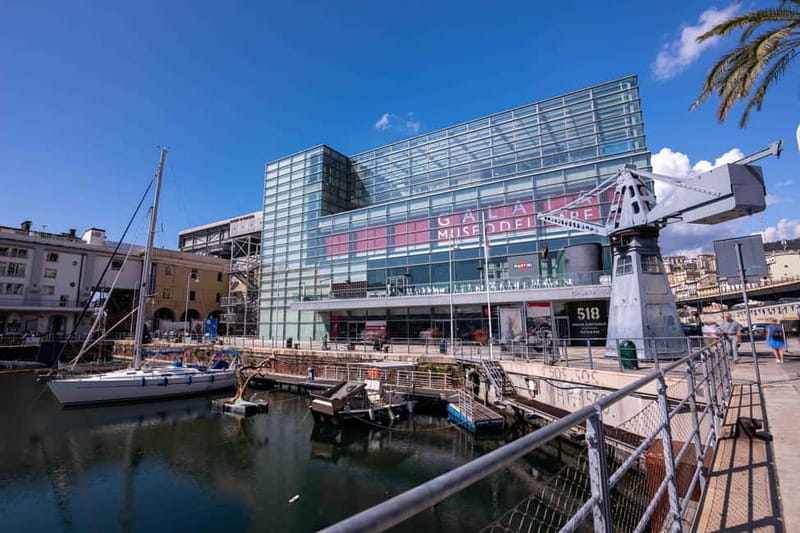
The Galata Maritime Museum is not a single room with a few artifacts. It’s a purpose-built experience that opened in 2004 and was designed by the Catalan architect Guillermo Vasques Consuegra, which you’ll feel in the layout and the way the story moves. The visit runs across 31 halls on 5 floors, linked by a chronological and thematic path built around one simple idea: man and the sea.
That’s where the value jumps out for me. Many museums explain the ocean from a distance. Here, you get the distance—paintings, objects, historical scenes—and then you step into the tight world of the submarine. The Nazario Sauro is part of the Galata Open Air Museum setup, docked right at the waterfront, so you’re not hunting it down around the city.
If you like maritime culture, ship life, or design—especially scale models—you’ll probably have a good time even if you’re not a hardcore naval-history person. And if you’re traveling with kids, the submarine and the models tend to be the kind of visual hook that keeps attention. Just remember the “one day” format means you’ll be choosing moments, not seeing everything slowly.
You can also read our reviews of more museum experiences in Genoa


Nazario Sauro Submarine: restoration details you can actually feel
The Nazario Sauro Submarine (sometimes listed in the Italian naming style) is the big special attraction here. It was built by Fincantieri for the Italian Navy in 1976, later abandoned in 2002, then donated to Mu.MA.S. Since 2010, it has been open to the public and is described as the only boat of its kind in Italy.
What makes it more than a stationary exhibit is the way the restoration kept maximum fidelity to the original. You’ll also notice simulated sound effects that recreate the feel of operation, which helps you picture what being inside would have been like while it was active. That matters because submarine life isn’t just about metal walls—it’s about cramped working spaces, constant practicality, and the sounds and routines of life underwater.
The visit route inside is designed to show you living conditions for sailors. I’d treat it like a sensory lesson, not like a walkthrough with perfect comfort. If you’re someone who hates enclosed spaces, plan with that in mind and take breaks when you need them. If you’re comfortable in tight areas, this is where the “wow” tends to land.
The museum’s chronological route: Columbus to migrations, then the age of ships
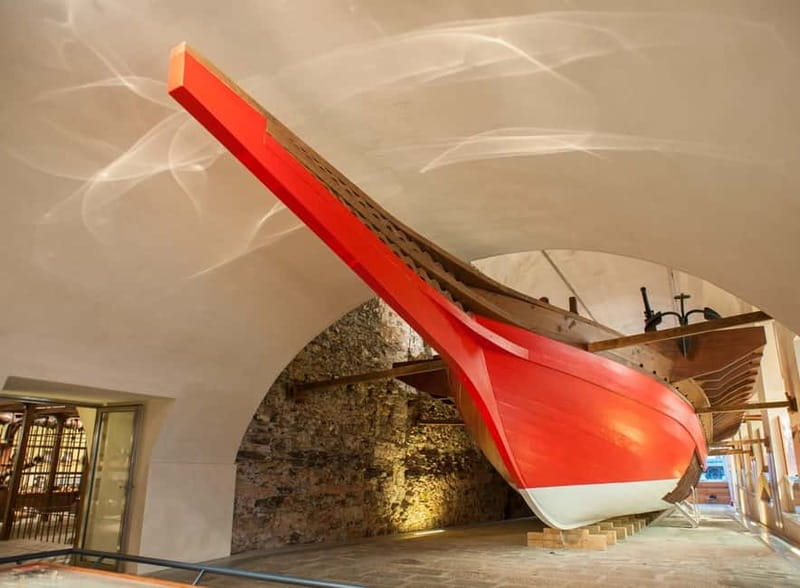
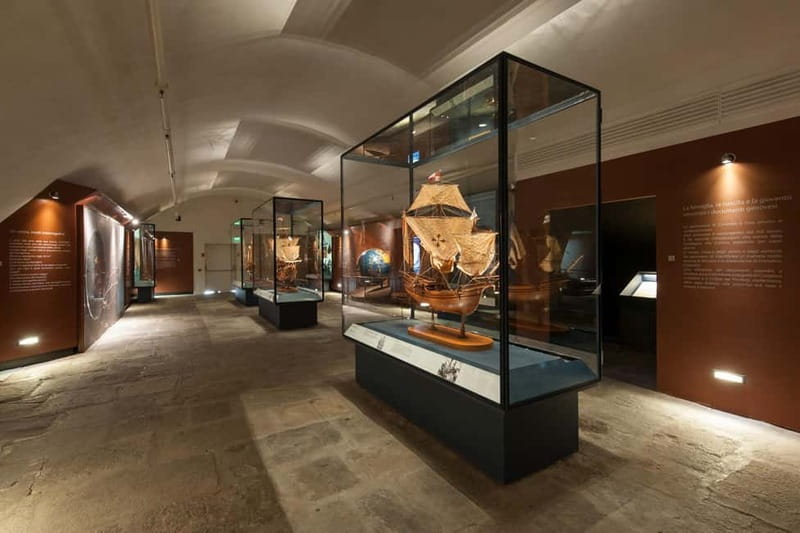
Once you leave the submarine area, you’ll be moving into the Galata Maritime Museum’s structured narrative. The museum doesn’t just throw objects at you. It uses alternating sections—maritime culture finds, works of art, and themed environments—so you keep switching gears between real-world life and how people viewed the sea through art and story.
The path begins with the story of Christopher Columbus and then stretches forward in time. You move through themes like contemporary migrations, but it’s not stuck in modern headlines. It also covers earlier sea periods: rowing and galleys, sailing ships, and later steamships. That “man and the sea” unifier is the thread tying the whole museum together, so even if one section feels slow, another will switch you back into motion.
The museum spans 5 floors, so you’ll likely do a lot of walking and stairs-or-ramps rhythm. The good news: it’s built for access, with ramps and lifts for mobility-impaired visitors. If you’re bringing a stroller or you’re dealing with mobility limits, I’d still expect the day to take more energy than a quick gallery visit.
Paintings of the sea (1800s to 1900s) and the Andrea Doria stop
One of my favorite ways to understand maritime culture is through how artists pictured it. This museum includes a sea-painting collection from the 1800s and 1900s, placed so you can pause and look at the sea as an idea, not only as a tool. It’s also positioned near a terrace with Mediterranean shrubs, which helps you reset after time spent inside.
Then you get a dedicated focus on the ocean liner Andrea Doria and the sinking in 1956. You’re not just looking at a vessel in isolation. You’re seeing how the sea, technology, and human stakes collide in a story that still matters. Even if you only catch one or two major historical moments, this is a strong one to land on.
If you’re an art-and-history mix person, this segment is a great “middle” stop. It gives you something emotional and visual before you head toward the bigger outdoor viewpoints.
Mirador and Belvedere terraces: the port-city view payoff
The museum experience ends outside, and the outdoor spaces are not an afterthought. You’ll reach the Belvedere, and you’ll also get to the Mirador terrace, described as delivering a 360° view over Genoa’s old town and harbor arch. This is where the day stops feeling like “museum mode” and turns into “look at this city.”
I like how the terrace layout supports both photo time and just standing there, letting your eyes connect the dots between what you saw indoors and what you’re seeing now. If you look back at the museum’s sea theme, the port becomes a living backdrop instead of a distant map point.
Tip: if you’re sensitive to sun, plan your break time. The terraces have open air and visible views, so bring a hat or plan to rotate inside/outside as needed. If you want photos, give yourself an extra couple of minutes on the Mirador before you rush off to catch the next thing.
Pacing for a 1-day plan: how to avoid the rushed-feeling trap
This is a one-day experience, and it’s easy to underestimate how much time a submarine can take, especially if it’s the main reason you came. One helpful clue from the way people talk about this visit: if you put the submarine first and then assume you’ll breeze through the museum, you might end up feeling time-pressure.
So I’d plan it like this in your head: the submarine is a “must-see” block, and the museum is a “choose-your-path” block. If you try to read every label and stop at every room, you can burn through the hours fast because there are many halls across multiple floors.
If you’re traveling with kids or you just know you can’t do museum marathon mode, pick a few anchor themes: the Columbus start, the evolution from galleys to steamships, the sea paintings, and the Andrea Doria segment. Then let the rest be extra credit.
And yes, you can still enjoy the museum even if you don’t see every single room in depth. The structure is meant to guide you, so you’re not stuck without direction.
Language and signage: what to expect if you don’t speak Italian
The museum experience is presented with Italian, Spanish, and English support according to the available information. That’s good for many visitors, but it can be a problem if you were counting on French explanations or a French audio guide.
If you speak only English or only French, I’d treat this as a “read smarter, not longer” situation. Bring a translation app and use it for the big labels rather than trying to translate everything word-for-word. Also, if you rely on signage to navigate, keep an eye out for clear directional cues and pause at junction points instead of walking quickly through halls.
One practical thing: the museum has a lot of movement between floors and rooms. Better directional awareness means less time backtracking and more time enjoying what you came for.
Facilities that make the day easier: lockers, tactile stations, and nursing areas
This visit is set up to be workable. There’s a free secure cloakroom and lockers, which is a lifesaver if you’re carrying a bag, small backpack, or extra layers. Video surveillance is in place for safety.
For interactive learning, the museum includes three tactile stations. These are a nice addition if you like learning with your hands or if you’re traveling with someone who benefits from that style of interaction.
If you need family-friendly support, there’s a nursery and a dedicated pit stop nursing area. Those details can make a difference in how smooth the day feels, especially when a visit spans multiple floors.
If you use a wheelchair, wheelchairs can be requested, and the museum is described as wheelchair accessible via ramps and lifts. That said, like any multi-level museum, the day will still be more comfortable if you plan your pacing and take breaks when you need them.
“Is it worth $22?” A value check that actually matches what you get
At about $22 per person, the ticket price is covering two major experiences: entrance to the Galata Maritime Museum and access to the Nazario Sauro Submarine. That combination is where the value lives.
You’re not paying for only a museum collection behind glass. You’re paying for a day that includes:
- A large museum structure with 31 halls across 5 floors
- The submarine itself, restored from a real 1970s build
- Outdoor terraces with serious city and port views
- Art and story elements, including sea paintings and the Andrea Doria (1956) angle
If maritime history is your thing, you’ll likely feel the money was used well. If you’re only mildly interested in ships, it might still work because the submarine creates a physical, human scale to the subject. But if you hate enclosed environments or you strongly need French-language interpretation, then the value depends on whether the language support fits your needs.
Should you book the Galata Maritime Museum and Nazario Sauro Submarine?
I’d recommend booking if you want a Genoa day that connects art, ships, and real sailor life—without turning into a long academic lecture. This is a solid pick for families (models and the submarine tend to catch attention), for people who like maritime culture, and for anyone who enjoys architecture and urban viewpoints.
Think twice if your language comfort depends on French guidance or audio narration. In that case, plan to use translation tools and focus on the visual anchors: the submarine, the painting room, and the terrace views.
If you’re the kind of traveler who likes finishing with a payoff view, this one has it. The Mirador’s 360° harbor-and-old-town perspective is the moment that makes the whole day feel complete.
FAQ
What’s included in the ticket price?
Your admission includes entrance to the Galata Maritime Museum and access to the Nazario Sauro Submarine.
How long is the visit?
This experience is listed as valid for 1 day. Starting times can vary, so check availability for the time you want.
How much does it cost?
The price is listed as $22 per person.
Is the museum and submarine visit wheelchair accessible?
Yes. The museum is wheelchair accessible via ramps and lifts, and wheelchairs can be requested.
Are tactile activities available?
Yes. There are 3 tactile stations for an interactive experience.
Are there restrictions during the visit?
Smoking and littering are not allowed.