REVIEW · ALCALA DE HENARES
From Madrid: Alcalá de Henares & Cervantes Museum Day Trip
Book on GetYourGuide →Operated by Fun and Tickets · Bookable on GetYourGuide
Alcalá de Henares feels like a living footnote to Cervantes. This day trip strings together key places from Cervantes’ life alongside the city’s UNESCO-listed old-town story. Two big wins for me are how hands-on the sites feel and how efficiently you cover them in just one morning-plus-afternoon.
I especially love the chance to walk through the Miguel de Cervantes Birthplace Museum, with reconstructed rooms from the 16th century. And the visit to the University of Alcalá de Henares is more than a photo stop; it’s where you start to understand why this town mattered far beyond its walls.
One thing to consider: the schedule can feel a bit tight, and you only get a limited break time to reset between major stops.
In This Review
- Key highlights to look for
- Why Alcalá de Henares belongs on a Madrid history day
- Price and value for about $55 (what you’re really buying)
- Meeting at San Bernardo 7 and the ride to Alcalá
- Cervantes’ Birthplace Museum: rooms, ritual, and context
- The Chapel of the Hears: a quieter stop with big meaning
- University of Alcalá: where education and power meet
- Plaza de Cervantes and the walk toward the cathedral
- Magisterial Cathedral and the story of the child martyrs
- Archbishop’s Palace: royal origins tied to Catherine of Aragon
- Pacing: what the 2.5-hour guided block and 30-minute break feel like
- What it’s like with the guide: Spanish commentary, clear explanations
- What to bring for comfort (and to avoid turning the day into a grind)
- Who this day trip suits best (and who should reconsider)
- Should you book this Alcalá de Henares & Cervantes day trip?
- FAQ
- Where do I meet for the Alcalá de Henares day trip?
- How long is the tour and how does travel time work?
- What’s included in the price?
- Is food or drinks included?
- What language is the guide?
- Is this tour wheelchair accessible?
- Final call: book or pass?
Key highlights to look for
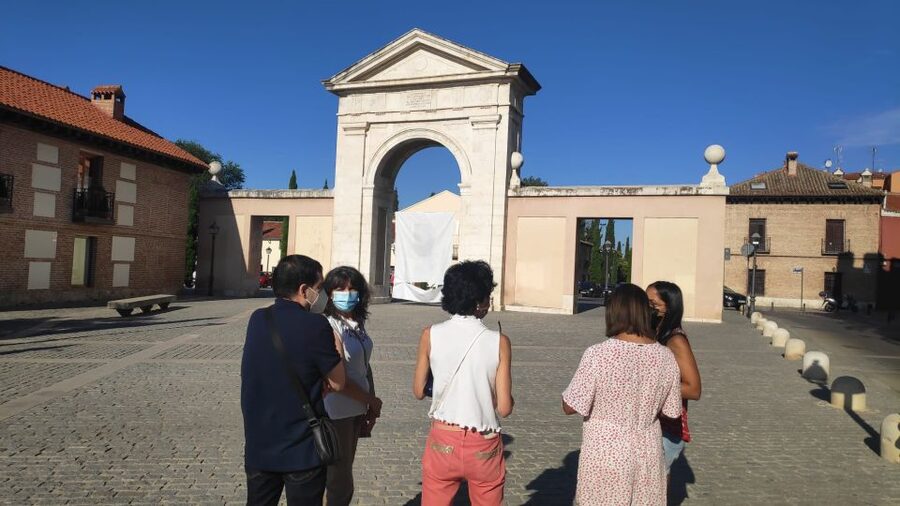
- Miguel de Cervantes Birthplace Museum with reconstructed 16th-century rooms
- Chapel where Cervantes was baptized and related family connections
- University of Alcalá de Henares, described as the oldest university in Spain
- Magisterial Cathedral and the story of the child martyrs
- Archbishop’s Palace, including the birthplace of Catherine of Aragon
- A guided day that includes transportation, a guide, and key tickets
Why Alcalá de Henares belongs on a Madrid history day
Alcalá de Henares is close enough to Madrid for a satisfying day trip, but it doesn’t feel like a rushed suburb. The whole place is built around the idea that ideas travel—Roman-era roots, religious power centers, and the cultural gravity that pulled Cervantes into the spotlight.
This tour makes that connection for you. You don’t just see monuments; you move from one story-world to the next: Cervantes’ early life, the role of Cardinal Cisneros in education, the cathedral’s dramatic legend, and then royal power at the Archbishop’s Palace. It’s a strong mix of literature, religion, and politics in a compact area.
Price and value for about $55 (what you’re really buying)
At around $55 per person for a 5-hour outing, you’re paying for more than entry tickets. You’re getting round-trip transportation, a live guide, and included tickets to the Miguel de Cervantes Birthplace Museum plus the University of Alcalá de Henares.
That matters because both sites can involve waiting. This option is set up to help you skip the ticket line, so your time in Alcalá stays focused on the places that take the longest. The only obvious missing piece is food—you’ll want to plan on buying your own snacks or a casual lunch during the short break.
If you like guided structure (and you want to avoid juggling multiple ticket purchases), this is a decent deal. If you prefer wandering slowly without time-boxed guidance, you might feel the pace is a touch brisk.
Meeting at San Bernardo 7 and the ride to Alcalá
You meet at San Bernardo 7, outside the shopping gallery area. From there, it’s about 35 minutes by bus/coach into Alcalá de Henares, then another 35 minutes back.
What I like about the logistics is the built-in rhythm: you don’t waste your first hour wrangling transit once you’re on the clock. You also get a clear total duration—5 hours—so it’s easier to match with your Madrid plans.
One practical caution: a couple of people reported start-time problems, including a late guide and in one case a day where the tour didn’t happen. That doesn’t mean it will be your experience, but it does mean you should arrive a few minutes early at San Bernardo 7 and keep your expectations flexible.
Cervantes’ Birthplace Museum: rooms, ritual, and context
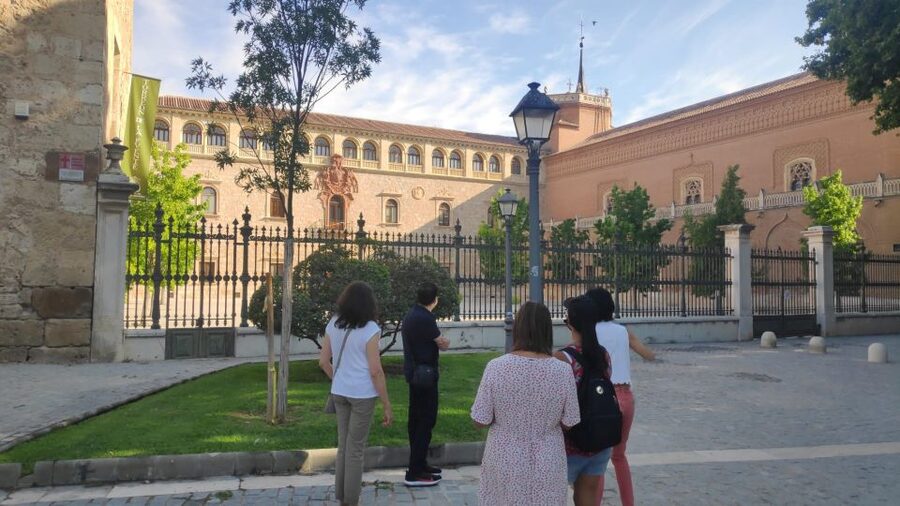
The day centers on Cervantes, and the Miguel de Cervantes Birthplace Museum is the heart of that. You’ll walk through reconstructed rooms from the 16th century, which is exactly what helps this place work as more than a display. The goal isn’t just to see objects—it’s to get a sense of daily life and the kind of environment that shaped the author before he became a giant of Spanish literature.
You’ll also connect the museum to the next stop spiritually and personally. The tour includes time at the chapel where Cervantes was baptized, plus places linked to his family and to the broader story around his writing. That chain of locations is one of the better ways to understand Cervantes: not as a name on a textbook page, but as a person rooted in a specific place and time.
If you’re the type who likes literary sites with context, this section usually lands well. If you’re hoping for lots of free time to linger, the guidance keeps you moving—so take notes quickly and return to anything that catches your interest during the break later.
The Chapel of the Hears: a quieter stop with big meaning
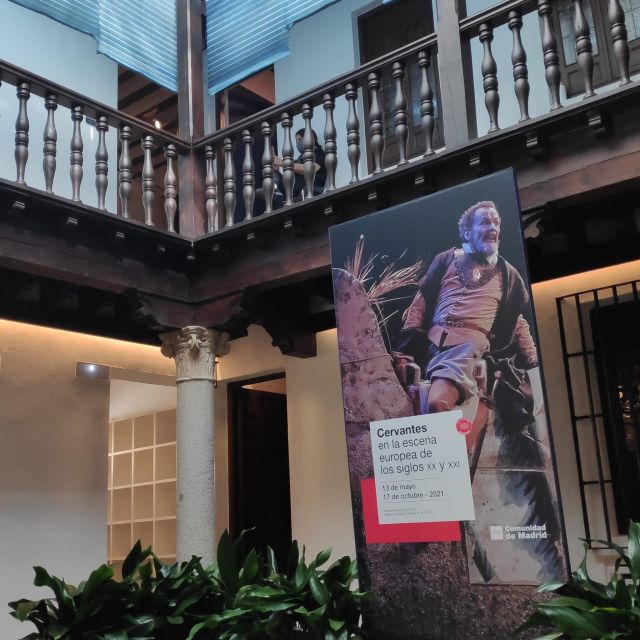
After the birthplace museum, the tour shifts to a more reflective moment: the chapel where Cervantes was baptized. This is where the day slows down, even if the clock doesn’t.
The value here is the connection between life events and place. In Spain, religious spaces often act like anchors—keeping personal stories and local identity tied together. You’ll hear how your guide points out places tied to Cervantes’ early life and family connections.
If you’re visiting during colder weather, keep in mind that chapels can feel chilly. The tour’s advice to bring warm clothing isn’t just generic; it’s the difference between tolerable and uncomfortable.
University of Alcalá: where education and power meet
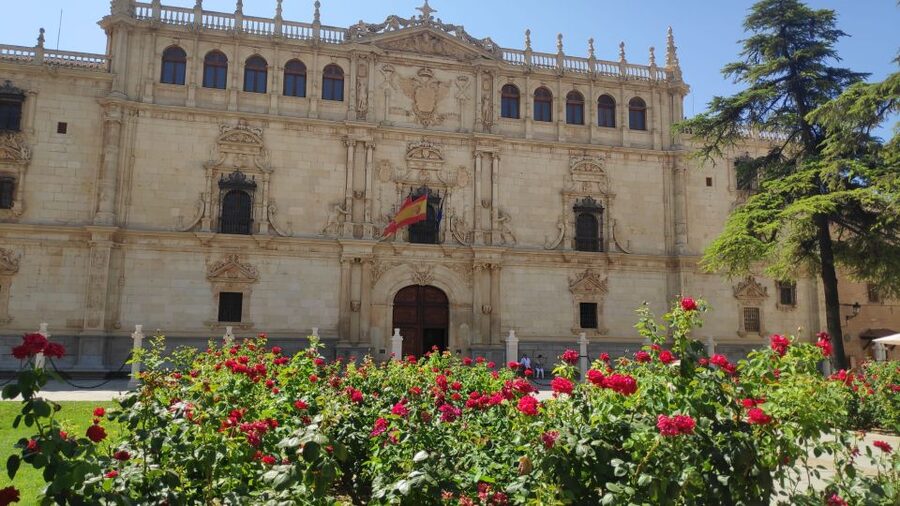
Next comes one of the big “wow, so that’s why this town matters” moments: the University of Alcalá de Henares, described on this tour as the oldest university in Spain.
Your guide brings in the political and personal engine behind it, including the role of Cardinal Cisneros in establishing the university. That’s important because universities aren’t just classrooms. In historic cities, they often represent funding, influence, and the future direction of a region.
You’ll walk through the halls and explore the university area before moving on to the nearby plazas. This stop works especially well if you like history that explains how societies organized knowledge. It also pairs nicely with the Cervantes section: one side gives you the human story, and the other explains the cultural machinery that helped shape Spanish intellectual life.
Plaza de Cervantes and the walk toward the cathedral
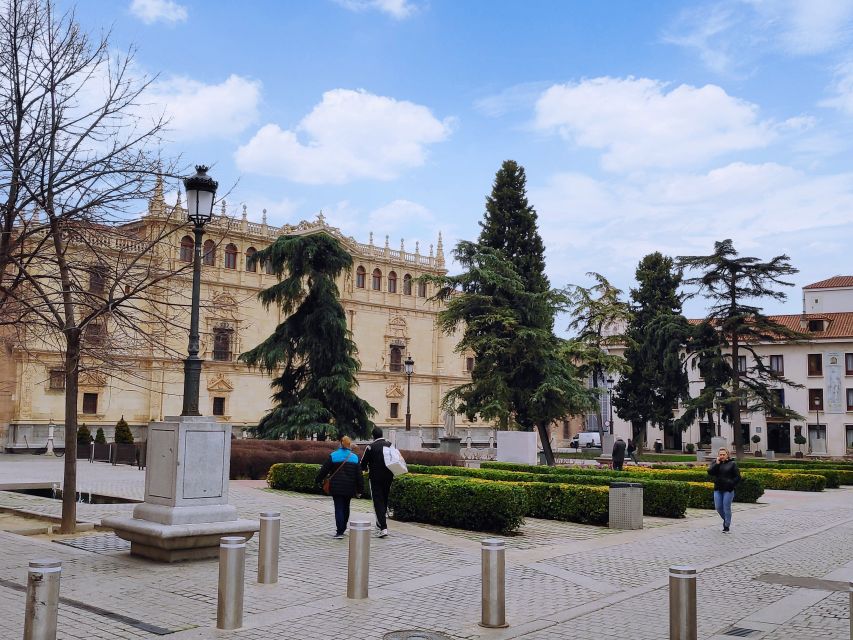
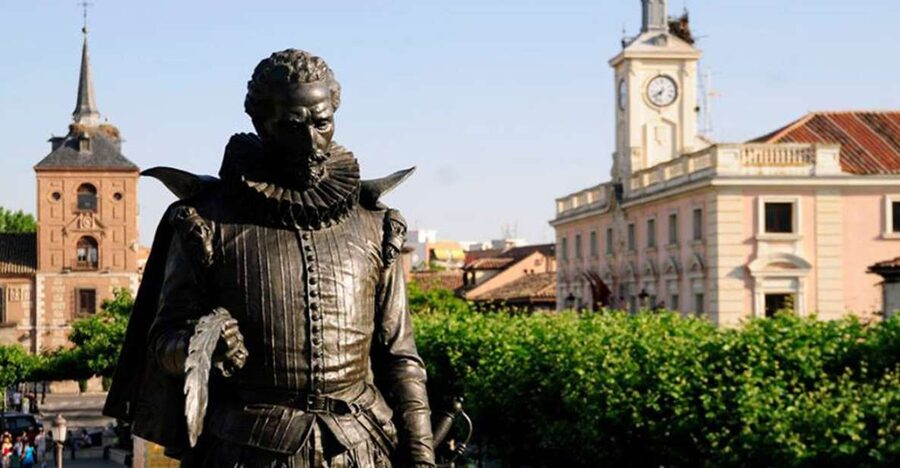
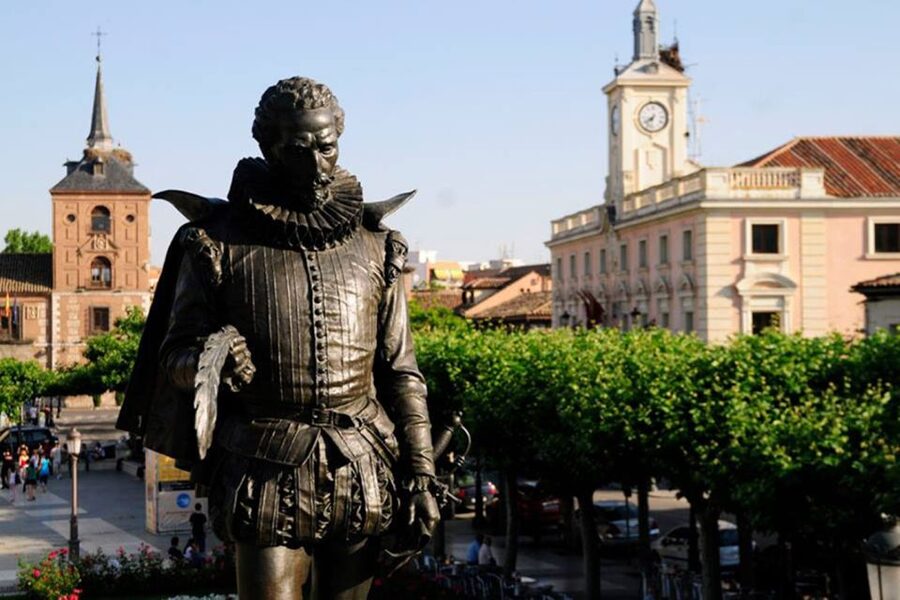
You’ll see the statue of Cervantes in Plaza de Cervantes. It’s quick, but it acts like a reset: you take a moment in open air, then the tour pushes you back into the heavier historical storytelling.
From here, the route moves toward Plaza de los Santos Niños, where the Magisterial Cathedral is located. This is where the day becomes dramatic in a distinctly local way.
One tip: good walking shoes matter here. Even if the distance isn’t huge, you’ll be moving through historic streets and spending time standing to hear the guide’s story.
Magisterial Cathedral and the story of the child martyrs
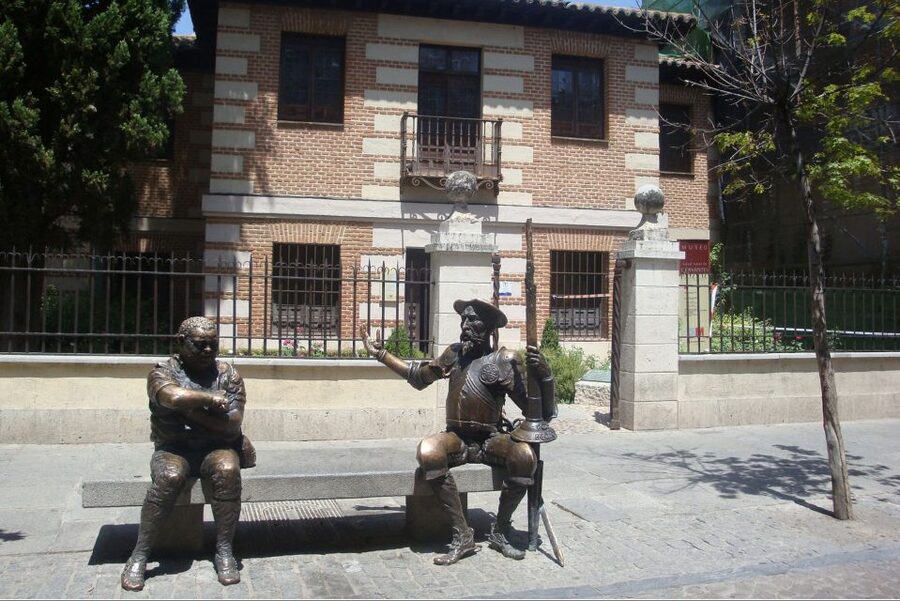
At the cathedral, the focus turns to a specific legend: the story of the child martyrs associated with the site. You won’t just look at the building—you’ll learn the narrative your guide connects to the cathedral.
This is one of those moments where religious architecture serves a purpose beyond aesthetics. The cathedral becomes a storyteller in stone, and the guide’s job is to connect what you see with why people in the area still remember it.
If you’re sensitive to heavy religious narratives, this is the part to prepare for. And if you’re the opposite—curious about how faith stories shaped local identity—this is a highlight you’ll likely remember long after the photos fade.
Archbishop’s Palace: royal origins tied to Catherine of Aragon
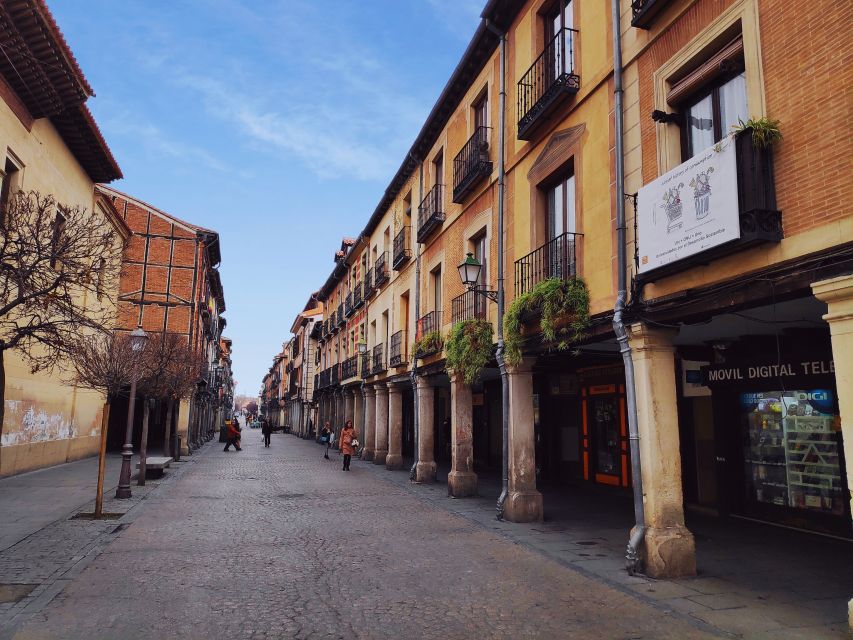
To close the tour, you head to the Archbishop’s Palace. This is an elegant step up from the cathedral’s spiritual weight and back toward political power.
The palace is described as a residence where Castilian monarchs once stayed, and your visit includes the detail that Catherine of Aragon was born here. That kind of fact is more than trivia—it helps you see why a place like Alcalá could carry influence. It wasn’t only about writers and students; royalty and church leadership also marked the city as worth remembering.
You’ll admire the palace and finish with a sense of scale. Cervantes’ early world, the university’s mission, and the cathedral’s legend all feel more real once you’ve seen where power physically lived.
Pacing: what the 2.5-hour guided block and 30-minute break feel like
The on-the-ground guided portion is about 2.5 hours, with 30 minutes set aside for a break in Alcalá, then the return ride. That means you’ll see a lot without long stops.
This is great for first-timers who want the main beats in one pass. It can feel quick if you’re the type who likes to read every plaque or linger inside museum rooms.
Also, there’s no built-in long sit-down meal. So use the 30 minutes strategically: grab water, decide where you’ll eat later, or do quick browsing around plazas—especially near where the cathedral and university are.
If you like slower travel, consider pairing this day trip with a second, lighter literature or historic wander when you’re back in Madrid.
What it’s like with the guide: Spanish commentary, clear explanations
This is a live guided tour in Spanish. That’s not a deal-breaker for everyone, but it does mean you’ll get the most out of it if you’re comfortable catching historical details without translating every sentence in your head.
The good news is that the experience is set up around storytelling. One guide name that came up in the feedback is David, and people described him as especially strong. Even if you don’t get the same guide, the format aims for guided explanation that ties each location to a bigger narrative.
If you don’t speak Spanish fluently, I’d still go, but I’d manage expectations: you may understand the broad strokes, while the finer points might slip by unless you’re following quickly or using on-the-spot translation.
What to bring for comfort (and to avoid turning the day into a grind)
This tour is straightforward, but comfort matters because you’re walking and standing through historic stops. Bring:
- Comfortable shoes
- Warm clothing (especially in cooler months)
- Sunscreen
- Water
The route includes outdoor plazas like Plaza de Cervantes and Plaza de los Santos Niños, so sun and temperature can hit you. Water is especially useful because the plan doesn’t include food and drinks.
Who this day trip suits best (and who should reconsider)
This tour is a strong fit if you:
- Like literature-related travel that connects writers to places
- Want a “greatest hits” history day without planning multiple tickets
- Enjoy guided storytelling across museum + university + cathedral + palace
It’s less ideal if you need wheelchair accessibility, because it’s listed as not suitable for wheelchair users. If mobility is limited, you may want to look for a different format or a different route in the city.
And if you’re traveling with very young kids, the tour length is short enough that it could work, but the schedule is still guided and walking-focused—so it may not be the most relaxed half-day option.
Should you book this Alcalá de Henares & Cervantes day trip?
If you want one efficient day connecting Cervantes, education history, religious storytelling, and royal context—all outside of Madrid—this is worth booking. The included transportation and key tickets, plus the option to skip the ticket line, make it a practical value for about $55.
Book it if you’re comfortable moving at a guided pace and you’ll appreciate Spanish commentary. Skip it (or look harder) if you need slower sightseeing time, wheelchair access, or a built-in meal plan.
If you do book: show up early for San Bernardo 7, wear good shoes, and treat the 30-minute break as your reset button. You’ll leave with a much fuller sense of how Cervantes’ world was stitched together—by family, faith, education, and power.
FAQ
Where do I meet for the Alcalá de Henares day trip?
You meet at San Bernardo 7, outside the shopping gallery.
How long is the tour and how does travel time work?
The activity lasts 5 hours total, including about 35 minutes each way by bus/coach, plus a guided visit of about 2.5 hours and a 30-minute break.
What’s included in the price?
The price includes transportation, a guide, tickets to the Miguel de Cervantes Birthplace Museum, and tickets to the University of Alcalá.
Is food or drinks included?
No. Food and drinks are not included, so you’ll need to plan for your own during the break.
What language is the guide?
The tour has a live tour guide in Spanish.
Is this tour wheelchair accessible?
No. It’s listed as not suitable for wheelchair users.
Final call: book or pass?
Book this day trip if Cervantes and historic Spain are your kind of day, and you want a structured route that hits the birthplace, university, cathedral, and Archbishop’s Palace with included entry. Pass if you need long, unhurried time in each site or if you require wheelchair accessibility.