REVIEW · NEW YORK
Edward Hopper House Museum Entry Ticket
Book on Viator →Operated by Edward Hopper House Museum & Study Center · Bookable on Viator
Edward Hopper’s world starts in a modest house. This entry ticket gets you inside the 1858 home where Hopper was born and raised, with rotating displays of his early work, family artifacts, and special exhibitions by artists inspired by his legacy. I especially like the way the orientation film and the historic Nyack materials help you connect the art to real places. One thing to think about first: the house is intentionally small, so you won’t see a sprawling, room-by-room mansion.
The visit also has a human pulse. The staff and hosts bring serious enthusiasm, and one reviewer even mentioned a chat with Eileen that made the long video worth it. If you’re expecting lots of household rooms like a preserved period museum, you may find it a bit compact—still, the focus here is sharp and rewarding for Hopper fans.
In This Review
- Key highlights you’ll notice right away
- Edward Hopper’s beginnings: an 1858 house with a sharp focus
- Price and time: $10 for an hour that stays efficient
- Arriving at the museum: what to expect before you go in
- Step inside: orientation film and Hopper’s Nyack maps
- Rotating exhibits: early works, family artifacts, and modern echoes
- The upstairs payoff: bedroom and Art Room (with a real staircase)
- Hosts and energy: why the staff makes the hour better
- What to watch for: turning the museum into a real understanding
- Practical tips so the visit feels easy
- Should you book the Edward Hopper House Museum entry ticket?
- FAQ
- How long does the Edward Hopper House Museum entry ticket take?
- How much is the ticket?
- What’s included with the ticket?
- Is the tour available in English?
- Is there an ADA restroom?
- Is the second floor accessible?
- What is the cancellation policy?
Key highlights you’ll notice right away
- Orientation film that gives you context before you hunt for details
- Historic maps and materials tied to Hopper’s Nyack years
- Rotating exhibits blending early Hopper work, family artifacts, and modern responses
- Special exhibitions by well-known artists inspired by Hopper’s legacy
- Upstairs bedroom and the Art Room as standout spaces
- A short visit window (plan 30 minutes to 1.5 hours) that keeps things moving
Edward Hopper’s beginnings: an 1858 house with a sharp focus
This museum experience is built around one simple idea: if you want to understand Edward Hopper’s art, you start with his early environment. You’re stepping into a historic residence dating to 1858—an actual home setting, not just a gallery that happens to sell tickets. That matters because Hopper’s subjects often feel quiet, observant, and rooted in everyday scenes. Coming in with the house context gives you a different lens for what you’ll see inside.
You’ll also get the kind of structure that helps your brain. Instead of wandering without a map (metaphorically and sometimes literally), the visit includes an orientation film and interpretive materials tied to Hopper’s early life in Nyack. The museum doesn’t try to overwhelm you with everything at once. It offers a guided, focused pathway that’s easy to follow even if you’re not a die-hard art student.
And yes, the house is small. But that can be a plus. You move from one meaningful stop to the next without feeling trapped in a never-ending tour. I like that the emphasis stays on understanding—how Hopper’s beginnings relate to what came later.
A few more New York tours and experiences worth a look

Price and time: $10 for an hour that stays efficient
At $10 per person, this ticket is priced to be approachable. You’re not paying for a multi-stop, all-afternoon day. You’re buying a tight visit that typically runs 30 minutes to 1 hour 30 minutes. That range is helpful because it gives you flexibility: you can rush through the key areas if you’re pressed for time, or you can slow down and really take in the art and supporting materials if you enjoy interpretive details.
For value, I look at two things: how much interpretation you get versus how long you spend there. Here, you get that interpretation up front via the film and the Hopper’s Nyack orientation materials, and then you’re given art and exhibit spaces to connect the dots. The time is also realistic for many schedules. If you’re doing other New York-area sights, this works well as a low-stress add-on rather than a heavy commitment.
Also, it’s mobile ticket friendly. That’s a modern convenience that saves you from ticket-printing hassle and keeps things smooth when your day is already packed.
Arriving at the museum: what to expect before you go in
You’ll find the museum in New York, and it’s described as near public transportation, which is a big deal in a city where getting across town can turn into a mini project. Service animals are allowed, and the visit is marked as suitable for most travelers.
There’s also an ADA restroom on the ground floor. That’s the kind of practical info that helps you plan without second-guessing mid-visit.
One more note for planning your day: the experience is in English, and confirmation is provided at booking time unless you book very close to travel (within about 3 hours). Average advance booking is around 8 days, so if you’re traveling in busy weeks, reserving ahead is a smart move.
Step inside: orientation film and Hopper’s Nyack maps
The entry starts at the Edward Hopper House Museum & Study Center. The first big advantage is pacing. Before you fully move through the spaces, you get an orientation experience that frames what you’re about to see. The film helps you build a quick foundation: who Hopper was, what his early years looked like, and why the Nyack period mattered.
Then come the historic materials tied to Hopper’s Nyack—specifically, historic maps of Hopper’s Nyack, along with context about where he lived until 1908, when he was 26 and relocated to New York City. You don’t need to already know Hopper’s biography to benefit from this. The museum gives you enough background to make the artworks and themes feel less abstract.
For me, the key value here is that the museum turns biography into something visual. Maps and local context give you geography, and geography makes the art easier to place in your mind. You start noticing details differently. Instead of thinking, I wonder what this painting is, you think, I get why he might have seen it that way.
Rotating exhibits: early works, family artifacts, and modern echoes
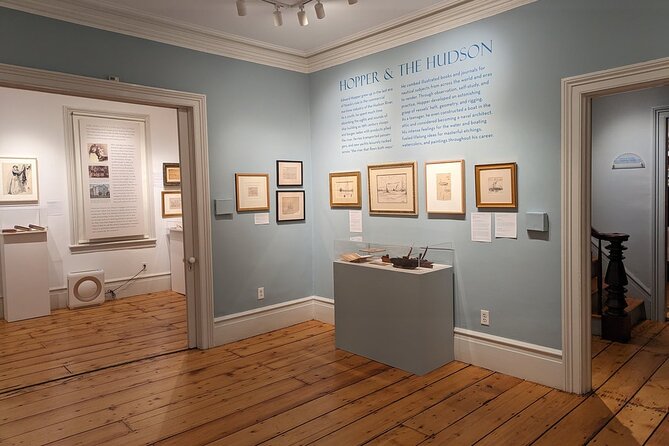
After that orientation foundation, you’ll shift into the museum’s exhibition spaces. A strong part of this experience is the mix of content. You’ll see rotating displays of Hopper’s early work along with family artifacts. That blend is important because it avoids a common problem in art museums: you can end up only looking at the end product, without seeing the environment behind it.
The museum also features exhibitions by well-known artists inspired by Hopper’s legacy. This is where the experience can surprise you. Hopper’s influence doesn’t live only in old paintings. Contemporary artists respond to his style, his themes, and his sense of mood. If you’ve ever wondered how a classic American artist keeps mattering, this is one of the clearest ways to find out in a short visit.
One review note that stood out: people often enjoy the way Hopper’s work is shown alongside the work of his wife, Jo. Even if you’re not deeply familiar with Jo Hopper, pairing her work with his helps you see the artistic world surrounding him, not just the lone-genius story.
The upstairs payoff: bedroom and Art Room (with a real staircase)
One of the most praised parts of the visit is upstairs. The upstairs bedroom and the Art Room are specifically mentioned as excellent. This is one of those moments where the museum feels like it’s giving you a payoff for the extra vertical effort.
But there’s a practical consideration: the second floor is accessible only by a historic staircase, and it may feel steep to some visitors. If you’re traveling with limited mobility, consider going in with realistic expectations. The good news is you’ll still have meaningful viewing on the ground level, including the film and other exhibition areas. You just might choose not to push upstairs if stairs are difficult.
If you do climb up, do it slowly and confidently. A historic staircase can be beautiful and still be functional-painful if you rush. This is the kind of place where good shoe choice matters more than you’d think.
Hosts and energy: why the staff makes the hour better
A big theme in the best feedback is the staff energy. Hosts at the house are described as enthusiastic and knowledgeable, and they genuinely seem to enjoy talking about what the home represents across time. That matters because small museums can either feel quiet and disconnected, or they can feel alive through staff interpretation.
In particular, I’d pay attention to the human side. One reviewer highlighted chatting with Eileen and said the long video felt excellent after that conversation. Even if you don’t have time for a deep chat, being willing to ask a question can change the feel of the visit. You’ll get answers tailored to what you’re noticing, not generic art-history facts.
The museum experience is also described as including a longer orientation video. If you settle in and give it your full attention, you’ll get more out of everything that follows—because you’re watching with context, not just watching for vibes.
What to watch for: turning the museum into a real understanding
You’ll get the most from this ticket if you do two simple things: slow down in the exhibition areas, and actively connect what you see to the house context. Here’s a practical way to do that.
First, when you see Hopper’s early work, don’t treat it like standalone art. Ask yourself how the Nyack materials might help. If the museum shows a theme or a period, tie it back to the place and time. Even without an art degree, those connections start to feel natural fast.
Second, pay attention to the exhibits that explain influence. The museum’s contemporary-artist side is valuable because it shows how Hopper’s legacy becomes a conversation. Instead of thinking of Hopper as a closed chapter, you can see ongoing replies—artists working with similar ideas: light, distance, stillness, and everyday mood.
Third, if you’re headed upstairs, plan a little extra time there. The upstairs bedroom and Art Room are frequently called out because they feel more intimate and specific. You’re not just walking through space—you’re moving closer to the kind of environment that can shape how an artist works.
Practical tips so the visit feels easy
This isn’t a huge venue, so logistics are simple. Still, a few details can make your experience smoother.
- Bring water? Coffee and tea aren’t included, and bottled water isn’t included either. If you’re sensitive to getting thirsty, plan to grab a drink elsewhere before or after.
- Wear shoes you trust on stairs. The second floor uses a historic staircase, and it can be steep for some visitors.
- If you need an accessible route, plan around the ground floor. There’s an ADA restroom on the ground floor, which is a helpful anchor point for your comfort.
- If you like public transit, that’s supported here since the museum is near public transportation.
Also, the experience is offered in English, and it’s marked as suitable for most travelers. If you’re traveling with family, this can work well because the time commitment is manageable—especially compared to longer museum marathons.
Should you book the Edward Hopper House Museum entry ticket?
I’d book it if you want a short, focused Hopper experience that connects art to place. The $10 price and the 30 minutes to 1.5 hours window make it easy to fit into a day without feeling like you lost half your vacation. You’ll also get a strong interpretive setup through the orientation film and the Hopper’s Nyack maps, which is a big part of why this visit works for both newcomers and serious fans.
I wouldn’t rush to book it if you’re expecting a large house museum with many period rooms. This isn’t built to mimic a fully furnished, room-after-room home tour. It’s designed like a compact interpretive experience—more jewel-like than sprawling.
If your goal is to understand Hopper’s early influences and see how his legacy continues through contemporary artists, this ticket is good value and a smart stop. I’d choose it as a calm, meaningful break rather than a rushed checklist item.
FAQ
How long does the Edward Hopper House Museum entry ticket take?
Plan on about 30 minutes to 1 hour 30 minutes.
How much is the ticket?
The price is $10.00 per person.
What’s included with the ticket?
Admission includes the tour.
Is the tour available in English?
Yes, it is offered in English.
Is there an ADA restroom?
Yes, there is an ADA restroom on the ground floor.
Is the second floor accessible?
The museum has a second floor, but it is only accessible by a historic staircase, which some visitors may find steep.
What is the cancellation policy?
You can cancel for a full refund if you cancel at least 24 hours in advance. If you cancel less than 24 hours before the start time, you do not receive a refund.