REVIEW · CARTAGENA SPAIN
Cartagena: Punic Wall, Roman Theatre & Roman Forum Museums
Book on GetYourGuide →Operated by CARTAGENA PUERTO DE CULTURAS · Bookable on GetYourGuide
Cartagena keeps its oldest walls in plain sight. I love how the Punic Wall ties Cartagena’s start (3rd century BC) to the legends around Anibal and Qart Hadast, and I love the scale of the Roman Theatre you finish inside. The main catch: this combo includes sites and entry, but it does not include a live guide, so you’re mostly on your own with optional audio.
This is a true three-stop package: Punic Wall, the Roman Theatre Museum, and the Roman Forum Molinete Museum. You’ll exchange your voucher at the reception desk in the Punic Wall Interpretation Center before you start, and you can choose a visit time based on availability. The audio guide is optional (Spanish, English, French), and the experience is set up to work even if you just want to wander and read at your pace.
Plan for a lot of walking and museum time. Opening hours matter, and your ticket isn’t a fast-pass. Also note the basic site rules: bring an ID or passport, and you can’t bring food, drinks, or large bags.
In This Review
- Key highlights you’ll actually feel while visiting
- Start smart: the voucher exchange at the Punic Wall Interpretation Center
- Punic Wall: Cartagena’s 3rd-century BC beginning and the Anibal thread
- Roman Theatre Museum at Town Hall Square: Rafael Moneo’s under-street route
- Finishing inside the Roman Theatre: 7,000 seats in Roman “Hispania”
- Roman Forum Molinete Museum: Curia, Isis, baths, and Roman street life
- Price and value for $18 per person: what you’re really paying for
- Who should book this Cartagena combo, and who might want to rethink it
- Should you book Cartagena: Punic Wall, Roman Theatre & Roman Forum Museums?
- FAQ
- What’s included in the combo ticket?
- Where do I exchange my voucher?
- Is a live guide included?
- Can I bring food and drinks?
- Are large bags or luggage allowed?
- Are pets allowed?
- Is the experience wheelchair accessible?
- How long is the ticket valid?
Key highlights you’ll actually feel while visiting
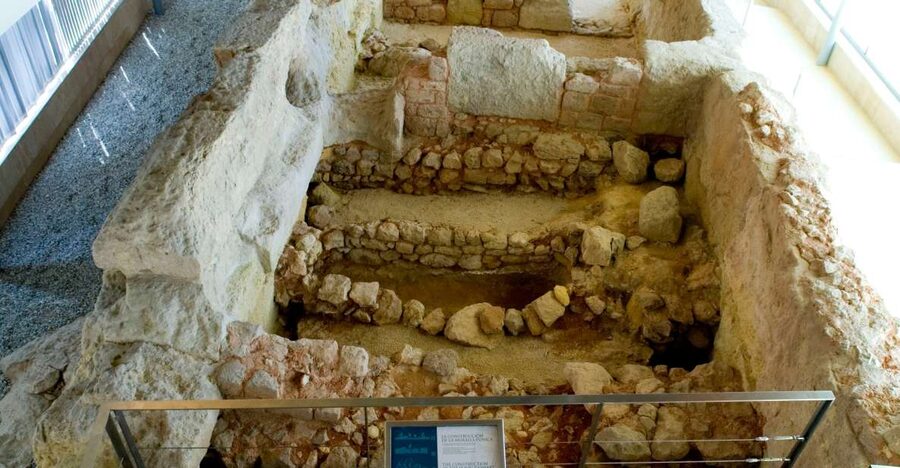
- Punic Wall shows Cartagena’s 3rd-century BC layer, when the city was Qart Hadast
- Anibal’s myth shows up in the Punic Wall story, giving the stones a narrative
- Roman Theatre Museum is designed by architect Rafael Moneo, and it’s built for a “street-level to under-street” path
- You end at a Roman Theatre with 7,000 seats, one of the biggest Roman stages in Hispania
- Roman Forum Molinete Museum is one of Spain’s largest urban archaeological parks, so you’ll walk an entire civic district
- Forum highlights include Curia (senate), the Sanctuary of Isis, and port thermal baths
Start smart: the voucher exchange at the Punic Wall Interpretation Center
Before you see anything, you’ll need to do the one task that makes everything work: exchange your voucher in person. Your voucher is mandatory, and a screenshot won’t work.
Head to the Punic Wall Interpretation Center and swap your voucher at the reception desk. There’s a Spanish/English greeter at the counter, which helps if you have any questions about timing or where to begin. Bring your passport or ID card, since the sites ask for it.
This matters because the rest of the experience is self-paced. You’re not showing up with a QR and walking straight in like a theme park. You’re starting with a proper check-in, then moving through three museums and major outdoor remains.
You can also read our reviews of more museum experiences in Cartagena Spain
Punic Wall: Cartagena’s 3rd-century BC beginning and the Anibal thread
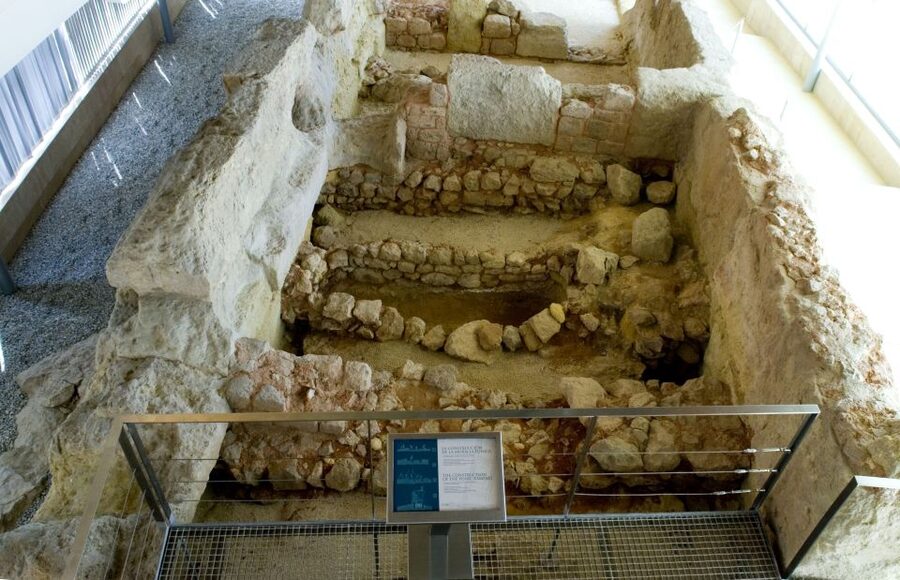
The Punic Wall is your oldest stop, and it sets the tone fast. You’re looking at remains dating to the 3rd century BC, when Cartagena’s early settlers shaped a city called Qart Hadast.
What I like about this section is that it doesn’t treat the stones like random ruins. The storyline connects the Carthaginians settling the city to the later moment when the Romans took over during the Second Punic War. Then, the museum-style interpretation brings in the legend of Anibal—so you’re not only reading dates. You’re trying to picture why people fought, traded, and built defenses where they did.
As you walk along or around the wall, you get a sense of defense and control. That’s a different feel from a Roman forum: it’s more about keeping power and protecting a strategic city than hosting civic speeches and ceremonies.
Practical tip: wear shoes that can handle uneven surfaces. Even when parts look “museum-like,” the old material is still old—so you’ll benefit from grip and comfort.
Roman Theatre Museum at Town Hall Square: Rafael Moneo’s under-street route
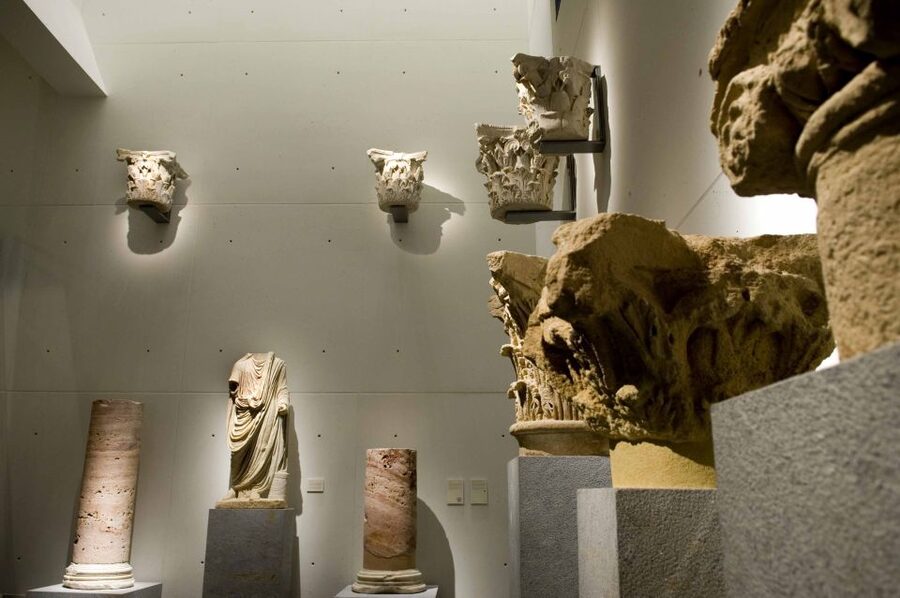
Next comes the Roman Theatre Museum, located at Cartagena’s Town Hall Square. This is where the experience shifts from outdoor defense to Roman public spectacle.
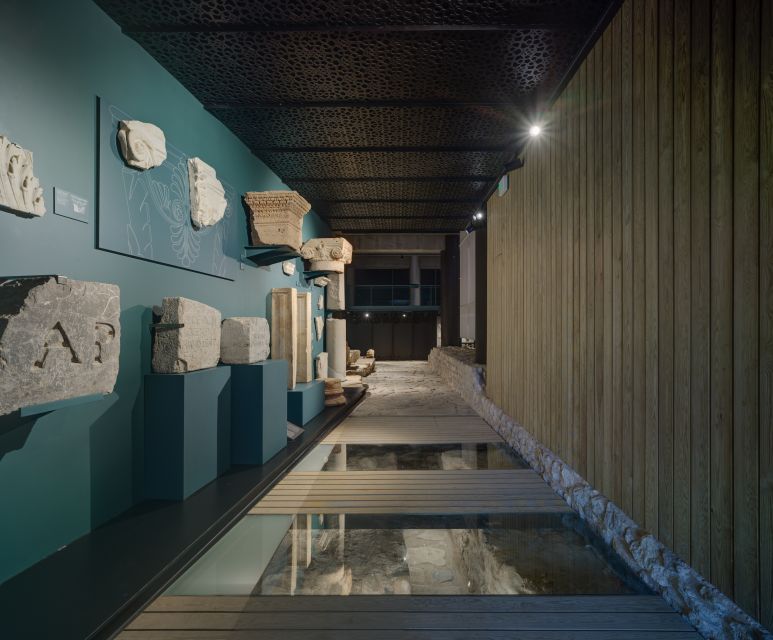
The museum entrance isn’t just a door. You start in the Palacio de Riquelme, the building that provides access to the museum. From there, you follow a history-themed passageway under the street, which leads into a newer museum space.
What makes this stop genuinely useful is that it’s not only about viewing objects. It helps you understand how architecture, display design, and excavated finds connect to the theatre monument you’ll see afterward. You’re building mental context before you step into the open-air structure.
Inside the museum spaces, you’ll find emblematic pieces from the excavations and learn about the Roman theatre’s architecture and artistic elements. If you’re the type who enjoys museums more when they explain how a place worked, this stop will click.
Small consideration: since there’s no live guide included, the quality of your experience depends on whether you use the optional audio guide or take time to read the exhibits. If you dislike reading, you’ll probably want the audio (Spanish, English, or French).
Finishing inside the Roman Theatre: 7,000 seats in Roman “Hispania”
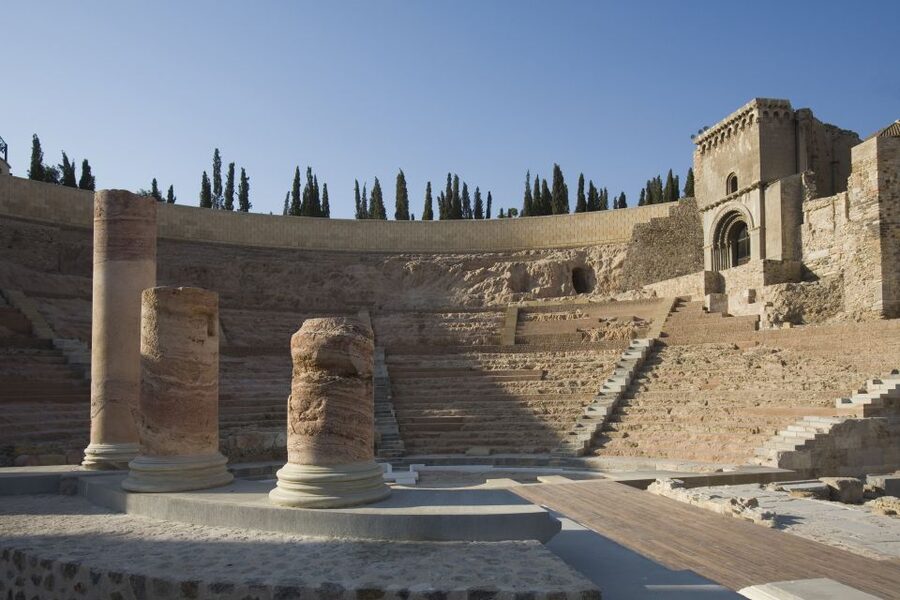
After the museum, you end up at the Roman Theatre itself, one of the largest Roman theatres in Hispania. The seating capacity is about 7,000, which changes how you see the structure.
I love this moment because it turns the museum’s explanations into scale. You’re no longer imagining the size of the stage or the sightlines. You’re standing inside a place built for performance, public announcements, and the kind of civic culture that filled Roman cities.
This is also where you can best connect with the theme of the day: layered history. One site shows Cartagena as Carthaginian city-state roots; the next shows Roman power through entertainment and public life; and the final stop pushes you into the civic and religious core.
Practical tip: give yourself extra minutes here. Even a short visit feels longer in a big theatre, mostly because you’ll keep looking back at how the seating and stage relate.
Roman Forum Molinete Museum: Curia, Isis, baths, and Roman street life
If you want the Roman city to feel like a city, this is the finish. The Roman Forum Molinete Museum is described as the largest urban archaeological parks in Spain, and you can feel that size in how the remains are spread out and how much you can walk through.
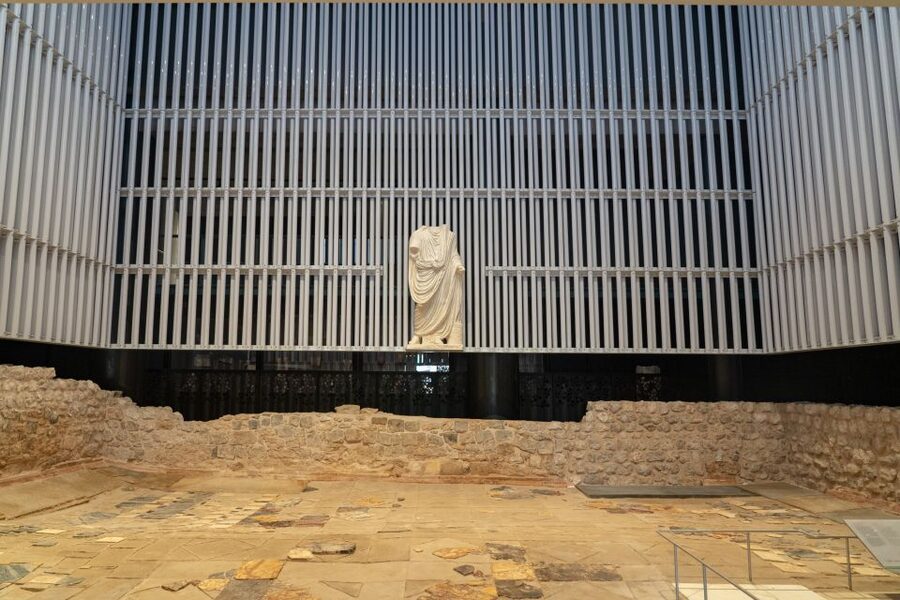
Start in the museum halls, where you’ll see a careful selection of pieces that trace Cerro del Molinete from today back to the old Carthago Nova. This is the part that helps your eyes stop treating the remains as separate landmarks. Instead, you start seeing the logic: where governance happened, where cults were practiced, where daily life moved.
Then the visit expands outdoors and you’ll stroll through major Roman remains, including:
- Curia, the local senate, with richly decorated marble pavement
- The Colonial Forum, described as the city’s central hub, including how its design reflected a hierarchy between divine and human
- The Sanctuary of Isis, tied to mystery cults of Egyptian gods
- Old roads (with cart tracks)
- The port’s thermal baths, plus a standout entrance portico with its original flooring
- The Atrium Building, with high walls and pictorial decorations linked to Roman banquets
I especially like the mix here: governance (Curia), public administration (Colonial Forum), religion (Isis), and the practical life of trade and travel (roads and port baths). You’re not only learning about monuments; you’re learning how Roman Cartagena functioned.
Because this is outdoors and spread out, pace matters. If you rush, you’ll miss the “why this matters” feeling. If you slow down, you’ll start noticing how each area answers a different question: Who held power here? What did people worship? Where did people move and work?
Price and value for $18 per person: what you’re really paying for
At about $18 per person, you’re paying for entry to three big, high-demand Roman and Punic sites, bundled into one combo. Included in the deal are Punic Wall, Roman Theatre Museum, and Roman Forum Museum admissions.
For value, the main win is not just saving money. It’s saving planning friction. Instead of juggling separate tickets and worrying about where to start and how to connect the sites, you get a clear “three-era circuit.” Your money also buys you time with spaces that explain themselves: the Punic Wall interpretation, the Roman Theatre Museum’s designed route, and the Molinete halls that contextualize the outdoor ruins.
If you’re the kind of visitor who wants a structured arc (old city → Roman theatre → civic forum), this price feels like a good deal. If you only want one or two stops, you might feel like you’re paying for more than you’ll use—so in that case, choose the sites you care about most first.
Also, the audio guide is optional. If you want the best self-paced experience, plan to use it in at least the museum-heavy parts.
Who should book this Cartagena combo, and who might want to rethink it
This combo suits you best if you:
- Like to see multiple eras in one day or one walking circuit
- Enjoy museums that explain what you’ll see afterward (especially the Roman Theatre Museum)
- Want a strong “city-function” feeling, not only big monuments
You might want to rethink it if you:
- Are expecting a live guided experience. A live guide isn’t included, so you’ll rely on audio and signage.
- Prefer quick outdoor views only. This combo includes museums with exhibit time, including halls at Molinete and the Roman Theatre Museum’s interior spaces.
If you’re traveling with kids, it can work, but you’ll probably want to pick and choose reading time. The Roman Forum areas are wide, and young legs may need breaks.
Should you book Cartagena: Punic Wall, Roman Theatre & Roman Forum Museums?
Yes—if you want an efficient, high-impact look at Cartagena’s Punic origins, Roman public life, and Roman civic/religious center in one connected visit. The Punic Wall gives you the oldest layer, the Roman Theatre shows Roman scale, and Molinete ties it together with a walkable urban archaeological park.
Book it if you’re comfortable with a self-paced format and you’ll either use the optional audio guide or take time to read the key exhibit panels. Skip it or adjust expectations if you specifically want a live guide, because that’s not part of this package.
If your goal is three major sites without a lot of back-and-forth planning, this combo is a strong fit for Cartagena.
FAQ
What’s included in the combo ticket?
It includes entry fees for Punic Wall, the Roman Theatre Museum, and the Roman Forum Museum. An audio guide is included only if you select that option.
Where do I exchange my voucher?
You must exchange your voucher at the reception desk in the Punic Wall Interpretation Center.
Is a live guide included?
No. This experience includes the sites and optional audio, but it does not include a live guide.
Can I bring food and drinks?
No. Food and drinks are not allowed.
Are large bags or luggage allowed?
No. Luggage or large bags are not allowed.
Are pets allowed?
Pets are not allowed, but assistance dogs are allowed.
Is the experience wheelchair accessible?
Yes. The experience is listed as wheelchair accessible.
How long is the ticket valid?
It’s listed as valid for 15 days. Starting times depend on availability, so it’s worth checking before you pick your visit day.