REVIEW · CARTAGENA SPAIN
Cartagena : Roman Theatre Museum Entry Ticket
Book on GetYourGuide →Operated by CARTAGENA PUERTO DE CULTURAS · Bookable on GetYourGuide
A buried Roman theater in plain sight. I love the Roman Theatre Museum designed by Rafael Moneo, and I love the Passageway of History that explains how the theater went from stage to buried site. One consideration: the theater area includes steps, and if you’re not steady on your feet, you may not reach every lower spot.
This is a smart, self-paced ticket that blends museum rooms with an outdoor walk into the actual arena. The theater could hold 7,000 spectators, so even what’s preserved feels big. If you like ancient ruins with clear explanations, this one is easy to enjoy—just plan your timing and bring your patience for finding the entrance.
In This Review
- Key things to know before you go
- Roman Theatre Museum: what makes this Cartagena visit special
- The Passageway of History: from burial to rediscovery
- What you’ll see inside: mosaics, a Roman house, and lost spaces
- Walking into the theater: capacity, stage area, and real-world limits
- Audio guide and languages: getting the most without slowing down
- Price and value: why $8 makes sense here
- Timing, Sunday closure, and the rules that trip people up
- Practical tips for families, heat, and mobility needs
- Is this ticket worth your Cartagena time?
- FAQ
- How much does the Cartagena Roman Theatre Museum ticket cost?
- Is the ticket valid for more than one day?
- What’s included with the entry ticket?
- Is an audio guide available?
- What languages are supported for hosts or greeters?
- Where do I meet for the experience?
- Is the site wheelchair accessible?
- Can I bring food or drinks into the museum?
- When does the Roman Theatre Museum close on Sundays?
- What should I bring for entry regarding the ticket voucher?
- Can I cancel for a refund?
Key things to know before you go
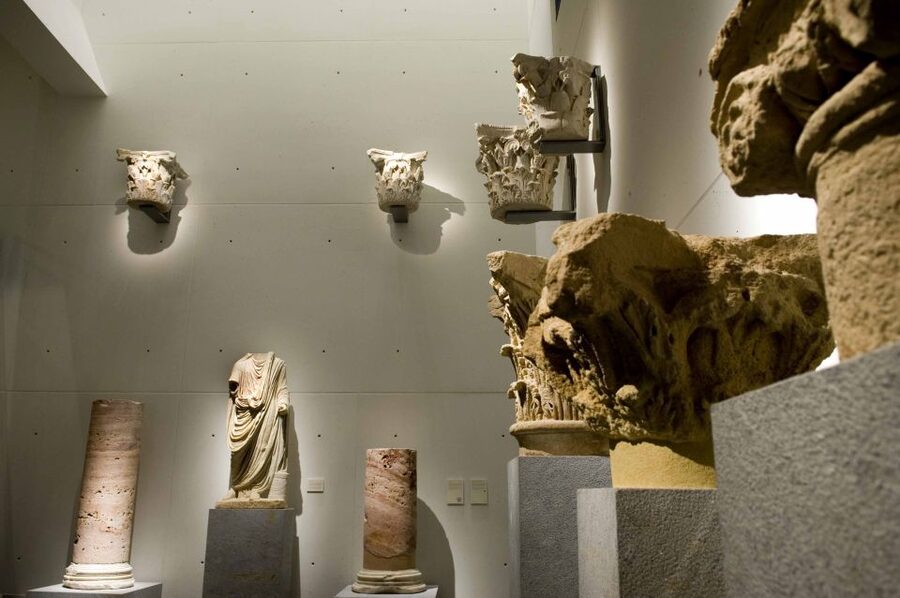
- Rafael Moneo’s museum design wraps the ruins in a modern space that makes the site feel readable.
- The Passageway of History walks you through how the theater was buried and later rediscovered.
- Mosaic-tiled Roman house remains show what existed before the theater was built.
- Self-paced visit means you can slow down for exhibits before you step outside.
- Plan for heat and stairs since food and drinks aren’t allowed and some areas are step-heavy.
Roman Theatre Museum: what makes this Cartagena visit special
Cartagena has a lot of Roman leftovers, but this stop has a specific trick up its sleeve: you’re not just looking at stones in a square. You’re moving through a museum designed to explain the site, then you end up in the theater itself. That museum-first layout is exactly why I think this ticket works.
The Roman Theatre Museum was designed by Rafael Moneo, and you feel that in how the space is organized. Instead of dumping artifacts in a room, it nudges you along a story: how the theater functioned, why it changed, and why it ended up buried. It also helps that the visit is generally self-paced. You control the tempo. If you read, you can read. If you just want the highlights, you can do that too.
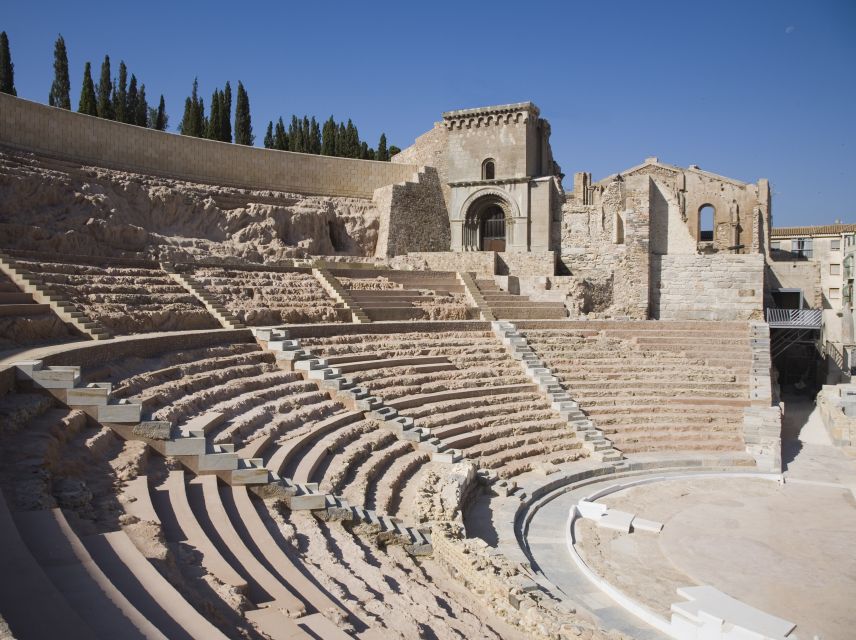
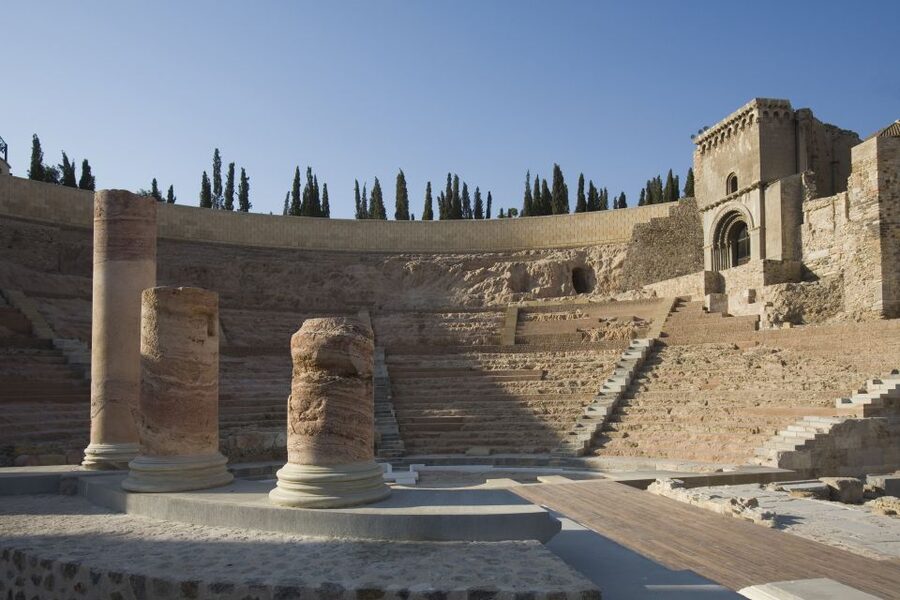
Then you step outdoors and the scale hits you. A theater built to hold thousands of people doesn’t feel like a “small ruin.” Even with parts preserved rather than fully restored, it still has the shape and drama of performance space. And because the capacity was about 7,000 spectators, your brain instantly tries to picture the crowd.
My favorite part is the way the museum makes the outdoor ruins make sense. Without that, you can stare at architecture and guess. With it, you understand what you’re looking at—at least enough to appreciate it.
The Passageway of History: from burial to rediscovery
The heart of the experience is a kind of story corridor through time. You start by learning the historical process that buried the Roman theater site and eventually led to its rediscovery. That matters because it turns the ruins from random leftovers into something with a timeline.
You’ll also see the theater site’s development going back to the 1st century B.C. That’s a big range, and it’s not just a date stamp. The museum framing helps you connect why the location and construction mattered, and how the area changed over time.
This is also where the experience gets more than just “architecture.” You can expect explanations about how plays were performed in Roman times and how Roman art and politics were tied together. Even if you’re not a drama person, the cultural angle helps you understand why Romans cared about public performance spaces.
I like that the museum doesn’t treat the theater as a museum object only. It treats it like a living public stage that had meaning. When you reach the outdoor area, it feels less like walking into a photo spot and more like going back to where something happened.
What you’ll see inside: mosaics, a Roman house, and lost spaces
One of the most interesting surprises is the evidence of what existed before the theater. You can see the remains of a Roman house with mosaic tiles, and the story includes how it was destroyed during the theater’s construction. That detail is more than trivia—it gives you a clear “before and after.”
Mosaics are always a strong draw, but here they do a special job. They show everyday Roman life, and they remind you that the theater wasn’t built in an empty landscape. People lived there. Things were arranged. Then, construction shifted priorities.
If you like archaeology that feels tangible, this part does. You’re not just seeing grand public structures. You’re seeing the quieter domestic layer that got overwritten by the theater project.
There’s also plenty to look at across multiple areas of the museum, with floors you can access by lift or escalators. That makes it easier to explore even if you don’t want to fight stairs nonstop.
Walking into the theater: capacity, stage area, and real-world limits
Once you’re outside, you enter the Roman theater area and can walk around the space. It’s the payoff moment. The museum builds the context; the arena gives you the geometry and scale.
Because the theater could seat thousands—7,000 spectators—you get a sense of the kind of event it was designed for: a public spectacle. From where you stand, you can understand why acoustics and sightlines mattered. Even without a complete restoration, the structure still communicates purpose.
Now, here’s the practical part I’d plan for. The theater and stage-adjacent areas involve steps. Some areas may not be reachable for everyone. For example, people with limited mobility may not be able to go down to the stage area, and wheelchairs and prams may need to stay at the top. If you know you’ll want to access lower sections, plan your route early and keep your expectations realistic.
Also note: the site is a representation of the original arena, so railings and hand support might not be where you expect them. That doesn’t mean it’s unsafe, but it does mean you should move carefully. If you’re visiting with kids, keep an extra eye on them on open steps.
And one small reality check: there’s no food or drink option built into your visit. Food and drinks aren’t allowed, so this is a “see, walk, then move on” type of stop.
Audio guide and languages: getting the most without slowing down
If you want the museum’s story to click quickly, consider the optional audio guide. It’s offered in Spanish, English, French, German, and Russian, and it can make the explanations easier to follow while you walk. I especially like audio guides for Roman sites because you don’t always have time to read every panel at museum speed.
This ticket is also supported by hosts or greeters who speak Spanish, English, French, German, and Russian. If you have questions, you can ask. And there’s a real-world advantage: the pacing is self-guided, so you’re not stuck matching someone else’s speed.
If you’re the kind of person who learns best by listening while moving, audio is a good match. If you prefer reading on your own, you can still enjoy the visit, but audio tends to shorten the time between seeing a ruin and understanding it.
And if you get a guide named Bruno in your group, the vibe tends to be friendly and Q&A friendly. It’s the kind of extra help that makes the history feel less like a lecture and more like a conversation with the site.
Price and value: why $8 makes sense here
At about $8 per person, this ticket is good value for a few reasons.
First, you’re paying for two experiences wrapped into one: a museum designed around the ruins, plus the outdoor Roman theater walk. That combination usually costs more at sites that treat museum and ruins like two separate visits.
Second, you’re paying for clarity. Many ancient sites feel overwhelming because the visitor has to connect dots alone. Here, the Passageway of History and the way the museum is organized helps you understand what you’re seeing, including how the theater was buried and rediscovered.
Third, optional audio gives you an extra layer for a low ticket price. So if you’re with kids or you just don’t want to stop and read every sign, you can still learn a lot without grinding your feet into “museum mode.”
Is it perfect value for everyone? If you want a hands-on workshop, this isn’t that. If you want long wandering like a big open-air park, you might want more time elsewhere. But for a focused Roman theater/museum stop in Cartagena, it’s one of the more efficient buys.
Timing, Sunday closure, and the rules that trip people up
Timing matters here. The Roman Theatre Museum closes at 2:00 PM on Sundays. If you’re visiting on a weekend, plan to arrive earlier so you’re not rushing through the museum story and missing the outdoor walk.
The ticket is valid for 1 day, and you’ll want to check starting times before you go. Your schedule depends on which entry time you choose. Since this is a museum-plus-site ticket, I’d treat it like a single appointment, not a “drop in when we’re nearby” stop.
Also, read the voucher rule carefully. A voucher is mandatory, and it’s not valid as a generic voucher or a QR screenshot. Bring the actual voucher you booked with, and have it ready at entry.
One more practical tip: buy tickets ahead if you can. Lines can get long when people try to solve the ticket problem after arriving. Even a small wait can cut into your museum time.
And if you’re using phone directions, don’t trust them blindly. The entrance can be tricky to find, and the correct route typically involves going through the museum to get into the theater area. If you only follow directions to an exit-style point, you’ll waste time and get frustrated.
Practical tips for families, heat, and mobility needs
This place is friendly for families, but it’s not a stroller-free miracle. The museum areas are accessible by lift or escalators, which helps. But outside, you’ll meet steps and uneven movement paths.
If you’re bringing kids, plan for heat. On hot days, you can end up wishing you could buy a cold drink, and that’s not an option during the visit. Food and drinks aren’t allowed, so your best move is to arrive prepared: wear sun protection, bring water with you only if allowed before entry and use breaks outside afterward.
If you’re worried about access, treat your visit like a “moderate walking and step negotiation” outing. People who are less fleet of foot might not be able to reach every stage-adjacent section. That doesn’t make the visit pointless. It just means you should prioritize where you can comfortably view the theater.
Wheelchairs are supported, and the site is described as wheelchair accessible. Still, plan for designated routes and limited access to the lowest areas. If that affects what you care about most, aim to arrive early and ask staff where you can go from your starting point.
And remember: electric wheelchairs aren’t allowed. If this applies to you, plan ahead and confirm what your mobility needs can be supported with.
Is this ticket worth your Cartagena time?
Here’s my honest take: if you want a Roman theater experience that’s explained clearly and doesn’t require guided group marching, this is a strong pick.
You should book it if:
- You like museum-style context before walking into the ruins.
- You want an efficient stop that still feels substantial.
- You’re curious about Roman culture beyond buildings—how performance connected to politics and daily life.
- You’ll use the audio guide or you’re comfortable reading your way through exhibits.
You might skip or pair it with something else if:
- You’re only interested in a quick look at outdoor remains and hate stairs.
- You’re visiting without enough time to complete both museum and theater walk.
- You’re going on a Sunday and can’t arrive early enough for the 2:00 PM closure.
If you do book, give yourself real breathing room. This isn’t a “snap photos and leave” stop. The best experience is when you let the museum tell you what the theater was, then you step into the space with that idea in your head.
FAQ
How much does the Cartagena Roman Theatre Museum ticket cost?
It’s listed at about $8 per person.
Is the ticket valid for more than one day?
No. The ticket is valid for 1 day.
What’s included with the entry ticket?
You get entrance to the Museum and the Roman Theatre site. An audio guide is included only if you select that option.
Is an audio guide available?
Yes. The audio guide is optional, and it’s available in Spanish, English, French, German, and Russian.
What languages are supported for hosts or greeters?
Hosts or greeters are listed as speaking Spanish, English, French, German, and Russian.
Where do I meet for the experience?
The meeting point may vary depending on the option booked.
Is the site wheelchair accessible?
Yes, it’s listed as wheelchair accessible.
Can I bring food or drinks into the museum?
No. Food and drinks are not allowed.
When does the Roman Theatre Museum close on Sundays?
On Sundays, it closes at 2:00 PM.
What should I bring for entry regarding the ticket voucher?
A voucher is mandatory, and it’s not valid as a voucher or QR screenshot. Bring the proper voucher.
Can I cancel for a refund?
Yes. Free cancellation is available up to 24 hours in advance for a full refund.
Would I book it? If you’re in Cartagena and you want a Roman theater stop with context (not just ruins), this is one of the better-value ways to spend your time. It’s focused, learnable, and the “walk into the arena” moment lands. Just plan your Sunday timing and watch the steps.