REVIEW · GYEONGJU
Busan: Gyeongju UNESCO Legacy Tour with National Museum
Book on GetYourGuide →Operated by LOVE KOREA · Bookable on GetYourGuide
Gyeongju feels timeless at full speed. I like this day trip for its clear Silla-era storytelling, especially at Bulguksa Temple. I also love the reset you get from a calm walk in the 400-year-old Ahopsan Bamboo Forest, guided by locals such as Kang or Yaho.
The main trade-off is that it’s a long, packed schedule. If you hate hopping between sites, you may want to treat this as a “highlights + guided context” day, not a slow wander.
In This Review
- Key points I’d plan around
- Why Gyeongju Works So Well on a Busan Day Trip
- Pickup Timing, Route Flow, and What 12 Hours Really Means
- Ahopsan Bamboo Forest: 400 Years of Quiet (and the Optional Café Plan)
- Bulguksa Temple: When Stone Pagodas Make Sense
- The Lunch Break: How to Use That Hour Like a Pro
- Gyeongju Gyochon Hanok Village and Choe Jun’s House
- Museum vs. Daereungwon Tomb Complex: Pick Your Spring Story
- Donggung Palace & Wolji Pond and the Woljeonggyo Bridge Finale
- Included vs. Not Included: The Value Math for $48
- Who This Tour Fits Best (and Who Should Rethink)
- Booking Tip: Get the WhatsApp Contact Right
- Should You Book This Gyeongju UNESCO Legacy Tour?
- FAQ
- How long is the Gyeongju UNESCO Legacy Tour from Busan?
- Where does pickup happen in Busan?
- Where do you get dropped off?
- What languages does the guide speak?
- What’s included in the price?
- What isn’t included?
- Does the tour always include the museum?
- Does Ahopsan Bamboo Forest always happen?
- Is lunch included?
- Can I cancel and get a refund?
Key points I’d plan around
- Morning pickup convenience from Busan’s subway areas means you skip the headache of figuring out transport
- Ahopsan Bamboo Forest starts the day with a quiet, cinematic-feeling nature break (entry is optional)
- Bulguksa Temple gets a focused guided visit so you understand what you’re looking at, not just where to stand for photos
- Museum or Daereungwon Tomb Complex swaps happen during cherry blossom dates, depending on bloom conditions
- Gyochon Hanok Village and Choe Jun’s House add everyday history, not only royal monuments
- $48 value includes round-trip transfers plus tolls, parking, and fuel, which matters on an out-and-back day trip
Why Gyeongju Works So Well on a Busan Day Trip
Gyeongju is one of those places where everything connects: kingdoms, religion, daily life, and art all point back to the Silla period. Doing it as a day trip from Busan saves you the logistics of staying overnight, while the guided format keeps the meaning from sliding by too fast.
I especially like that you’re not just shown buildings. You get a story thread that ties the temple, the museum relics (or the tomb complex in spring), and the end-of-day sights together into one coherent day.
Pickup Timing, Route Flow, and What 12 Hours Really Means
This tour runs for about 12 hours, with pick-up at three Busan subway locations: Busan Station Exit 4 (08:10), Seomyeon Exit 4 (08:30), and Haeundae Exit 5 (09:10). Drop-off is back around Haeundae Station Exit 5, Seomyeon, or Busan Station, depending on where you started.
That timing is the real deal-maker. You’ll be up early, but you’ll also avoid the common trap of half-day confusion. You’ll move through Gyeongju in a deliberate order, and you’ll still get time to walk around on your own at each stop.
Practical tip: wear shoes you can walk in for temple steps and village lanes. Even with a guide, your feet will do real work.
Ahopsan Bamboo Forest: 400 Years of Quiet (and the Optional Café Plan)
The day begins at Ahopsan Bamboo Forest, known for its peaceful atmosphere and its reputation as a 400-year-old grove. Plan for a one-hour sightseeing window, which is enough time to slow your pace, take photos, and actually feel like you arrived in a different world.
Entry is not included, which gives you an easy choice. If you don’t want to go in, you can relax at a nearby café with scenic views instead. Either way, this stop matters because it changes your mood before the more intense history starts.
Seasonal note for spring: during cherry blossom season (Mar 24 – Apr 12), the tour may shift to Haeundae Dalmaji Hill instead of Ahopsan Forest based on seasonal conditions. If you’re traveling in that window, this is one of the best reasons to book this specific tour rather than doing Gyeongju from scratch.
Bulguksa Temple: When Stone Pagodas Make Sense
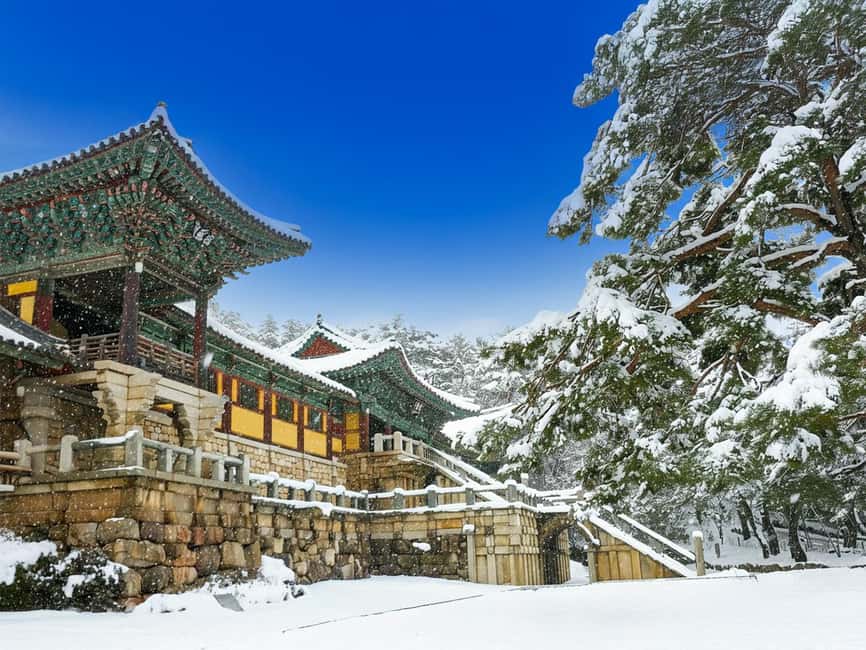
Next up is Bulguksa Temple, a UNESCO World Heritage site famous for its Silla-era Buddhist architecture. You’ll get about one hour here with guided time focused on temple halls, courtyards, and historic stone pagodas.
Here’s what I’d expect this part to do for you: it turns random stone shapes into readable symbols. With the guide’s explanations, you’re less likely to feel like you’re just walking past “pretty old stuff.” Instead, you’ll start noticing how the layout and details reflect Buddhist ideas and Silla craftsmanship.
Also, Bulguksa is surrounded by nature, so your photos won’t look like they were taken in a parking lot. If the weather is decent, this is one of the calmest stops on the whole day.
One consideration: if you’re sensitive to stairs or uneven temple ground, move slowly and give yourself a little buffer for photo angles.
The Lunch Break: How to Use That Hour Like a Pro
You’ll stop at a local restaurant for lunch (about one hour). Meals are not included, but you’ll be placed where it’s easy to eat without turning the day into a “find food” quest.
I like that lunch is built into the schedule instead of being free-floating. That means you don’t end up hungry, late, and stressed while the guide is trying to keep everyone on time.
If you have dietary restrictions or allergies, tell the operator in advance. The tour data specifically asks you to inform them ahead of time, and it makes a difference in how smoothly lunch goes.
Gyeongju Gyochon Hanok Village and Choe Jun’s House
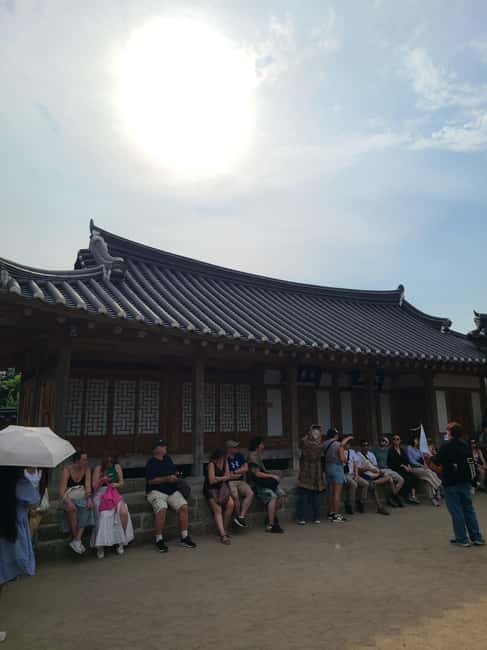
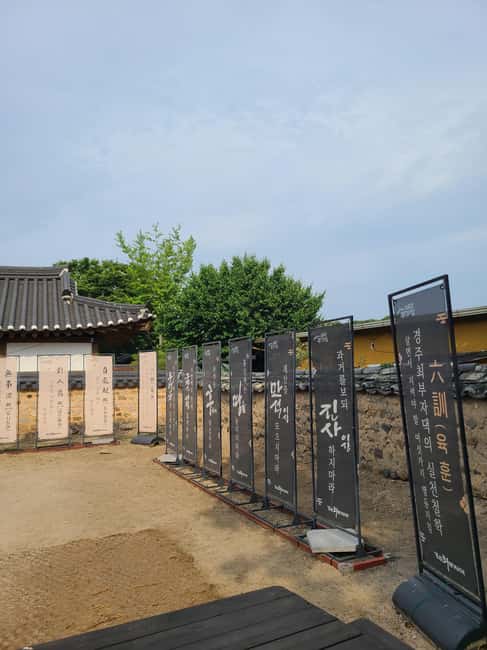
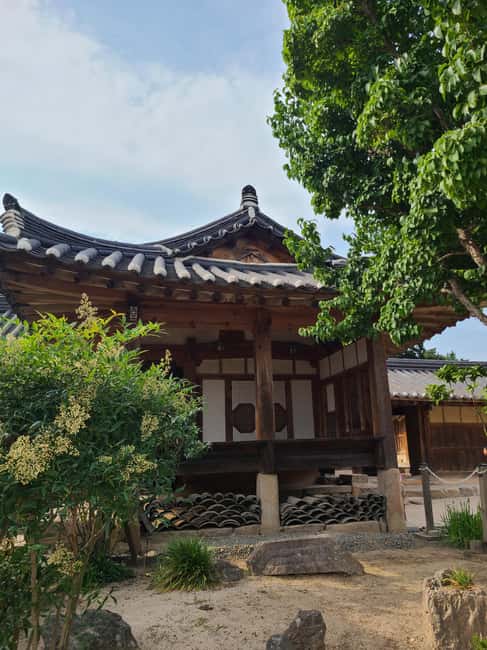
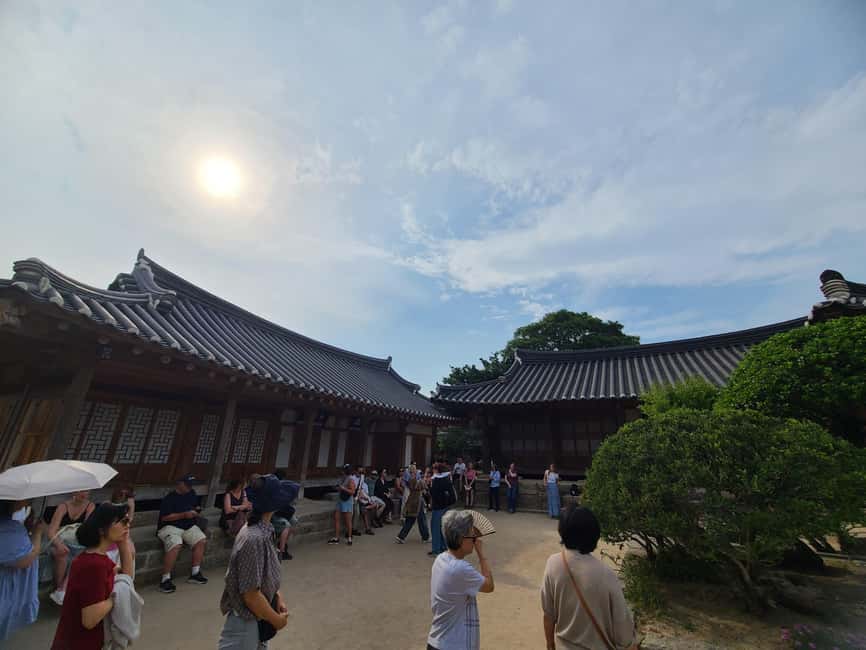
After the temple, the tour shifts into everyday Korea with Gyeongju Gyochon Hanok Village and Choe Jun’s House. You’ll spend about 30 minutes in each area, which is short enough to keep it from dragging, but long enough to feel the atmosphere.
This is where you learn that history isn’t only in grand monuments. Hanok neighborhoods show daily life through traditional house design and the rhythm of old streets. Choe Jun’s House adds a more personal, human scale to the day—less “empire on a pedestal,” more “who lived here and how they thought.”
Practical tip: bring a little cash just in case you want snacks or small crafts. Lunch is separate, but village time often tempts you into quick purchases.
Museum vs. Daereungwon Tomb Complex: Pick Your Spring Story
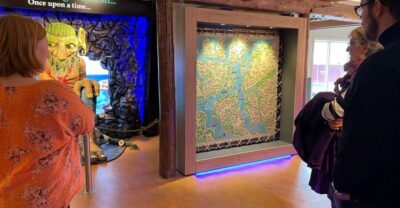
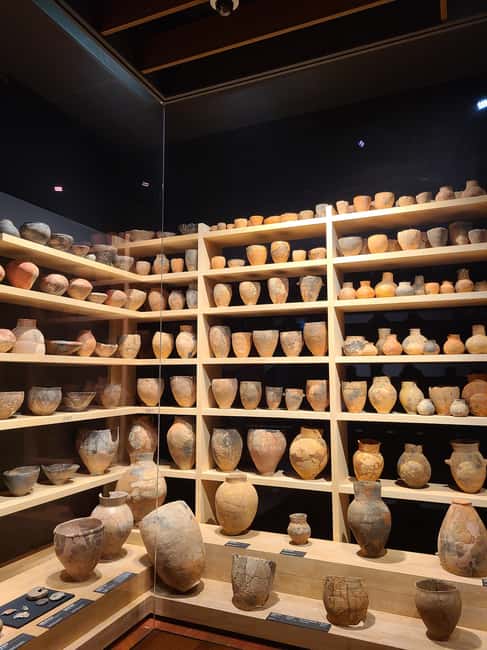
For the museum portion, you’ll normally visit Gyeongju National Museum, which is known for important relics and national treasures from the Silla Dynasty. You’ll typically get about one hour for this.
During cherry blossom dates (Mar 24 – Apr 12), the tour can swap the museum for Daereungwon Tomb Complex, where royal tombs and stone walls are framed by cherry blossoms. The tour notes that this option is seasonal and depends on bloom conditions, so you’re not guaranteed perfect timing, but you are set up to catch the best available view that day.
How to decide if you care:
- If you want explanations and artifacts that help you understand Silla culture fast, lean toward the museum option.
- If you want the visual wow-factor of spring blossoms with the tomb setting, the Daereungwon swap can be the more cinematic choice.
Either way, this is a key moment in the day because it connects what you saw at Bulguksa to what you’ll see in the later palace-and-pond areas.
Donggung Palace & Wolji Pond and the Woljeonggyo Bridge Finale
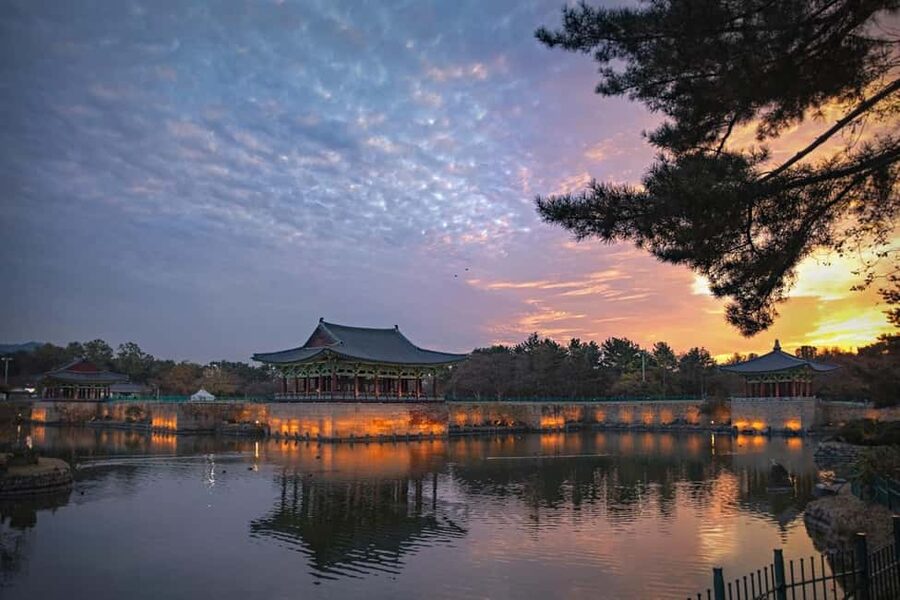
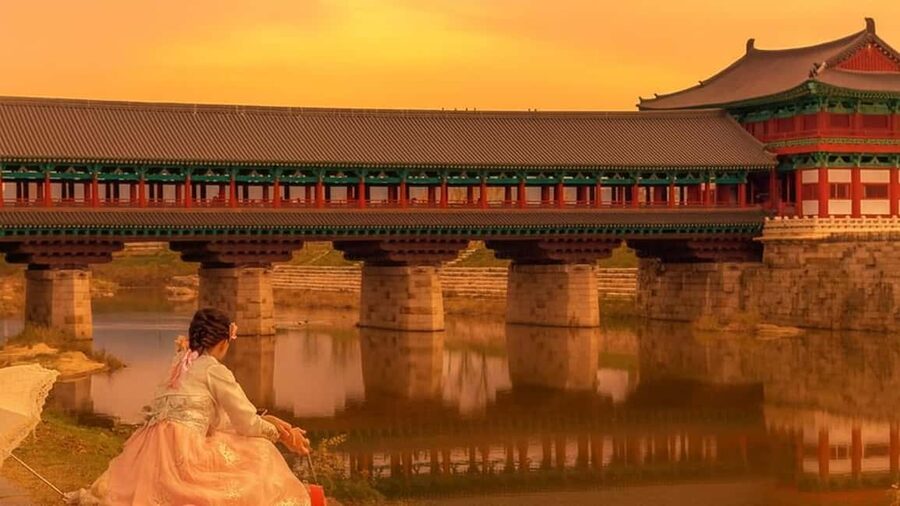
Toward the end, you’ll visit Donggung Palace & Wolji Pond (about 30 minutes), an important historic palace-and-pond area tied to the Silla royal world. Admission to this is listed as not included, so if you plan to enter, keep that cost in mind.
Then you finish at Woljeonggyo Bridge, with scenic views on the way and time to enjoy the final stop (about 30 minutes). This bridge is often the kind of finale that makes the whole day feel complete: you’ve gone from temple stone to village streets to museum relics, and now you land on water-and-sunset style scenery.
From the way guides describe the day, the bridge stop is also a practical win for photos. It’s late-day timing, which usually means nicer lighting and calmer vibes than a mid-day rush.
Included vs. Not Included: The Value Math for $48
At around $48 per person for a 12-hour day, this tour isn’t just a seat on a bus. The price includes:
- English/Chinese-speaking guide
- professional guiding support
- round-trip transfers from your pickup point
- toll fees, parking fees, and fuel fees
What’s not included:
- meals (lunch fees)
- personal expenses and travel insurance
- admissions for Donggung Palace & Wolji and Ahopsan Forest (listed as optional spots)
- if Ahopsan Forest isn’t your pick, you can choose the nearby café plan instead
The value question is simple: if you were doing Gyeongju on your own, you’d still need transport, and you’d still waste time figuring out the order. Here, your day is structured, driven, and guided, so you spend your time seeing rather than problem-solving.
Who This Tour Fits Best (and Who Should Rethink)
This tour is a great match if you:
- want a single day to cover major Gyeongju highlights without planning stress
- care about the meaning behind UNESCO and Silla-era sites, not only photos
- like a balance of guided time and walking time
You might rethink it if you:
- hate early starts or long sit-in-a-vehicle days
- prefer free-form exploration where you can linger as long as you want with zero schedule constraints
For families, this kind of structured day is often easier. You get a clear sequence, and the guide’s explanations help kids and adults alike understand what they’re seeing.
Booking Tip: Get the WhatsApp Contact Right
This is the kind of tour where small admin details affect your day. The operator asks you to leave accurate contact info (WhatsApp) so they can reach you for a smooth experience, since they’ll contact you via WhatsApp.
Also, note that time at each attraction can change due to local weather and traffic. The order may shift by season (summer/winter) and weather. That’s normal, but it’s helpful to know so you don’t lock yourself into strict expectations.
Should You Book This Gyeongju UNESCO Legacy Tour?
I’d book it if you want the fastest path to meaningful Gyeongju: Bulguksa Temple with context, a Hanok village that shows daily life, a museum (or tomb complex in spring), and a classic bridge finish with good scenery. The biggest strength is not any single site—it’s the way the guide turns the day into one connected story.
Skip it only if you’re the type who needs to control every minute. This is scheduled, time-boxed, and designed for coverage. If that sounds good to you, this is a strong-value way to see UNESCO-level Silla heritage from Busan.
FAQ
How long is the Gyeongju UNESCO Legacy Tour from Busan?
The tour duration is about 12 hours.
Where does pickup happen in Busan?
Pickup is available at Busan Station Exit 4 (08:10), Seomyeon Subway Station Exit 4 (08:30), and Haeundae Subway Station Exit 5 (09:10).
Where do you get dropped off?
Drop-off locations include Haeundae Station Exit 5, Seomyeon, and Busan Station.
What languages does the guide speak?
The tour includes an English/Chinese-speaking guide, and the live tour guide is English.
What’s included in the price?
Included are the guide, professional guide service, round-trip transfers to and from the meet-up location, toll fees, parking fees, and fuel fees.
What isn’t included?
Meals (lunch fees), personal expenses, personal travel insurance, and admission to Donggung Palace & Wolji and Ahopsan Forest (optional spots) are not included.
Does the tour always include the museum?
Normally, yes, it includes Gyeongju National Museum. During cherry blossom season (Mar 24 – Apr 12), you may choose Daereungwon Tomb Complex instead, depending on bloom conditions.
Does Ahopsan Bamboo Forest always happen?
Ahopsan Bamboo Forest is part of the usual plan, but during cherry blossom season (Mar 24 – Apr 12) it may be replaced with Haeundae Dalmaji Hill depending on seasonal conditions.
Is lunch included?
Lunch is not included. There is a lunch break (about one hour), but you’ll pay the lunch fees separately.
Can I cancel and get a refund?
Yes. Free cancellation is available up to 24 hours in advance for a full refund.