REVIEW · BODY WORLDS BERLIN
Berlin: Tickets for the BODY WORLDS Museum in Berlin
Book on GetYourGuide →Operated by Institut für Plastination e.K. · Bookable on GetYourGuide
Your body turns into the main character. At BODY WORLDS in Berlin, real plastinates make organs, diseases, and body systems easy to spot, while the info is paced with small, readable chunks so you don’t feel swamped. It’s one of those museum visits where you keep thinking about how all the parts work together, not just what’s on display.
One thing to keep in mind: the audio components can be a bit hit-or-miss, with some audio exhibits reported as out of order or hard to locate. Also, the ticket gets you in, but an audio guide isn’t included, so plan to rely on the on-exhibit text and whatever phone-based help you choose to use.
In This Review
- Key Things to Know Before You Go
- BODY WORLDS Berlin: The Hook That Makes It Different
- Tickets, Timing, and Finding Panoramastraße 1a
- What You’ll See: From Whole Plastinates to Single-Organ Views
- Skeleton and Muscles: The Body’s Frame and Engine
- Digestive, Heart, Lungs, and Nervous System: Anatomy With Real-World Meaning
- Embryo Development in the Womb: A Different Kind of Human Story
- Diseases and Organ Functions: How the Exhibits Explain the Hard Stuff
- The Body as a Life-Guide: Stress, Happiness, and Longevity
- How Long to Plan and When to Go for a Calm Visit
- Practical Tips: Cloakroom, Lockers, and Audio Choices
- Comfort, Content, and Who This Is For
- Value in Berlin: Is $24 Worth the Time?
- Should You Book? My Decision Guide
- FAQ
- How much are tickets for BODY WORLDS in Berlin?
- How long does a visit take?
- What are the opening hours and last admission?
- Is the audio guide included with the ticket?
- What is included in the ticket price?
- Is BODY WORLDS wheelchair accessible?
- Are the exhibits shown in English?
- Is there cloakroom or lockers?
- Is the exhibit suitable for young children?
Key Things to Know Before You Go

- Real whole-body plastinates that show organ functions and common diseases in a visual, easy-to-grasp way
- Short, scannable text that guides you through complex anatomy without information overload
- A full tour of body systems from skeleton and muscles to digestion, heart, lungs, and the nervous system
- Development and disease themes including embryo development in the womb
- Body + lifestyle topics like how stress shows up and what influences happiness and longevity
- Plan for about 2 hours if you want time to read at a calm pace
BODY WORLDS Berlin: The Hook That Makes It Different
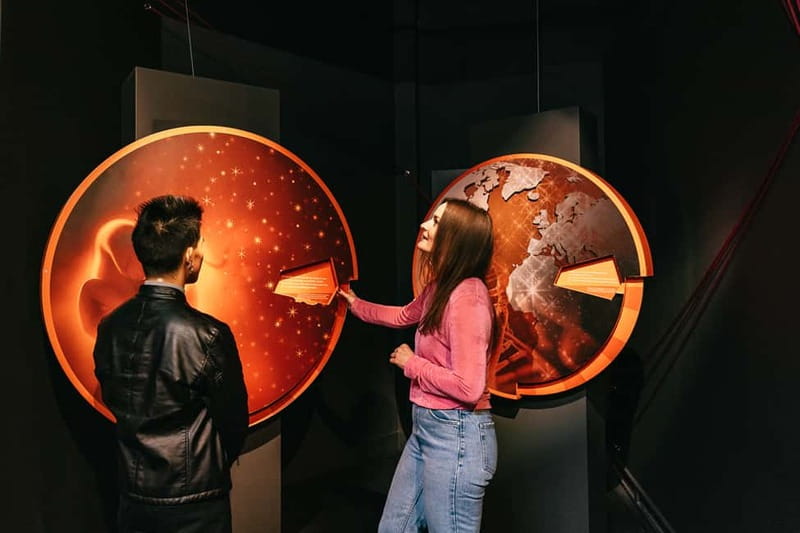
BODY WORLDS by Dr. Gunther von Hagens is built on one idea: your insides are worth studying. This museum doesn’t treat the body like a textbook diagram. It turns human structures into something you can actually look at, piece by piece, so the connections between systems become obvious.
The standout here is the plastination display style. You see whole-body preparations and organ-focused views that explain how the body functions—and how problems can change that function. If you’re the type who likes to understand the why behind symptoms, this works better than most “anatomy for visitors” attractions.
A few more Body Worlds Berlin tours and experiences worth a look

Tickets, Timing, and Finding Panoramastraße 1a
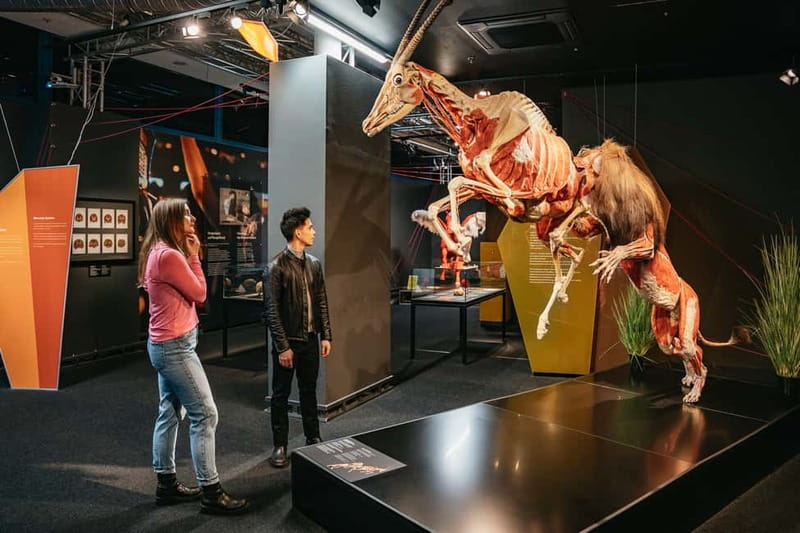
You’re looking at a one-day visit, with tickets priced around $24 per person. The museum is open 10AM to 7PM, and the last admission is 6 PM. For a smooth visit, aim to arrive earlier rather than skating in at the cutoff, especially if you like reading the text.
The meeting point is at Panoramastraße 1a, 10178 Berlin. That matters because BODY WORLDS isn’t the kind of museum you want to hunt for late in the day while you’re already tired.
A useful tip: keep your expectations realistic about time. One review note was to allow about 2 hours to see it properly. If you read slowly or want to linger on the systems that interest you most, you can stretch from there.
What You’ll See: From Whole Plastinates to Single-Organ Views
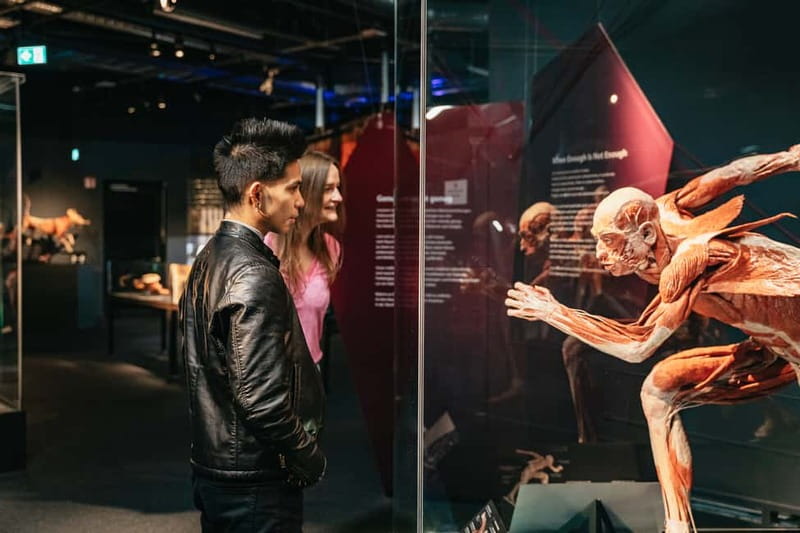
The exhibition is organized like a guided tour through the body. You’ll move through sections that cover the major systems, with displays designed to show function and structure together.
A big reason it clicks for visitors is the way it connects form to outcome. Instead of only showing an organ shape, the exhibits also focus on what goes wrong in an easily understandable way—so disease becomes less abstract.
You can expect to see:
- Whole-body plastinates and detailed preparations
- The human skeleton and how the body is built for movement
- The interplay of muscles and how that supports the rest of your systems
- Sections on digestive, cardiovascular, respiratory, and nervous systems
That’s a lot, but the pacing helps. The text is broken into manageable portions, which makes it feel readable even when the subject is intense.
Skeleton and Muscles: The Body’s Frame and Engine
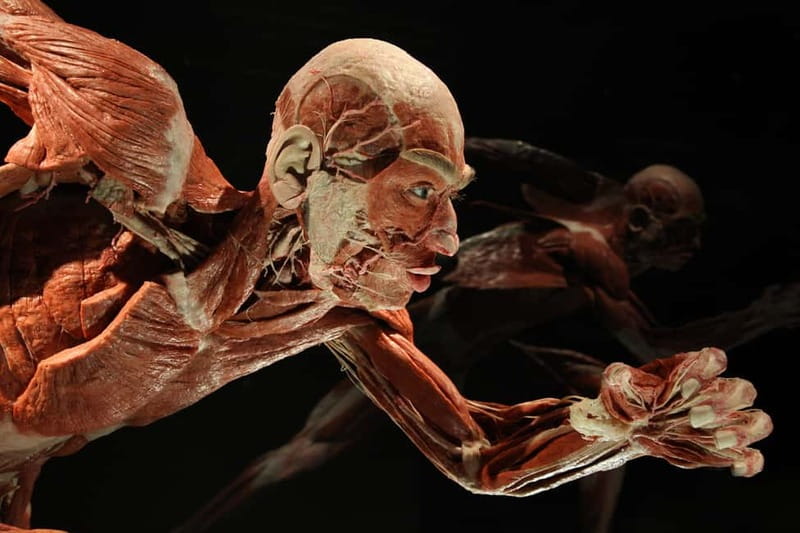
The museum starts you off with the body as a structure. The skeleton section helps you see what supports you and why movement depends on more than willpower.
Then comes the muscular system, where you start to understand the body as an engine. Muscles aren’t just “there.” They work with the skeleton to create motion and stability, and that theme makes the later organ sections easier to follow. You start noticing how systems rely on each other.
This is one of the places where the museum feels educational without becoming clinical. The exhibits make the mechanics visual, so you’re not stuck memorizing labels—you’re learning what they do.
Digestive, Heart, Lungs, and Nervous System: Anatomy With Real-World Meaning

As you move through the tour, the museum shifts from “what it looks like” to “what it does.” The digestive section helps you track the path of food and what each stage contributes. The cardiovascular displays highlight the role of circulation—how oxygen and nutrients get where they need to go.
The respiratory organs are shown with a focus on function, not just anatomy, and that pairs naturally with the cardiovascular content. Once you see both together, breathing stops being a random daily action and becomes part of the body’s larger delivery system.
Then there’s the nervous system, which can feel like the most complex part of the tour—because it connects everything else. Even if you don’t have a medical background, the visual format makes it easier to grasp the idea that your body runs on signals, not just muscles and organs.
If you like learning in a structured order, this museum’s layout supports that. You don’t get thrown into a random collage of body parts. You follow a route.
Embryo Development in the Womb: A Different Kind of Human Story
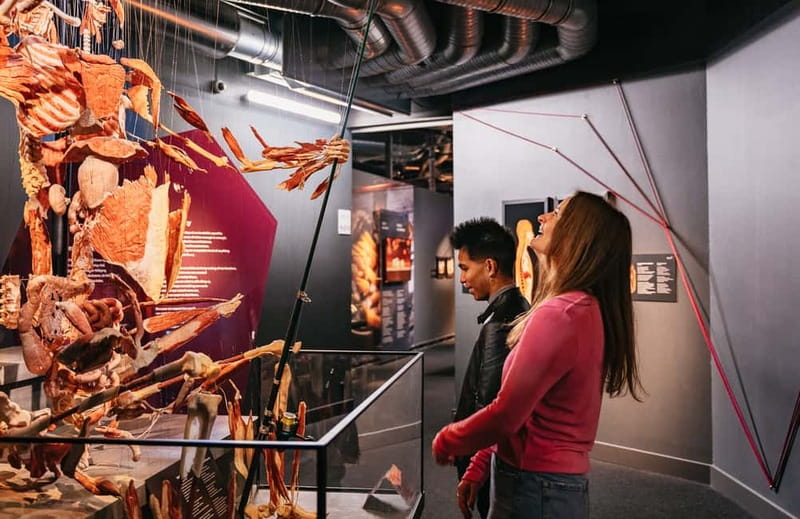
One of the most emotionally striking parts is the section on embryo development in the womb. It shifts the tone from anatomy-as-machine to anatomy-as-life.
This isn’t presented as a trivia stop. It helps you see human development as a process, which makes later sections feel connected rather than separate. When you understand how the body forms, the rest of the systems feel less like “installed parts” and more like outcomes of an evolving design.
It’s also a reminder that the museum isn’t just about what breaks. It’s about how structure and function develop and change over time.
Diseases and Organ Functions: How the Exhibits Explain the Hard Stuff
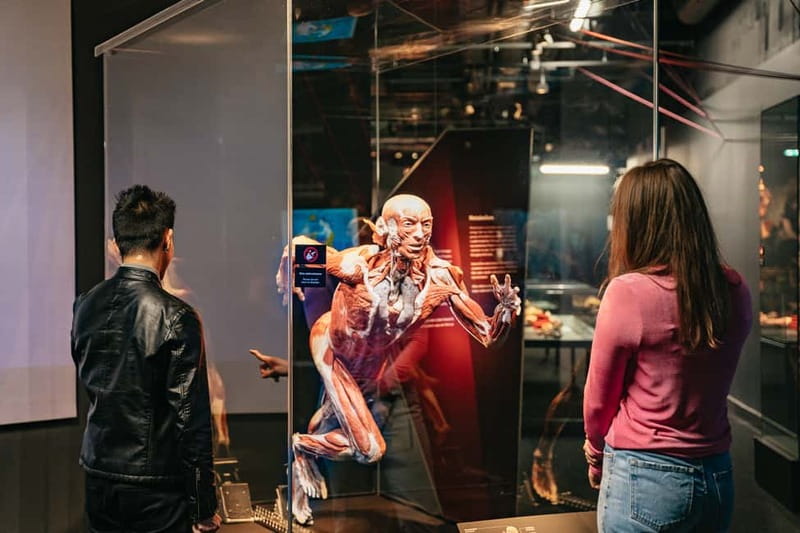
A central promise of BODY WORLDS is that it shows interplay between muscles, organs, and diseases. In practice, that means you’re not only looking at organs at their best. You’re also seeing how specific conditions can affect structure and function.
The goal is understanding. The displays are designed to make those topics readable rather than frightening or vague. This works especially well if you’ve ever had medical information overwhelm you. Here, the museum tries to translate complexity into visuals and short text you can process.
If you’re someone who finds medical topics fascinating, this is where you’ll want to slow down. Don’t rush past the disease-focused sections. They’re built to be understood as you stand in front of them.
The Body as a Life-Guide: Stress, Happiness, and Longevity
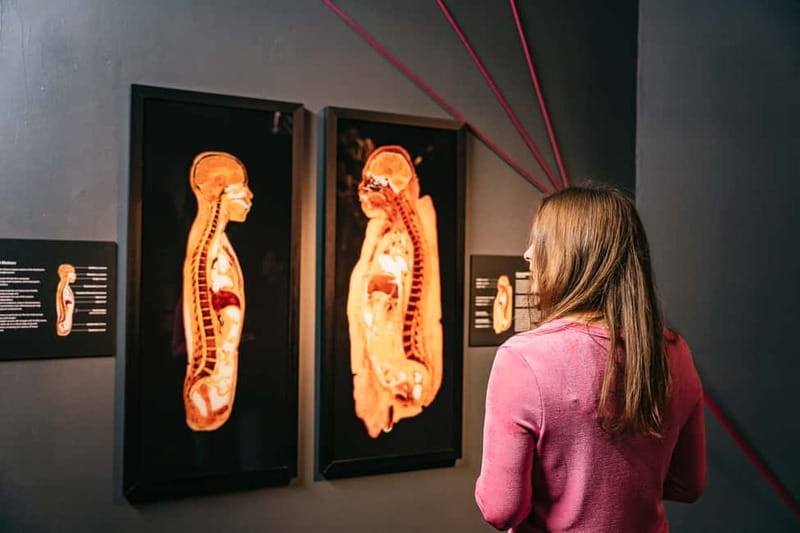
BODY WORLDS goes beyond organs. After the systems sections, the museum shifts into questions about existence and everyday life.
You’ll learn about topics like:
- what determines a person’s happiness
- how the body copes with stress
- the middle ground between excessiveness and modesty
- what the body needs to live a long, healthy life
Even though it’s not a self-help seminar, the museum makes the connection between biology and behavior. It gives you a way to think about why stress isn’t just a mental issue, and why habits matter at a physical level.
This is also a good moment to reset your mental load. After intense anatomical visuals, these themes feel like a thoughtful close to the story.
How Long to Plan and When to Go for a Calm Visit
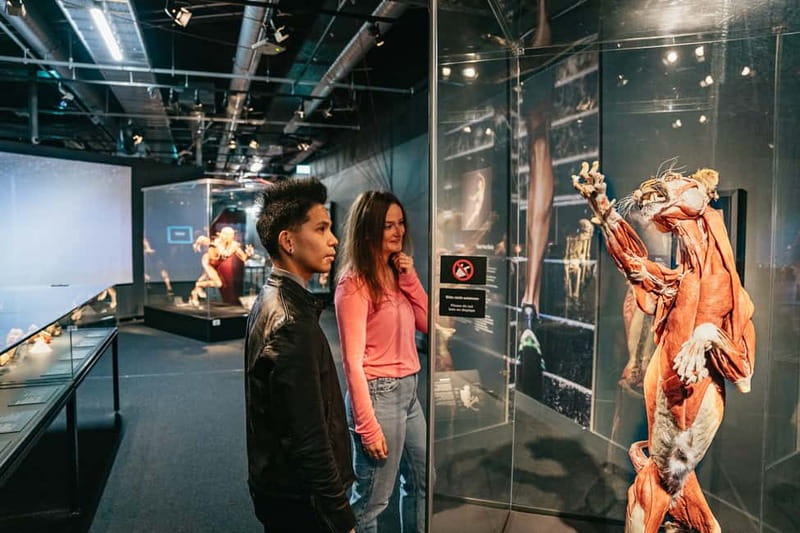
A strong tip is to plan for around 2 hours if you want to see it at a comfortable pace. That lines up with the idea that the museum is best when you read, look carefully, and give yourself time to process each section.
For timing, remember last admission is 6 PM and closing is 7 PM. If you show up later, you’ll end up rushing through exactly what makes the museum special: the step-by-step visual explanations.
If you’re going on a day with bad weather, this is a great indoor option. One review specifically called it a great activity when it’s raining, and that tracks—there’s no need to plan for outdoor time.
Practical Tips: Cloakroom, Lockers, and Audio Choices
Your ticket includes entrance to the exhibition, but it does not include an audio guide. The museum also lists a cloakroom and lockers, with lockers subject to a charge.
So if you like audio support, you’ll need to decide whether to purchase or use another tool on-site (you might find some phone-based guidance helpful). Either way, plan on the exhibit text doing a lot of the work.
Also, there’s a small “getting oriented” theme in the feedback: some people found it not immediately clear where to go at first. My practical advice is simple—don’t force speed on your first minutes. Give yourself time to orient so you can enjoy the flow.
One more real-world note: some audio exhibits can be out of order or tricky to find. If you run into that, don’t panic. The museum is still understandable without audio, especially because the text is broken into manageable pieces.
Comfort, Content, and Who This Is For
BODY WORLDS is visually intense. One review noted it’s not really suitable for young children, and that makes sense. This isn’t a “kid hands-on fun” museum. It’s anatomy with real preparations and a strong educational tone.
On the other hand, it’s ideal for:
- adults who love biology and want a visual explanation of body systems
- people curious about how diseases affect organs
- anyone who wants to understand the body as a connected system, not isolated parts
If you’re sensitive to medical imagery, you’ll want to go in with your own comfort level in mind. The museum is designed to be informative, but the visuals are undeniably real.
Value in Berlin: Is $24 Worth the Time?
At around $24, the ticket price feels reasonable for a full, structured exhibition that covers multiple systems and also touches on stress, happiness, and longevity. This isn’t a quick photo-stop. You need time to read and observe.
The best value comes when you match your pacing to the content. If you spend 30 minutes sprinting, you’ll miss what makes it meaningful. If you spend around 2 hours reading the short sections and focusing on the systems that interest you, it becomes a strong educational experience for the money.
Also, the museum’s access is straightforward: the exhibition entrance is what you’re paying for. You’re not paying extra for the basic experience—you’d only add optional items like audio support.
Should You Book? My Decision Guide
Book BODY WORLDS in Berlin if you want a hands-on-feeling anatomy experience with real plastinated displays and a clear structure that helps you understand organ function and diseases. It’s especially worth it if you like learning in visual steps and you don’t want to be hit with long paragraphs of dense text.
Skip or rethink if:
- you need audio as a core part of your learning and you’re worried about audio exhibits possibly being unreliable
- you’re planning for very young children
- you prefer lighter, less intense museum content
If you’re visiting Berlin on a rainier day, or you want one ticket that gives you a lot of learning per hour, this is a smart choice.
FAQ
How much are tickets for BODY WORLDS in Berlin?
The price is listed as about $24 per person.
How long does a visit take?
The activity is valid for 1 day. One tip given was to allow about 2 hours to see it at a relaxed pace.
What are the opening hours and last admission?
The museum is open Monday through Sunday from 10 AM to 7 PM, and the last admission is 6 PM.
Is the audio guide included with the ticket?
No. The audio guide is listed as not included.
What is included in the ticket price?
Your ticket includes entrance to the BODY WORLDS exhibition.
Is BODY WORLDS wheelchair accessible?
Yes, it is listed as wheelchair accessible.
Are the exhibits shown in English?
One review specifically noted strong English translation on both the displays and the audio guide.
Is there cloakroom or lockers?
There is a cloakroom and lockers are available, with lockers subject to a charge.
Is the exhibit suitable for young children?
It’s not really suitable for young children, based on guidance from an included review note.