
REVIEW · AMSTERDAM
Amsterdam National Maritime Museum Skip-the-line-Ticket
Book on Viator →Operated by Het Scheepvaartmuseum · Bookable on Viator
Amsterdam’s sea stories start fast. The skip-the-line ticket gets you inside Het Scheepvaartmuseum at Oosterdok without waiting around, so you can spend your time on the big maritime highlights. You’ll also get a free 1-hour audio guide in English, which is perfect for a museum visit that still feels flexible.
I especially like two things: the museum is set in a restored 17th-century Arsenal tied to the Royal Dutch Navy, and the exhibits cover how the Netherlands built power at sea through the Golden Age. I also like that the visit isn’t just display cases—you get hands-on-feeling moments, including ship-focused storytelling and interactive elements designed for different ages.
One thing to consider: if you hate audio guides or prefer super slow wandering, you may feel slightly pulled toward the highlights path. The good news is you can still choose how much you follow versus freestyle.
In This Review
- Key things to notice before you go
- Het Scheepvaartmuseum at Oosterdok: the setting you’ll feel right away
- Skip-the-line entry: why that $24.03 feels practical
- Your 10:00 start: how long you likely need
- The audio guide: structure that keeps you from missing the best parts
- Inside the museum: Golden Age power, navigation gear, and ship art
- The Dutch East Indiaman ship replica and the 3D interior moment
- East wing highlights and the kinds of exhibits that reward your time
- Virtual seafaring, old port scenes, and the outside cargo-ship replica
- What to expect if you’re visiting with kids or need a smoother flow
- Price and value: does the skip-the-line ticket make sense for you?
- Practical tips to make your visit smoother
- Should you book this skip-the-line Amsterdam National Maritime Museum ticket?
- FAQ
- How much does the Amsterdam National Maritime Museum skip-the-line ticket cost?
- How long does the visit take?
- What language is the audio guide in?
- What does the skip-the-line ticket include?
- Where is the museum located?
- What’s not included with the ticket?
- Is a mobile ticket provided?
- What time does the experience start?
- Is there free cancellation?
- Is the museum visit suitable for most people?
- Final call: book or pass?
Key things to notice before you go
- Skip-the-line admission saves time at the ticket stage, so you can start exploring sooner
- Restored Royal Dutch Navy Arsenal makes the building itself part of the story
- 1-hour English audio guide gives structure without locking you into a full guided tour
- Dutch East Indiaman ship replica and 3D interior are standout moments for many visitors
- Navigation instruments and Golden Age displays add real context beyond ship images
Het Scheepvaartmuseum at Oosterdok: the setting you’ll feel right away
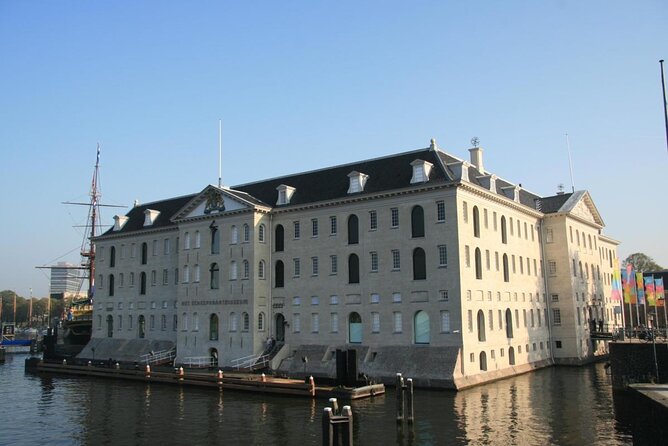
This museum sits in the special Amsterdam area called Oosterdok (East Dock), which already hints at what you’re here for: ports, trade, and ships. When you reach the building, you’re not entering some generic box of exhibits. You’re stepping into a restored 17th-century Arsenal, originally used as a Royal Dutch Navy storehouse.
That matters more than it sounds. Because the space is historical, the museum experience feels like it belongs to the maritime world, not just about it. Even the modern glass roof over the courtyard creates a nice contrast—old harbor-era function around you, with brighter museum light above. It’s a smoother experience than you might expect from a museum that focuses on ships and navigation gear.
A few more Amsterdam tours and experiences worth a look



Skip-the-line entry: why that $24.03 feels practical

The whole point of this ticket is speed. You use your fast-access admission to bypass the ticket line, which is especially useful in a popular city museum. If your plan is limited—say you’re stacking a few sights in Amsterdam this day—time savings are worth real money.
At about $24.03 per person, you’re not just paying for entry. You’re paying for the ability to start faster and for the included 1-hour audio guide in English. If you tried to buy tickets on the spot (or arrived without planning), you could lose that saved time before you even reach the exhibits.
In other words: the value here isn’t just the museum. It’s the pacing. A maritime museum can be big, but this ticket helps you keep the visit from turning into a long day of standing.
Your 10:00 start: how long you likely need
The start time listed is 10:00 am, and the total experience time is roughly 30 minutes to 1.5 hours. That range is intentional because the museum gives you options. You can follow the audio guide for a structured circuit, or take your time and sample the rooms that grab you most.
If you do the audio guide at a steady pace, plan for close to an hour of focused listening and moving between highlight areas. If you’re the type who stops often to read labels and watch interactive screens, you’ll drift longer, but you still shouldn’t feel trapped.
A nice strategy: decide first whether you want the audio guide to lead you, or whether you’ll use it like a menu—play parts while you’re standing in front of the matching exhibit.
The audio guide: structure that keeps you from missing the best parts

This ticket includes a 1-hour audio guide. It’s offered in English, and it’s designed for a highlights walk-through rather than a museum lecture.
Here’s what I like about this setup from a practical viewpoint: it reduces decision fatigue. Maritime history can include big dates and long timelines, and the audio guide gives you a path through the museum’s most meaningful rooms. But you’re not stuck in a group schedule.
If you prefer to move at your own speed, you can do that too. Think of the audio guide as a tool to help you notice what’s important: the Golden Age of maritime power, the tools of navigation, the artistic side of ship culture, and how the Dutch port world shaped what you see today.
Inside the museum: Golden Age power, navigation gear, and ship art
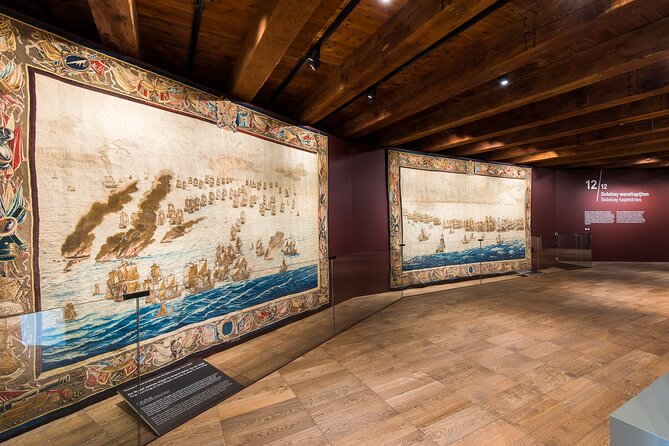
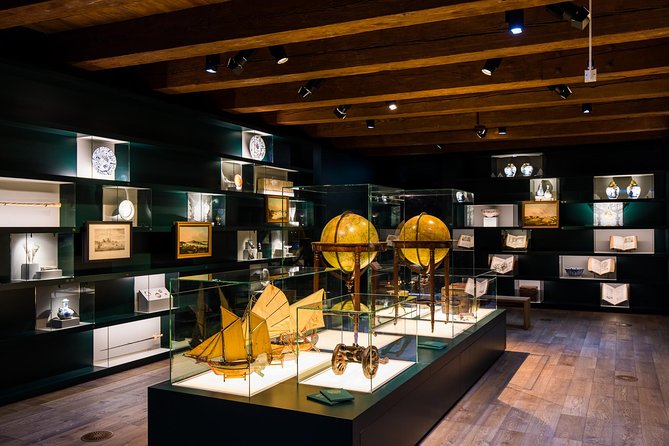
When you step into Het Scheepvaartmuseum, the emphasis is clear: the Netherlands had deep ties to the sea, and the museum shows that connection through multiple types of collections. Expect to see atlases, art, and model ships, plus objects and displays connected to navigation and maritime work.
The museum also uses large screens to explain the timeline of Dutch maritime strength in the 17th century. That’s useful because ship history is easy to reduce to only one thing—big vessels, big battles, big ships. The displays help you see the wider system: trade networks, exploration mindset, map-making, and the technology that made long-distance sailing possible.
One area you’ll want to pay attention to is the mix of globes, navigational instruments, and ship decorations. Even if you’re not a nautical-tech person, these objects help you understand the practical side of maritime life: how people planned journeys, how they measured the world, and how ships carried more than goods—they carried identity and craftsmanship.
You can also read our reviews of more museum experiences in Amsterdam





The Dutch East Indiaman ship replica and the 3D interior moment

The museum’s showpiece experience is a replica of a Dutch East Indiaman ship, and it’s presented in a way that feels more like a story than a static model. One standout element is the 3D reconstitution inside, which many people single out because it adds scale and movement to what you’re looking at.
This is where the audio guide can be especially helpful. If you listen while you explore the ship-related sections, you get a clearer sense of what the replica represents—why it matters in Dutch maritime history, and how the era’s sailing culture connected to trade with Asia.
Even if you skip the audio guide in that moment, I’d still plan to spend time there. The 3D component makes it easier to picture life aboard and the purpose behind the design, instead of just reading about it.
East wing highlights and the kinds of exhibits that reward your time
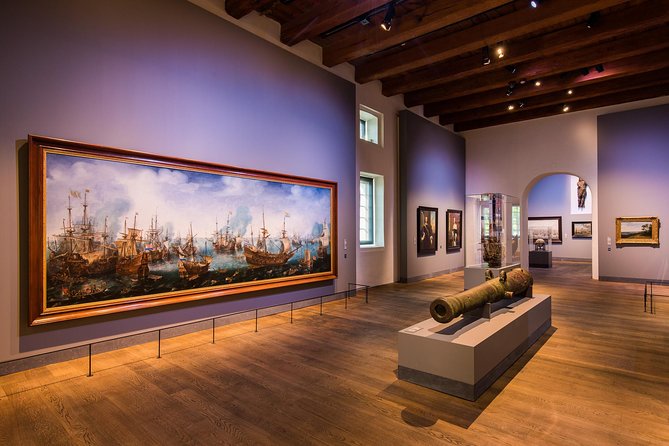
Some museums have a few good rooms and then a lot of “more of the same.” This one tends to reward the time you give it, especially in areas where the museum blends artifacts with visual storytelling.
A highlight mentioned in the museum experience is the East wing, where people appreciate the mix of art, artifacts, and photographs. That combination can be a big deal because ship history isn’t only about metal and wood. It’s also about how society pictured the sea—how maps, illustrations, and images carried the Netherlands’ maritime identity.
If you want a simple approach: don’t try to read everything cover to cover. Pick a section that interests you—navigation tools, Golden Age context, or ship culture—and go a little deeper there. You’ll come away feeling like you got a real slice of the story.
Virtual seafaring, old port scenes, and the outside cargo-ship replica
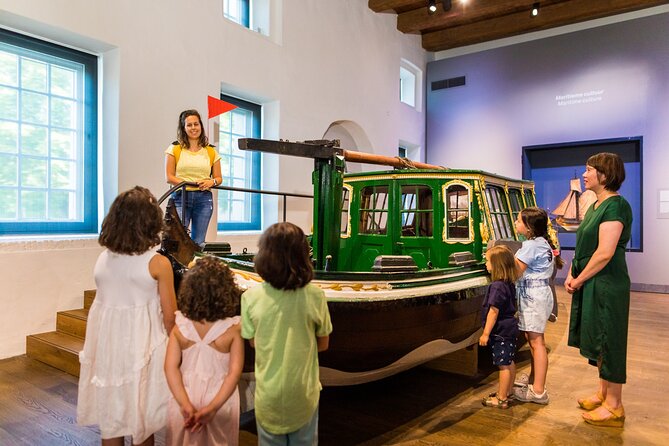
Beyond the main gallery rooms, the museum experience includes a virtual seafaring adventure and a journey through old Amsterdam port. These parts help bridge the gap between historical objects and what they meant in real life. Instead of only looking at items, you start to understand motion and place—how a port looked and how travel might feel.
Then you can step outside for the showpiece replica of an 18th-century Amsterdam cargo ship. That outdoor stop is valuable because it gives you a different perspective than indoor model displays. You see scale more clearly, and you can reset after time in rooms with lots of reading.
It also works well if you’re visiting with kids or anyone who gets restless indoors. The change of setting refreshes attention.
What to expect if you’re visiting with kids or need a smoother flow
Het Scheepvaartmuseum includes exhibits designed for children, and that can make the experience easier to manage as a family. It’s also wheelchair-friendly, so the museum should be comfortable for people who need step-free access.
If you’re traveling with kids, I’d treat the audio guide like an adult anchor, not a requirement. Let the kids guide you to the ship replica and interactive parts, then use the audio to add context once you’re already interested.
Price and value: does the skip-the-line ticket make sense for you?
At $24.03, this ticket is built around two real benefits: fast access and an included 1-hour audio guide. The museum is extensive, so skipping a line can be the difference between a satisfying visit and a rushed one.
Here’s how I’d judge value for your day:
- If you want a highlights-focused visit with less waiting, this is a strong deal.
- If you plan to spend hours and don’t want audio, you might feel like you’re paying for something you won’t fully use—though the museum itself is still worth time.
- If you’re traveling during a busier part of the day, the skip-the-line feature tends to pay off.
Also, because the included audio guide is in English, you don’t need to spend extra time hunting for another guide option.
Practical tips to make your visit smoother
A few smart moves help you get the most from a short window:
- Give yourself at least one hour if you want the audio guide to guide you and still have time to linger.
- Use the audio guide like a set of bookmarks: play a segment, then stop and look at the related objects.
- Start early enough to avoid the temptation to rush. A 10:00 am start gives you a calmer pace.
- Wear comfortable shoes. A maritime museum can involve lots of walking between rooms, ship zones, and outside exhibits.
If you’re planning your day in Amsterdam, this museum pairs well with other nearby stops around Oosterdok, since the area is set up for public transit connections.
Should you book this skip-the-line Amsterdam National Maritime Museum ticket?
Yes, I’d book it if you want a time-efficient, highlights-based visit with an English audio guide and you value avoiding lines. This is a good choice when you’re balancing multiple sights in Amsterdam and you still want a museum that teaches you something real about the Netherlands at sea.
If you hate audio guides or you’re determined to do a long, ultra-slow museum crawl, you might feel the one-hour structure nudges you. In that case, you could still enjoy the museum, but the “included audio + skip-the-line” format may not match your style as well.
FAQ
How much does the Amsterdam National Maritime Museum skip-the-line ticket cost?
It costs $24.03 per person.
How long does the visit take?
The experience typically lasts about 30 minutes to 1.5 hours.
What language is the audio guide in?
The ticket includes a 1-hour audio guide in English.
What does the skip-the-line ticket include?
It includes skip-the-line admission to Het Scheepvaartmuseum, plus the audio guide.
Where is the museum located?
The museum is at Het Scheepvaartmuseum on Amsterdam’s Oosterdok (East Dock) area.
What’s not included with the ticket?
The ticket does not include hotel pickup/drop-off, transportation to and from the museum, or food and drinks.
Is a mobile ticket provided?
Yes, the ticket is a mobile ticket.
What time does the experience start?
The listed start time is 10:00 am.
Is there free cancellation?
Yes. Free cancellation is available up to 24 hours in advance for a full refund.
Is the museum visit suitable for most people?
The experience states that most travelers can participate, and it’s described as wheelchair-friendly.
Final call: book or pass?
Book this if you want an efficient visit to Amsterdam’s maritime history with skip-the-line entry and a built-in 1-hour English audio guide. It’s a smart way to see the most important ship, Golden Age, and navigation-focused parts without turning your day into a waiting game.