REVIEW · AMSTERDAM
Amsterdam National Holocaust Museum and Memorial Entry Ticket
Book on Viator →Operated by Jewish Cultural Quarter Amsterdam · Bookable on Viator
A former school turns grief into context. This entry ticket pairs the National Holocaust Museum with the Hollandsche Schouwburg memorial, using an included audio guide to help you follow personal stories and exhibitions at your pace.
I especially like the two-stop structure that makes the story feel connected, from the building’s harrowing wartime role to the memorial’s wall of names. One possible drawback to plan for: the audio guide is offered in English only, and if you want perfect audio-to-object timing, the self-guided setup may feel a little fiddly in places.
In This Review
- Key Points to Know Before You Go
- National Holocaust Museum: More Than a Usual Exhibit Stop
- The Former Crèche and School Story: Why the Location Matters
- Audio Guide at Your Pace: Helpful, But Plan for English
- Stop Two: Hollandsche Schouwburg Memorial, Where Waiting Becomes History
- Respectful Tone and Serious Space: What to Expect Emotionally
- Timing: How to Fit 1h15–1h45 Into Your Amsterdam Day
- Price and Value: $24.03 for Two Sites and Audio
- What’s Included (and What You’ll Need Elsewhere)
- Getting There and Practical Setup
- Should You Book This Ticket?
- FAQ
- What’s included with the Amsterdam National Holocaust Museum and Memorial ticket?
- How long should I plan for this experience?
- Is there a live guided tour?
- What language is the audio guide offered in?
- Do I get a mobile ticket?
- Where are the two stops?
- Is it easy to reach with public transportation, and can service animals attend?
Key Points to Know Before You Go
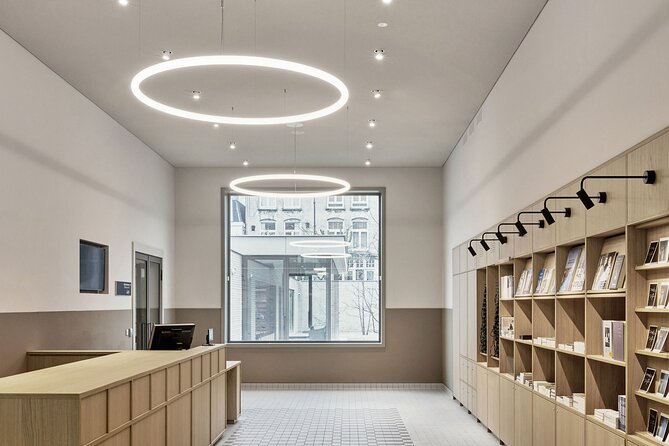
- Two linked sites: museum first, then the Hollandsche Schouwburg memorial with its names and Holocaust-in-Netherlands context
- Audio guide included: helpful station-by-station context instead of a narrated walking tour
- Small group cap: maximum 15 travelers, which usually means less chaos and more quiet attention
- Former teacher training school setting: the museum is tied to a real wartime place connected to children being hidden and helped
- Memorial focus: tens of thousands held in a former theatre before deportation, with remembrance built into the space
National Holocaust Museum: More Than a Usual Exhibit Stop
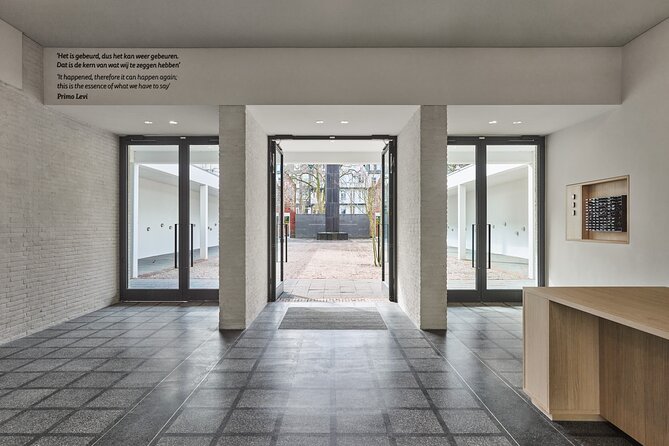
If you’re trying to understand the Holocaust in Amsterdam, this is one of the more direct ways to do it. The National Holocaust Museum isn’t just a collection of artifacts behind glass. It’s housed in a historic building tied to the wartime story itself, which gives the whole visit a weight that hits faster than a standard museum day.
You’ll start inside the museum with a set timeslot. The visit is designed to take about 1 hour 15 minutes (roughly in that range), which is a solid length: long enough to absorb the main story, short enough to keep you from feeling like you’re trudging through content with no end in sight.
What I like is how the museum tells the Holocaust through personal accounts and changing exhibitions and events presented in an artistic way. That matters because it shifts you from facts-only learning to human-scale details—who was affected, what choices were possible, and what “help” looked like in practice.
A key part of the museum’s setting is the building’s relationship to the rescue story involving Jewish children. At this historic site, hundreds of Jewish children held in a crèche next door were later smuggled to relatively safer places with the help of the resistance. You don’t just read about survival and rescue in the abstract—you’re seeing that this happened in real walls, real rooms, and real neighborhoods.
A few more Amsterdam tours and experiences worth a look



The Former Crèche and School Story: Why the Location Matters
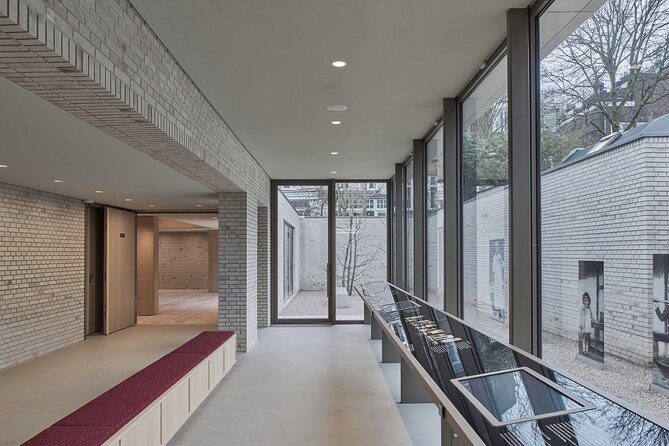
A lot of Holocaust learning in Europe happens across many sites, and they can feel scattered. Here, the building does part of the explaining for you. The former teacher training school setting helps you understand that “education” and “care” were twisted into something dark by occupation forces, and then twisted again by resistance efforts that tried to protect children.
That connection is powerful for practical reasons, too. When you’re trying to remember names, dates, and sequences, your brain needs anchors. This museum offers anchors in both content and place: the way the story is structured and the fact that you’re standing in a former school environment tied to the children’s story.
The museum experience can also help you if you’re doing an Amsterdam “meaningful sites” route. People often pair this stop with other major historical visits in the city. Even if you don’t, you’ll still get what you came for: a structured explanation of what happened, including the role of rescuers and collaborators, not just the final outcomes.
Audio Guide at Your Pace: Helpful, But Plan for English
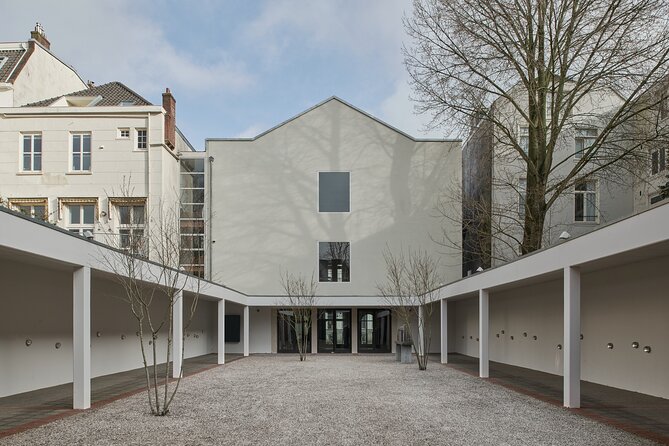
This ticket includes an audio tour, and it’s one of the best parts of the experience because it’s built into the way the museum is presented. Instead of one long narration, the audio is tied to stations, and you’ll use hand-held recorders at each part of the display. That approach can make the story feel more immediate because you hear context right where you’re looking.
The content and pacing feel especially useful in a museum like this, where some exhibits ask a lot of you emotionally. Having audio can keep you from getting stuck in a reading-heavy lane. It also helps you manage the visit length so you don’t spend 30 extra minutes lost in one room.
That said, there are two practical considerations you should know:
- The audio guide is offered in English only. If you’re traveling with someone who doesn’t read English comfortably, plan ahead.
- Because it’s station-based and self-guided, you might occasionally feel that the audio doesn’t perfectly match what you’re standing in front of. If you need strict alignment between sound and objects, you may want to move slowly and pause to let each station click into place.
Stop Two: Hollandsche Schouwburg Memorial, Where Waiting Becomes History
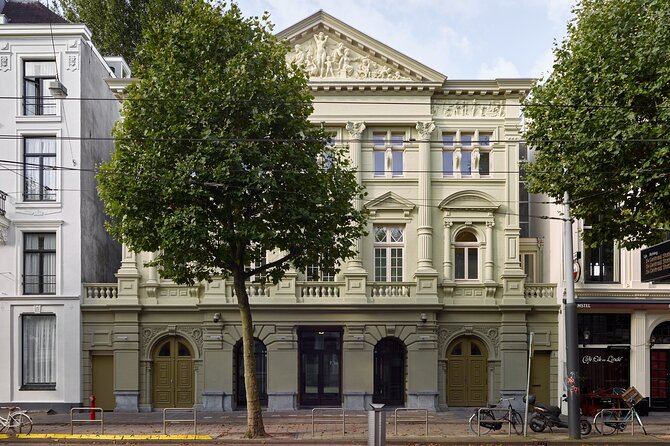
After the museum, you’ll head to Hollandsche Schouwburg, a former theatre that became a holding place during the Second World War. The occupying forces made Jews assemble here, and it’s described as a place where tens of thousands were held without knowing what fate awaited them—until deportations to concentration and extermination camps.
This is also the memorial part of the experience, and it works differently than the museum. It’s not built around browsing exhibits. It’s built around remembrance and context you can absorb at a quieter pace.
You’ll spend about 30 minutes here. That’s a good length because it gives you time to look carefully at the memorial wall and the exhibition about the Holocaust in the Netherlands without turning it into a rushed checklist.
One of the most moving elements is the memorial wall of names. Even if you don’t read every name (and you may not want to), seeing that many identities listed is the point: this wasn’t a single faceless tragedy. It was people with names, families, and lives that were destroyed.
You’ll also be reminded of the broader Dutch context. The museum gives you the structure of the Holocaust story, and the memorial grounds that story in how the Netherlands was affected and how deportation worked from places like this.
Respectful Tone and Serious Space: What to Expect Emotionally
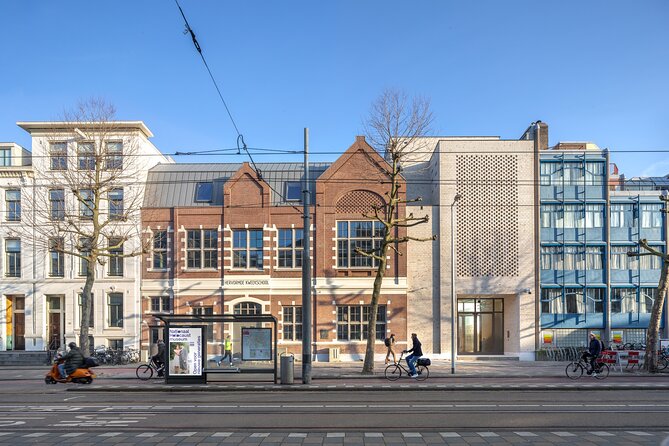
This is a museum that keeps its tone serious and quiet. That may sound like a vague impression, but it matters because it shapes your visit. You’re less likely to feel distracted by loud tour chatter, and the experience tends to encourage careful attention.
Many people find it emotional and intensely informative, and the combination of personal accounts, letters and other media, plus the audio station format helps it land. The result is less of a lecture and more of a sequence of story moments.
There’s also something about the layout that can make the story feel staged in a strong, memorable way—more like two major story blocks that hit one after the other. If you like experiences where your mind can sort “first this, then that” without confusion, the museum-then-memorial order helps.
You can also read our reviews of more museum experiences in Amsterdam






Timing: How to Fit 1h15–1h45 Into Your Amsterdam Day
The total duration is about 1 hour 15 minutes to 1 hour 45 minutes. That range covers the museum timeslot and your time at the Hollandsche Schouwburg memorial.
Here’s a practical way to plan your day:
- Give yourself some buffer before the first entry timeslot, because Amsterdam can be a walk-and-traffic city.
- After the museum, don’t rush your second stop. The memorial is where you slow down and actually take in the meaning, not just the facts.
If you’re visiting multiple major sites in one day, this ticket can be a strong anchor. It’s easier to pair with other nearby historic stops than it is to tack onto a jammed schedule where you’ll be scanning everything while checking your watch.
Price and Value: $24.03 for Two Sites and Audio
At $24.03 per person, you’re paying for more than just a museum entry. You get entry to the National Holocaust Museum plus entry to the Hollandsche Schouwburg memorial, and you also get an audio tour included.
That’s the value equation: you’re bundling two linked places plus the listening component that helps you understand what you’re seeing. If you were buying museum tickets and then separately figuring out memorial entry, this packaged ticket would likely cost you more time and often more money.
So yes, it’s not free and it’s not cheap for a short visit. But you’re buying a focused historical experience with built-in interpretation. For a topic this heavy, that interpretation isn’t a luxury—it’s part of making your visit meaningful and understandable.
One more note: it’s priced like an entry ticket with audio, not like a full guided group tour. If you want a live guide who can answer questions on the spot, you’ll need to look for a guided alternative. Here, your understanding comes from the museum’s presentation and the audio stations.
What’s Included (and What You’ll Need Elsewhere)
Included in your ticket:
- National Holocaust Museum entry ticket
- Hollandsche Schouwburg memorial entry
- Audio tour
Not included:
- Guided tour
- Access to the Jewish Museum and Portuguese Synagogue
This is useful for deciding whether you’re done after this stop. If your Amsterdam plan includes other Jewish cultural sites, you’ll likely want to book those separately since they aren’t included here.
Getting There and Practical Setup
This experience is near public transportation, which helps because you won’t be locked into taxis or long detours. You’ll also be able to use a mobile ticket, and confirmation is received at booking time.
Service animals are allowed, and most people can participate. The main practical limit is more about emotional pacing than physical limitations: take your time. This is one of those visits where reading speed isn’t the goal—attention is.
Group size is capped at 15 travelers, which typically makes for a calmer experience than the big-bus museum model.
Should You Book This Ticket?
Book it if you want a structured Holocaust learning experience with an included audio guide, and especially if you like the idea of visiting two connected places—a museum in a historic school-related setting, followed by the Hollandsche Schouwburg memorial with its wall of names.
Consider another option if:
- You need audio support beyond English.
- You’re very sensitive to self-guided navigation and you expect the audio to align flawlessly with every exhibit moment. In a station-based setup, you may need patience and slower movement.
If your goal is to learn, remember, and leave with a clearer understanding of what happened in the Netherlands and how lives were affected, this ticket is a strong choice. It’s focused, it’s built for your time window, and it doesn’t pretend this subject is light.
FAQ
What’s included with the Amsterdam National Holocaust Museum and Memorial ticket?
You get admission to the National Holocaust Museum, admission to Hollandsche Schouwburg National Holocaust Memorial, and an audio tour.
How long should I plan for this experience?
Plan for about 1 hour 15 minutes to 1 hour 45 minutes total. The museum portion is listed at around 1 hour 15 minutes, and the memorial portion is around 30 minutes.
Is there a live guided tour?
No. This ticket includes entry and an audio guide, not a guided tour.
What language is the audio guide offered in?
The experience is offered in English.
Do I get a mobile ticket?
Yes. This is listed as a mobile ticket, and you receive confirmation at booking.
Where are the two stops?
Stop one is the National Holocaust Museum. Stop two is Hollandsche Schouwburg, the memorial site.
Is it easy to reach with public transportation, and can service animals attend?
It’s listed as being near public transportation, and service animals are allowed.