REVIEW · GIFU PREFECTURE
Knife Making Experience in Samurai Sword Town
Book on Viator →Operated by MOST JAPAN · Bookable on Viator
Making a knife in Seki feels oddly satisfying. I love the hands-on instruction that walks you through sharpening, polishing, and engraving, and I love that you test the edge right after finishing. One thing to think about: this is a full, focused day at about 5 hours, not a casual wander.
This is a private, small-group style experience, so you get close attention instead of getting lost in a crowd. You’ll learn from the bladesmith team (including instructors like Sumio, Yoshi, and Hiro), and you’ll finish with a knife plus a signed certificate and a Japanese lunch.
In This Review
- Key things I’d circle before you go
- Seki’s knife-town setting: from museum rows to your workbench
- The 5-hour flow and private-group pacing
- Knife Museum: seeing rare blades before you touch steel
- Swordsmith Museum plus Seki’s cutlery production: why this town still matters
- Temple time: Seki Zenko-ji after your knife work
- Making a Damascus kitchen knife with a 50+ year master bladesmith
- Testing the edge, lunch, and the signed certificate + mini knife
- Price and value for $316.27: what you’re really paying for
- Should you book this Seki knife-making day?
- FAQ
- How long is the knife making experience?
- What time does the tour start and where is the meeting point?
- Is the tour private?
- Is pickup available?
- What’s included with the experience?
- Do you test the knife’s sharpness?
- Is there free cancellation?
- Are museum tickets included?
Key things I’d circle before you go
- Damascus kitchen knife, made in front of you with polishing, sharpening, engraving, and assembly
- Edge testing on fresh vegetables so you can actually judge the result
- Small-group attention with clear, patient coaching (and even some humor)
- Museum time first, tools later so you understand what you’re making
- Seki stopovers that connect craft to place including sword history and cutlery production
Seki’s knife-town setting: from museum rows to your workbench
Seki (in Gifu Prefecture) is famous for blades and cutlery. The best part of this day is how it uses that reputation in a practical way: you start by looking at knives and sword history, then you shift to doing real work with your hands.
I like that the experience doesn’t treat the craft like magic. You’re shown the steps, you do the work, and then you see the result immediately. When you finish, you’re not just buying a souvenir. You’re leaving with a tool you helped create—and you also get the story that makes it make sense.
The atmosphere in a knife-making town has a different feel than a standard sightseeing day. Even the quiet stops feel connected, because you keep thinking about how metal becomes something useful and lasting.
The 5-hour flow and private-group pacing
The whole experience runs about 5 hours and returns to your starting point. It starts at 10:30 am at Sekitomioka Station (Hidase, Seki, Gifu 501-3911), which is handy if you’re doing this as a day trip.
This tour is also private: only your group participates. That matters because knife-making can get technical fast. In a big group, someone always falls behind or waits too long. With a small group, you can ask questions and get feedback while you’re still doing the step.
Pickup is offered, and you’ll also use a mobile ticket. If you’re coming by train, the “near public transportation” setup means you’re not stuck figuring out complicated last-mile transfers.
Knife Museum: seeing rare blades before you touch steel
You spend about 2 hours at the Knife Museum, and that time is not filler. It sets your mental checklist before you start making your own piece.
You can see different types of knives, including rare and unique ones from around the world. That’s useful because it gives you context for what you’re aiming at with a kitchen knife: edge geometry, balance, and the idea that blades are tools first.
A drawback to consider: museum time is time where you’re looking, not working. If you’re the type who wants to jump straight into making, you might feel a slight delay. But the payoff is that you get a better sense of what “good” looks like before you create your own.
Swordsmith Museum plus Seki’s cutlery production: why this town still matters
Next comes the Seki Swordsmith Museum for about 1 hour. This stop focuses on Samurai and Japanese sword history, and it helps connect the craft to the wider culture around blades. If you’re a sword fan, you’ll likely enjoy seeing how Seki developed as a key sword-making center as early as the 13th century.
After that, you get a shorter visit to Gifu Cutlery Hall (about 30 minutes, and admission is free). This part grounds everything. Seki isn’t only about swords as artifacts; it’s also about cutlery as production—skills passed down, shaped by demand, and refined through generations.
This pairing is smart: one museum explains the story, the other points you to the practical side of making. It helps you understand why your knife workshop isn’t just a craft lesson—it’s tied to an industry and a living skill base.
Temple time: Seki Zenko-ji after your knife work
Then you shift gears with a visit to Seki Zenko-ji Temple for about 1 hour 30 minutes. The temple’s foundation dates back to the mid-eighteenth century, and the visit highlights features like The Great Bell and the Kaidan route, which are well known.
I like this placement in the day. After hours thinking about edge angles and finishing, a calmer cultural stop helps your brain reset. You also get a better sense of Seki as a place you could actually live in, not just a workshop location.
Admission here is free, so it’s a low-cost way to add meaning to the day. One note: since it’s longer than the cutlery hall stop, wear shoes you’re comfortable walking in.
Making a Damascus kitchen knife with a 50+ year master bladesmith
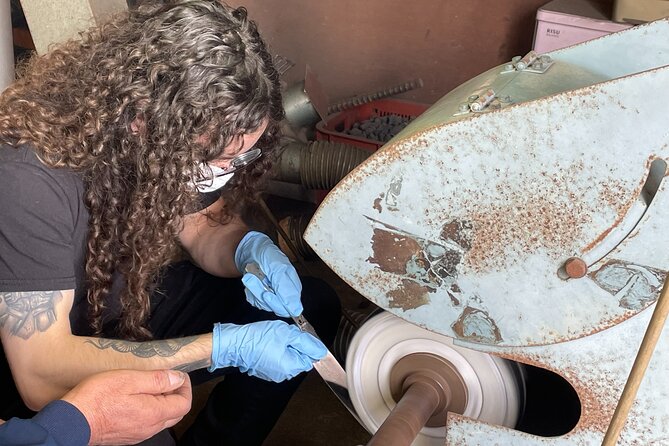
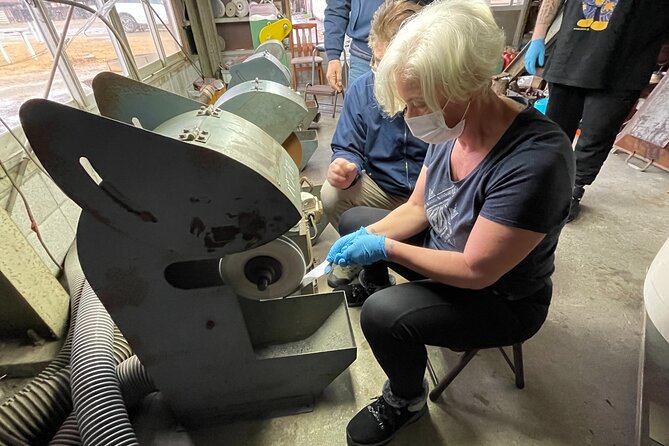
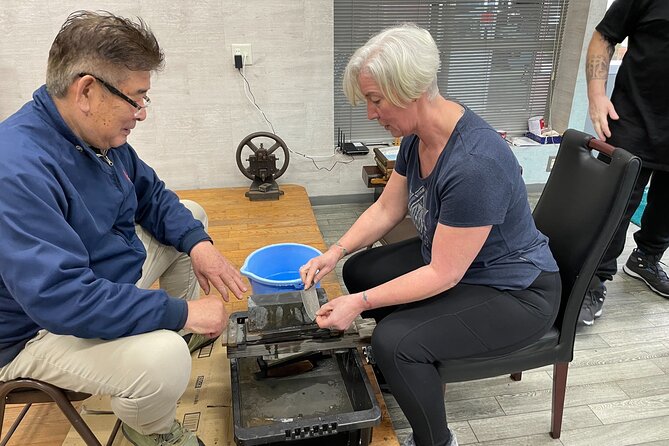
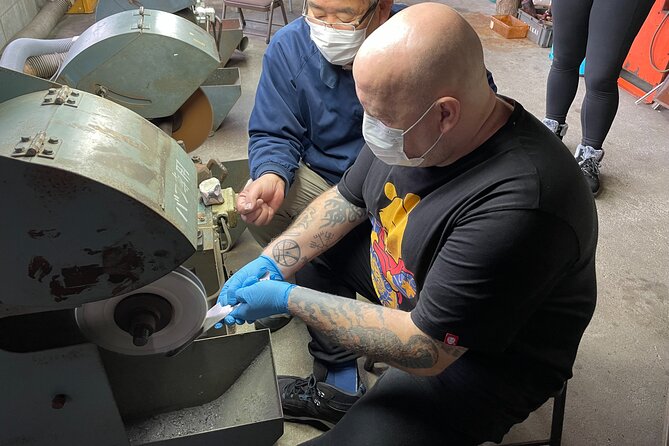
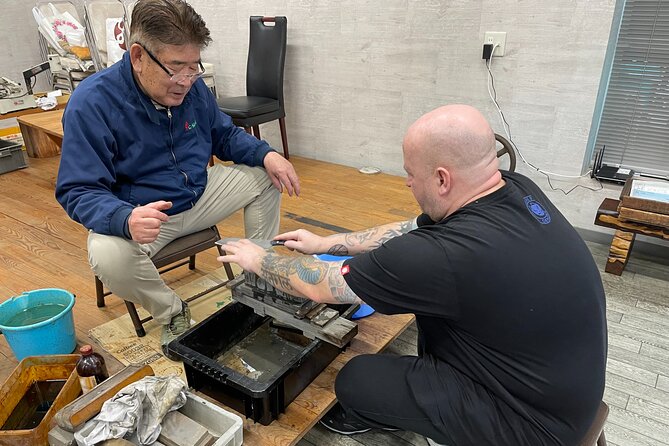
Now the main event. You craft your own professional Damascus kitchen knife in Seki. You’ll be guided by a master bladesmith with 50+ years of experience, and that’s the point where the “museum watching” stops and the real learning begins.
From what’s described for this workshop, your hands-on work includes:
- sharpening
- polishing
- engraving
- assembly
This is where the private, small-group setup matters again. Polishing and sharpening aren’t one-size-fits-all. You need corrections while you’re working, not after. In the same way, engraving needs steady technique and time, and your instructor can’t give that level of attention in a huge crowd.
The tone from instructors like Sumio, Yoshi, and Hiro also sounds like part of the value. Reviews point to clear instruction and even a light sense of humor, which makes a technical craft feel more friendly and less intimidating.
One thing to think about: finishing and getting a good edge takes care. If you’re hoping for a quick, hands-off souvenir moment, this won’t be that. This experience is a full process, and you’ll feel the time in your body—in a good way.
Testing the edge, lunch, and the signed certificate + mini knife
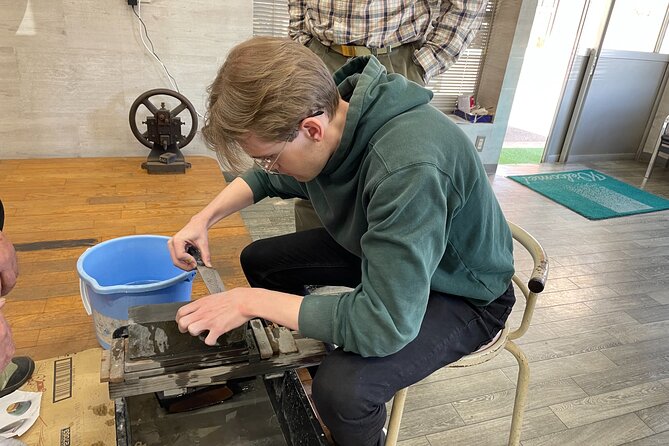
After you complete your knife, you test its sharpness on fresh vegetables. I love this part because it turns the workshop into a measurable result. You’re not guessing whether your polishing and sharpening worked. You can see it immediately.
You also get a Japanese lunch, which is both practical and morale-friendly. Workshops are long, and having a meal built in means you don’t have to plan food between stops.
Take-home items include:
- your handcrafted Damascus kitchen knife
- a signed certificate
- a handcrafted mini knife souvenir (limited availability)
That mini knife bonus is worth noting because it can go fast. If you care about getting it, you’ll want to treat it like a bonus—not something you can plan around like a guaranteed add-on.
There’s also an intangible payoff: once you’ve tested the edge, the certificate and the souvenir feel earned rather than decorative.
Price and value for $316.27: what you’re really paying for
The price is $316.27 per person, and the best way to judge value here is to look at what’s included.
You’re paying for guided, skilled instruction with a master bladesmith, plus hands-on time to make and finish a real kitchen knife. You’re also getting admissions at two paid museum stops (Knife Museum and Swordsmith Museum), a Japanese lunch, and take-home items including a signed certificate and a mini knife souvenir.
So you’re not just buying a tour ticket. You’re paying for labor, materials, and instruction—plus the cultural framework around it in Seki.
Could it be cheaper? Sure, if you only did museums or a short demo. But you’d lose the core value: making the knife yourself and testing the sharpness with your own hands. For many people, that’s the whole point—and it’s also what turns this into a memorable day instead of another stop on a list.
Should you book this Seki knife-making day?
Book it if you want a real skill-based activity in Japan, not a passive show. It’s especially great for:
- knife and craft lovers who like doing tasks step-by-step
- people who want a hands-on souvenir they’ll actually use
- anyone who enjoys cultural context, not just shopping
I’d think twice if you:
- hate long workshops where you must stay focused for hours
- prefer quick experiences with little hands-on work
- want a pure sightseeing day with minimal instruction
If you’re coming from Kyoto, the day-trip timing is reasonable (about 1.5 to 2 hours by train). And because it’s private, it often feels like a custom day rather than a production line.
FAQ
How long is the knife making experience?
It runs for about 5 hours (approximately).
What time does the tour start and where is the meeting point?
It starts at 10:30 am at Sekitomioka Station in Hidase, Seki, Gifu, and the activity ends back at the meeting point.
Is the tour private?
Yes. It’s a private tour/activity, and only your group will participate.
Is pickup available?
Pickup is offered. The meeting point is listed at Sekitomioka Station, so you can align pickup details when booking.
What’s included with the experience?
You’ll make and finish your Damascus kitchen knife through hands-on sharpening, polishing, engraving, and assembly. You also get a signed certificate, a delicious Japanese lunch, and a handcrafted mini knife souvenir (limited availability).
Do you test the knife’s sharpness?
Yes. After finishing your knife, you test the sharpness on fresh vegetables.
Is there free cancellation?
Yes. You can cancel for a full refund if you cancel up to 24 hours in advance of the experience start time.
Are museum tickets included?
Knife Museum admission and Seki Swordsmith Museum admission are included. Gifu Cutlery Hall and Seki Zenko-ji Temple are free admissions.