REVIEW · SEATTLE
Seattle: The Museum of Flight Entry Ticket
Book on GetYourGuide →Operated by The Museum of Flight · Bookable on GetYourGuide
One museum stop and you’re looking at the sky. The Museum of Flight is a huge collection of aviation and space hardware, built for people who like machines, timelines, and hands-on learning.
I love how close you get to famous aircraft details, from a full-sized Space Shuttle training mockup to the chance to sit in a Boeing 747 cockpit. I also like the mix of experiences: galleries, storytelling, and interactive moments that don’t feel like a one-note display.
The main thing to plan for is size. This is a very large museum across five galleries, so give yourself time and don’t miss that last admission is at 4:00 PM.
In This Review
- 5 things you will notice right away
- Getting your bearings at the Museum of Flight campus
- Price and value: what $29 buys (and what it doesn’t)
- Skip-the-line entry and the audio guide that matters
- Optional start: the flight-themed 3D movie (if you want context)
- Aviation Pavilion: where cockpit dreams and early flight tech meet
- The Great Gallery: aircraft arranged like they’re mid-flight
- The Space Gallery and the Shuttle training mockup
- Personal Courage Wing: WWII through pilots, nurses, and support crews
- Flight simulators: the fun factor, plus the extra cost
- Timing strategy: how to get it done without feeling rushed
- Best views day: the bridge for airport energy and Mount Rainier
- What makes this ticket feel special for different types of visitors
- Should you book the Museum of Flight entry ticket?
- FAQ
- What is included in the Museum of Flight entry ticket?
- How much does the entry ticket cost?
- Is the flight simulator included with the ticket?
- Is the 3D movie included?
- How long should I plan to spend at the museum?
- When is the last time I can enter?
- What languages are available for the audio guide?
- Is the museum wheelchair accessible?
- Are any items not allowed inside?
- Is it possible to avoid waiting by booking in advance?
5 things you will notice right away
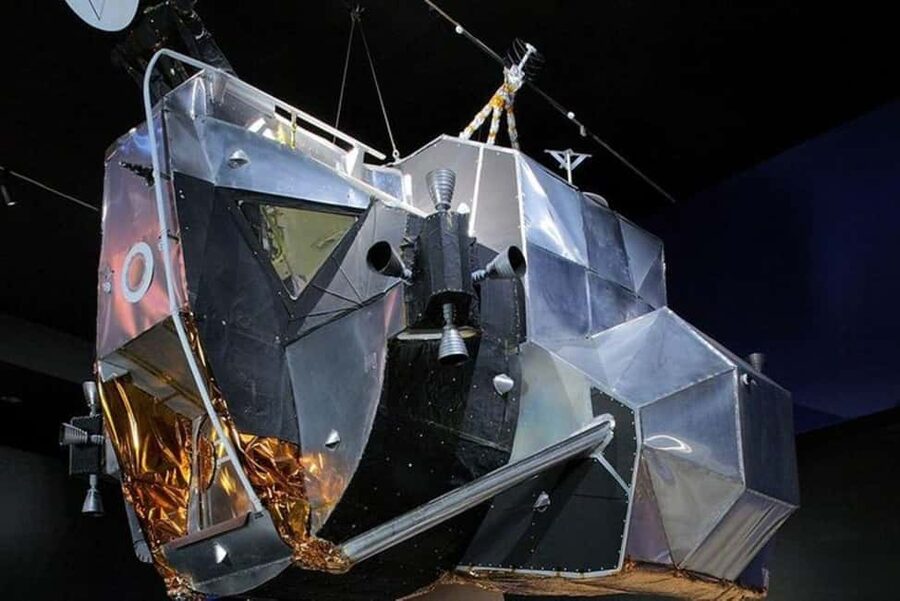
- A full-size Space Shuttle Orbiter mockup built for astronaut training makes the space section feel real, not distant.
- Over 150 aircraft let you trace aviation changes across decades without leaving the building.
- Hands-on exhibits and cockpit access help you see how design decisions matter.
- WWI and WWII stories in the Personal Courage Wing put faces to flight operations, not just aircraft.
- Rare Cold War odds and ends, including the M-21 Blackbrid spy plane and Korean and Vietnam jet fighters, add surprise value.
Getting your bearings at the Museum of Flight campus
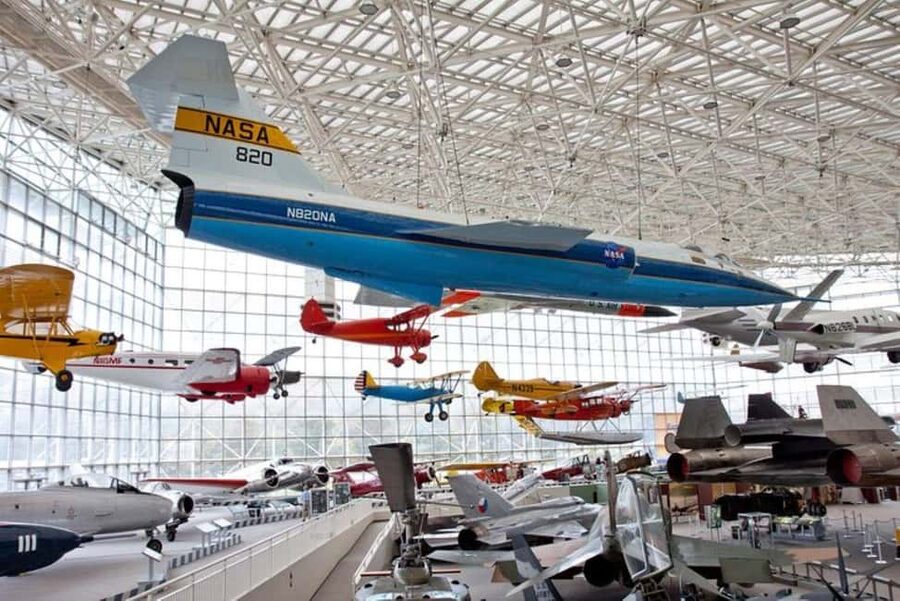
This museum isn’t a quick walk-through. It spans a large two-sided campus and is organized into five separate galleries. On most visits, you’ll want at least 3 hours to cover the majority of exhibits, and more if you stop often at aircraft and reading stations.
A practical way to handle the layout is to think in “zones.” You’ll have aircraft-heavy halls (where you’ll naturally slow down), a dedicated space section, and a storytelling wing that shifts your pace and mood. If you try to rush from plane to plane, you’ll feel it. The museum is designed so you keep discovering new displays as you move from one gallery to the next.
Also, plan your day around the closing rhythm. The museum closes at 5:00 PM, but last admission is 4:00 PM. If you’re the kind of person who likes to linger with photos, start earlier rather than later.
A few more Seattle tours and experiences worth a look


Price and value: what $29 buys (and what it doesn’t)
At $29 per person, you’re buying entrance to a major museum collection, not a bundle of “extras.” The ticket includes the museum entry, and it comes with an audio guide in multiple languages.
Here’s the value logic I like: you pay once and you can spend your time where you want—aircraft you recognize, aircraft you don’t, and the big special displays that are hard to substitute. You also get flexibility because the museum has a lot of stand-alone sections, so even if you miss one area, the day still feels complete.
Two items are not included:
- Tickets for the flight simulators
- The flight-themed 3D movie (optional and extra)
So, if simulators are a must for you, budget a little more. If you’re happy with aircraft, galleries, and storytelling, the base ticket is solid for what you get.
Skip-the-line entry and the audio guide that matters
One reason I’d buy an entry ticket in advance is simple: it helps you avoid time lost at the door. Once you’re inside, the audio guide keeps the visit moving in your preferred language.
The audio guide is available in:
German, Chinese, Russian, Japanese, English, French, and Spanish.
That matters because aviation and space history can get technical fast. Hearing the explanations in your language helps you stay oriented while you’re looking at engines, cockpit layouts, and flight-era context.
The museum is wheelchair accessible, so you can plan an easy route through the galleries without feeling like you’re fighting the building.
Optional start: the flight-themed 3D movie (if you want context)
If you want an easy on-ramp, you can start with the flight-themed 3D movie. It’s optional and costs extra, but it’s designed to set a tone before you hit the aircraft displays.
Think of it as a warm-up. If you’re bringing kids, or if you want the day to feel like a story with a clear “beginning,” this can be a good way to get everyone on the same page.
If you’re short on time, you can skip it. You still get plenty of context just by walking into the galleries and reading the exhibit information.
Aviation Pavilion: where cockpit dreams and early flight tech meet
The Aviation Pavilion is the heart of the aviation collection. This is where you’ll spend time looking at aircraft with a mix of respect and curiosity—especially because the museum includes moments that feel hands-on.
One standout is the chance to get up close to the Boeing 747 experience, including a cockpit setting where you can take it in as if you’re scanning instruments. Even if you never plan to fly that kind of plane, a cockpit makes the story click. Suddenly, “history” becomes design: what’s in the panel, how space was organized for crews, and how flight operations demanded structure.
You’ll also see other major display categories, including a large glass gallery featuring some of aviation’s most unusual achievements:
- A human-powered MacCready Gossamer Albatross II
- A replica of Amelia Earhart’s aircraft
That pairing works well because it shows aviation wasn’t only about bigger and faster. It was also about getting it to work with clever engineering and human effort. If you like “how did they make that possible,” this section will reward you.
And then you hit the Cold War surprises. The museum includes the M-21 Blackbrid spy plane, plus jet fighters connected to the Korean and Vietnam Wars. Those displays can hit hard if you stop long enough to connect the aircraft to the era’s needs—surveillance, speed, and control in serious situations.
One practical note: because this pavilion is aircraft-heavy, it’s easy to lose track of time. Set your own goal, like seeing the big cockpits and the Cold War aircraft first, then returning for the smaller details afterward.
The Great Gallery: aircraft arranged like they’re mid-flight
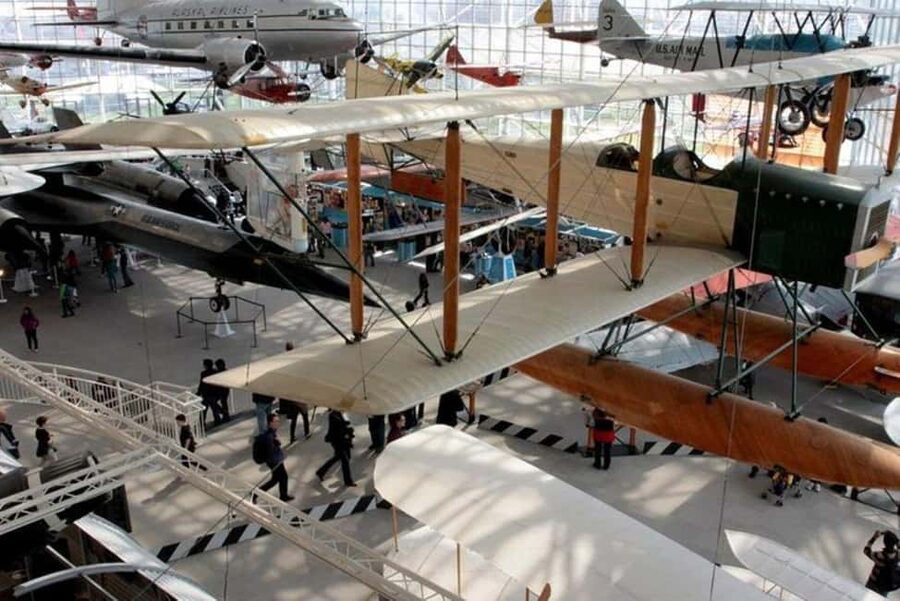
As you move into the Great Gallery, the space itself changes the mood. Planes feel placed for viewing, like they’re floating rather than simply stored.
This is the area where I’d go if you want architecture + aircraft together. You’re not just looking at metal—you’re looking at how the museum presents scale. Big wings, long fuselages, and the way light hits surfaces can make you slow down even if you weren’t planning to.
It’s also a good “reset” zone. If you’ve spent time crouching at detailed aircraft labels in the earlier halls, the Great Gallery gives your eyes a break and lets your brain reassemble the timeline from a higher vantage point.
The Space Gallery and the Shuttle training mockup
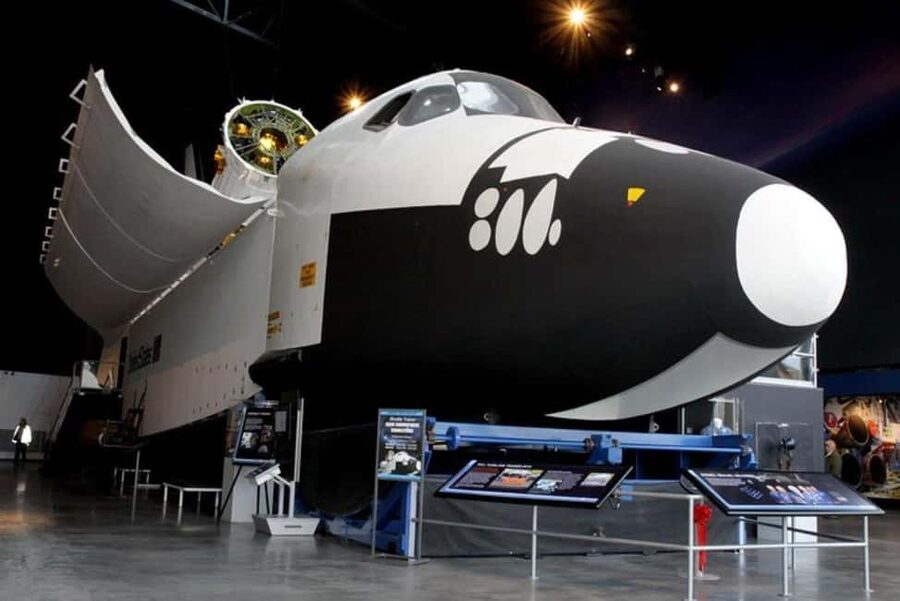
If space is your main reason for visiting, this is the section that earns the hype. The Space Gallery is built around a full-sized Space Shuttle Orbiter mockup used for astronaut training.
A training mockup is different from a static display. It’s meant to help people learn systems, procedures, and physical constraints. Standing in front of it makes the space story feel practical: this wasn’t only about rockets in the sky; it was also about procedures, preparation, and teamwork.
The multi-sensory setup helps you understand the scale of the program without turning it into pure science-fiction. You get the sense that spaceflight training had to be precise and repeatable—exactly what you’d expect from a system where small errors matter.
If you’re traveling with anyone who likes NASA in general but gets bored by textbooks, this mockup is the kind of thing that brings them back into focus fast.
Personal Courage Wing: WWII through pilots, nurses, and support crews
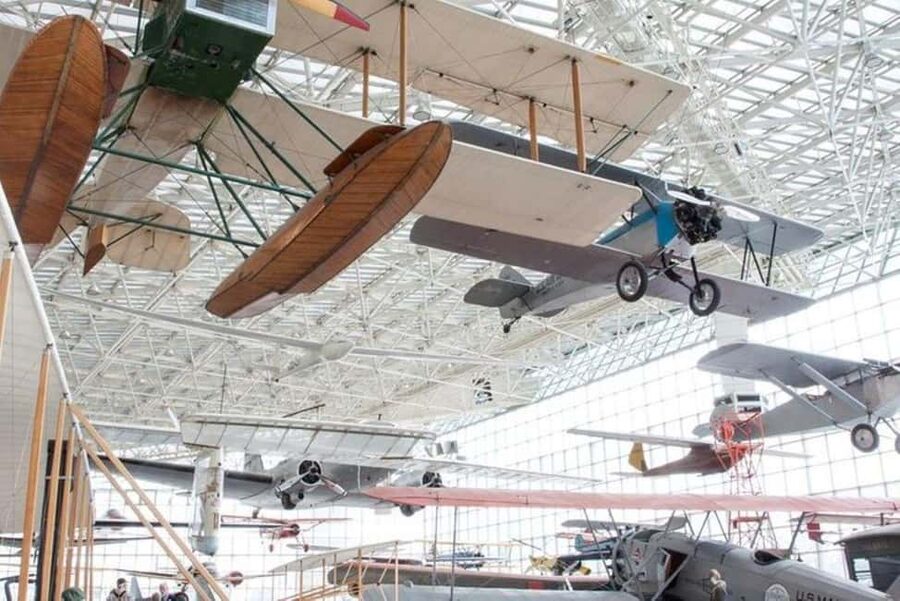
After the aircraft and space hardware, the museum shifts tone with the Personal Courage Wing. This area covers both World Wars through personal stories and the roles of the people who made flight operations work, not only the pilots.
You’ll encounter accounts connected to:
- Pilots
- Nurses
- Photographers
- Support crew
That lineup is powerful because it widens the definition of who matters in wartime aviation. If you only focus on planes, you get a mechanical story. If you focus on people, you get a human story with technology as the tool.
I also like this wing as a pacing choice. It’s a slower section where you can step back and connect context across the aircraft you saw earlier. When you later look at a war-era jet or bomber aircraft, you’ll be thinking about the crew roles behind it.
Flight simulators: the fun factor, plus the extra cost

The museum has flight simulators, and they’re one of those “I’m glad I chose to do it” experiences for many people. Just know they’re not included in the $29 entry ticket.
If you’re the type who learns by doing, simulators can turn a museum visit into a memory that lasts. If you’re more “I want to see the hardware,” you might prefer to spend that time and money on longer gallery stops.
A good compromise is to decide after you’ve seen the first two galleries. By then, you’ll know whether simulators match your style or whether you’d rather keep moving through aircraft and displays.
Timing strategy: how to get it done without feeling rushed
Here’s a realistic approach for a one-day visit, built around the museum’s five-gallery structure and the 3-hour “majority” estimate.
- Start early enough that 4:00 PM isn’t looming. Last admission is at 4:00 PM and you’ll feel rushed if you arrive late.
- Hit the Aviation Pavilion first, because it sets your baseline for aircraft types and key exhibits.
- Then choose between the Great Gallery and Space Gallery depending on your interests. If space is a priority, go Space Gallery next so you’re not running out of energy.
- Save Personal Courage Wing for mid-to-late in the day. By then, the stories will land better because you’ve already built a sense of what wartime flight demanded.
If you do this, you’ll still have time to wander back for the aircraft you can’t stop thinking about.
Best views day: the bridge for airport energy and Mount Rainier
One more reason this museum can feel like more than an indoor stop is the outdoor view on clear days. If the weather cooperates, head to the T. Evans Wyckoff Memorial Bridge for wide sightlines of Seattle-Tacoma International Airport and Mount Rainier.
This is a nice “closing scene” because you move from museum aircraft to real airport activity and the bigger geography around Seattle. Even if you aren’t a plane spotter, it helps you connect why an aviation museum belongs here.
What makes this ticket feel special for different types of visitors
This is a strong choice if you’re traveling with any of these interests:
- Aviation enthusiasts who want a large aircraft collection in one place
- Families who need a museum day with hands-on moments and big visual anchors
- People who want space history shown in physical, close-up ways (that shuttle mockup is the headline)
- Anyone who likes museums that combine hardware with people’s stories
It’s also a good value for mixed groups. Not everyone in the group needs to be a tech fan. The aviation sections satisfy detail lovers, the space section satisfies wonder seekers, and Personal Courage satisfies history-and-people readers.
Should you book the Museum of Flight entry ticket?
Book it if you want one solid day that gives you aircraft scale, space training realism, and WWII storytelling in a single stop. At $29, the base ticket is good value as long as you’re fine with simulators and the 3D movie being optional add-ons.
Skip it or reconsider if you only want quick highlights and you’re not willing to spend time in a large campus museum. The place takes effort, and the late-day cutoff at 4:00 PM makes a rushed visit feel unsatisfying.
If you want an easy plan with a lot of payoff, this is one of the Seattle-area museum tickets I’d confidently put on your shortlist.
FAQ
What is included in the Museum of Flight entry ticket?
The ticket includes museum entrance. An audio guide is also included.
How much does the entry ticket cost?
The price is $29 per person.
Is the flight simulator included with the ticket?
No. Flight simulator tickets are not included.
Is the 3D movie included?
No. The flight-themed 3D movie is optional and costs extra.
How long should I plan to spend at the museum?
Plan for at least 3 hours to see the majority of exhibits, since the museum is very large.
When is the last time I can enter?
Last admission is at 4:00 PM, one hour before the museum closes at 5:00 PM.
What languages are available for the audio guide?
The audio guide is available in German, Chinese, Russian, Japanese, English, French, and Spanish.
Is the museum wheelchair accessible?
Yes, the museum is wheelchair accessible.
Are any items not allowed inside?
Weapons or sharp objects are not allowed.
Is it possible to avoid waiting by booking in advance?
Yes. Buying a ticket in advance helps you skip the line.