REVIEW · ROYAL DELFT
Royal Delft: Delftblue Factory and Museum
Book on GetYourGuide →Operated by St. Royal Delft Museum · Bookable on GetYourGuide
Hands paint Delft Blue here, still. Royal Delft lets you see the real workflow behind Delft Blue earthenware, and then you can follow it with a 1-hour audio tour through the museum and showroom. I like that it’s not just pretty displays: you’re walking through a working space where craftspeople handle clay, tools, and paint with care.
I especially like the built-in break at Brasserie 1653 in the courtyard garden, where tea, coffee, and meals turn the visit from a quick stop into a slower afternoon. The staff experience can be personal too; one greeter I’m noting by name is Margeret, who gets people oriented. The one real drawback is that the gift shop prices can feel steep—this is premium craft, and it shows.
In This Review
- Key things I’d mark on your map
- Royal Delft Factory and Museum: what you’re really buying with your ticket
- Entering from Delft: how to time your visit from Amsterdam, The Hague, or Rotterdam
- The audio tour route: how the museum part keeps you moving
- Walking the factory: where Delft Blue becomes a process, not a product
- Seeing workers at work: what to watch for in the painting rooms
- Museum pieces and showroom browsing: how to shop without losing your mind
- Brasserie 1653 in the courtyard garden: the smart way to end your visit
- Price and value for Royal Delft Experience at about $21
- Who should book Royal Delft (and who might skip)
- Should you book Royal Delft: my take
- FAQ
- How long is the Royal Delft experience?
- How much does it cost?
- What’s included with the ticket?
- Is a guided tour included?
- What languages are available for the audio guide?
- Where do I meet for the visit?
- Is Royal Delft wheelchair accessible?
- How do I get there by train from Amsterdam or Rotterdam?
- Are there days when Royal Delft closes early or shuts down?
- Is parking and public transport available near the site?
Key things I’d mark on your map
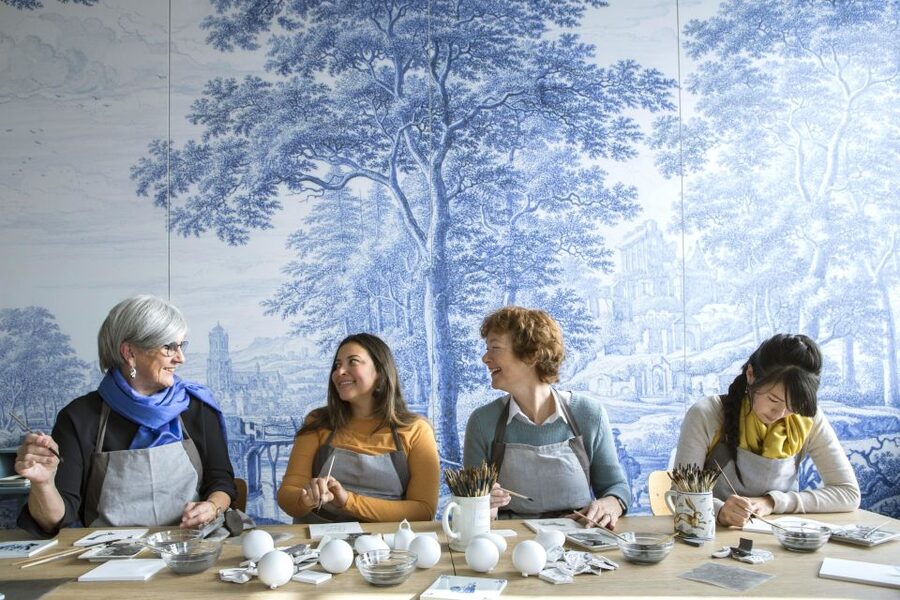
- Watch Delft Blue being made by hand in a factory that still follows old-school methods
- Follow an audio tour (8 languages) that paces the stories without needing a live guide
- See antique and modern Delftware in the museum and showroom areas
- Plan a courtyard coffee or high tea at Brasserie 1653 after the production rooms
- Expect craftsmanship details like the black-ink-to-blue kiln effect
Royal Delft Factory and Museum: what you’re really buying with your ticket
Royal Delft is famous because it’s one of the last original Delft Blue factories from the 17th century that’s still producing Delft Blue by hand. Founded in 1653, it’s not a themed version of “old Delft”—it’s the place where the traditional workflow still matters. And that matters to you, because the best souvenirs here aren’t the cheapest ones; they’re the ones you understand after seeing the labor behind them.
Your ticket includes entry plus a 1-hour audio tour in 8 languages, and that’s a big part of the value. You don’t need to coordinate with a group schedule. You can move at your pace: stand close when you want, step back when you want time to look, and replay sections if something catches your eye.
Also, there’s free Wi-Fi on site. That might sound minor, but it’s handy for checking train times back to Amsterdam or looking up the Dutch design details you want to remember.
Entering from Delft: how to time your visit from Amsterdam, The Hague, or Rotterdam
Royal Delft sits in Delft, and you can reach it quickly by train from major hubs. From Amsterdam, plan about 1.5 hours by train. From The Hague or Rotterdam, it’s about 30 minutes.
Once you arrive, the practical part is easy: Delft train station is about a 15-minute walk. If you want to turn your route into a pleasant stroll, Market Square is about 20 minutes on foot. For cars, there’s free parking around the building, and you’ve also got options like the canal boat or the Delft City Shuttle into town.
Timing-wise, the experience is set for about 1.5 hours. That’s long enough for the museum storytelling, the hands-on factory views, and a real pause in the garden—without turning into a half-day mission.
If you’re planning around holidays, note the closure pattern: on 24 and 31 December the site closes at 16:00, and it’s closed all day on 25–26 December and 1 January.
The audio tour route: how the museum part keeps you moving
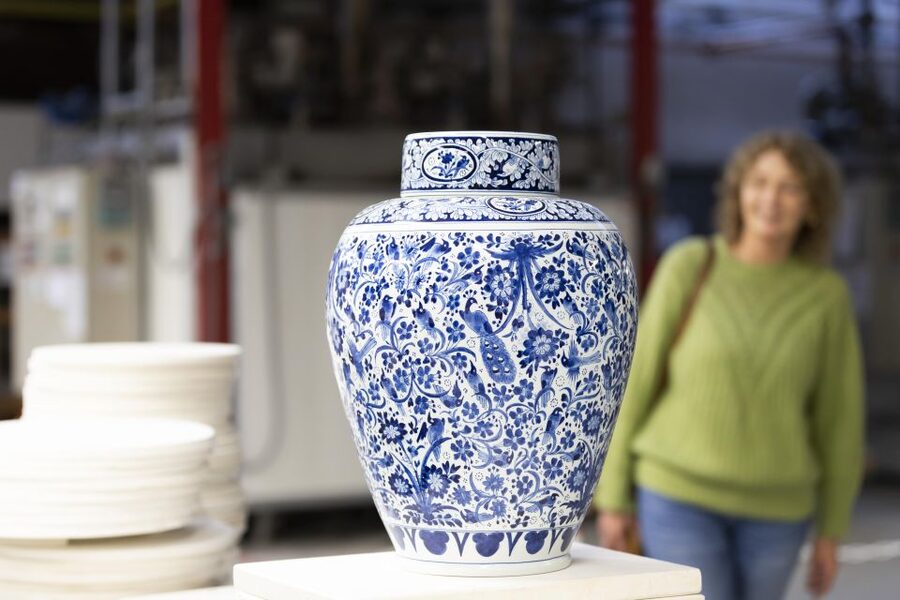
The Royal Delft Experience is built around an audio-led walk, plus guided-style orientation when you arrive. There’s a host or greeter on site (English and Dutch), but the core learning happens through your audio guide in Spanish, Chinese, Dutch, English, French, German, Italian, Japanese.
The audio format is part of why this works so well for different travel styles. If you love details, it gives you enough background to understand why the design language looks the way it does. If you prefer a quicker experience, it still keeps you moving so you don’t wander in the dark, guessing what matters.
One practical thing: the audio tour helps you connect what you’re seeing to the production process—like why certain steps happen before others. You’ll also get the sense that the museum isn’t there to replace the factory; it’s there to explain how the factory produces the final look.
Walking the factory: where Delft Blue becomes a process, not a product
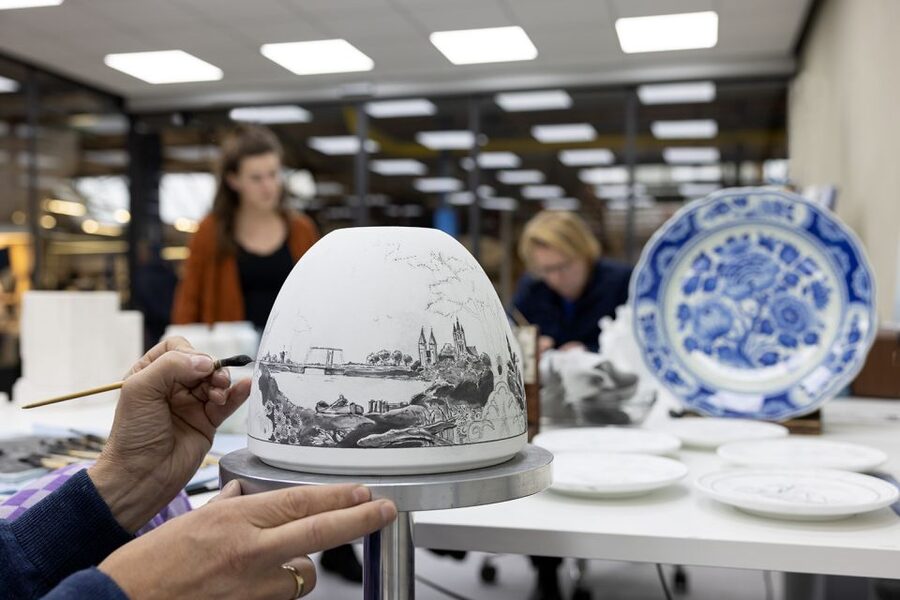
This is the section most people remember, because it’s the closest thing to seeing art made at real scale. Royal Delft keeps it old-school: paintbrushes touch white earthenware, and elsewhere clay gets worked into handmade moulds. Then the crafted pieces move forward through the production flow until they become the recognizable cobalt-blue designs.
Here’s the key detail that makes your visit feel “real”: you learn that the color behavior is part science. Delft Blue’s look comes from the way materials react in the kiln, including the effect where black ink turns blue in the kiln. That’s the kind of fact that changes how you view the designs—from a printed pattern into a physical transformation.
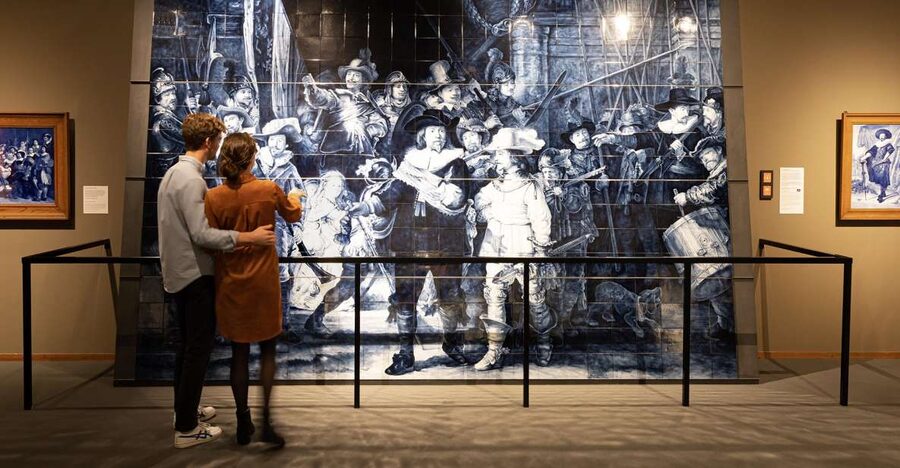
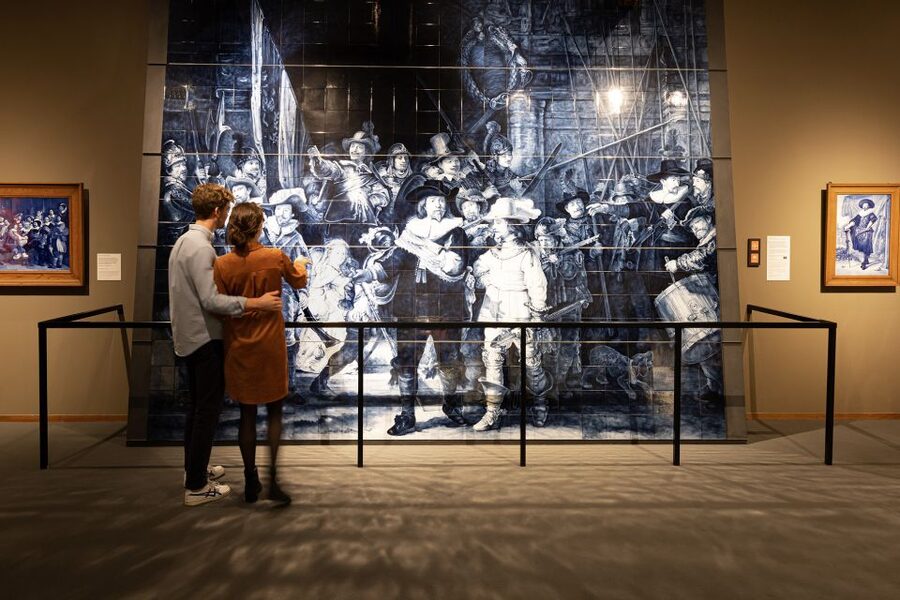
You’ll also see impressive examples in the display areas tied to this process. One standout example mentioned is a life-sized tiled version of The Night Watch. Even if you don’t know Dutch art history deeply, scale like that makes the craft feel tangible.
One timing consideration: some visits have more workers visibly at their stations than others. If you arrive later in the day, you might find fewer people actively working in view. That doesn’t mean the site is closed—just that the most “watchable” moments can vary with the day’s production rhythm.
Seeing workers at work: what to watch for in the painting rooms

The star show here is watching hands execute the small, exact work. The craftsmanship is visible in how painters handle delicate lines and curves. The designs aren’t random decoration; they follow a disciplined approach that’s been passed down for generations.
When you’re in the factory rooms, use a simple rule: don’t just look for the final blue. Look for the steps that create precision:
- the careful placement before paint touches the surface
- the repeated control of line thickness and spacing
- the attention to how pieces move from stage to stage
This is also where you’ll understand why Delft Blue isn’t fast. It’s slow work, and that’s exactly why the finished objects cost what they cost.
Museum pieces and showroom browsing: how to shop without losing your mind
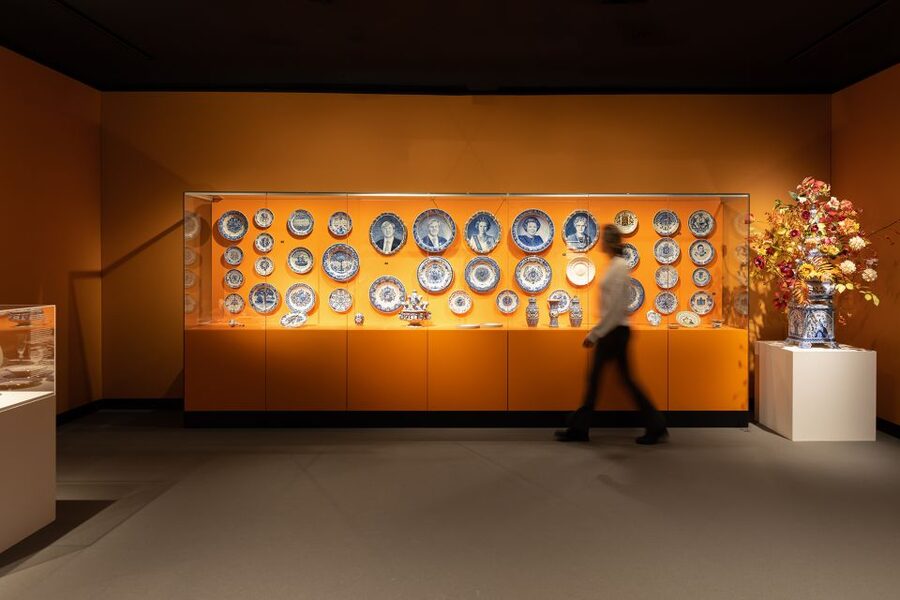
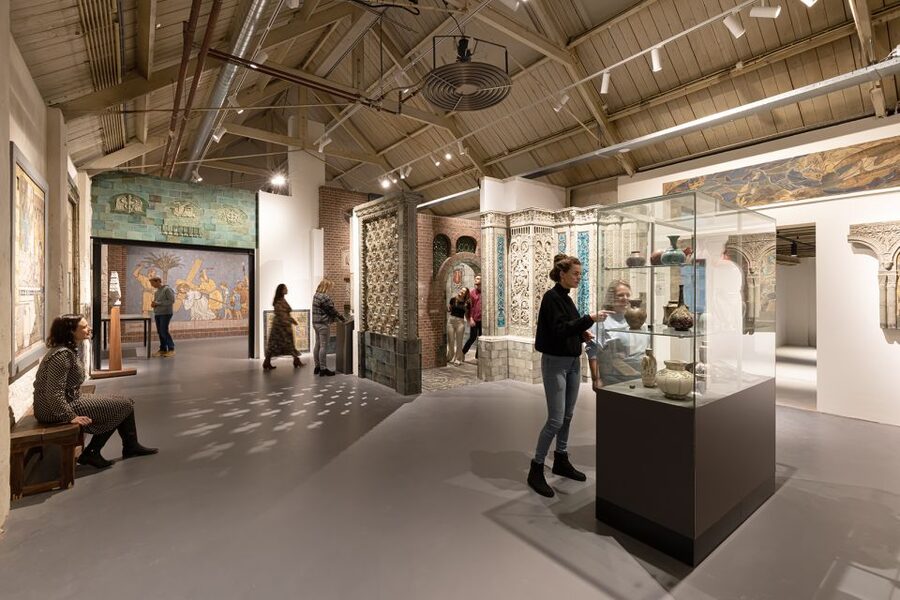
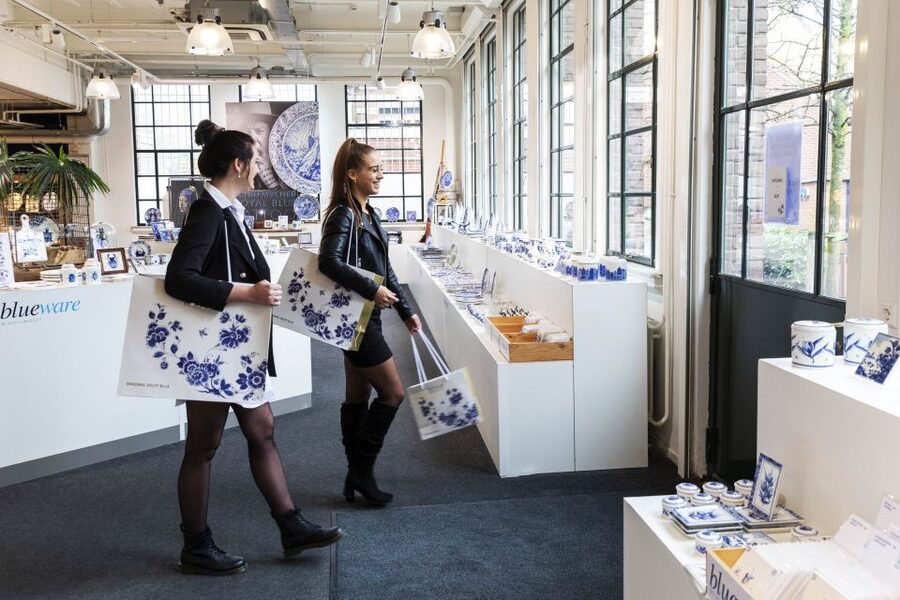
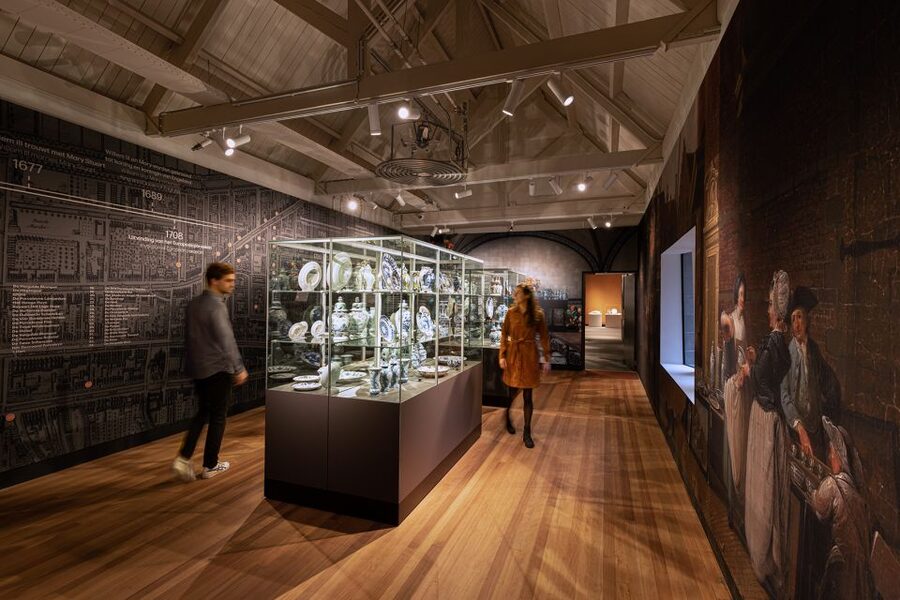
Royal Delft has a lot to see, from older pieces to more modern designs. The showroom area is where you’ll get the clearest sense of what’s possible today with a centuries-old method: hand-painted classic Delftware, plus newer takes and souvenirs.
This is also where you should set expectations before you walk in. Delftware can be expensive, and the pricing reflects labor and materials, not just branding. If you only came for a small keepsake, it’s still worth setting a budget in your head so the shop doesn’t steamroll your plans.
If you’re thinking ahead for gift shipping, know that the shop offers options to have items wrapped, packed, and shipped back home. That’s useful if you’re traveling light or you’re buying something breakable.
A little tip: if you want the “complete story,” browse in this order—museum/production first, showroom second. Once you’ve seen how pieces get made, you’ll spot the differences in quality and style more easily.
Brasserie 1653 in the courtyard garden: the smart way to end your visit
One of the best practical touches here is that the museum and factory don’t end in a hard stop. You can head to Brasserie 1653, which looks out over the courtyard garden. It’s a good payoff after walking through rooms of fine detail.
You can grab coffee, do high tea, or choose lunch. Even if you don’t plan a full meal, the garden setting helps you slow down and reset your attention. That matters because the factory work is visually precise—after a while, your brain starts to blur patterns together unless you take breaks.
This is also a nice place to pair your visit with a shopping moment. Buy earlier for gifts, then decide later in the shop when you’ve had time to reflect. The courtyard break makes that easier.
Price and value for Royal Delft Experience at about $21
At about $21 per person for a 1.5-hour visit, Royal Delft is priced like a premium cultural stop—not a bargain museum. The value comes from the mix: you’re paying for factory access plus interpretive audio plus the ability to shop directly at the production source.
Where this makes sense for you:
- You love craft and want to see the process, not just finished objects
- You’re comfortable reading or listening at your own pace
- You plan to spend time browsing pieces and learning what makes Delft Blue work
Where it might not:
- If you’re mainly chasing low-cost souvenirs
- If you hate audio tours and want a live guide full time (the guided tour itself is not included)
If you do come, treat the ticket as the price of understanding. That sounds philosophical, but it’s practical: once you know what goes into hand-painted Delft Blue, you’ll buy smarter—or you’ll at least appreciate what you’re looking at without frustration.
Who should book Royal Delft (and who might skip)
Book Royal Delft if you’re the type who enjoys watching skilled people at work. You’ll also like it if your travel style includes planned time to look closely—because this is the kind of place where standing still for a few minutes can be the best strategy.
It’s a strong fit for couples, families with older kids (who can handle audio-paced storytelling), and anyone doing a Delft day that also includes history and design.
You might skip or rethink if:
- you want a loud, interactive guided theater experience
- you’re coming only for quick sightseeing photos
- you know you’ll be put off by higher-end pricing once you enter the showroom
Should you book Royal Delft: my take
Yes, I think you should book it if you care about how things are made and you’re willing to spend your money on quality craft rather than cheapest souvenirs. The ticket gives you a well-paced visit length, factory viewing, and museum context, all without forcing a rigid group schedule.
If your top priority is the most active painting demonstrations, try to align your visit earlier in the day when more workers are likely visible at their stations. If you’re more focused on the history, the production details, and the final pieces, any time within opening hours should still feel worthwhile.
In short: this is one of Delft’s places where the learning and the watching go together.
FAQ
How long is the Royal Delft experience?
The Royal Delft Experience is listed at 1.5 hours.
How much does it cost?
The price is listed as $21 per person.
What’s included with the ticket?
Your ticket includes entry, a 1-hour audio tour in 8 languages, and free Wi-Fi.
Is a guided tour included?
No. A guided tour is not included. The experience includes an audio guide.
What languages are available for the audio guide?
The audio guide is available in Spanish, Chinese, Dutch, English, French, German, Italian, and Japanese.
Where do I meet for the visit?
The meeting point is Rotterdamseweg 196, 2628AR, Delft, the Netherlands.
Is Royal Delft wheelchair accessible?
Yes, it is listed as wheelchair accessible.
How do I get there by train from Amsterdam or Rotterdam?
From Amsterdam, it takes about 1.5 hours by train. From The Hague or Rotterdam, it takes about 30 minutes by train.
Are there days when Royal Delft closes early or shuts down?
Yes. On 24 and 31 December it closes at 16:00. It is closed all day on 25 and 26 December and on 1 January.
Is parking and public transport available near the site?
Yes. There is free parking around the building. You can also use the canal boat or the Delft City Shuttle, and the Delft train station is a 15-minute walk away. There are also public bus stops nearby.