REVIEW · OLYMPIA
Private local tour of the archaeological site and museum of Olympia
Book on Viator →Operated by Niki Olympic Tours · Bookable on Viator
Ancient Olympia makes more sense with a guide. This private tour pairs the Archaeological Site with the Olympia Museum so you’re not just looking at stones—you’re understanding what they were for and why they mattered. I like the way a licensed guide can explain the big picture while pointing out the exact finds and buildings you’re standing in front of. One thing to plan for: the €20 admission fee per person is not included, and you should expect some walking on uneven ground.
The payoff is that Olympia is easy to misunderstand on your own. You’ll see the gymnasium and palaestra, the round Philipeion, the workshop tied to Phidias and the gold-and-ivory Zeus, plus the temples of Zeus and Hera. Then, at the museum, you get the objects those places produced—armor, ceramics, bronze offerings, and famous sculptures like the Hermes and the Nike.
This is also a private group experience, so you can go at a pace that fits you. Do note: private transportation isn’t included, so you’ll want a plan for getting between the site and museum. If you’re hoping for a zero-effort day, check your logistics first.
In This Review
- Key highlights at a glance
- Olympia With a Guide: Where the Stories Actually Start
- Archaeological Site Stop: Gymnasium, Philippeion, Phidias, Zeus, Hera, and the Stadium
- The gymnasium and palaestra: training that shaped the day
- The round Philipeion: a special building with a distinct shape
- Phidias workshop: where the Zeus statue was made
- Temples of Zeus and Hera: the sacred backdrop
- The altar where the Olympic torch is lit today
- The ancient stadium: the stage for competition
- Olympia Museum: From Finds to Famous Names
- Bronze and clay offerings: tripods, figurines, and offerings culture
- Armor, vases, and everyday tools of a big world
- Phidias workshop finds: tools and the cup
- Famous sculptures: Hermes by Praxiteles and Nike by Paeonios
- Pediment statues from the temple of Zeus
- Time and Pace: What Fits Into 2 Hours 30 Minutes
- What You’re Really Paying For: Guide, Context, and Admission Reality
- Logistics That Matter: Meeting Point, Transport, and What to Bring
- Who Should Book This Private Olympia Guide
- Should You Book This Private Olympia Tour?
- FAQ
- What’s included in the private tour?
- How long does the Olympia private tour take?
- Is the entrance fee included in the tour price?
- What does the tour cover at the archaeological site?
- What do you see in the museum?
- Is private transportation included?
- Is the tour offered in English?
- Is it actually private, or is it mixed with other groups?
- Are there any physical requirements?
- How does cancellation work?
Key highlights at a glance
- Private, English-guided experience with a licensed guide for your group only
- Ancient site focus: gymnasium, palaestra, Philipeion, Phidias workshop, temples, and the stadium
- Olympic torch altar connection to the modern lighting ritual
- Museum standouts: Hermes by Praxiteles, Nike by Paeonios, and major pediment sculpture
- Tailored pace for the group, from curious learners to families with kids
- Admission not included: budget for the €20 per person ticket on top of the tour price
Olympia With a Guide: Where the Stories Actually Start
Olympia can feel like a collection of ruins until someone tells you how the pieces fit together. That’s where this tour earns its keep. A good guide helps you connect training spaces to ceremonies, sculptures to builders, and a temple setting to athletic life.
I like the structure here: you cover the archaeological site first, then shift to the museum. That order matters. When you see the gymnasium and workshops outdoors, later objects in the museum stop being random artifacts and start looking like evidence from a system.
The best part is the human element. In real groups, people come with different attention spans, different learning goals, and different physical comfort levels. This tour is set up for that kind of variation. You’ll typically find the guide adjusting pace and explanation, whether you’re a fast learner or you need time to slow down and ask questions.
Archaeological Site Stop: Gymnasium, Philippeion, Phidias, Zeus, Hera, and the Stadium
The archaeological site portion runs about 1 hour 30 minutes. It’s enough time to see the major zones without turning it into a marathon, and it’s paced for walking through open-air spaces where the setting does half the work.
Here are the highlights you’ll be looking at, in the order that makes the story coherent:
The gymnasium and palaestra: training that shaped the day
You’ll visit the remains of the gymnasium and palaestra. Even if you’ve heard the word gymnasium before, seeing the actual layout helps you understand what training meant here—this wasn’t an accessory to the Games, it was part of the whole identity of Olympia.
If you’re thinking like a visitor, it’s easy to miss how much social life and discipline lived in these areas. The guide’s job is to point out what the spaces were used for and how they relate to who trained and why.
The round Philipeion: a special building with a distinct shape
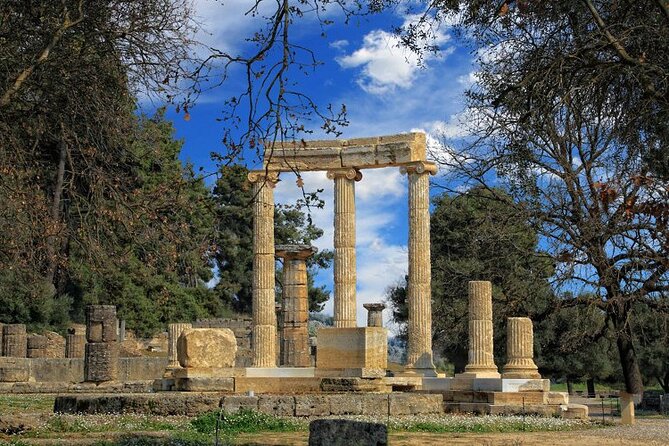
Next comes the round Philipeion. The shape alone makes it stand out, but the context is what matters: special buildings at Olympia often connect to patrons and political symbolism, not just athletic function.
This is one of those spots where a guide can make your photos better. You don’t just capture ruins—you understand what the building was trying to say.
Phidias workshop: where the Zeus statue was made
One of the most compelling segments is the workshop of Phidias, the place tied to the creation of the gold and ivory Zeus statue. Even if you can’t picture the finished masterpiece in your head, seeing the workshop remains gives you the sense of craft, tools, and scale behind it.
This is where you start to feel how Olympia wasn’t only about sports. It was also art, religion, and prestige—serious effort went into impressing people.
Temples of Zeus and Hera: the sacred backdrop
You’ll also see the temples of Zeus and Hera. These temples anchor the site. The guide helps you understand why worship and competition were tangled together, not separate events.
Look closely at how the temple placement sets the tone: these were visual and spiritual centerpieces. Even with weather and time worn into the stone, the site still communicates importance.
The altar where the Olympic torch is lit today
A neat modern-to-ancient connection is the altar where the Olympic torch is lit in modern days. It’s a reminder that the symbolism of Olympia keeps being reused, re-staged, and reinterpreted.
For me, this is the moment where the tour stops being purely academic. You can stand in the same broader place and realize the modern ritual borrows ideas from the ancient setting.
The ancient stadium: the stage for competition
Finally, you’ll see the ancient Olympic stadium. At the stadium, the experience clicks into a different gear. It’s one thing to read about sport; it’s another to see where the action would have been directed.
Even though the structure you see is the result of centuries of change, the scale and layout help you picture movement, pacing, and crowd energy.
Practical note: the site is outdoors and can be sun-heavy. Wear good shoes and plan for uneven ground. If you’re traveling with kids, the guide’s pacing can help keep attention from drifting.
Olympia Museum: From Finds to Famous Names
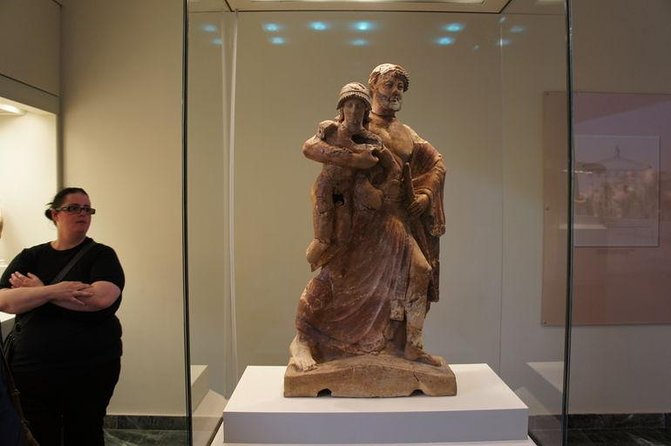
After the site, you’ll spend about 1 hour at the Archaeological Museum of Olympia. This is where the tour becomes easier to understand, because objects give you proof.
If the outdoor ruins are the stage, the museum is the cast and props.
Here’s what you can expect to see:
Bronze and clay offerings: tripods, figurines, and offerings culture
You’ll view bronze and clay offerings, including tripods and figurines. These items matter because they show how people participated. Olympia wasn’t only athletes and officials; visitors and worshippers left tangible pieces behind.
A guide can help you connect the offerings to the religious setting you just walked through outside.
Armor, vases, and everyday tools of a big world
The museum also holds armor, vases, and tools. These aren’t just decorative pieces. They show what the region valued and what kinds of objects circulated.
The value here is that you don’t get stuck in one narrow category. You’ll see a mix that makes Olympia feel like a real working place, not a postcard.
Phidias workshop finds: tools and the cup
One standout is the tools and cup from Phidias’s workshop. Seeing workshop tools in a museum is a special kind of clarity. You get the “how it was made” details without needing a master’s degree in sculpture.
This is also a great way to slow down if you like hands-on craftsmanship. The guide’s comments help you read these objects as part of a process, not just items in glass.
Famous sculptures: Hermes by Praxiteles and Nike by Paeonios
Two famous works you’ll likely recognize in the museum are Hermes by Praxiteles and Nike by Paeonios. Even if you’ve only heard their names, the presence of these masterpieces gives weight to what Olympia stood for artistically.
The guide’s role helps you notice what to look for—pose, style, and what the sculpture communicates. Without that, you might just walk past because you assume you already “know” classical art.
Pediment statues from the temple of Zeus
You’ll also see very impressive and well-preserved classical statues from the pediments of the temple of Zeus. Pediments can be visually overwhelming if you don’t know where to focus. A guide helps you orient yourself so you can actually follow the story the sculptures are telling.
This is one of those museum moments where you can spend five minutes and feel like you understood an entire theme—if someone points you toward the right details.
Time and Pace: What Fits Into 2 Hours 30 Minutes
The full tour runs about 2 hours 30 minutes. It’s split into roughly 1 hour 30 minutes at the site and 1 hour at the museum.
That timing is a big part of the value. You get enough time to see the big landmarks without getting exhausted in the heat or rushing through the museum with sore feet.
Because the tour is private, the pace can be adjusted. That matters if:
- you like to ask questions,
- you’re visiting with kids,
- or you need a steadier rhythm rather than a sprint.
Do keep in mind that the museum portion can be visually intense. Plan on taking breaks if you’re prone to museum fatigue. The guide’s pacing helps, but you’ll still be inside and standing for stretches of time.
What You’re Really Paying For: Guide, Context, and Admission Reality
The tour price is $216.02 per person, and the duration is about 2.5 hours. The licensed guide service is included. What’s not included is the entrance ticket for the archaeological site and museum (€20 per person).
So what’s the actual value here?
You’re not paying for access alone. The big cost is explanation. Olympia is full of structures that look similar at first glance, and it’s easy to walk past the most interesting parts if you don’t know what you’re seeing. Paying for a guide is often what turns an expensive ticket day into a meaningful day.
Also, the tour is private, so you’re not stuck with a large, slow-moving crowd. Private guiding is especially worth it at sites like Olympia because details matter and routes matter.
Two more value notes from how this tour plays out in real groups:
- Guides can tailor pacing quickly, so the tour doesn’t feel like a memorized script.
- Families can get more out of the visit because the guide works to keep kids engaged instead of waiting out the adults.
If you’re traveling solo or as a couple, private can still be worth it, but you’ll want to be honest about your travel style. If you love reading at your own pace, you might feel the cost more. If you want your time turned into understanding, the guide pays for itself.
Logistics That Matter: Meeting Point, Transport, and What to Bring
The meeting point is listed near Archaia Olympia (at an unnamed road by the area). The end point is at the Archaeological Museum of Olympia.
Private transportation is not included, so you’ll want to handle getting between the site and museum on your own. In practice, this usually means you either arrange local transport or rely on whatever is practical for your day. It’s not a deal-breaker, but it is a detail worth planning.
What to bring:
- comfortable walking shoes for uneven outdoor areas,
- sun protection (hat, sunscreen) if you’re visiting during peak daylight,
- water,
- and a question list. Seriously. Olympia rewards curiosity.
Also, you should have moderate physical fitness. That doesn’t mean it’s extreme, but the terrain and standing time are real.
Good to know: service animals are allowed, and the area is near public transportation. And since this is a private tour, it’s just your group.
Who Should Book This Private Olympia Guide
This tour is a strong match if you want:
- better context than a self-guided walk,
- a clear, efficient route across both the outdoor ruins and the museum,
- and a guide who can adjust to your group’s pace.
It’s especially appealing for:
- families with kids who need story and momentum,
- couples and friends who want a shared “aha” experience,
- and anyone who likes seeing named artists and objects rather than generic categories.
If you’re the type who enjoys reading quietly with an audio guide, you might not feel as much value in paying for a private guide. But if you want Olympia explained in plain language—so the statues, tools, and training areas connect—this setup is hard to beat.
Should You Book This Private Olympia Tour?
Yes, if you want your time to turn into understanding. For Olympia, the difference between wandering and knowing what you’re looking at is huge, and a licensed guide is the shortcut.
Book it especially if:
- you care about Zeus-era details and want the workshop and museum objects linked together,
- you’re visiting with kids or a small group and want a pace that works for everyone,
- or you don’t want to spend your day decoding ruins.
Skip it or reconsider only if:
- the €20 admission fee on top of the tour price will strain your budget,
- you prefer fully independent pacing with no guide guidance,
- or your group needs step-free routes and you want to plan around that carefully (the tour asks for moderate physical fitness).
FAQ
What’s included in the private tour?
The tour includes licensed tour guide services.
How long does the Olympia private tour take?
It runs about 2 hours 30 minutes (approx.).
Is the entrance fee included in the tour price?
No. You’ll need to pay the entrance ticket for the archaeological site and museum (€20 per person).
What does the tour cover at the archaeological site?
You’ll see the gymnasium and palaestra, the round Philipeion, the workshop of Phidias, the temples of Zeus and Hera, the altar where the Olympic torch is lit today, and the ancient Olympic stadium.
What do you see in the museum?
The museum houses finds from the site, including bronze and clay offerings (like tripods and figurines), armor, vases, tools and the cup from Phidias’s workshop, plus sculptures such as Hermes by Praxiteles and Nike by Paeonios, and well-preserved pediment statues from the temple of Zeus.
Is private transportation included?
No. Private transportation is not included.
Is the tour offered in English?
Yes, English is offered.
Is it actually private, or is it mixed with other groups?
It’s private. Only your group participates.
Are there any physical requirements?
You should have a moderate physical fitness level.
How does cancellation work?
Free cancellation is available. You can cancel up to 24 hours in advance for a full refund. If you cancel less than 24 hours before the start time, the amount paid is not refunded.