REVIEW · NEWPORT RHODE ISLAND
Newport: Colonial History Walking Tour
Book on GetYourGuide →Operated by Newport History Tours · Bookable on GetYourGuide
Colonial Newport reads like a living map. This 75-minute walk gives you an orderly route through the city’s colonial landmarks, starting inside the Old Colony House (1739). You get a sense of how the town grew, who lived here, and why these buildings still matter.
I love the way the story is built chronologically, starting from Newport’s early settlement era and then moving through time as you walk. I also like that the tour includes entry to the Colony House’s second floor for a self-guided look, so you can slow down for the parts that catch your interest.
One possible drawback: at this length, you won’t get every detail you might want. And like any walking tour, your experience depends on being able to hear the guide well from where you’re standing.
In This Review
- Key highlights at a glance
- Why This Newport Colonial Walk Fits Real Travel Days
- Old Colony House (1739): The Best First Stop for Context
- The Historical District Stops That Make the Story Feel Real
- Great Friends Meeting House: Newport’s Quaker presence
- Touro Synagogue: faith, identity, and continuity
- City Hall: civic power in colonial shadows
- Wanton-Lyman-Hazard House: architecture as a historical clue
- More stops in the same spirit
- How the Guide Turns Buildings Into a Timeline
- After the Walk: The Brick Market Museum and Shop Option
- Price and Value: Is $20 a Good Use of Time?
- Who This Tour Suits Best (And Who Might Want Something Else)
- Should You Book Newport: Colonial History Walking Tour?
- FAQ
- How long is the Newport Colonial History Walking Tour?
- Where do I meet for the tour?
- What is included with the tour?
- Do I need to pay extra for the museum at the end?
- Which landmarks will the tour include?
- Is gratuity included in the $20 price?
- What language is the guide?
- Is there free cancellation?
- Does the tour offer reserve now and pay later?
- Is there a self-guided part during the tour?
Key highlights at a glance
- Old Colony House (1739) start: tour begins inside a cornerstone of Newport’s colonial government life
- Walking route through the Historical District: you connect places by time, not just by location
- Religious and civic sites close together: Great Friends Meeting House, Touro Synagogue, City Hall, and more
- Guided + self-guided blend: guided talk plus optional time on the second floor
- Smart add-on after the walk: optional stop at the Brick Market museum and shop nearby
Why This Newport Colonial Walk Fits Real Travel Days
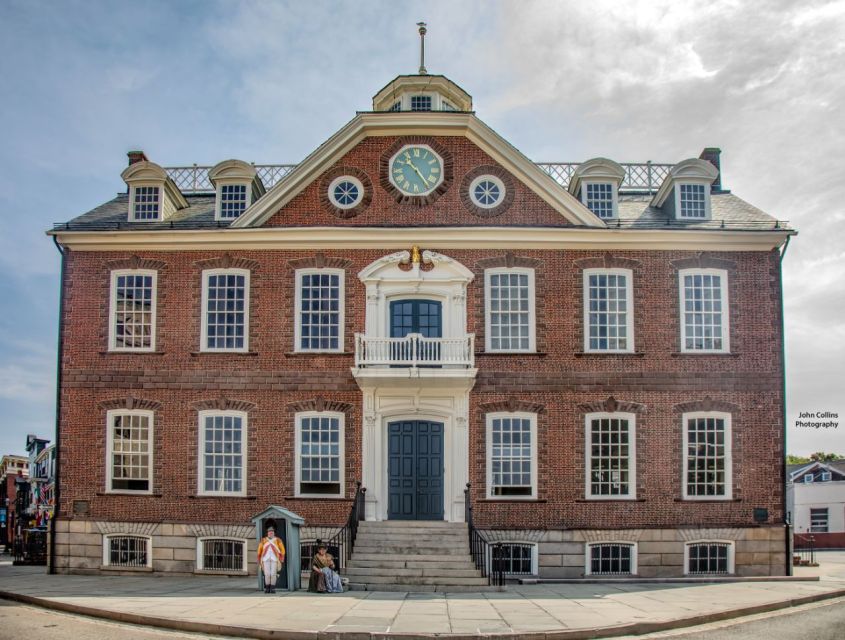
If you only have a short window in Newport, this kind of tour is a practical win. You get a guided overview that doesn’t require you to pre-study a bunch of names and dates just to understand what you’re seeing. The pacing is built around motion: you listen, you walk, you look at the next site, then the guide links it back to the larger story.
The value also comes from structure. Starting inside the Old Colony House sets expectations fast, because you immediately get a sense of how colonial Newport organized itself. Then the route through the Historical District keeps pulling you forward—so the architecture isn’t just scenery. It becomes evidence.
I’d treat it as a foundation tour. If your goal is to understand colonial Newport’s “who lived here and why it mattered” angle, you’ll leave better oriented. If your goal is a deep specialist lecture with hours of room-by-room detail, you might find 75 minutes on the short side.
Old Colony House (1739): The Best First Stop for Context
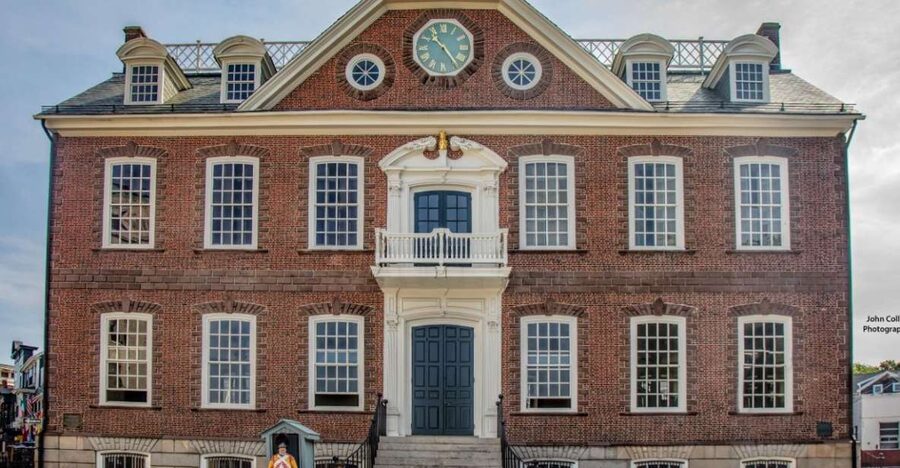
The tour begins inside the historic Old Colony House, built in 1739. Starting here is clever because it anchors the whole walk in Newport’s civic life. Even if you’re not a history superfan, you can feel the logic: this is where colonial authority met daily reality.
You also get included entry to the second floor for a self-guided visit. That matters more than it sounds. A guided walking tour can rush you through what you’re looking at. Self-guided time gives you control. If there’s a sign, exhibit area, or room that clicks for you, you can linger without worrying the group will be gone.
One thing to keep in mind: because the second-floor component is self-guided, it’s on you to slow down and actually use the space. When I’m picking between short tours, I value this combo—guided context up front, then optional time to shape your own focus.
Also, Old Colony House sets the tone for the rest of the walk. The guide’s job is to turn “cool old building” into “why this place shows up in America’s larger story.”
The Historical District Stops That Make the Story Feel Real
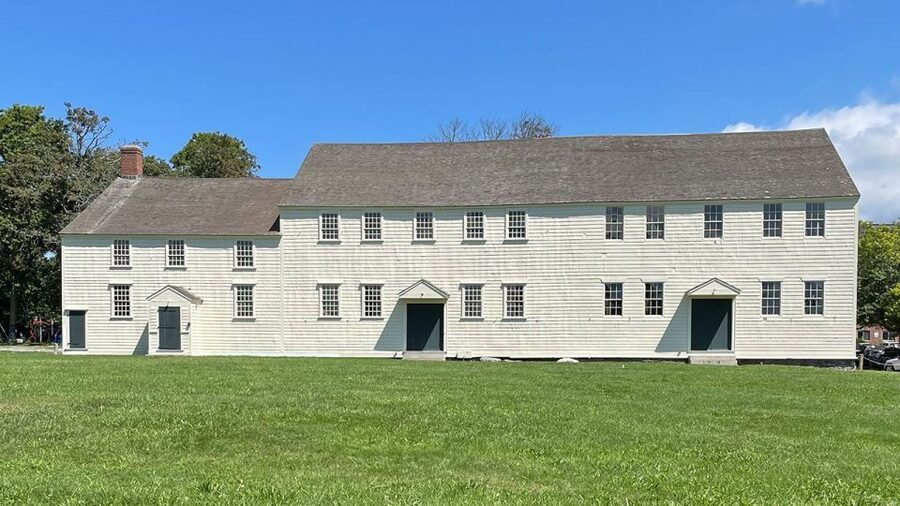
After the Old Colony House, the tour moves through Newport’s Historical District. This part is where the tour earns its keep: you’re not just collecting isolated landmarks. You’re watching a community reveal itself through different kinds of institutions—government, worship, and community memory—standing close enough that you can connect them in your mind.
Great Friends Meeting House: Newport’s Quaker presence
One of the named stops is the Great Friends Meeting House. This is where the story takes on a wider lens, because colonial Newport wasn’t only about one dominant group or one single civic style. Seeing a Meeting House in the same walk as government buildings helps you understand that religious communities weren’t side notes. They were a key part of how the town functioned and how people found belonging.
You’ll get the sense that faith and community life shaped daily choices—from local relationships to how Newport presented itself in the wider world. Even if you don’t know Quaker history going in, the tour frames it so you can follow.
Touro Synagogue: faith, identity, and continuity
Another key stop is the Touro Synagogue. This is an important contrast point. Newport’s colonial era included diverse religious communities, and the synagogue gives you a tangible way to grasp that diversity without turning it into trivia.
What I like here is how it broadens your idea of colonial “Newport culture.” The tour doesn’t just say people existed; it shows you where communities gathered and how places of worship stayed relevant enough to become enduring landmarks.
City Hall: civic power in colonial shadows
Then you’ll visit City Hall. This stop pulls you back to the civic side of the story. It’s easy to assume history is only about big speeches and faraway politics, but City Hall connects the dots to local governance—how a community organized itself, managed issues, and built institutions meant to last.
For many first-time Newport visitors, this kind of stop changes the trip from sightseeing into understanding. Buildings become readable. You start asking the right questions as you walk past other landmarks on your own.
Wanton-Lyman-Hazard House: architecture as a historical clue
The tour also includes the Wanton-Lyman-Hazard House. Houses like this help you see the colonial era through domestic architecture, not just public institutions. The guide can point out how style, scale, and historical ownership fit into the bigger timeline you just heard.
This stop is a useful reminder: history doesn’t only live in meeting halls and synagogues. It also lives in homes, in the way communities built status, and in how families left traces that later generations could still recognize.
More stops in the same spirit
The tour mentions additional important sites as you walk, beyond the named ones above. That’s part of the value: you get a curated route that’s compact enough to do in a single outing, but broad enough to avoid turning the experience into one-note architecture appreciation.
How the Guide Turns Buildings Into a Timeline
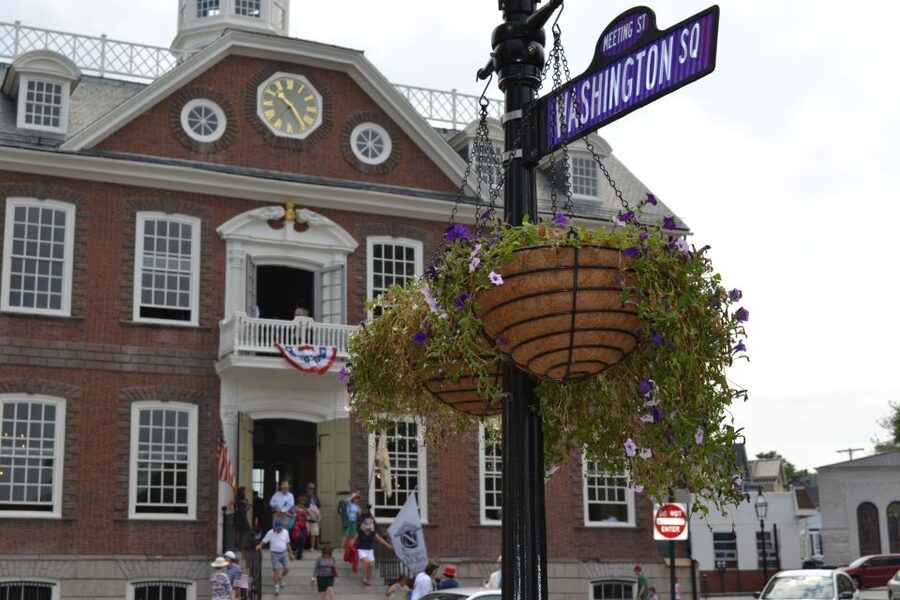
A walking tour like this lives or dies by how it connects the dots. And that’s exactly what the best moments aim to do: you’re moving through the city while the guide keeps time in your head.
I like the tour’s promise of a settlement story spanning about 400 years, starting from the pre-colonial era. That framing matters because it prevents the usual “colonial Newport = one narrow snapshot” problem. When you hear the sequence, it helps you understand why later colonial institutions grew where they did.
You’ll also notice a theme that comes through in strong versions of the experience: the guide ties major historical moments to specific places. That can be eye-opening if you only know national history in textbook terms. The tour’s sites are physical reminders that big events were experienced locally and acted out by real people.
Two practical notes, based on real-world experience with guide-led tours:
- If sound matters to you, pick a spot where you can hear clearly during narration. A guide who’s hard to hear turns the whole value down fast.
- If you love learning, pay attention right when the tour begins at Old Colony House. The first stretch sets the vocabulary for the rest of the walk.
After the Walk: The Brick Market Museum and Shop Option
At the end of the tour, you’ll have the chance to visit the Newport Historical Society’s Museum and Shop at the Brick Market. This is a smart add-on if you want to keep momentum going after your walking loop.
Here’s the practical part: visiting the museum involves a suggested donation of $4 US per adult and $2 US per child above the age of five. That’s not the same as a required ticket price, but it’s still good to budget a little if you plan to go in.
I like that this option exists because it lets you choose your depth. The walking tour gives you orientation. Then, if you want more, you can expand into exhibits and retail related to Newport history. If you don’t, you can head back out without feeling like you missed something you “had” to do.
Price and Value: Is $20 a Good Use of Time?
At $20 per person for about 75 minutes, this is priced like a solid introduction to Newport’s colonial story. The best part isn’t only the number. It’s what’s included: a live guide and entry to the second floor of the Colony House for a self-guided component.
So you’re paying for three things:
- Guided interpretation (the part that turns buildings into meaning)
- A structured walking route through major sites
- A chance to slow down inside Old Colony House’s second-floor area
What’s not included is gratuity, so plan on that if you feel the guide earns it. (And based on reviews, guide quality varies. In the best sessions, the energy and pacing can be excellent.)
If you’re doing Newport with a tight schedule, $20 for 75 minutes is a reasonable spend. If you’re planning to read signs and do your own route anyway, you might feel the cost depends heavily on the guide’s delivery and the time you want to invest. This tour is at its best when you’re ready to let a guide connect the architecture to the story.
Who This Tour Suits Best (And Who Might Want Something Else)
This walking tour fits best if you’re the type of person who likes structure. You want a plan, you want key stops, and you want the guide to connect the dots as you go. It’s also a good pick if you enjoy the mix of civic and religious sites, because Newport’s colonial story isn’t one-dimensional.
You’ll likely be happy with this tour if:
- You’re short on time and want a strong orientation to Newport
- You like seeing multiple landmark types in one loop (government, faith, and historic homes)
- You enjoy walking and learning in a steady rhythm
You might think twice if:
- You’re hard of hearing or sensitive to group-audio situations, because the tour is narration-based and moving
- You want very long, detailed time at each building
- You prefer total self-guided pacing from start to finish
Should You Book Newport: Colonial History Walking Tour?
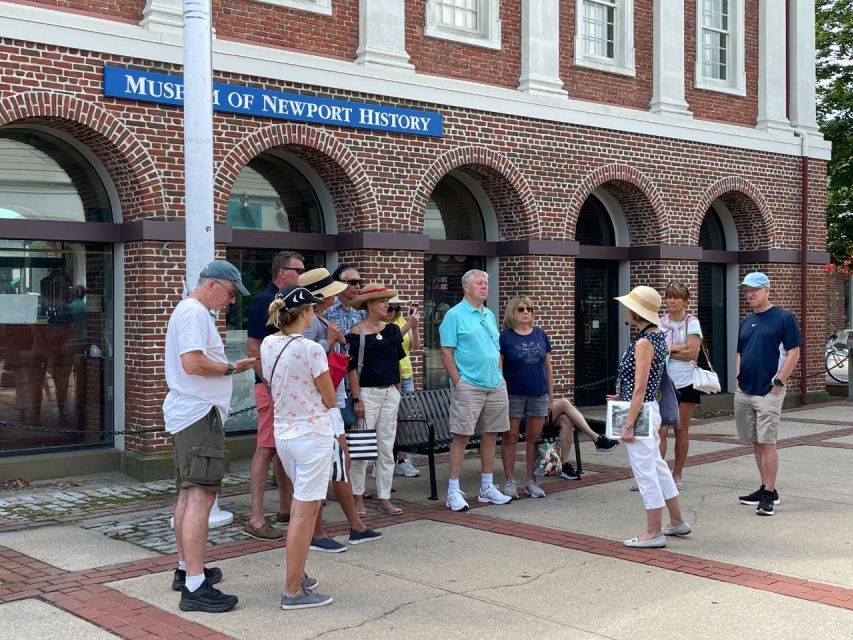
I’d book it if you want a compact, well-paced way to understand colonial Newport without spending hours piecing together the story yourself. The Old Colony House start is a smart foundation, and the named stops you’ll see help you grasp how different communities and institutions shaped the town.
If your priority is deep, slow history at one site, you may feel that 75 minutes is tight. But for a value-focused introduction with guided interpretation plus second-floor time, this is a strong choice—especially if you care about how architecture and institutions reflect real people over hundreds of years.
FAQ
How long is the Newport Colonial History Walking Tour?
It lasts 75 minutes.
Where do I meet for the tour?
Please meet inside the Museum of Newport History & Shop.
What is included with the tour?
You get a guided tour, plus entrance to the second floor of the Old Colony House for a self-guided visit.
Do I need to pay extra for the museum at the end?
Visiting the Newport Historical Society Museum and Shop at the Brick Market is optional, and it includes a suggested donation of $4 per adult and $2 per child above age five.
Which landmarks will the tour include?
The tour includes stops such as the Great Friends Meeting House, the Touro Synagogue, City Hall, and the Wanton-Lyman-Hazard House, among others.
Is gratuity included in the $20 price?
No. Gratuity is not included.
What language is the guide?
The live tour guide speaks English.
Is there free cancellation?
Yes. You can cancel up to 24 hours in advance for a full refund.
Does the tour offer reserve now and pay later?
Yes. You can reserve and pay later, keeping travel plans flexible.
Is there a self-guided part during the tour?
Yes. The second-floor access at the Colony House is self-guided.