REVIEW · MYSTIC
Mystic Seaport Museum Adventure
Book on Viator →Operated by Mystic Seaport · Bookable on Viator
Whaleships and working trades in one day. Mystic Seaport is a walkable 19-acre slice of 19th-century coastal life, and the prebooked entry helps you get moving fast instead of waiting at the ticket window. I especially like the chance to see and understand the Charles W. Morgan whaling ship up close, plus the way the museum spreads its stories across people, tools, and buildings—not just ship models.
One thing to think about: you’ll do a lot of walking on gravel and you’ll hit stairs and steps, with limited handicap access in some older exhibit buildings and on ships.
In This Review
- Key highlights worth planning around
- Entering Mystic Seaport’s 19-acre seafaring village
- Charles W. Morgan and the working shipyard perspective
- Trade workshops: coopers, ship smiths, riggers, print shop, and carving
- Galleries, figureheads, carvings, and the museum’s “art + sea” angle
- How long to plan: 2 hours might work, but a full day is the real move
- Tickets, parking, and what your admission actually covers
- Who should book Mystic Seaport admission (and who might feel underwhelmed)
- Should you book this Mystic Seaport prebooked admission?
- FAQ
- What’s included with admission?
- How long should I plan to spend at Mystic Seaport?
- What are the opening hours?
- Where do I redeem my voucher when I arrive?
- Is the tour offered in English?
- Can I bring a service animal or a dog?
- Is the site wheelchair friendly?
- What’s the maximum group size?
- What is the cancellation policy?
Key highlights worth planning around
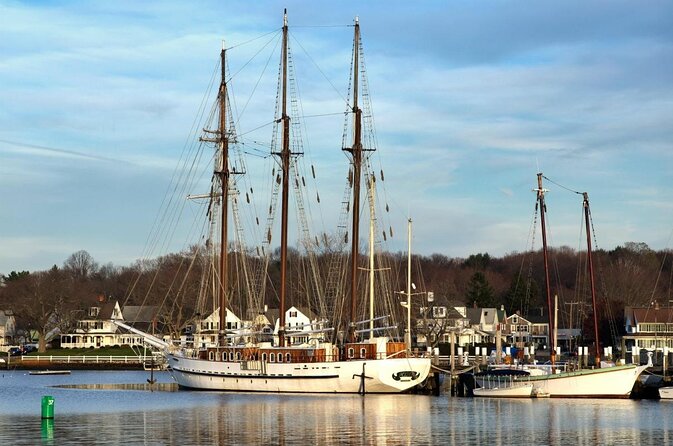
- Charles W. Morgan, oldest American commercial ship still afloat (and it’s part of an actively working preservation shipyard)
- Prebooked entry to skip the ticket line, so you start exploring sooner
- Hands-on trade workshops focused on ship smiths, coopers, and riggers, plus a print shop and ship carver’s workshop
- Full-day museum access across seafaring village, galleries, gardens, and multiple tall ships
- Built-in talks and historians nearby, so you can ask real questions as you wander
- A small group experience (up to 14 travelers) that feels easy to manage
Entering Mystic Seaport’s 19-acre seafaring village
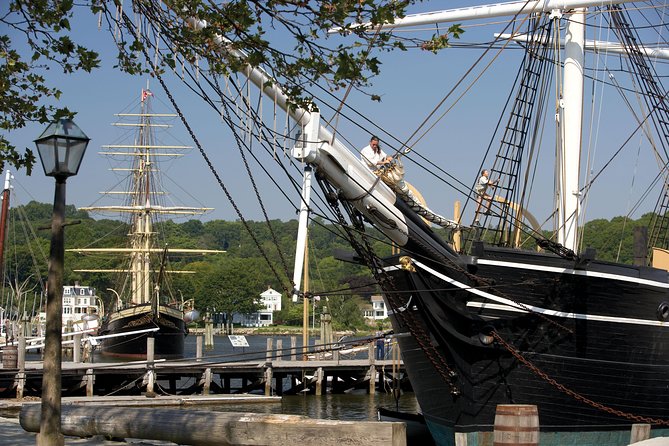
Mystic Seaport isn’t a single building where you hurry from room to room. It’s laid out like a working coastal community—preservation shipyard, a 19th-century seafaring village, and formal galleries all spread across grounds you can roam at your own pace. That matters because the best part of this kind of place is slowing down: reading a placard, looking at how a tool works, then turning the corner and realizing you’re seeing the same story from another angle.
You get the admission ticket for the Museum of America and of the Sea, with access to the indoor/outdoor sites. Translation: plan for both sheltered exhibits and open-air areas. On a good weather day, the outdoor strolling adds to the “you’re there” feeling; on a less cooperative day, you still have plenty to do inside.
The seafaring village side is especially good for people who like texture—old buildings, hands-on demonstrations, and the sense that everyday work had names and steps. It’s also family-friendly in the practical sense. One reason people keep recommending it is that kids aren’t left with only glass cases; there are interactive areas and small “breaks” built into the day.
Charles W. Morgan and the working shipyard perspective
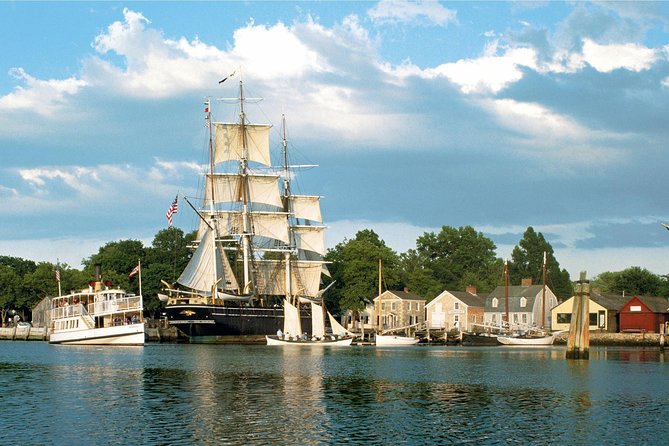
If you’re only going for one thing, make it Charles W. Morgan. This square-rigged whaling vessel is considered the crown jewel of Mystic Seaport’s collection and is the last wooden whaleship still afloat. The museum frames it in a simple, powerful way: you’re not just looking at a restored object—you’re visiting a ship that has outlasted all others of its kind.
What’s included is time to explore the ship during a stop built around about 30 minutes. You can climb aboard and go below decks, and that’s where the ship turns from “cool” into “wow.” Seeing the layout firsthand helps you understand how the ship functioned as a home and a workplace, not just a floating piece of history.
The ship is also tied to an actively working preservation shipyard. That’s a big deal because it shows you restoration and maintenance as ongoing work, not a one-time makeover. You’ll get a better grasp of how difficult it is to keep wood, rigging, and large structures intact over time.
Trade workshops: coopers, ship smiths, riggers, print shop, and carving
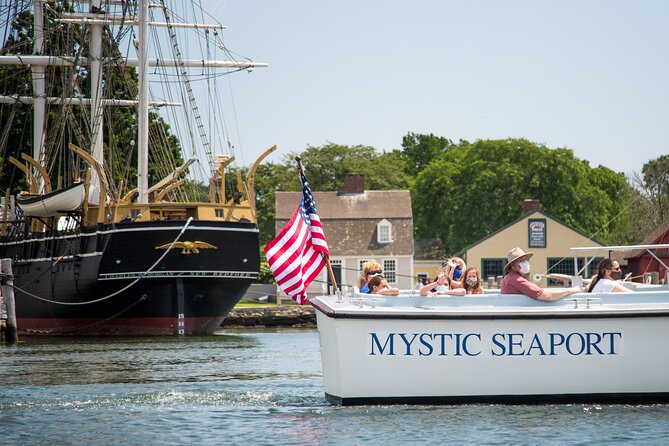
The museum’s greatest trick is making maritime history feel personal. You learn about the lives and skills of trades that supported shipbuilding and life at sea—especially ship smiths, coopers, and riggers. Instead of treating these as background facts, Mystic Seaport connects them to daily work in a 19th-century coastal town.
Cooperage is a standout if you like practical craft. Barrels sound simple until you see the process and scale of the work. One cooperage staff member named Linda is specifically called out for making the details click, and that’s a pattern you’ll notice across many of the trade areas: people want to explain what they’re doing and why it matters.
You’ll also have the chance to visit a ship-smith area, a print shop, and a ship carver’s workshop. These complement each other. Shipbuilding wasn’t only about big timbers and tall masts; it also relied on specialized labor, finishing work, printed materials, and carved details that gave ships their character.
If your group has mixed interests—some people love ships, some people love art, some people love tools—these trade stops help bridge the gap. Even if boats aren’t your main passion, you’ll still walk away with a clearer picture of how coastal communities ran.
Galleries, figureheads, carvings, and the museum’s “art + sea” angle
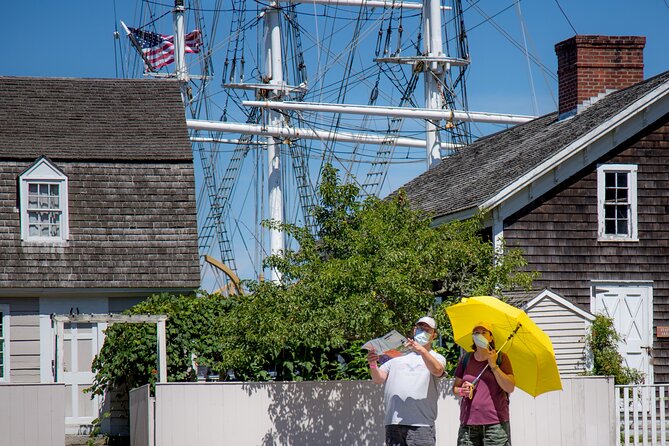
After the village and tall ships, the galleries broaden the story into maritime history, art, and culture. This is where you start noticing the visual language of the sea: figureheads, vintage photography, restored vessels, and carvings. It’s the kind of exhibit mix that rewards curiosity. You can read slowly, compare objects, and build a stronger sense of how seafaring influenced everything from design to storytelling.
Don’t miss the gardens either. Mystic Seaport includes reproduction historic gardens tied to 19th-century America, with a nod to the Industrial Age. Gardens at a maritime museum might sound like filler, but they’re a reminder that “sea history” lived on land too—through industry, living spaces, and the people who built and maintained everything around the docks.
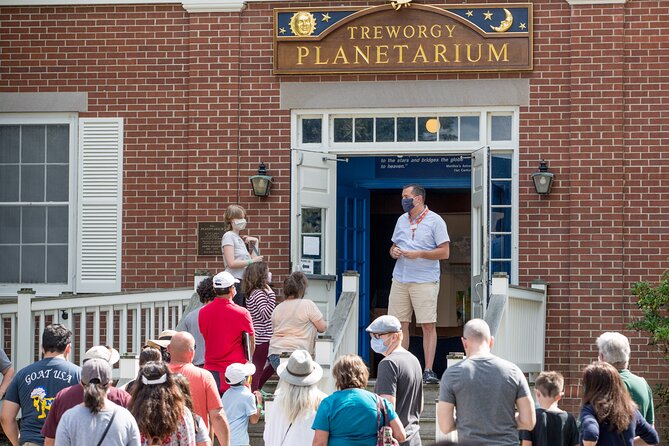
There are also occasional add-ons you may run into during a visit. For example, the planetarium is mentioned by visitors as something that can cost extra. So if you’re the kind of person who wants every possible extra show, keep a little flexibility in your day—and a little budget—for those optional experiences.
How long to plan: 2 hours might work, but a full day is the real move

The experience window is listed as 2 to 6 hours, but the museum is designed for longer. In practice, the place rewards you most if you give it the time to breathe. You’ll likely want more than a quick loop because there’s a village to wander, three tall ships to explore, and exhibition halls to slow down in.
Most people do best by treating this as a full-day plan. Get there when the doors open, and you’ll feel less rushed between ship decks and indoor galleries. A full day also helps you handle the reality of the grounds: gravel paths, stairs, and lots of small buildings that take time to notice.
For rest breaks, you’ll find spots to pause—visitors note there are places to settle in during a long day. This matters if you’re traveling with kids or anyone who doesn’t love climbing stairs back and forth. If you’re sensitive to uneven walking surfaces, build in breaks early rather than waiting until you’re already tired.
Also, if you visit during quieter times of year, some buildings may be closed. You don’t need to panic about this—just keep your expectations flexible and treat the open areas as the main event.
Tickets, parking, and what your admission actually covers

This is a prebooked admission approach, meant to help you skip the line at the Seaport Museum ticketing area. When you arrive, you redeem your ticket at the front entrance. That simple step can save a surprising amount of time, especially in busier months.
Your included value is straightforward:
- Parking fees
- Access to the museum experience across the 19-acre site (indoor/outdoor)
- Entry for three tall ships
Food and drinks aren’t included, so plan to eat off site or budget for on-site options if you’re hungry. One practical note from the experience vibe: people who care about lunch quality tend to recommend going elsewhere rather than relying on a meal inside the grounds.
If you’re thinking about extra experiences, it’s smart to expect some items may have separate charges. Visitors mention that some add-ons—like the planetarium and certain boat-related activities—can cost extra even when admission is included. I’d still call the core admission good value because you’re paying for a full museum day plus multiple ships, not just a “walk past a few exhibits” ticket.
Group size is capped at 14 travelers, which makes the day feel calm. You’re not herded into one long line of the same route. You can actually follow what grabs your attention.
Who should book Mystic Seaport admission (and who might feel underwhelmed)
This visit is ideal if you like:
- Maritime history that’s hands-on and human-scale
- Tall ships and the chance to go below decks
- Trades and craftsmanship (cooperage, ship-smith work, carving, and printing)
- A museum day that feels like walking through a lived-in seafaring community
It’s also a strong family choice. Kids can get something out of the experience without needing to “like boats.” Visits often work well for teens too, especially if they enjoy learning through demonstrations and seeing tools and processes up close.
The main caveat is physical. There’s a lot of walking, plus stairs and steps, and some ships and exhibit buildings have limited handicap accessibility. If your group needs a low-walking plan, you might want to map out which areas matter most to you before you arrive, then focus on those.
Also consider interest level. If your group isn’t into ships at all, the museum’s strengths may feel slower. But if even one person wants to climb aboard and see how whaling ships and ship restoration worked, the day usually clicks quickly.
Should you book this Mystic Seaport prebooked admission?

Yes—if you want an authentic 19th-century maritime experience that goes beyond tall-ship photos. Prebooking is the right move because it helps you start exploring sooner, and the ticket gives you a full day across a large site plus three tall ships.
I’d think twice only if your group hates stairs or can’t handle uneven gravel, or if nobody in your party cares about boats, shipbuilding, and maritime trades. Otherwise, this is a high-return day in Mystic: part museum, part working shipyard story, part village walk, with the Charles W. Morgan experience as the anchor.
FAQ
What’s included with admission?
Admission includes parking fees, the entire 19-acre indoor/outdoor museum experience, and access to three tall ships. Charles W. Morgan is included as part of the ship visit.
How long should I plan to spend at Mystic Seaport?
The experience runs about 2 to 6 hours, and you can also take as much time as you like with full-day access. Most people get the most out of it with a full day.
What are the opening hours?
From 04/01/2026 to 05/31/2026, and from 06/01/2026 to 10/31/2026, hours are 10:00 AM to 5:00 PM daily. From 11/01/2026 to 12/31/2026, hours are Thursday to Sunday, 10:00 AM to 4:00 PM.
Where do I redeem my voucher when I arrive?
Redeem your tickets at the front entrance to the Seaport Museum.
Is the tour offered in English?
Yes, the experience is offered in English.
Can I bring a service animal or a dog?
Service animals are allowed. Dogs on leash are permitted on the grounds, but dogs are not permitted on ships or in exhibits.
Is the site wheelchair friendly?
Some ships and exhibit buildings have limited handicap accessibility, and the grounds include gravel and stairs.
What’s the maximum group size?
The maximum is 14 travelers.
What is the cancellation policy?
You can cancel for a full refund if you do so up to 24 hours in advance of the experience start time. If you cancel less than 24 hours before, the amount paid isn’t refunded.