REVIEW · PHILADELPHIA
Museum of the American Revolution Admission Ticket with Audio Guided Option
Book on Viator →Operated by Museum of the American Revolution · Bookable on Viator
This museum makes the Revolution feel personal. I like how it strings together key moments of the war with hands-on exhibits, strong storytelling, and audio guide help so you can follow the drama without getting lost. It’s set in Philadelphia’s Historic District, so you can connect the museum story to the city blocks you’ll be walking anyway.
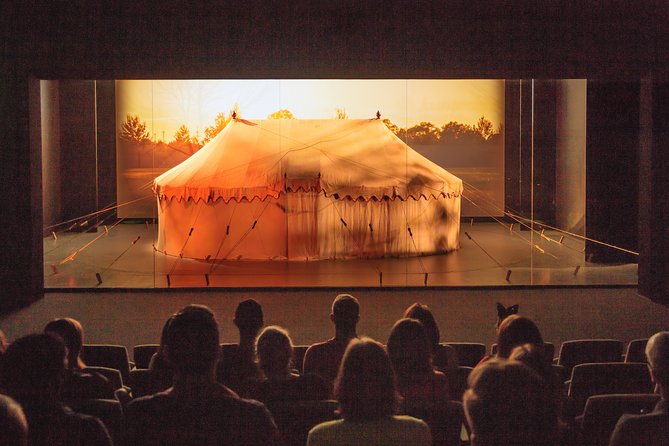
I especially loved George Washington’s headquarters tent, because standing there puts scale and emotion on the conflict. I also liked the audio-guided wand option, which helps you pace yourself and link what you’re seeing to the bigger story behind it.
One heads-up: the museum can feel busy at times, especially with larger groups or school-age visitors. If crowds make you cranky, plan your day smart—go earlier, and use that second day on your ticket if you need a slower pass.
In This Review
- Key highlights to plan around
- Price and ticket value: why two days for $25 matters
- Skip-the-line entry and the intro film: get your bearings fast
- Washington’s tent: the emotional centerpiece you’ll remember
- Grievances, the Declaration, and the Boston Liberty Tree
- Oneida allies and the debate that reshaped alliances
- Brandywine and the privateer ship: battles and the war at sea
- Audio tour wand strategy for a slower, smarter two-day visit
- Pair it with Liberty Bell and Independence Hall on foot
- Should you book this Museum of the American Revolution ticket with audio?
- FAQ
- How long does the museum visit take?
- Is entry skip-the-line included?
- Do I get an audio guide?
- What languages are audio guides available in?
- Is the ticket valid for two days?
- Is food included?
- Can I cancel for a full refund?
- Is service provided for kids and animals?
Key highlights to plan around
- Two consecutive days means you’re not forced to rush through
- Skip-the-line entry saves time when you’re also trying to hit nearby landmarks
- Introductory film gives you context so the galleries click faster
- Audio in English, Spanish, or French helps you move at your own speed
- Life-size scenes and interactive elements keep the Revolutionary War from feeling like a textbook
Price and ticket value: why two days for $25 matters
At $25 per person, this ticket can be a smart buy because it’s valid for two consecutive days. That turns a single-museum outing into a mini plan you can spread out—ideal if you like reading labels, watching short films, and lingering in the spots that grab you. For some people, 3 to 4 hours is enough. For others (like history fans), the museum can take longer, and having a second day keeps you from feeling time-pressed.
Also, you’re not just paying for “entry.” You get an intro film and access to the museum’s guided-feeling experience through the audio option at checkout. The mobile ticket is handy too, especially if you’re bouncing between sites around Independence Hall and the Liberty Bell area.
This museum is not about quick stops. It’s about setting a clear timeline—then letting you revisit it.
A few more Philadelphia tours and experiences worth a look

Skip-the-line entry and the intro film: get your bearings fast
You’ll start with skip-the-line entry, which is worth it in a city where major historic sites already attract day-long crowds. Once inside, the museum’s introductory film is designed to give you the framework first—what’s happening, why it matters, and how the conflict evolves. I’d treat this as your “base map.” If you watch it early, a lot of the artifacts and scenes make more sense later.
This is also one of those museums where your attention will drift unless you steer it. The film helps you steer. Then your path through the galleries becomes less like random rooms and more like a guided walk through turning points.
One practical tip: if you’re returning for a second day, use the intro film to refresh your timeline. It’s easier than trying to remember everything from the day before.
Washington’s tent: the emotional centerpiece you’ll remember
The museum gives you a striking early anchor: George Washington’s headquarters tent, presented as something you can truly stand in the presence of. That’s the moment I think many people will carry home, because it’s not just a display behind glass. It’s a space you can feel—scaled to help you visualize how leadership and strategy looked on the ground.
Around that tent, the story expands in a way that stays grounded. You see the war through geography, decision-making, and daily reality, not just quotes and portraits. The tent works as your launch point, so even if you’re not a military-history superfan, you can connect to what the Revolution demanded from real people.
If you want to make it even more meaningful, slow down for a minute or two before you move on. Look around, read what’s near you, and let the setting sink in before you head to the next scene.
Grievances, the Declaration, and the Boston Liberty Tree
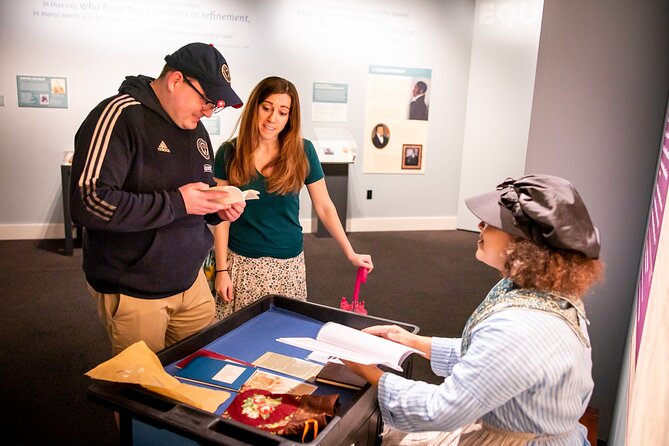
After Washington’s story-setting tent, you move into the Revolution’s “why now” energy. The museum includes a way to understand colonial anger through authentic printings connected to grievances, including material tied to the Declaration of Independence.
There’s also a life-size reproduction called the Boston Liberty Tree. Standing beneath it helps explain how symbolism fed politics in the 1770s—how public spaces, messages, and gathering places shaped momentum. It’s not just the event you’re seeing; it’s the culture behind the event.
What I like about this section is that it doesn’t treat the Revolution as one single decision. It shows a chain: complaints build pressure, pressure shapes debate, and debate turns into action.
If you tend to skim, resist that urge here. This is where the museum gives you the reasoning that makes the battles make more sense.
Oneida allies and the debate that reshaped alliances

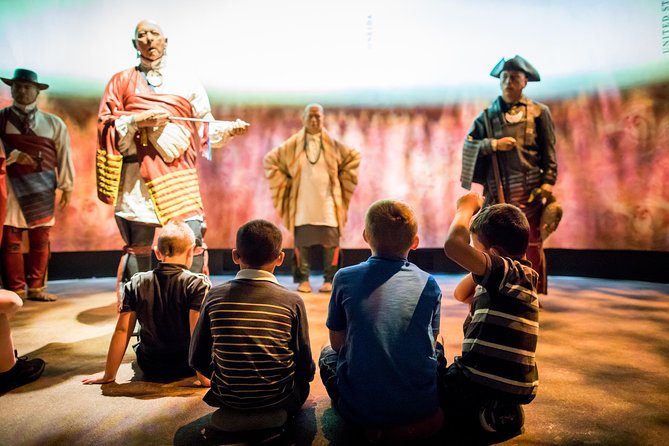
One of the most compelling parts of the museum is the attention to Native alliances, especially the life-size replicas connected to the Oneida Indian Nation. The museum doesn’t present their involvement as a simple yes/no. Instead, you’re faced with the intense debate that led to their decision to break with the Iroquois Confederacy and align with the American cause.
That matters because it challenges a common shortcut in American history: the idea that it was only colonists vs. Britain with everyone else watching. Here, alliances shift due to pressure, strategy, and community needs—and that’s a more accurate way to understand the era.
I recommend giving yourself time in this section. If you bounce through it, you’ll miss the main point: the Revolution was a complicated political moment with consequences beyond the main European powers.

Brandywine and the privateer ship: battles and the war at sea
When the galleries move into the conflict phase, the museum leans hard on life-size scenes. You’ll see the British infantry charge at the Battle of Brandywine—a front-line moment that feels urgent rather than distant. It’s the kind of display that helps you picture chaos without needing to know every unit name.
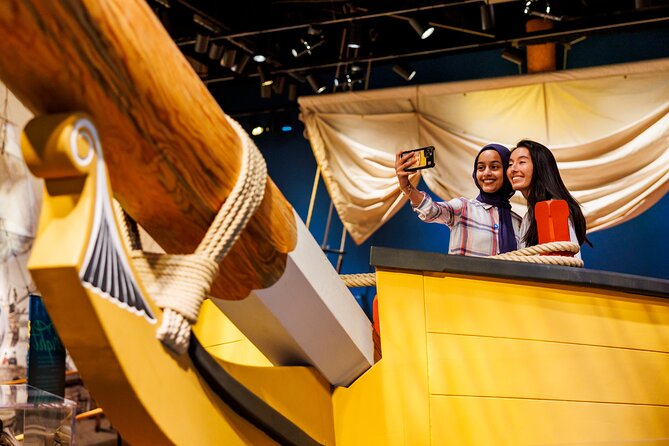
Then the story expands outward to the sea. You can climb aboard a replica privateer ship, which shifts your focus from land battles to maritime warfare. That transition is important. The Revolution wasn’t only fought with armies marching across maps. It was also fought through ships, shipping lanes, and who could sustain the fight.
If you’re a “show me the action” person, this is where you’ll get it. If you prefer analysis, read the nearby context and audio cues, because the museum tries to connect these scenes to strategy and cause-and-effect.
Audio tour wand strategy for a slower, smarter two-day visit
The audio experience is the option you’ll want to think about at checkout. Audio is available in English, Spanish, or French, and the museum provides audio-guided programming through a wand-style guide. If you’re buying at the last minute, it’s easy to forget that language selection matters—so choose it when you book.
Here’s how I’d use it without burning through the batteries (or your patience). First day: use the audio to follow the main storyline, especially for the tent area, key debates, and the big battle and sea scenes. Second day: switch to the parts you were most curious about—or the sections you didn’t fully digest the first time.
This museum also uses interactive elements and strong visuals (including 3-D models), so you’ll get value even if you only listen to portions of the audio. The wand helps you connect the dots so the exhibits don’t feel like isolated set pieces.
Pair it with Liberty Bell and Independence Hall on foot
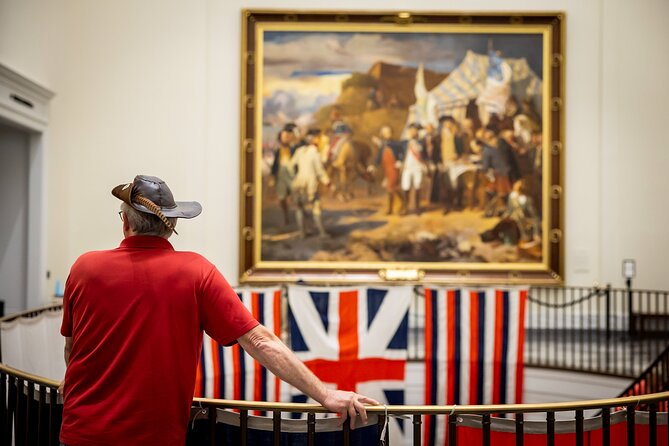
One practical advantage: the museum is an easy walk from the Liberty Bell and Independence Hall. That makes it perfect for a day where you’re trying to stack historic stops efficiently. You can treat the museum as your “story hub,” then walk out into the city to see the real landmarks that helped shape it.
Because the museum is time-and-attention heavy, I’d plan your day like this:
- Go to the museum first if you want the Revolution timeline to guide everything else you see.
- If you’re visiting landmarks with timed entries, still keep a museum block in the schedule. The two-day ticket helps you avoid forcing the whole plan into one hectic afternoon.
Also, note that food and drinks aren’t included, so plan a simple meal nearby. Being hungry can ruin museum focus faster than you’d expect.
Should you book this Museum of the American Revolution ticket with audio?
I think you should book if you want a structured, object-based American Revolution experience in Philadelphia—with two-day flexibility and an optional audio guide that keeps the story coherent. The Washington tent is a memorable centerpiece, and the museum’s mix of life-size scenes, interactive displays, and battle/sea coverage makes it work for both casual learners and history-nerds.
Skip it only if you know you hate crowds and you can’t tolerate a museum environment during busy periods. If that’s you, use your second day to escape the rush, and aim for earlier entry times.
FAQ
How long does the museum visit take?
The admission is for about 3 to 4 hours.
Is entry skip-the-line included?
Yes. Skip-the-line entry is included with the ticket.
Do I get an audio guide?
Audio guided options are available at checkout. You can choose your preferred language there.
What languages are audio guides available in?
Audio guides are available in English, Spanish, or French.
Is the ticket valid for two days?
Yes. The ticket is valid for 2 consecutive days.
Is food included?
No. Food and drinks are not included.
Can I cancel for a full refund?
You can cancel for a full refund if you cancel at least 24 hours before the experience starts. If you cancel within 24 hours, the amount paid isn’t refunded.
Is service provided for kids and animals?
Children must be accompanied by an adult, and service animals are allowed.