REVIEW · METTMANN
Mettmann: Neanderthal Museum Admission Ticket
Book on GetYourGuide →Operated by Neanderthal Museum · Bookable on GetYourGuide
Four million years, one fun museum day.
At the Neanderthal Museum in Mettmann, you get a modern multimedia setup that makes human evolution feel concrete, with life-size reconstructions and an audio guide to keep you moving. It also helps that the museum is tied to the real valley where the famous Neanderthal was discovered.
I especially like the way the permanent exhibition guides you from early origins to today, not as a boring textbook. The hands-on stations and the included audio guide (English and German) are a big reason this works for both adults and kids. One thing to note: the main galleries can get busy with lively school-age groups, so quiet, slow reading may be harder.
In This Review
- Key highlights I’d plan around
- Neanderthal Museum Mettmann: what your admission ticket really covers
- Permanent multimedia exhibition: a clear timeline you can follow
- Neanderthal Discovery Site and the special exhibition area
- Stone Age Playground plus Ice Age Animal Park: when kids actually burn energy
- Art Trail and scenic walking routes (with real learning along the way)
- Höhlenblick Tower: skullcap roof, 360º burial, and a virtual Ice Age world
- Height, nerves, and practical comfort
- Timing the day: how long to plan for indoors and outdoors
- Value for your time: why this ticket feels worth it
- Should you book a ticket to the Mettmann Neanderthal Museum?
- FAQ
- FAQ
- How long is the Mettmann Neanderthal Museum ticket valid?
- What’s included with admission?
- Is an audio guide included, and in what languages?
- Does the ticket let me skip the ticket line?
- Is food or drinks included?
- Is the museum wheelchair accessible?
- Can I reserve and pay later?
Key highlights I’d plan around
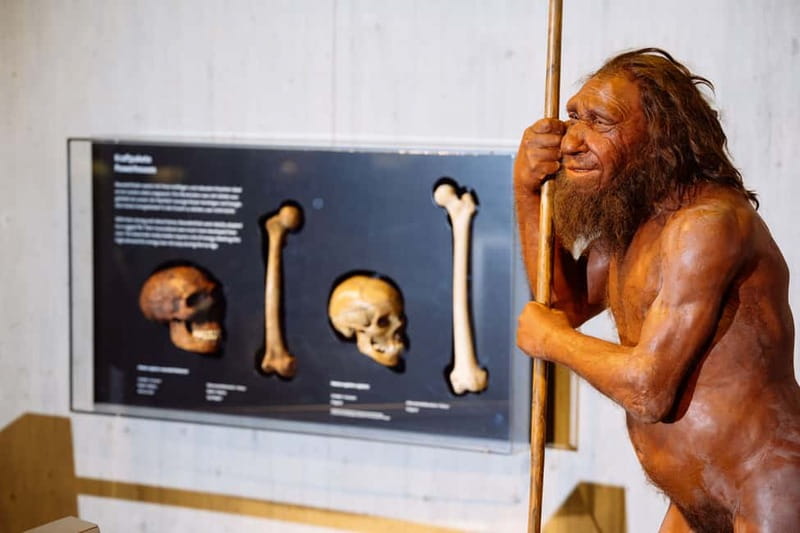
- Multimedia permanent exhibition that spans from early hominin beginnings to present day
- Audio guide in English and German included with your admission
- Neanderthal Discovery Site special area plus the Höhlenblick Tower experience
- Baby mammoth Tinka and other life-size reconstructions that make the story feel real
- Europe’s largest Stone Age Playground plus an Ice Age Animal Park with bison
- Höhlenblick Tower with a skullcap-shaped roof, life-size bones, and a 360º burial video
Neanderthal Museum Mettmann: what your admission ticket really covers

This is a full-day kind of ticket, valid for one day. You’re not just buying entry to a single room—you’re getting access to multiple parts of the museum grounds, including the current special exhibition area, the Neanderthal Discovery Site, and the Höhlenblick Tower.
Your admission also includes an audio guide (English and German). That matters because this museum leans on multimedia storytelling and hands-on stops, so the audio guide helps you turn those sounds and screens into a clear narrative without constant guessing.
Food and drinks aren’t included, so plan a snack or meal break on your own. If you’re visiting with kids, that’s more important than it sounds—play areas keep energy high and hunger shows up faster than you’d expect.
Permanent multimedia exhibition: a clear timeline you can follow
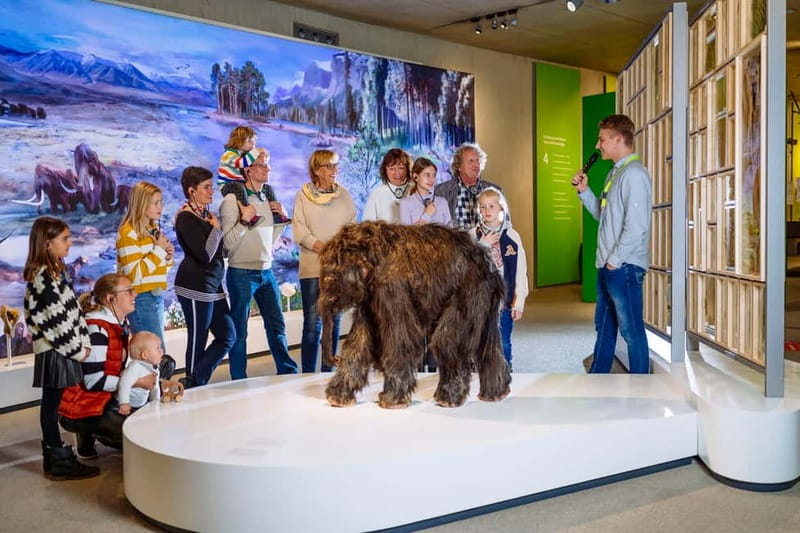
The heart of the museum is a modern, multimedia permanent exhibition built around a simple idea: human evolution isn’t one “big moment,” it’s a long story with change, adaptation, and clues. You start with the earliest beginnings—four million years ago in African savannahs—and you move forward toward today.
I like how it’s designed to work on your pace. If you’re the kind of person who reads every label, you can. If you’re more of a “tap a station and see what happens” type, you can do that too, and the audio guide helps you connect the dots.
There’s also a strong physical element. You’ll meet life-size reconstructions of our ancestors, and the museum includes a cute touch: a baby mammoth named Tinka. It sounds silly until you realize it’s doing real educational work—kids remember faces and animals more easily than dates.
Neanderthal Discovery Site and the special exhibition area

Alongside the permanent galleries, your ticket includes access to the current special exhibition and the Neanderthal Discovery Site. This is the part of the visit that feels most “hands-on story mode,” with extra context built around where the Neanderthal was found in this region more than 160 years ago.
I’d treat the special exhibition as your focus block. Plan for around an hour or two here, depending on how much you want to watch, listen, and try the stations. The payoff is that it supports the bigger permanent-exhibition story instead of feeling like a random add-on.
If you’re visiting with mixed ages, this is where you get the best balance. The museum is clearly built for kids—there are interactive components—but the explanations are set up for adults to keep interest too. For me, that’s a sign of good family design, not just “kid decoration.”
Stone Age Playground plus Ice Age Animal Park: when kids actually burn energy
If you’re traveling with children, the biggest win at this museum is outdoor time. The grounds include Europe’s largest Stone Age Playground, and it’s the kind of playground that can absorb serious energy. That means you can do the indoor exhibits without fighting the usual “when do we get to run?” battle.
Near the play areas, you’ll also find an Ice Age Animal Park. You can encounter bison there, which fits the overall theme and gives the museum story a living, visual anchor. It’s not just a themed zoo—the animals tie into the Ice Age setting the museum keeps returning to.
One practical tip: come ready for movement. This is a place where a stroller can still work, but outdoor routes and playground time mean you’ll want comfortable footwear and a plan for breaks. If rain hits, you’ll be glad the museum also has plenty to do inside.
Art Trail and scenic walking routes (with real learning along the way)
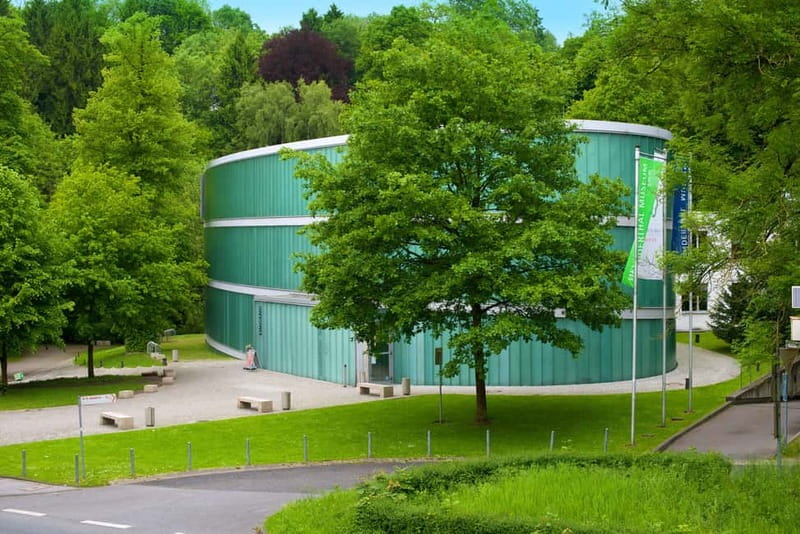
Beyond the main exhibits, there’s an Art Trail that helps turn the grounds into a self-guided walk. This is one of those parts that quietly improves your whole experience, because it breaks up the day. After several indoor multimedia stops, you get a chance to reset and keep the story going at a human pace.
As you move around toward the tower, the museum also uses the walking route to add context. You’ll hear stories connected to eyewitness accounts of the valley and see key points tied to the geology and discovery setting.
I like these “in-between” sections because they keep the day from feeling like you’re bouncing from one room to the next. They also help you connect what you saw indoors with what you’re seeing outdoors—stone, cliffs, and the discovery landscape that makes the Neanderthal story feel local.
Höhlenblick Tower: skullcap roof, 360º burial, and a virtual Ice Age world
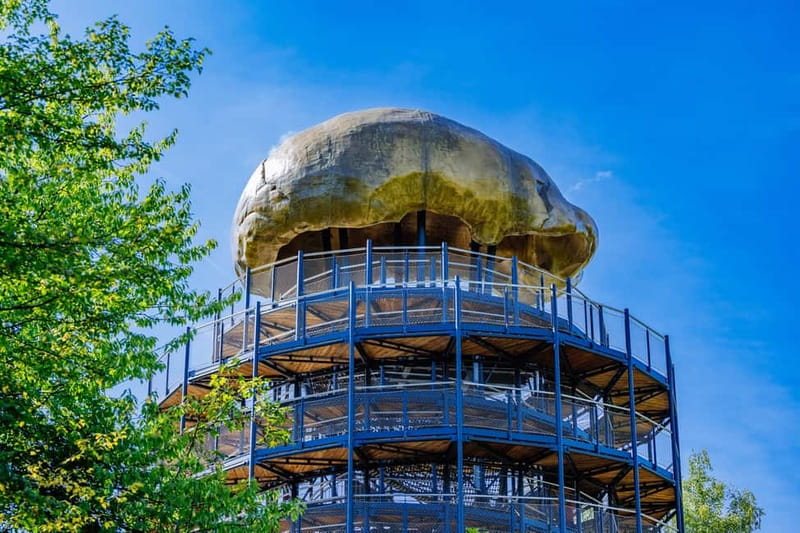
If you only have energy for one big exterior highlight, make it the Höhlenblick Tower. The tower experience is built as a journey up and around, with multiple ways to understand the Ice Age setting—some physical, some visual, some audio-supported.
First, the tower roof is designed to look like a Neanderthal skullcap. It’s a clever detail because it turns the building itself into an educational prop, so you’re already in the right mindset before you even start.
The museum also highlights a virtual Ice Age world at the same height as the lost discovery cave. That’s a fascinating concept: you’re not just watching a reconstruction, you’re standing in a spot designed to echo the original setting.
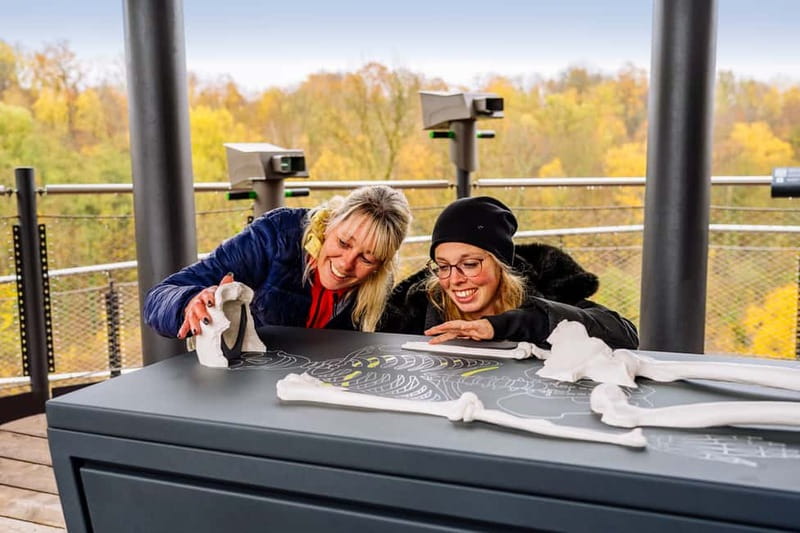
As you go, you’ll see life-size Neanderthal bones and you can be part of a 360º video related to the Neanderthal burial. This is one of the museum segments where the technology feels purposeful. Instead of making you watch screens passively, it frames the story in a way that feels human and grounded.
If you’re a stroller user or worried about steps, you’ll likely appreciate the climbing-tunnel shortcut. There’s a route that lets you take a shortcut through a climbing tunnel about 20 meters above ground. That means you get a vertical sense of the tower experience without needing to do it the hard way.
Finally, there are stops tied to the discovery narrative, including the path where you can find points like the Rabenstein rock formation, connected to the discovery site.
Height, nerves, and practical comfort
The tower is visually dramatic, and if you have a fear of heights, you may feel that in your body. The good news is that the museum includes audio, pictures, and videos that keep you anchored to the story while you navigate the experience.
Bring your own pacing: take breaks, watch your footing, and don’t rush. When you’re stressed, it’s easy to miss the details that make the tower meaningful.
Timing the day: how long to plan for indoors and outdoors
Your ticket is valid for one day, but you’ll want to treat it like a half-day plus. A lot of the experience works best when you move from indoor story zones to outdoor play and back again.
A comfortable approach is to plan about 1–2 hours for the special exhibition plus the Discovery Site area, then add more time for the permanent exhibition. After that, give the outdoor spaces their due—playground, animal park, art trail, and the Höhlenblick Tower.
If you’re aiming for a realistic flow, think 2–3 hours inside if it’s rainy, then whatever time you still have for outdoor exploring when the weather is better. One of the most useful design choices here is that the grounds support a circular style of wandering, so you don’t feel like you must retrace your steps over and over.
Because food and drinks aren’t included, bring water and plan where you’ll take breaks. This is especially important if you’ll be managing kids who want to move the whole time.
Value for your time: why this ticket feels worth it

This admission ticket gives you a stack of experiences that would normally be sold separately: permanent multimedia storytelling, a special exhibition, a discovery-site component, and the tower experience with multiple formats (audio, visuals, reconstructions, and 360º video).
The audio guide is a big part of the value. You’re not stuck translating on the fly or hoping you’ll catch every detail from the screen labels. You can focus on learning without slowing down every five steps.
The other value driver is variety. You get animals (bison), play (Stone Age Playground), and a big “wow” structure (Höhlenblick Tower). That means fewer moments where adults feel like they’re waiting while kids drag them along, and fewer moments where kids feel bored while adults read.
Should you book a ticket to the Mettmann Neanderthal Museum?
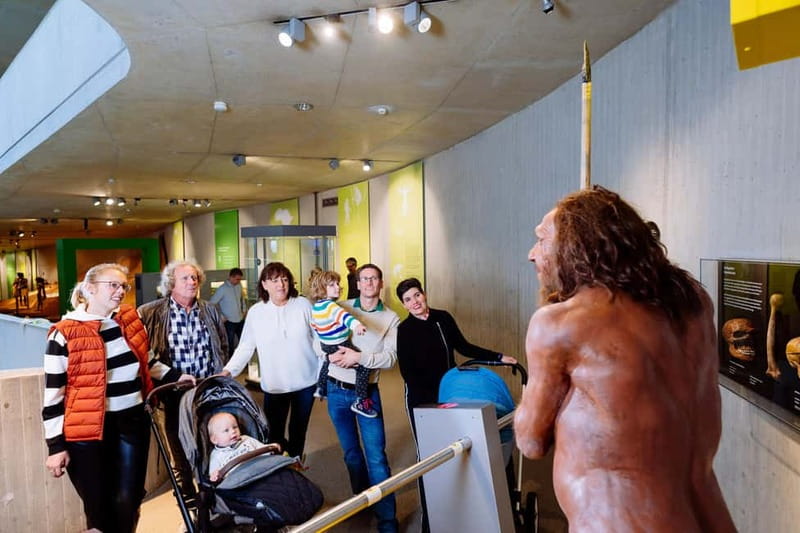
I’d book it if you want a museum day that mixes clear educational storytelling with actual physical experiences—playground time, an animal park, and a tower visit with serious visual impact. It’s especially strong for families, since the museum supports different attention spans without turning everything into noisy chaos.
I’d hesitate if you’re hoping for a quiet, almost library-like visit. The permanent galleries can get crowded with energetic groups, and you may find it hard to linger over every label.
If your main goal is a “one-and-done” cultural stop, this might feel like more than you need. But if you want a full day where kids can burn off energy and adults still learn something real, the Höhlenblick Tower and the multimedia exhibition make this ticket a solid choice.
FAQ
FAQ
How long is the Mettmann Neanderthal Museum ticket valid?
The ticket is valid for 1 day. You’ll want to check availability to see starting times.
What’s included with admission?
Your admission includes access to the current special exhibition, the Neanderthal Discovery Site, and the Höhlenblick Tower.
Is an audio guide included, and in what languages?
Yes. The audio guide is included and is available in English and German.
Does the ticket let me skip the ticket line?
Yes, skip-the-ticket-line entry is included.
Is food or drinks included?
No, food and drinks are not included.
Is the museum wheelchair accessible?
Yes, the museum is wheelchair accessible.
Can I reserve and pay later?
Yes. You can reserve now and pay later, keeping your plans flexible.