REVIEW · LILLE
Lille: Entry ticket to the Museum of Illusions
Book on GetYourGuide →Operated by Musée de l'Illusion Lille · Bookable on GetYourGuide
Illusions are made for your camera. I love the photo-ready installations (you’ll get the classic floating, upside-down, and shrinking effects) and the optical illusion explanations that make the trick feel less random, more scientific. One thing to watch: this place can get crowded, and with a lot of mirror and photo spots, it’s easier to enjoy when you can move calmly and take your time.
Musée de l’Illusion Lille is a straightforward outing: buy a ticket, go in, and explore at your own pace for about 1 hour. For roughly $22 per person, you’re paying for a concentrated dose of visual fun in the center of Lille, not a long museum marathon.
The overall rating is 4.1/5 from 307 reviews, with lots of love for how well it works for families. Still, a few comments flag that it can feel short, especially if you’re hoping for lots of space to linger or you’re not into mirror-heavy rooms.
In This Review
- Key things to know before you go
- Musée de l’Illusion Lille in one hour: a self-paced plan
- What you’ll see: floating, upside-down, and shrinking photo rooms
- The science angle: how perception gets tricked
- Holograms, perspective puzzles, and the tunnel effect
- Price check: is a $22 ticket worth it in Lille?
- Best time to go and how to avoid mirror-mania
- Who this is for: families, teens, and curious adults
- Practical tips before you buy: what to bring and what to skip
- Should you book the Museum of Illusion Lille ticket?
- FAQ
- How long is the Museum of Illusion Lille ticket valid for?
- How much does the entrance ticket cost?
- Where do I go for the entry ticket?
- What is included in the ticket?
- Is the museum wheelchair accessible?
- Are food and drinks allowed inside?
- What should I bring with me?
Key things to know before you go

- Floating, upside-down, and shrinking photo moments you can recreate in minutes
- Optical illusion science cues that explain what your eyes think they’re seeing
- Holograms and perspective puzzles that play with distance and angle
- Tunnel-style installation energy that adds variety beyond mirrors
- Good for big and small with a smooth, family-friendly flow
- Crowds can change the experience in popular photo rooms
Musée de l’Illusion Lille in one hour: a self-paced plan
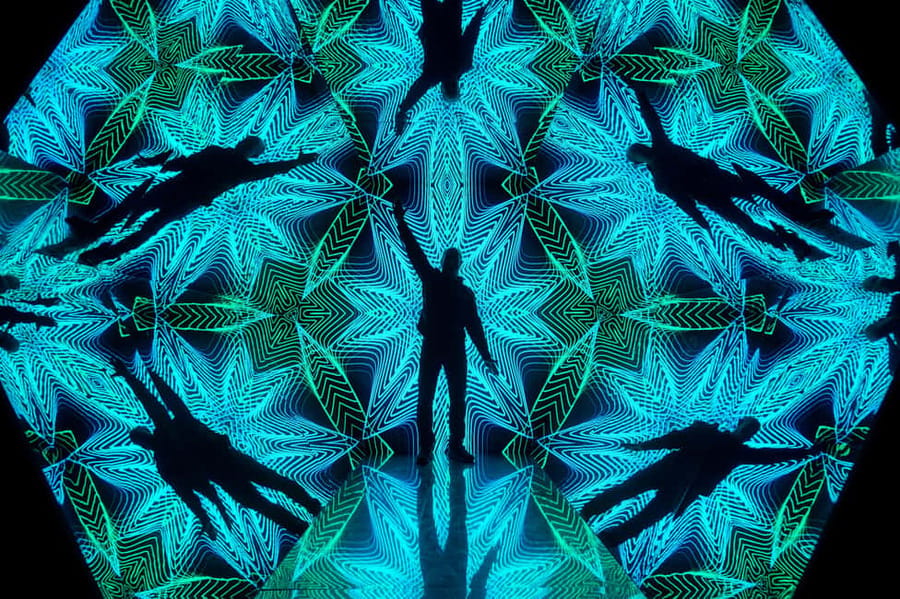
If you’re looking for a “works fast, feels fun” stop in Lille, this ticket delivers. You’re entering Musée de l’Illusion Lille with admission included, then walking through rooms designed to trick your senses. There’s no required route. You can slow down where you like and skip what doesn’t grab you.
Expect a visit that runs about 1 hour, which is long enough to try multiple installations and take a batch of photos. It’s also short enough that it won’t wreck your day. The trade-off is simple: you won’t have endless time to repeat your favorite room ten times while everyone else waits.
A small practical note: some content may be in its original language, so if you’re not fluent, you’ll still be able to enjoy the visuals, but you might read less of the explanations. The visuals do most of the work anyway.
What you’ll see: floating, upside-down, and shrinking photo rooms
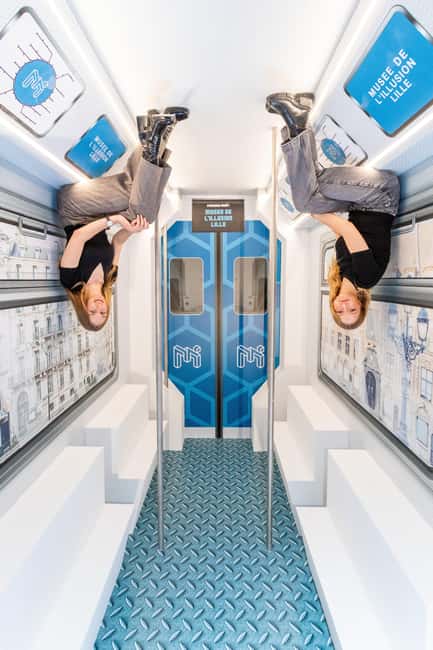
This museum is built around the kind of optical tricks that instantly translate into photos. And that’s not a gimmick. The rooms are designed so the effect is clear right away, even if you’re just holding a phone.
Here’s what you can look forward to:
- Floating-in-the-air style scenes where the illusion makes it seem like you’re suspended
- Upside-down setups that make you feel like you’ve turned the world on its head
- Shrinking effects where your body scale looks totally wrong in a fun way
These are the rooms where you’ll want a charged smartphone (plus a camera if you prefer). Reviews also hint that mirror-heavy setups are part of the experience, so the best results usually come from stepping back, adjusting your angle, and finding the spot where the illusion locks in.
If you’re traveling with kids, these rooms tend to keep momentum. If you’re traveling as adults, they still work, just with different energy: you’ll notice how quickly your brain accepts a false version of reality, then fights it when you move.
One drawback to keep in mind: if you’re not comfortable waiting your turn in photo spots, crowds can make certain installations feel slower than they should be.
The science angle: how perception gets tricked
Not every illusion is just for show. A big part of the appeal here is that you’re not only seeing the trick—you’re also getting the reason your eyes and brain fall for it.
As you move through the museum, you’ll find optical illusion information and learning moments tied to perception. That matters because it turns the experience from random spectacle into something you can explain afterward. You start recognizing patterns like:
- why your brain assumes a straight line is straight
- how perspective changes what you think is the correct size
- why certain angles make you feel like you’re looking at depth where there is none
This is one of the highest-value features if you’ve ever wondered how these optical tricks work. Even if you read only part of the material (because some is in the original language), the visuals still give you instant feedback.
And yes, the museum remains fun even if you don’t care about the science. But if you do care, this is the part that makes the 1 hour feel smarter than just “take photos and leave.”
Holograms, perspective puzzles, and the tunnel effect
Beyond the classic “you in the illusion” rooms, Musée de l’Illusion Lille leans into modern visual effects like holograms and installations built around perspective-shifting puzzles. This is where the museum feels less like a single trick and more like a sequence of challenges for your vision.
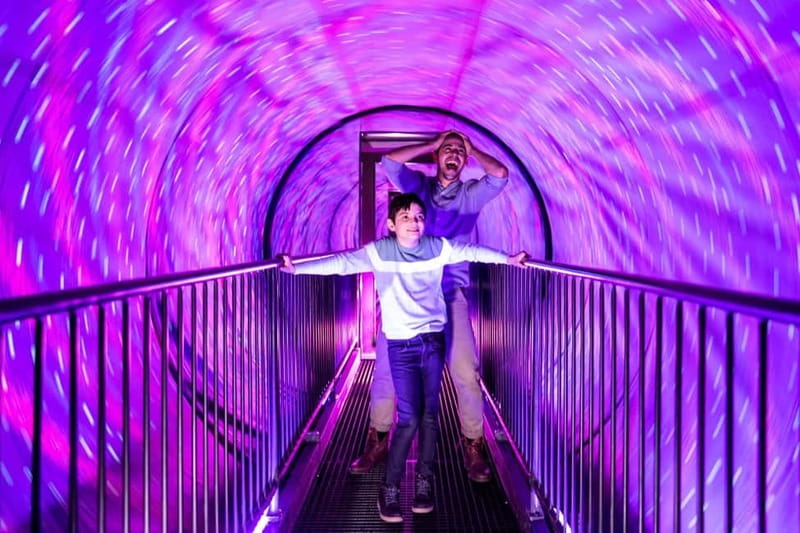
One specific detail to watch for: there seems to be a tunnel-style installation that people bring up when they talk about what impressed them. Even without knowing the exact setup in advance, the idea is clear. A tunnel installation usually adds motion cues and “where am I in space” thinking, which is great for keeping the experience varied.
Perspective puzzles are also a key piece. These aren’t just for getting a cool picture. They ask you to step, look, and adjust. You’ll often feel the illusion switch as you change where you stand, which makes it more interactive than a static exhibit.
If you’re easily frustrated by “the trick doesn’t work for me” moments, take a calm approach. The museum’s illusions usually reward small changes: move half a step, tilt your phone slightly, and try again.
Price check: is a $22 ticket worth it in Lille?
Let’s be real: at about $22 per person for an entrance ticket, you’re paying for an experience, not a collection of centuries-old art. The value depends on what you want from your day in Lille.
Here’s how I’d judge the price:
- If you want photo moments that are instantly shareable, this ticket is a good match. The float, upside-down, and shrink rooms are designed for quick wins.
- If you want a hands-on perception story, the included optical illusion information adds substance beyond the photos.
- If you’re expecting a huge museum with hours of wandering, the 1-hour timeframe is the limiter. Some visitors feel it’s small and moves fast, and that’s a fair risk.
Crowds also affect value. When popular rooms get busy, your time stretches and the experience can feel less satisfying. You might still have fun, but the feeling of “I paid for an hour and didn’t get my hour” can creep in.
My practical take: this is best treated as a planned, time-friendly stop. Think of it like an activity you fit in between bigger sightseeing, not the centerpiece of a full day.
Best time to go and how to avoid mirror-mania
You can’t fully control crowds, but you can control your timing and your strategy.
From what people say, the museum can get very busy, and mirror and photo rooms are the places that can create bottlenecks. So aim for one of these approaches:
- Go earlier in the day if possible, so you’re not waiting for space in the best photo zones.
- Keep your “must-do” list short: pick 2–3 rooms you really care about, then let the rest be bonus.
Also, if you tend to get bothered when things feel crowded, remember that many illusions are angle-sensitive. When you’re squeezed for space, the best trick shots can become harder. A little patience goes a long way, but you don’t want to spend your whole visit queuing.
If the museum feels crowded when you arrive, you can still get a lot out of the quieter sections. Move steadily, try the science explanations while others focus on photos, and come back to the photo rooms once the flow changes.
Who this is for: families, teens, and curious adults
This place works for a surprisingly wide range of people.
Families and kids
The museum’s format is playful and immediate. The illusions are easy to understand without needing long reading. Even when you don’t get the perfect shot, you still get the reaction moment.
Teenagers and adults who like visual challenges
Holograms, perspective puzzles, and perception explanations give you enough “aha” to make it satisfying beyond the social media factor. It’s fun, but it’s not only childish.
People who love photography or creative poses
If you like setting up shots and experimenting with angles, bring your camera or charged phone and treat it like a short photo session. The rooms are built for posing, not just looking.
People who dislike crowds or mirror-heavy spaces
This is the only group I’d steer with care. If mirrors and wait times make you cranky, consider going at a calmer hour or pairing it with a less crowded activity afterward. The experience can still be enjoyable, but it’s easier when you have breathing room.
Practical tips before you buy: what to bring and what to skip
This ticket is simple: admission included, and that’s it. Your success comes from preparation.
Bring:
- Camera (optional, but useful if you prefer a real lens)
- Charged smartphone (almost essential for photo rooms)
Leave at the door:
- Food and drinks are not allowed
- Alcohol and drugs are not allowed
If you’re traveling with a group, plan around the photo rooms. A good trick is to decide in advance who takes photos and who tries the illusion, so you’re not losing time while everyone switches devices.
Wheelchair access is available, so you should be able to navigate with accessibility in mind.
Should you book the Museum of Illusion Lille ticket?
Book it if you want a high-fun, low-planning stop in Lille with clear payoff in about 1 hour. It’s especially worth it if you’re traveling with kids, teens, or anyone who enjoys optical puzzles and quick photo moments.
Skip or reconsider if you’re sensitive to crowds, hate mirror-heavy areas, or you’re looking for a long museum visit with hours of wandering. In those cases, you may end up feeling the experience is too short or too busy for the price.
If your goal is a creative, perception-focused activity that fits easily into a day plan, Musée de l’Illusion Lille is a solid buy.
FAQ
How long is the Museum of Illusion Lille ticket valid for?
The experience is listed as lasting 1 hour. Check available starting times when you book.
How much does the entrance ticket cost?
The price is $22 per person.
Where do I go for the entry ticket?
You should go to Musée de l’Illusion Lille.
What is included in the ticket?
The ticket includes admission to the museum.
Is the museum wheelchair accessible?
Yes, the museum is listed as wheelchair accessible.
Are food and drinks allowed inside?
No. Food and beverages are not allowed.
What should I bring with me?
You should bring a camera and a charged smartphone. Alcohol and drugs are not allowed.