REVIEW · JERUSALEM
Jerusalem Yad Vashem Holocaust History Museum Tour
Book on Viator →Operated by Yad Vashem Holocaust Memorial · Bookable on Viator
This museum hits hard, fast. A guided walk through Yad Vashem’s Holocaust History Museum turns big, abstract history into something you can track step-by-step.
I especially love the way the tour pairs sharp facts with human evidence: you’ll see materials like the Auschwitz Album and a copy of Schindler’s List, plus survivor testimonies. I also like that you don’t just wander—an official Yad Vashem guide keeps the story chronological across nine galleries.
One drawback to plan around: the content is very graphic and emotionally heavy, and it can take longer than the tour length to feel like you got through it properly.
In This Review
- Key things to know before you go
- Entering Yad Vashem’s museum, built to make you slow down
- The nine-gallery flow: how the tour turns chaos into a timeline
- Leszno Street and the reconstructed Warsaw Ghetto cobblestones
- Survivor testimony: when history becomes voices, not just dates
- Hall of Names: the memorial that changes how you see the story
- How long it really takes: 2 hours is a plan, not a finish line
- What you’re paying for with a $12 ticket
- Before you go: simple planning that makes a big difference
- Should you book this Yad Vashem guided tour?
- FAQ
- How long is the Jerusalem Yad Vashem Holocaust History Museum tour?
- What does the ticket include?
- What will I see during the tour?
- Is food included?
- Where do I start and when?
- Is the tour suitable for children?
- Can I cancel for a full refund?
Key things to know before you go
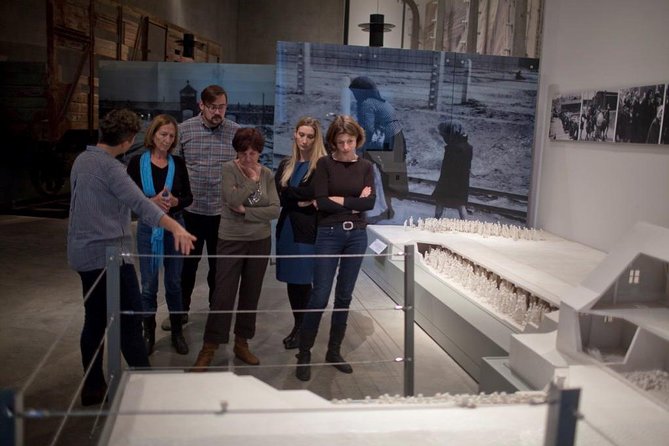
- Moshe Safdie’s architecture sets the tone: the triangular, prism-like museum structure cuts through the mountain, with cantilevered ends reaching into open air.
- Nine galleries = a clear timeline: the museum breaks the Holocaust into different “chapters,” so you’re not left piecing things together.
- Artifacts you’ve probably heard of are right there: including the Auschwitz Album and a copy of Schindler’s List.
- You’ll visit the Hall of Names: this memorial-focused stop grounds the story in individual identities.
- Headsets help you actually hear the guide: the tour includes audio so you can follow along without straining.
Entering Yad Vashem’s museum, built to make you slow down
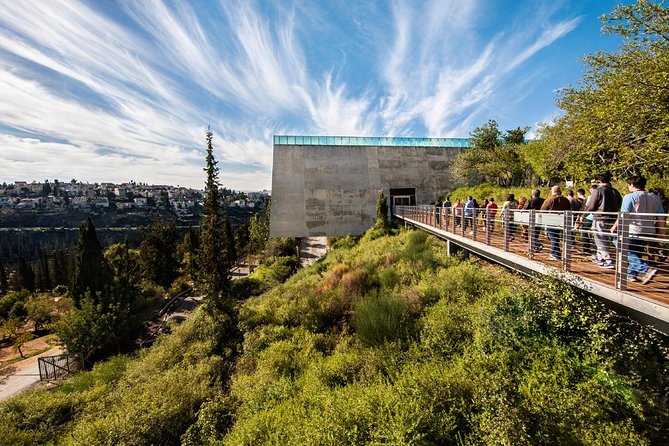
Yad Vashem is one of those places where the building isn’t just a container for exhibits—it’s part of the message. You approach the Holocaust History Museum inside a dramatic, modern structure designed by Moshe Safdie. The shape is striking: a triangular prism that penetrates the mountain from side to side, with both ends dramatically cantilevered into open air. It’s architectural, yes—but it also creates a mood shift the moment you start moving through it.
That matters because the museum content is intense. The design helps you transition from the street-level city world into a place of reflection, record-keeping, and testimony. If you’re the type who likes to “get oriented” before you read a lot, this helps: you can feel the space pulling you into the story.
This is a guided experience with an official Yad Vashem guide, plus headsets. Even if the group is moving at a steady pace, you’re less likely to miss key explanations. And for a museum this information-heavy, that is a real value. You’re paying for clarity, not just access.
The nine-gallery flow: how the tour turns chaos into a timeline
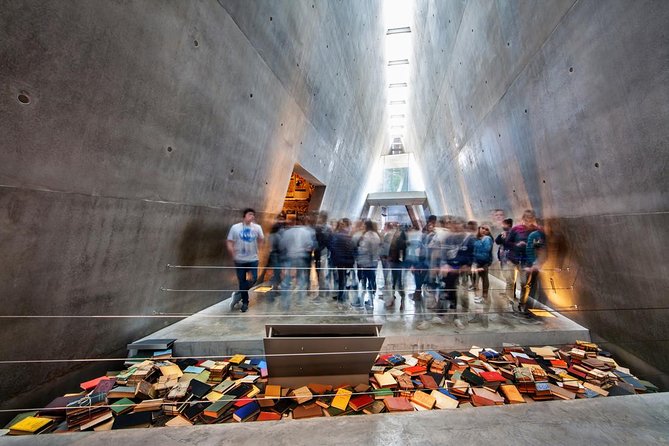
The core of your tour is the guided progression through nine different galleries. Each gallery is framed as a different chapter of Holocaust history, so you’re not stuck with disconnected rooms. Instead, you build an understanding of how events unfolded and how Nazi ideology shifted from propaganda to persecution to mass murder.
A big highlight is how the museum includes items that reveal how antisemitism was normalized. In the 1930s sections, you’ll encounter authentic posters, propaganda, and even antisemitic board games. Those aren’t there to shock you for fun—they show how ideas can be trained into daily life. That’s one of the most useful parts of the museum for modern visitors: it makes propaganda feel concrete, not like a vague slogan.
You’ll also see documentation and exhibit materials that connect to some of the most widely referenced Holocaust-era sources. The tour specifically calls out the Auschwitz Album and a copy of Schindler’s List. If you’ve only encountered these names through books, film, or school, seeing them here changes the scale. They stop being cultural references and become direct evidence—one image set, one documented narrative, tied to real people and real events.
This tour format is also practical. The museum is large and emotionally draining, so having an official guide keep you moving in sequence helps you avoid the common problem of reading a bunch of labels in random order and ending with fuzzy connections.
Leszno Street and the reconstructed Warsaw Ghetto cobblestones
One of the most memorable moments in the itinerary is a transition to Leszno Street, where you’ll walk on cobblestones from a reconstructed street from the Warsaw Ghetto. It’s easy to underestimate the power of that kind of environment until you’re standing on it and realizing what it represents.
This isn’t about turning history into a themed set. It’s there to give you a physical sense of place—something your brain can anchor to while you absorb the timeline of what happened. For many visitors, it’s a “now I understand what this means in a location” stop. The guide context makes it land harder, because you’re not just looking at a street—you’re connecting it to the conditions, the restrictions, and the unfolding tragedy.
If you’re sensitive to emotionally heavy exhibits, this stop can be the kind that lingers. On the flip side, if you’re the kind of traveler who needs a few sensory anchors to help you process, this is a strong one.
Survivor testimony: when history becomes voices, not just dates
The tour includes watching survivor testimonies. This part is both moving and practical, because it fills the gap between documentary evidence and human experience. Labels tell you what happened. Testimony tells you what it felt like, what people remembered, and what they carried afterward.
It’s also a reminder of why Yad Vashem exists as a remembrance center, not just a museum. The Holocaust wasn’t only an event recorded after the fact—it was lived through. When survivor accounts are part of the guided experience, they help you connect the museum’s “chapters” to real human consequences.
Headsets matter here too. Testimony can be easy to miss in a busy group setting. With audio built into your tour, you’re more likely to catch what the guide points out and follow along without losing the thread.
Hall of Names: the memorial that changes how you see the story
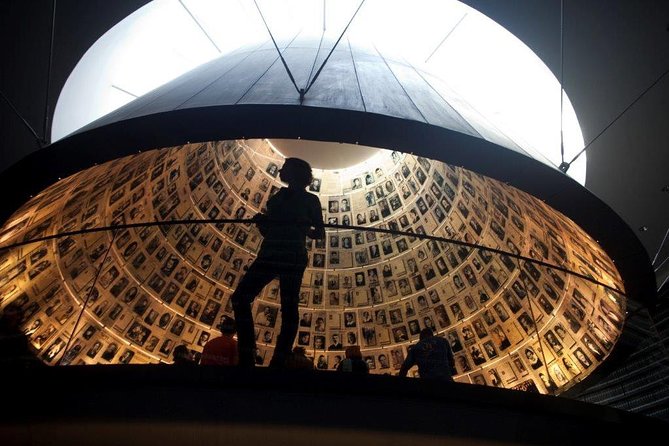
The tour also includes a visit to the Hall of Names, with its memorial to victims. This stop shifts the mood from “understanding history” to “honoring people.” It’s where the story stops being only a sequence of events and becomes individual lives—many of them never fully known in detail, but still remembered through the effort of naming.
That naming focus is one of the highest-value parts of Yad Vashem for most visitors. It gives you a structured way to hold emotion without it becoming pure overwhelm. The Hall of Names helps you translate sadness into remembrance, which is exactly what a memorial space is meant to do.
A practical tip: if you’re planning your day tightly, don’t rush this section. Even within a guided schedule, your body will ask for a pause here. That pause is part of what makes the experience stick.
How long it really takes: 2 hours is a plan, not a finish line
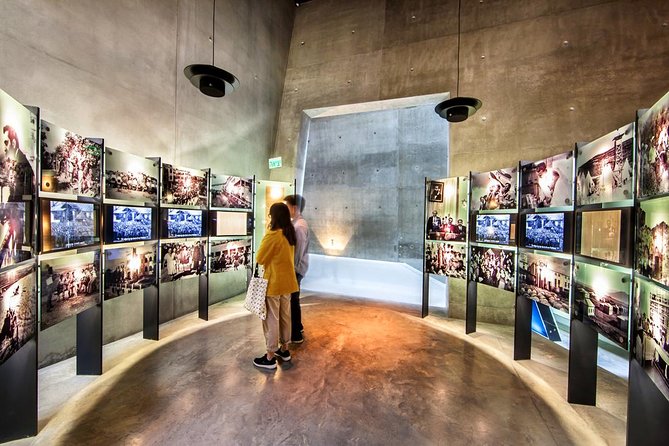
The tour runs for about 2 hours (approx.). The itinerary is designed to fit a “guided overview” pace. But Yad Vashem is one of those places where you should expect your time to stretch if you’re reading carefully or processing as you go.
Some visitors note that even getting through the museum briefly takes at least an hour, and others report spending 3 or more hours in the galleries. The tour includes an opportunity to continue exploring after the guided portion, which is smart because it gives you flexibility. You can treat the official tour as the backbone, then come back for the rooms that hit hardest for you.
If you only have a tight schedule, you can still do it. Just don’t pretend the emotional heaviness will vanish by the time the guide finishes. Plan a buffer afterward so you can decompress somewhere calmer.
What you’re paying for with a $12 ticket
At $12 per person, this is unusually good value for a guided visit inside one of the most important Holocaust remembrance sites in the world. You’re not just buying entry—you’re getting an official guide, headsets, and included admission. You’re also getting a guided structure that helps you understand the chronology without doing all the work yourself.
Is it cheap? For Jerusalem, yes. But it’s also cheap relative to what you’re actually receiving: content guidance, audio support, and interpretation across multiple galleries. In other words, the price doesn’t feel like you’re being rushed. It feels like you’re getting a guided context layer that makes the museum far more usable.
The main cost to watch is not the ticket. It’s time and emotional energy. If you’re going in already exhausted, this tour can feel like too much. If you’re rested, it feels like the right kind of hard.
Before you go: simple planning that makes a big difference
A few practical notes will help you get the most out of the experience.
Wear comfortable shoes. You’re walking through multiple galleries and also onto a reconstructed street section. Also, bring a layer. Museums can vary in temperature, and you’ll be standing or moving slowly in certain memorial spaces.
Food and drinks aren’t included. If you’re doing this as part of a longer Jerusalem day, eat earlier. That way you’re not searching for a snack while you’re trying to focus on testimony and memorial details.
Parking isn’t included either, so if you plan to drive, know there’s an on-site fee.
The tour starts at 10:30 am, and it’s a mobile ticket experience. If you’re using public transportation, that can work well because the site is near public transit.
Finally, check your own emotional readiness. This museum is described as extremely moving, very graphic, and not for the faint heart. One review also notes that children under 10 weren’t allowed, so if you’re traveling with kids, verify current age rules directly with the provider before you plan your schedule.
Should you book this Yad Vashem guided tour?
Yes, if you want a structured, official way to understand the Holocaust without spending your whole visit trying to figure out the story order on your own. The headsets and guide make a real difference in a museum packed with information, and the itinerary highlights some of the most significant exhibits—especially the Auschwitz Album, the Schindler’s List reference, the Hall of Names, and the survivor testimony components.
I’d be more cautious if you have very limited time and need a quick stop, or if you know you’re highly sensitive to graphic, emotionally intense content. In that case, consider whether you can handle a heavy visit and still get space to decompress afterward.
For most adults who value history with context—and for anyone who wants a clear, guided timeline—this is a top-tier choice at a very fair price.
FAQ
How long is the Jerusalem Yad Vashem Holocaust History Museum tour?
It lasts about 2 hours (approx.).
What does the ticket include?
The experience includes an official Yad Vashem guide, headsets to hear the guide clearly, gratuities, taxes and fees, and admission.
What will I see during the tour?
You’ll visit the main galleries (nine “chapters” of history), see exhibits including the Auschwitz Album and a copy of Schindler’s List, watch survivor testimonies, and visit the Hall of Names memorial.
Is food included?
No. Food and drinks are not included.
Where do I start and when?
The tour start time listed is 10:30 am.
Is the tour suitable for children?
Age suitability isn’t stated in the tour details, but one review notes children under 10 weren’t allowed. You should check the provider’s current age policy before booking.
Can I cancel for a full refund?
Yes. Free cancellation is available up to 24 hours in advance for a full refund. If you cancel later than that, the amount paid isn’t refunded.