REVIEW · SICILY
Guided tour of the salt pans of Trapani and the Salt Museum
Book on Viator →Operated by Saline Culcasi - Riselva del Mare - Museo · Bookable on Viator
White salt, blue sea, and a working mill. This guided experience at the Saline Culcasi salt pans pairs a scenic walk in the WWF area with a tour of the Museo del Sale, where salt-making becomes human history you can actually see.
Two things I really liked: the salt-pan walk lets you follow the production steps in a real working reserve, and you get a guided look inside the museum housed in an ancient baglio with an old 1400s mill setup and salt tools.
One thing to think about: the meeting spot is in Paceco, not right in central Trapani, so plan for a short drive or taxi. One guest even paid extra for transport—so don’t assume you can pop over on public transit.
In This Review
- Key highlights from the salt pans and Salt Museum
- Trapani salt pans at Paceco: what you’re really paying for
- Stop 1: Riserva Naturale Saline di Trapani e Paceco walk and salt-making steps
- What you’ll learn while walking
- A practical consideration
- Stop 2: Museo del Sale and the 1400s mill in the baglio
- Why this museum visit adds real value
- The only drawback to watch for
- Guides, explanations, and the details that stick
- The Archimedes screw moment
- Timing in Trapani: when the light makes a difference
- Price and value: $21.77 with tickets included
- Getting there from Trapani: don’t wing it
- Who should book this salt pans tour
- Should you book the Saline Culcasi Salt Pans and Salt Museum tour?
- FAQ
- How long is the guided tour of the salt pans and Salt Museum?
- What language is the tour offered in?
- Is this tour private or shared?
- Where is the meeting point?
- What do I do during the salt-pan part?
- What will I see at the Museo del Sale?
- Are admission tickets included?
- Is there any salt tasting?
- Are service animals allowed?
- Is there free cancellation, and does weather affect the tour?
Key highlights from the salt pans and Salt Museum
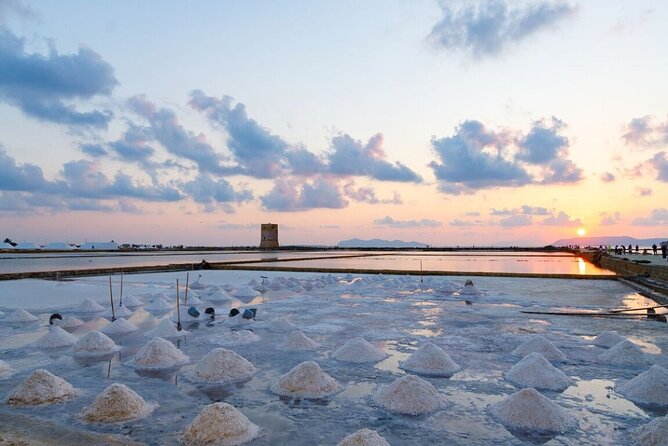
- WWF reserve walk with real salt forming: You follow the perimeter route and see how sea water becomes salt in the tanks.
- Colorful, close-up views: White salt shades, pink tanks, gray clay, and the sea reflecting sky.
- Hands-on moments: You collect salt with your hands as part of the step-by-step explanation.
- Museo del Sale in a baglio: The museum adds context, tools, and stories tied to the family who ran the operation for generations.
- The Archimedes screw stands out: You’ll hear about it as part of how the process works.
Trapani salt pans at Paceco: what you’re really paying for
At this price point, you’re not just buying a walk and a museum ticket. You’re buying a guided story that turns something plain (salt) into a place and a system.
The whole outing runs about 1 hour 15 minutes. That includes a guided 50-minute walk in the natural reserve and a 25-minute guided visit in the museum. Tickets are included, which matters here because you’re not left paying extra at the doors.
You’ll also get an English-guided experience, and it’s private for your group. That’s a big deal for a place like this, where questions pop up fast when you’re standing right next to salt tanks and seeing the process in action.
Stop 1: Riserva Naturale Saline di Trapani e Paceco walk and salt-making steps
The experience starts in the Riserva Naturale Saline di Trapani e Paceco, in the WWF reserve area where salt farming has shaped the wetlands for centuries. Right away, the visuals do half the work for the guide: white salt in lots of shades, the blue of the sea, gray clay, and pink tones from the tanks.
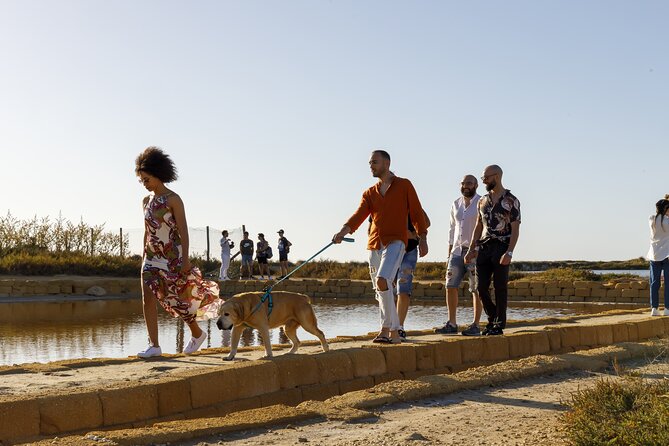
Expect a relaxing walk along the perimeter. You’re not speeding through points on a map—you’re moving slowly enough to notice small things. The route leads you toward sections where the water can look like a mirror, reflecting the sky. If you’ve ever seen salt photos that look almost too clean to be real, this is the place where that look comes from.
What you’ll learn while walking
The key idea is simple but explained in a hands-on way: you’ll see salt forming step by step, and you’ll understand how sea water gets transformed into the salt people use every day. The walk includes time to collect salt with your hands, which is one of the best ways to make the process click. It’s hard to forget salt texture after you’ve felt it yourself.
This is also a good spot for nature lovers. The area includes protected plants and birds, so you’re walking in a working system that’s still part of the local ecology—not just an industrial site.
A practical consideration
Wear shoes you’re okay getting a little rough with. The walk is easy in pace, but it’s a working reserve, and that means the ground can be uneven. Also, since you’re outside, the experience depends on decent weather—poor conditions can mean rescheduling.
Stop 2: Museo del Sale and the 1400s mill in the baglio
After the outdoor walk, you shift gears to the Museo del Sale. This is where the tour stops being just scenic and starts feeling personal.
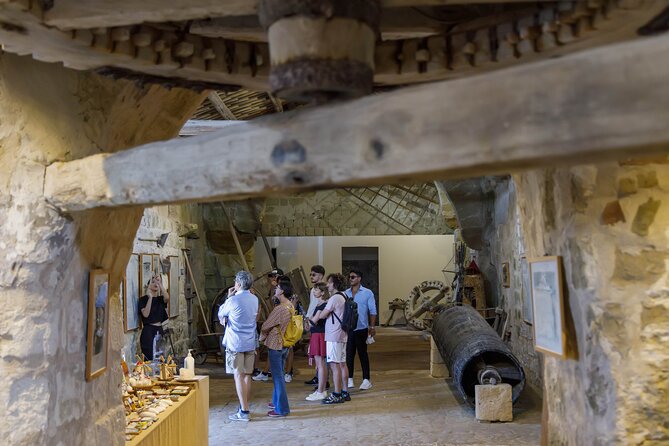
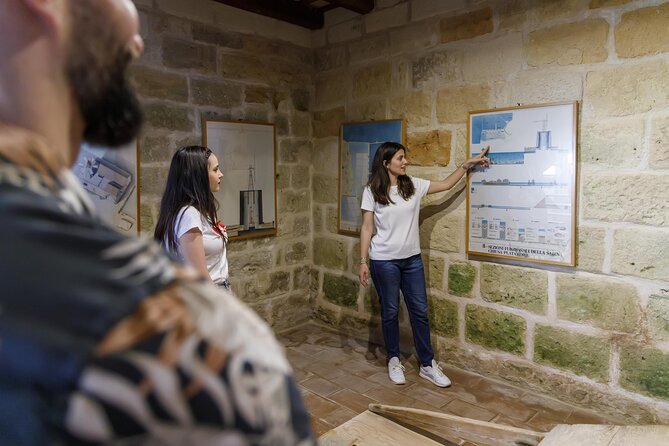
The museum sits inside an ancient baglio, and it features an old salt setting connected to a mill dating to the 1400s. The guide doesn’t treat salt as a chemistry lesson. Instead, the focus is on the tiring, repetitive work of the salt pans—and the family history behind running it for generations.
Why this museum visit adds real value
In many tours, the museum feels like a bonus room. Here, it works as a translation tool. The outdoor part shows you what salt tanks do. The museum helps you understand why people built systems like this and kept them running, long after modern shortcuts became possible.
You’ll also see historical tools from the salt operation. That hands-on, old-school feel comes through in how the guide tells the story, including how sea and salt have been linked here for a long time.
The only drawback to watch for
The museum can get busy. If you’re in a group where audio isn’t perfect, you might struggle to catch every detail from the second guide (some tours use more than one person to cover different parts). It’s still worth it, but if you care a lot about hearing every word, plan to lean in and ask questions when you can.
Guides, explanations, and the details that stick
What makes this tour feel worth the time is the way the guides teach without turning it into a lecture.
The salt-pan guide tends to be energetic and clear about the production steps. One review highlighted that the tour was explained first in English and then in Italian when needed, so there’s a sense of careful communication. Another important point: the guides’ English can vary a bit depending on who you get. One guide may speak English smoothly; another may have a stronger Italian accent. If English is your top priority, that’s good to keep in mind when booking.
You’ll also notice that the guide-led pace leaves room for questions. That matters because salt production isn’t intuitive. You’re standing in a system where the “why” is the interesting part.
The Archimedes screw moment
One review called out the Archimedes screw as a particularly interesting piece of the process. Even if you think you know what you’re going to see, this kind of mechanical detail helps you connect the water movement with how salt ends up forming in stages.
Timing in Trapani: when the light makes a difference
This tour shines when conditions are good. The reserve is outdoors, and salt pans also look different depending on the time of day.
A strong tip from the experience: go in later hours if you can. Several people recommended sunset time, including a specific mention of 6 pm to stay around and watch the light change. You get a nice visual payoff when the reserve shifts from bright daylight to softer colors, and the water-and-sky reflections become part of the show.
If you’re flexible, pick a time that lets you enjoy the setting rather than rushing back to your next stop.
Price and value: $21.77 with tickets included
At $21.77 per person, this is one of those deals that feels “reasonable” once you break it down.
You’re getting:
- A 50-minute guided salt-pan walk in the WWF reserve
- A 25-minute guided museum visit
- Admission tickets included
- Guided explanations for both the real working process and the historical context
That combination is the value. You’re not paying for one activity. You’re paying for a connected story: walk outside where salt forms, then walk inside where salt farming history explains the why.
The only cost surprise people mention isn’t the tour price—it’s transport from Trapani’s center to Paceco. If you don’t have a car, plan your ride ahead of time. One guest bluntly said not to book unless you have transportation, and the provider response backed that up by saying the city does not provide public transportation to the site. In plain terms: the tour is easy once you’re there, but getting there can take planning.
Getting there from Trapani: don’t wing it

The meeting point is Via Salina Chiusa, 1, 91027 Paceco TP, Italy. The redemption point is listed as VIA CHIUSA – NUBIA, 91027 Paceco TP, Italy.
Paceco is close to Trapani, but it’s not “next door.” One review said it was about a 15-minute drive from downtown Trapani, and that person had to pay extra for the round trip. That lines up with the broader warning: treat this like an outing with local transport needs, not a quick walk-and-go stop.
My advice: before you book, check your transportation plan for the exact meeting time. If you’re taking a taxi, figure out pickup timing. If you’re driving, confirm parking options nearby based on what you see in the area.
Who should book this salt pans tour
Book it if you want an authentic Sicilian subject that isn’t just postcards. You’ll get:
- Nature + industry in the same place (protected plants and birds, but also real salt making)
- A short, guided format that doesn’t eat your whole day
- A clear explanation of how sea water turns into salt you can actually see and touch
You might skip it if you hate driving to specific rural sites or if you need perfect English delivery every minute (there can be accents and audio challenges in the museum).
It’s also a good fit for mixed ages. The walk is described as suitable for all age groups, and service animals are allowed.
Should you book the Saline Culcasi Salt Pans and Salt Museum tour?
Yes, you should—if you can handle the one practical hurdle: transport to Paceco.
For me, the “sell” is the pairing. The outdoor part shows the salt process in real time. The museum then connects that process to people, tools, and a long-running family operation in an old baglio with a 1400s mill link. At $21.77, with admission tickets included and a guided format that lasts just over an hour, the value is strong.
If you’re already in Trapani and you want something different that feels genuinely Sicilian, this is a solid pick.
FAQ
How long is the guided tour of the salt pans and Salt Museum?
The experience runs about 1 hour 15 minutes in total, with about 50 minutes for the salt-pan walk and about 25 minutes for the museum.
What language is the tour offered in?
The tour is offered in English.
Is this tour private or shared?
This is a private tour/activity, meaning only your group participates.
Where is the meeting point?
The start is at Via Salina Chiusa, 1, 91027 Paceco TP, Italy.
What do I do during the salt-pan part?
You take a relaxing walk in the WWF reserve, follow the perimeter route of the salt pans, learn how sea water turns into salt, and you can collect salt with your hands.
What will I see at the Museo del Sale?
You’ll take a guided visit to the salt museum and an ancient mill from the 1400s, plus learn the history of salt work and the family who ran the operation for generations.
Are admission tickets included?
Yes. Admission tickets are included for both the salt pans portion and the museum portion.
Is there any salt tasting?
Some parts of the experience include a small tasting alongside the museum and salt-pan visit.
Are service animals allowed?
Yes, service animals are allowed.
Is there free cancellation, and does weather affect the tour?
Free cancellation is available up to 24 hours in advance for a full refund. The experience requires good weather, and if it’s canceled due to poor weather, you’ll be offered a different date or a full refund.