REVIEW · MALLORCA
Els Calderers House Museum in Mallorca
Book on Viator →Operated by Els Calderers · Bookable on Viator
A manor house with farm grit. Els Calderers mixes elegant rooms with real rural work spaces. You get a guided walk through 30+ rooms that show how people lived in Mallorca, plus the buildings that kept a working estate going.
I especially like the way the house is laid out like a whole world, not just a pretty interior. You’ll walk from formal spaces down to practical ones like the bread oven and laundry, so daily life feels concrete.
One consideration: the experience includes animal areas outside, and conditions can be a sensitive topic depending on what you notice on the day you go.
In This Review
- Key things to know before you go
- Getting to Els Calderers and what the 3-hour visit feels like
- Entering the Els Calderers house: where elegance meets work
- Ground floor rooms: Hall, priest’s office, chapel, and celler
- Main bedroom and its “dependencies” for daily routines
- From barn to peasant kitchen: food, staff life, and household roles
- Final stays: tools, milling, and the estate’s production engine
- The animal areas at Els Calderers: what to watch for on the day
- Price and value: is $10.81 worth it?
- Who should book Els Calderers (and who might skip it)
- Should I book this 3-hour house-and-farm tour?
- FAQ
- How long is the Els Calderers House Museum tour?
- How much does it cost per person?
- Is the tour available in English?
- What’s the group size limit?
- Where do I meet the tour?
- Do I need to arrange my own transportation?
- Is parking included?
- Can I cancel for free?
Key things to know before you go
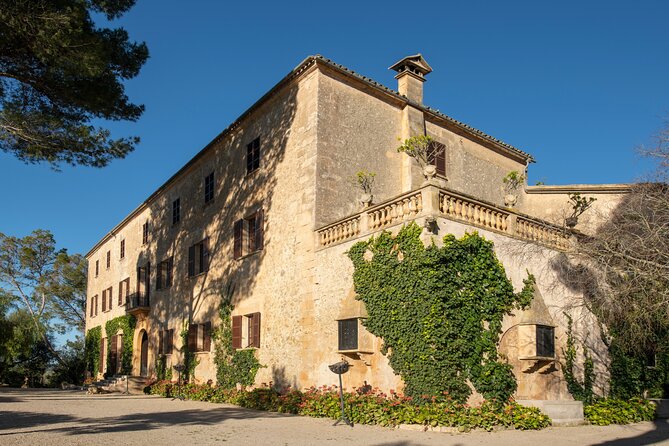
- 30+ rooms across house and farm buildings, so it feels like a full day of local life, not a quick stop
- English tour and a small group limit of 15 travelers
- Free parking is included, which helps a lot in rural Mallorca
- Expect farm details like bread baking, mills, carpentry, and blacksmithing
- The outdoor animal setup may not match what some people expect in cooler climates, so look closely yourself
Getting to Els Calderers and what the 3-hour visit feels like
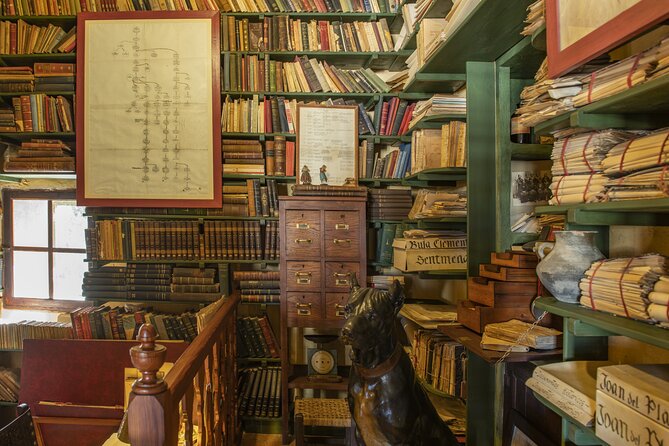
Plan on about 3 hours on site, give or take a bit depending on questions and how the group moves. At a small size (max 15 travelers), you should get more than a rushed circuit, especially if you’re the type who actually reads room labels while walking.
The meeting point is the Museu Etnològic dels Calderers at Finca Els Calderers, Camino, Els Calderers, 07240 San Juan, Illes Balears, Spain. The tour ends back at the same place, which makes logistics simpler than many “drop-off and disappear” excursions.
Two practical notes that matter:
- Private transportation isn’t included, so you’ll want your own car or a plan for local transport.
- Free parking is included, which can be a real money-saver if you’re driving.
Language-wise, the tour is offered in English, and most people can participate. If you’re sensitive to animal-related environments, come with a clear mindset and be ready to make your own call while you’re there.
Finally, timing: it’s commonly booked around 10 days in advance, so don’t wait until the last minute if you want a specific day.
You can also read our reviews of more museum experiences in Mallorca


Entering the Els Calderers house: where elegance meets work
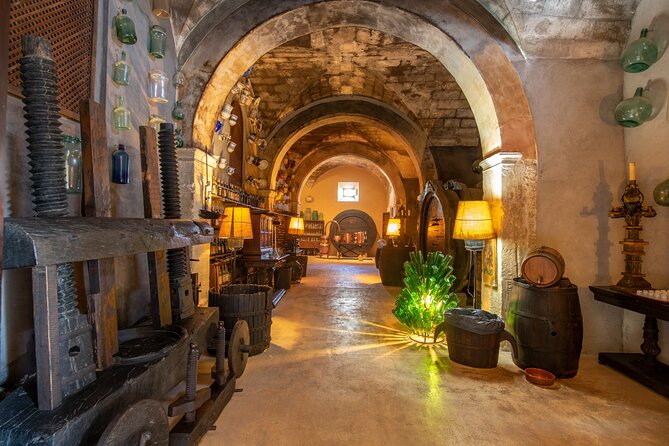
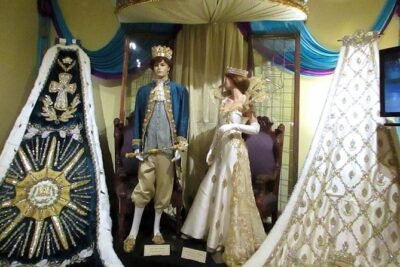
Els Calderers is a house museum, but it doesn’t feel like a costume set. What you’re touring is an estate life split between status and necessity: religious rooms, domestic spaces, and the working areas that kept food, tools, and animals in order.
Inside, you’ll move room to room through more than 30 spaces arranged to follow how life actually flowed—public-to-private, upstairs/downstairs, then out toward production buildings. Some of the most memorable parts are the transitions: one moment you’re in a more formal space, the next you’re seeing the kinds of tasks tied to bread, laundry, and farm maintenance.
I also like that the pace is built for interpretation. A lot of small museums give you a few highlight rooms. Here, the full route is the point.
Ground floor rooms: Hall, priest’s office, chapel, and celler
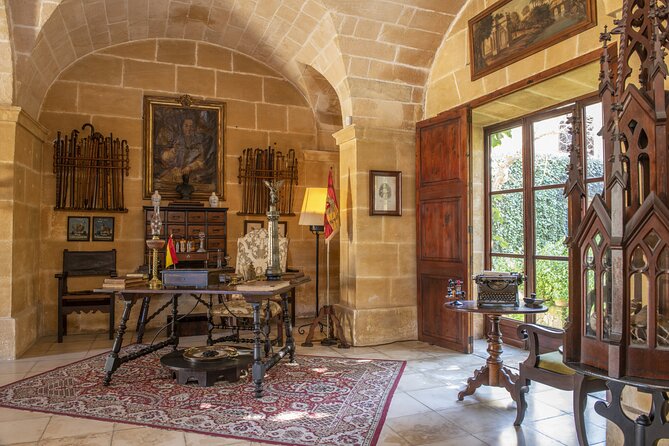
Your tour begins in the first set of rooms on the ground floor, and that start matters. These spaces set the tone of the estate: part home, part institution, part farm headquarters.
You’ll see:
- Hall (twice, in the route), which gives you the estate’s first impression—big enough to feel ceremonial, but still domestic
- Office of the Priest, which helps explain how religion was tied to everyday routines
- Chapel, where you get a clear sense of the family’s spiritual and social world
- Celler, a room that hints at storage, preservation, and the behind-the-scenes logistics of rural living
Even if you don’t obsess over architecture, these rooms are useful because they show power in plain sight: who had roles, where those roles lived, and how a community-centered household worked.
Main bedroom and its “dependencies” for daily routines
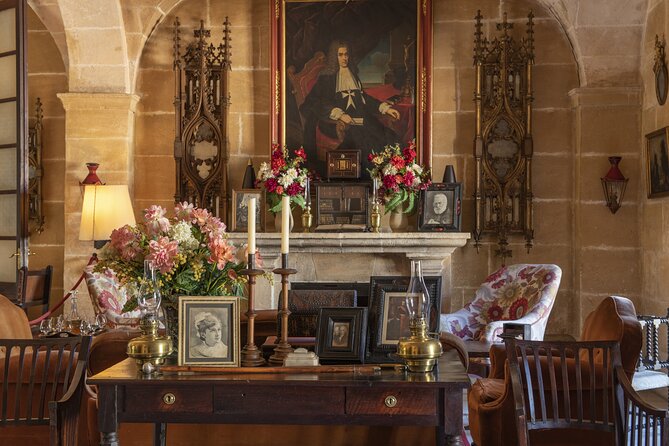
After the early rooms, the route moves toward the main bedroom and the areas that support it. This is where the tour gets more human-scale. You’re not just looking at furniture—you’re seeing the functional geography around sleeping, grooming, and household flow.
You’ll pass through:
- Dependencies of the main bedroom (including spaces listed as a common room and dressing areas)
- A corridor that feels like the connecting tissue of the house
- A toilet and the ironer (laundry and clothes care show up here as part of living, not an add-on)
This section is valuable because it breaks the myth that old houses were only “decor.” They were systems. A corridor, an ironer, a toilet—those aren’t glamorous, but they’re the difference between a fantasy mansion and a functioning home.
If you’re the type who loves practical details, you’ll probably enjoy this segment more than you expect.
From barn to peasant kitchen: food, staff life, and household roles
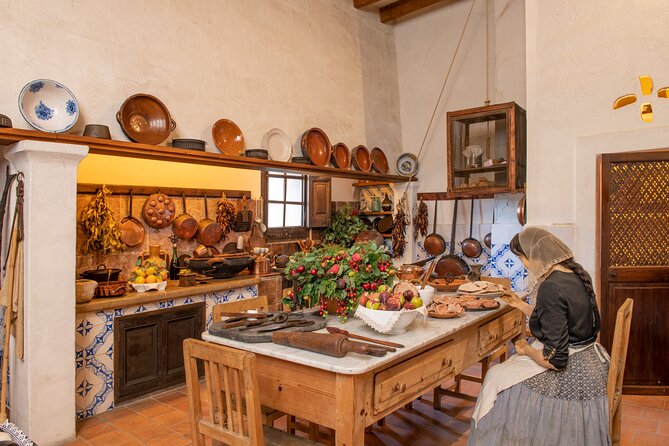
Then comes a shift from private spaces to food production and staff or working zones. The route includes the barn, bedrooms, and an office connected to the mayoral role, followed by key domestic work rooms.
A standout sequence includes:
- Peasant kitchen, which helps you understand how meals were prepared for the broader household
- Toilets and a bar, which add a social and daily-life layer beyond the formal rooms
- Souvenirs, which are part of the museum approach—handy if you want something small and locally themed
- Bread oven, one of the most tangible “you can almost smell it” stops
- Laundry, which grounds the experience in the chores that never sounded romantic
I like how the route doesn’t treat food as one stop. It treats bread and washing as central household labor. If you’re traveling with someone who thinks museums should be only about paintings and dates, this part often changes minds.
One small thing to keep in mind: not every room will feel equally maintained or explained. Some visitors have felt the information approach can be a little confusing, especially if room numbering doesn’t line up cleanly with a printed route. I’d suggest you stick close to the guide at any decision points so you don’t waste time reorienting.
Final stays: tools, milling, and the estate’s production engine
After the house rooms, the tour continues into the “final stays,” and this is where Els Calderers stops being only a house and becomes a complete working estate model.
You’ll walk through:
- Carpentry and blacksmithing areas, showing how tools and equipment were made and repaired
- Algarrobos and almonds machinery, connecting local crops to real work processes
- A pig slaughter room, which is blunt and not designed for comfort
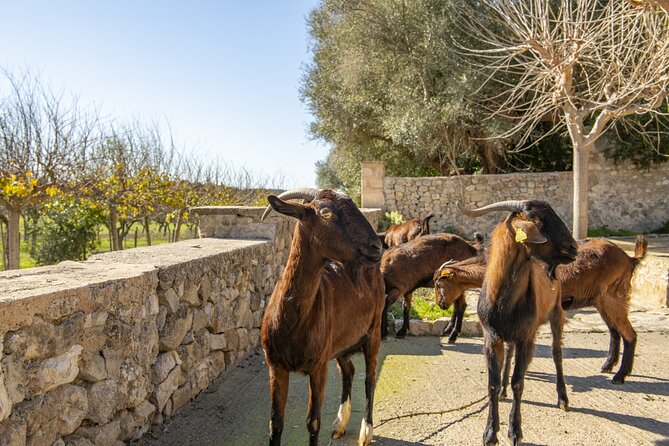
- Corrals with different animals, where animal handling becomes part of the story
- A flour mill, a key step in turning harvest into daily staples
- A corral of equine animals, relevant in farm transport and labor
- A porch of carts and garnishes, which rounds it out with the equipment side of farm life
If you like to understand “how did they do that,” this section delivers. It connects crops → processing → work → food → maintenance. It’s also where the estate’s economic logic becomes obvious: nothing expensive was truly separate. Everything supported everything else.
The animal areas at Els Calderers: what to watch for on the day
Because the farm is part of the museum experience, animal conditions are part of the emotional equation. Some people have described outdoor pens as bare, and others have said the animals looked healthy with shade and water.
Here’s the most practical way to handle it: when you reach the corrals, slow down and look at three things:
- Shade and shelter available in the yard area
- Space and bedding, if any is present
- Clean water access
You don’t need to become an animal welfare investigator. Just use your eyes and decide whether the setup matches your comfort level.
Also notice that farm life in Mediterranean climates can differ from what you might expect in cooler regions. That doesn’t erase concerns, but it helps you interpret what you’re seeing without jumping straight to conclusions. If something genuinely worries you, ask the staff about animal care routines while you’re there—don’t wait until you’re back out in the car.
Price and value: is $10.81 worth it?
At $10.81 per person, this tour is priced like a true local experience rather than a premium museum ticket. You also get an admission ticket included experience, which matters because it removes one of the usual “add-ons” that can make small museums feel pricier.
The free parking helps value too, especially if you’re driving in rural Mallorca and want to avoid parking headaches.
Where it’s biggest value:
- You want a guided route that takes you through many rooms, not just a quick house walkthrough
- You’re interested in how farm operations and household life blended
- You like seeing how everyday objects (bread ovens, laundry areas, mills) worked
Where it may feel less like value:
- If you mainly want polished museum presentation with minimal farm distractions
- If animal areas are a deal-breaker for you emotionally
For the right mindset, the price-to-time ratio feels fair.
Who should book Els Calderers (and who might skip it)
This tour suits you if you like small-group history that’s built around real daily work. It’s also a good match for visitors who enjoy practical details—tools, milling, baking, and the routines that kept an estate alive.
It can be a tougher fit if:
- You’re strongly bothered by animal living conditions in outdoor pens
- You dislike tours where not every room feels equally refined or explained
- You need a very tightly scripted experience with lots of modern interpretive tech (the visit is more “estate walkthrough” than “interactive exhibit palace”)
If you’re traveling with kids, this can work well because the farm side gives visual momentum. Just be prepared for a more serious tone in rooms tied to production, like the pig slaughter space.
Should I book this 3-hour house-and-farm tour?
If you want authentic Mallorca beyond postcards, Els Calderers is a solid pick. You’ll get a guided English visit that moves through 30+ rooms and ends with the estate’s working heart—mills, tools, and animal areas.
I’d book it if you’re excited by the mix of household life and production spaces, and you can handle that the outdoor parts of a farm can be emotionally complicated. If you’re sensitive to animal welfare scenes, come ready to observe carefully and decide in the moment.
FAQ
How long is the Els Calderers House Museum tour?
It’s about 3 hours.
How much does it cost per person?
The price is $10.81 per person, and the admission ticket is included.
Is the tour available in English?
Yes. The experience is offered in English.
What’s the group size limit?
The tour has a maximum of 15 travelers.
Where do I meet the tour?
Meet at Museu Etnològic dels Calderers, Finca Els Calderers Camino, Els Calderers, 07240 San Juan, Illes Balears, Spain.
Do I need to arrange my own transportation?
Private transportation isn’t included, so you’ll need to plan how to get there.
Is parking included?
Yes. Free parking is included.
Can I cancel for free?
Yes. You can cancel up to 24 hours in advance for a full refund.