REVIEW · EL CALAFATE
El Calafate History Museum Tour
Book on Viator →Operated by Centro de Interpretación Histórica Calafate · Bookable on Viator
A history lesson with dinosaur bones. The El Calafate History Museum Tour is built around a visit to the El Calafate Historical Interpretation Center, where you’re guided through Southern Patagonia’s past using exhibits, videos, and bone displays. It’s a smart option when you want something quieter than the big-ticket glacier day, but still feel like you’re learning real Patagonia stories.
What I like most is that the museum focuses on both geologic and human history—not just fossils—and it ties extinct dinosaurs and mega-mammals to later ecological changes in the region. I also love the pacing flexibility: you’re not stuck racing a rigid schedule inside the museum, since the center is open daily from 10:00am to 8:00pm and you can plan your visit within that window.
One drawback to think about: it’s a small space. If you’re hoping for a huge, multi-building museum experience, you may want to set expectations and spend your time reading the displays and watching the media rather than expecting endless rooms.
In This Review
- Key highlights worth timing your day for
- Inside the El Calafate Historical Interpretation Center (your main stop)
- What you’ll actually see: dinosaurs, mega-mammals, and deep time
- Patagonia geology meets human history (Tehuelche culture is part of the story)
- How long should you plan for? (and what the opening hours mean)
- Language support for real comprehension
- Private group, family-ready, and low-pressure
- Price and value: why $15 can be a smart use of time
- Practical planning: location, timing, and what to bring
- Who this tour fits best
- Should you book the El Calafate History Museum Tour?
- FAQ
- What is the main stop on the El Calafate History Museum Tour?
- How much does the tour cost?
- How long does the tour take?
- What time is the start, and when is the museum open?
- Is admission included in the price?
- Are there extra costs besides the $15 ticket price?
- Do I need transportation included?
- What languages are available?
- Can children attend?
- Is there free cancellation?
Key highlights worth timing your day for
- 100 million years of Patagonia history: dinosaur skeletons and mega-mammals framed by the region’s deep time
- Fossils plus glacier and Pleistocene change: geology and environment explained together
- Human history connection: Tehuelche culture is included in what you learn
- Family-friendly, no minimum age: kids can go, as long as an adult is with them
- Multilingual support: Spanish, French, English, Italian, and Portuguese are available
Inside the El Calafate Historical Interpretation Center (your main stop)
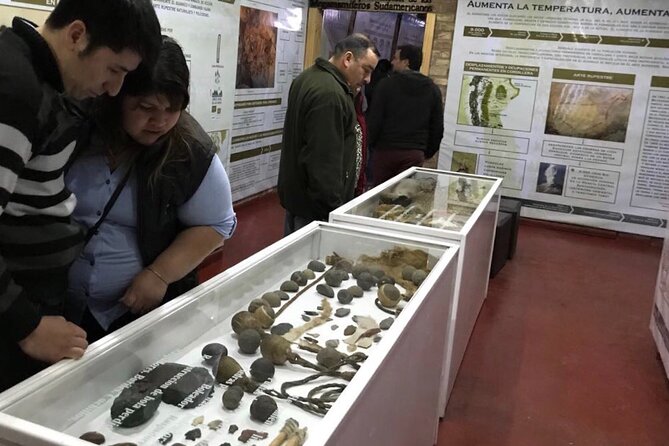
This tour centers on one stop: your visit to the El Calafate Historical Interpretation Center. The format is museum-style, with exhibits that use tools like graphics, videos, and bone montages to help you piece together what happened in Southern Patagonia over an enormous timeline. The tour length is listed as 1 to 4 hours (approx.), but the way the visit is described points to a solid chunk of time inside—think around two hours if you like to read and watch a bit rather than sprint.
The setting is handy, too. One review notes it’s about 7 blocks from Libertador Avenue, and it’s near public transportation. That matters because El Calafate has days when weather, wind, or crowds can mess with your plans. This is the kind of activity where you can walk, transit, or taxi over without building your day around a long transfer.
If you’re the type who enjoys “how did we get here?” questions, you’ll probably appreciate the museum’s approach. It doesn’t treat fossils as random wow-points; it links them to the processes that shaped the land—and then ties those changes forward to human history in the region.
What you’ll actually see: dinosaurs, mega-mammals, and deep time
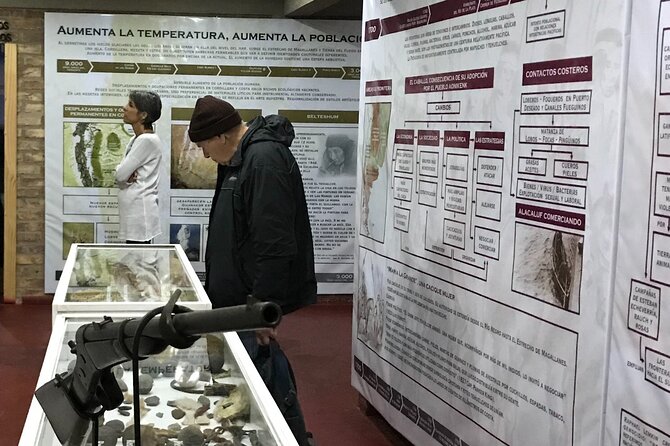
The headline promise is fossils: you’ll see bones and fossils of extinct dinosaurs and mega-mammals found in the Southern Patagonia area. The museum’s story is described as covering about 100 million-year history, which is a big deal for your understanding of Patagonia. It shifts the focus from “what is there now?” to “how did this place become what it is?”
Here’s why that’s valuable for you on a trip to El Calafate. Patagonia is famous for its dramatic landscapes, but without context, it’s easy to treat them like pretty backdrops. When a museum frames dinosaurs and mega-mammals alongside later environmental transformations, you start to connect the dots between the fossils you see indoors and the glacier-and-rock reality you’ll likely encounter outside later in your trip.
Also, the museum doesn’t stop at animals. It covers glacier processes and ecological transformations tied to the Pleistocene, which is a period of major climate shifts during the Ice Age timeframe. Even if you’re not a science person, you’ll usually walk away with a clearer mental model of why the region’s ecosystems changed the way they did.
Patagonia geology meets human history (Tehuelche culture is part of the story)
One of the most useful aspects of this tour is that it’s not fossil-only. The museum is described as teaching both geologic and human history of Southern Patagonia, and it specifically references ecological transformations of the Pleistocene that were part of the Tehuelche culture.
That word—Tehuelche—doesn’t just add a human-interest layer. It helps you avoid a common museum trap: treating nature history and human history like two separate chapters. In Patagonia, the timing matters. Climate shifts and environmental changes affect where people live, how they move, and what resources are available. When you see the museum make that link, your trip feels more grounded.
You’ll also get the sense that the museum is trying to tell a connected regional story rather than isolated facts. That’s great if you like learning something you can carry into other stops—like when you look at glacier landscapes later and wonder what conditions produced them and how they changed ecosystems over time.
How long should you plan for? (and what the opening hours mean)
Your tour duration is listed as 1 to 4 hours, approx. That range is wide, and it should be. This is a museum experience, and your time will depend on how closely you read, how often you pause the videos, and how much you want to linger with the fossil displays.
The museum is open every day from 10:00am to 8:00pm. So even though the experience has a start time listed at 10:00am, you’ll generally be able to choose a time that fits your day. Practically, that gives you flexibility if you wake up to a foggy morning or a late start.
One Sunday-afternoon review called the place a small space full of history. That’s exactly the kind of detail that helps you decide pacing: if you arrive when it’s calmer, you can take your time without feeling pushed. If you arrive later in the day, expect the usual museum buzz—families, people passing through, and more casual browsing.
Language support for real comprehension
If Spanish isn’t your first language, you’re covered. The center offers translation options in Spanish, French, English, Italian, and Portuguese. That’s important because a lot of museum value comes from understanding what the exhibits are actually saying, not just looking at pictures.
The tour information also notes that it may be operated by a multi-lingual guide. Even if the museum is self-paced, a guide (when available) can help you connect the dots and prioritize what’s most important in the displays.
One review also mentioned reading more than relying on hearing aids. I take that as a gentle reminder: don’t treat audio support as the whole experience. If you want maximum value, read the labels, watch the media when you pass it, and use visuals to reinforce the text.
Private group, family-ready, and low-pressure
This is listed as a private tour/activity, with only your group participating. That can matter for families and anyone who doesn’t want to feel like they’re being herded. It also means you can typically move at a comfortable pace, staying longer where you’re curious and skipping what you’re less interested in.
It’s also family-friendly in a straightforward way:
- Children must be accompanied by an adult
- No minimum age to experience it
- Service animals are allowed
If you’re traveling with kids, this is the kind of stop that can work better than long outdoor days. Fossils and large visuals tend to hold attention, and the museum environment is easier to manage when weather turns.
Price and value: why $15 can be a smart use of time
The price is $15.00 per person, and the tour includes all taxes, fees, and handling charges. In other words, you’re not playing guess-the-total later. That makes planning simpler when you’re budgeting a week in El Calafate.
Is it worth it? For me, value depends on what you’re trying to get from El Calafate. If you want glaciers plus hikes, this won’t replace the big nature days. But if you want a calm, educational stop that adds context to Patagonia’s bigger story, $15 is a friendly price for a guided museum visit.
Just keep an eye on extras that are not included. Parking fees (if you drive) are payable at tour check-in, and souvenir photos plus snacks and drinks are available to purchase. Transportation to and from the attraction is also not included, so plan your ride or walking route in advance.
Practical planning: location, timing, and what to bring
Because transportation isn’t included, you’ll want to plan how you’ll get there. The good news is that it’s near public transportation, and it’s roughly walkable to the area around Libertador Avenue (about 7 blocks per one review). That makes it easier to drop into the day without building an entire logistics plan around it.
Timing-wise, the open hours (10:00am to 8:00pm) give you options. If you like mornings, go earlier for calmer viewing. If you prefer late afternoons, you can keep the rest of your day flexible and still make the museum work.
What to bring is simple:
- Comfortable shoes for walking to/from the museum
- Reading glasses if you use them (museum signage can be small)
- Patience for families and question-asking kids—this stop supports that
And one small mental note: because the museum is described as small, your “best use” of time is to focus on the exhibits that explain relationships—what changed, when it changed, and why it matters—rather than trying to see everything at breakneck speed.
Who this tour fits best
This experience is a strong match if you:
- Want an intro to Southern Patagonia that connects geology, climate change, and human history
- Enjoy museum-style learning with visuals and fossil displays
- Are traveling with kids and need something indoor and manageable
- Prefer a low-stress, private group format
- Are visiting in a weather-inconvenient stretch and still want value from your day
It may not be the best fit if you’re hunting for a large-scale museum campus with hours of wandering across many buildings. This is small, focused, and time-efficient—plan accordingly.
Should you book the El Calafate History Museum Tour?
If you’re asking whether to book, here’s the practical call: I’d book this if you want context. For $15 with admission included, you get a focused visit to the El Calafate Historical Interpretation Center that covers fossils, glacier processes, and Pleistocene ecological change alongside Tehuelche culture.
Skip it only if your trip plan is already packed with multiple indoor activities and you’re mainly looking for something huge and sprawling. Otherwise, this is exactly the kind of stop that makes the rest of Patagonia feel more connected—and it does it without draining your energy.
FAQ
What is the main stop on the El Calafate History Museum Tour?
The tour takes you to the El Calafate Historical Interpretation Center for your museum visit.
How much does the tour cost?
It costs $15.00 per person.
How long does the tour take?
The duration is listed as 1 to 4 hours (approx.).
What time is the start, and when is the museum open?
The experience lists a 10:00am start, and the museum is open daily from 10:00am to 8:00pm.
Is admission included in the price?
Yes. The admission ticket is included, and all taxes, fees, and handling charges are included too.
Are there extra costs besides the $15 ticket price?
Parking fees may apply if you drive, and souvenir photos, snacks, coffee or tea, and non-alcoholic beverages are available for purchase.
Do I need transportation included?
No. Transportation to and from the attractions is not included.
What languages are available?
Translation options are available in Spanish, French, English, Italian, and Portuguese.
Can children attend?
Yes, there is no minimum age, but children must be accompanied by an adult. Service animals are allowed.
Is there free cancellation?
Free cancellation is available. You can cancel up to 24 hours in advance for a full refund.