REVIEW · BALI
Bali: Archeology Museum, Gunung Kawi & Goa Gajah Temple Tour
Book on GetYourGuide →Operated by Trip Gotik - Bali Tours · Bookable on GetYourGuide
Bali’s ancient water and stone feel close. This 7-hour archaeology day pairs Tirta Empul purification pools with the cliff-temple drama of Gunung Kawi, then adds the long rock carvings at Yeh Pulu and the relic-filled Gedong Arca museum. The one real catch is the walking: expect stairs, uneven paths, and temple rules that affect entry, so you’ll want sturdy shoes and a flexible plan.
You’ll also get what makes this kind of tour work in real life: hotel pickup and drop-off, an English-speaking guide, and the chance to tailor the day with add-ons like Luwak coffee tasting, massage, or even ATV and swing time. It’s priced at about $36 per person for a full day, so it’s strongest value when you care about temples, archaeology, and explanations that help you see what you’re looking at.
In This Review
- Key things that make this tour click
- One long day that connects Bali’s old world
- Tirta Empul: holy spring cleansing pools and temple etiquette
- Gunung Kawi: cliff temples, lost-king legends, and stairs
- Yeh Pulu at Bedulu: a 25-meter carving story in stone
- Goa Gajah: demon-mouth entry and a calmer interior
- Gedong Arca (Bali Archaeological Museum): where the artifacts explain the temples
- How the private format keeps the day from feeling rushed
- Optional add-ons that actually fit the archaeology day
- What to bring, how to dress, and what can ruin the day
- Price and value: why $36 can work for the right person
- Who should book, and who should skip
- Should you book this Bali archaeology tour?
- FAQ
- FAQ
- How long is the Bali Archeology Museum, Gunung Kawi & Goa Gajah Temple Tour?
- How much does the tour cost?
- What is included in the price?
- Is lunch or other food included?
- Are there any temple entry rules I should know?
- Can I bring pets or alcohol/drugs?
- What should I bring?
Key things that make this tour click
- Tirta Empul’s holy spring pools with a clear, guided explanation of the purification ritual
- Gunung Kawi by the Pakerisan River and the steep stair-and-cliff experience
- Yeh Pulu’s 25-meter-long carving wall showing gods and everyday village life
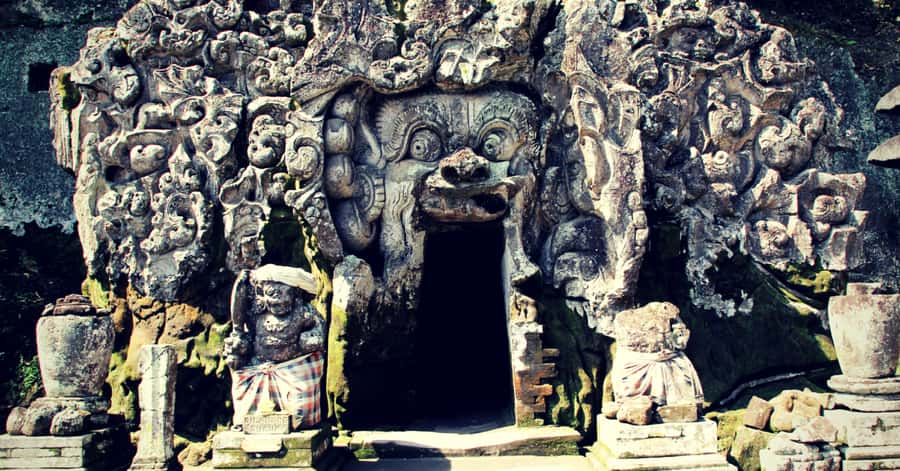
- Goa Gajah’s demon-mouth entrance leading to an atmosphere meant for meditation
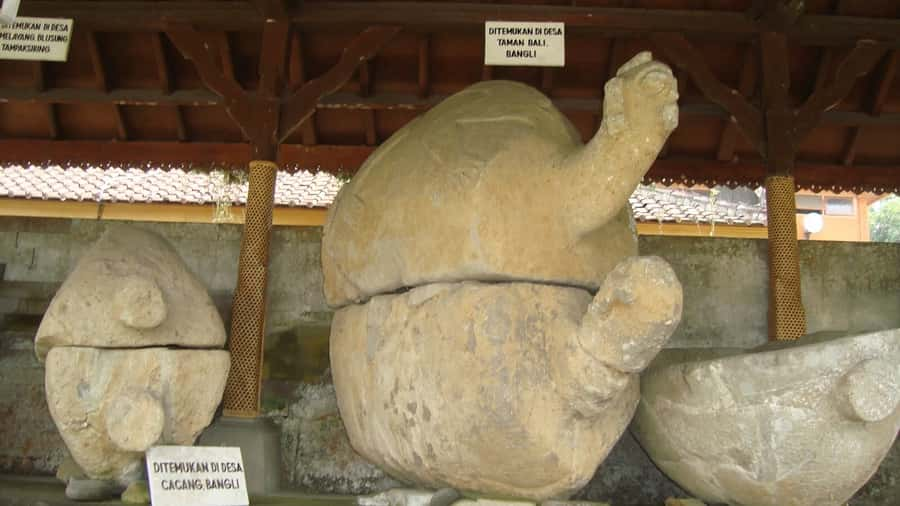
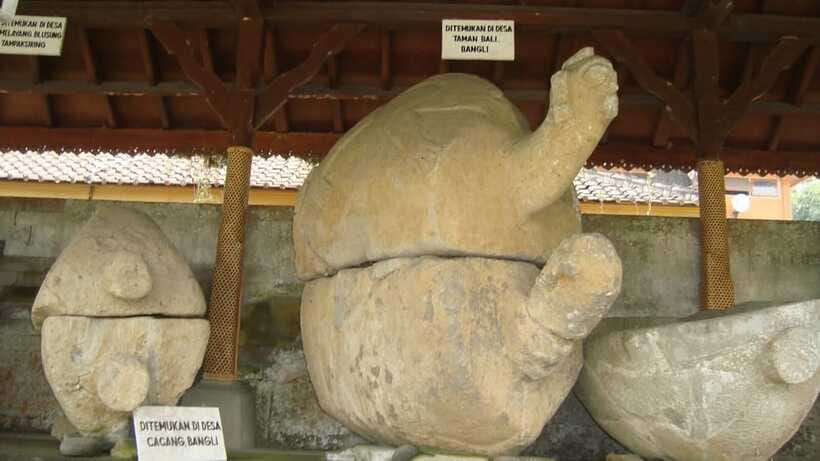
- Gedong Arca Museum with heritage objects, including sarcophagus-style pieces
- Optional upgrades like massage, Luwak coffee, Polaroid photo set, Jungle Swing, ATV, or rafting
One long day that connects Bali’s old world
This tour is built like a story. You start with ritual water at Tirta Empul, shift to ancient stone work at Gunung Kawi and Yeh Pulu, then move into the more mysterious, meditation-oriented Goa Gajah. You finish at Gedong Arca, where the museum pieces help you put the temples into context.
That ordering matters because Bali’s sacred sites can look similar if you only glance at carvings. With the guide pacing and explanations, you’re not just taking photos of temples. You’re learning what each place was for, how old traditions show up in the design, and why locals still treat them as living spiritual spaces.
Tirta Empul: holy spring cleansing pools and temple etiquette
Tirta Empul is the emotional start of the day. It’s a sacred Hindu temple dating back to the 10th century, famous for its holy spring water, believed to have healing and purification properties. Expect bathing pools where people come for cleansing rituals.
Before you go in, plan for practical rules. You’ll want modest dress with shoulders and knees covered. And there’s a specific temple entry limitation: menstruating individuals aren’t permitted to enter. If that applies to you or your group, you’ll need to adjust your plan with your guide.
Also keep your expectations realistic. This isn’t a quick “look and leave” stop. You’ll move through the complex slowly enough to take in the setting and understand the purpose of what you’re seeing—especially the way the water features are used during ritual cleansing.
Gunung Kawi: cliff temples, lost-king legends, and stairs
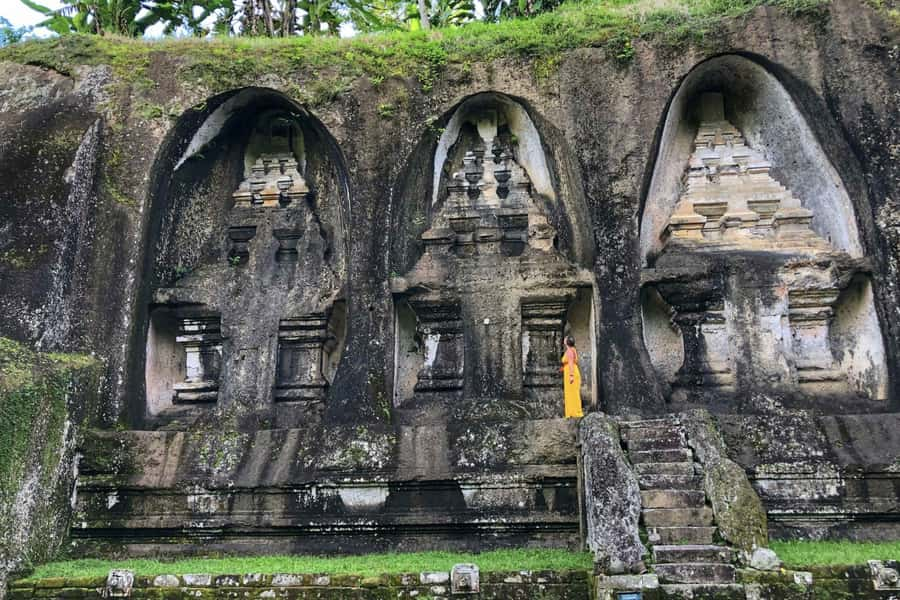
Next comes Gunung Kawi, a temple complex with a pre-Hindu feel—yet still tied into Bali’s long religious evolution. The sites are associated with legends of forgotten Balinese kings, and the temples are believed to date back to around the 11th century.
What you should actually prepare for is the terrain. Gunung Kawi is famous for the stair descent and the narrow, uneven paths that connect viewpoints and carvings. You’ll be working your legs, not just your camera.
A few practical tips make a big difference:
- Wear comfortable walking shoes with grip.
- Bring sunscreen and hydrate, because much of the experience is outdoors.
- If it’s been raining, assume some steps and stone surfaces can be slippery.
If you’re the type who likes details, ask the guide to explain what you’re seeing as you move down. The carvings and niches can feel random at first, but with a guided walkthrough, they start to read like a map of belief and power.
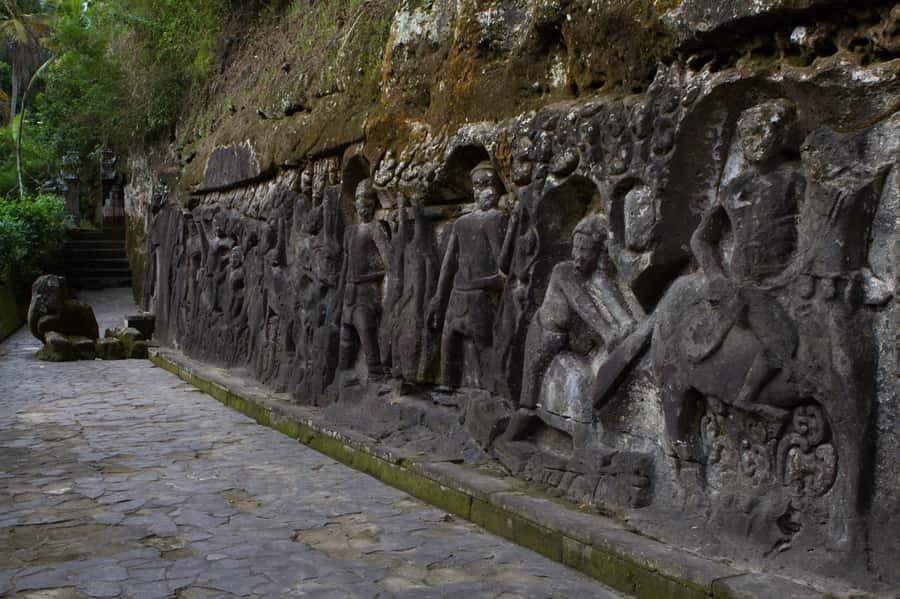
Yeh Pulu at Bedulu: a 25-meter carving story in stone
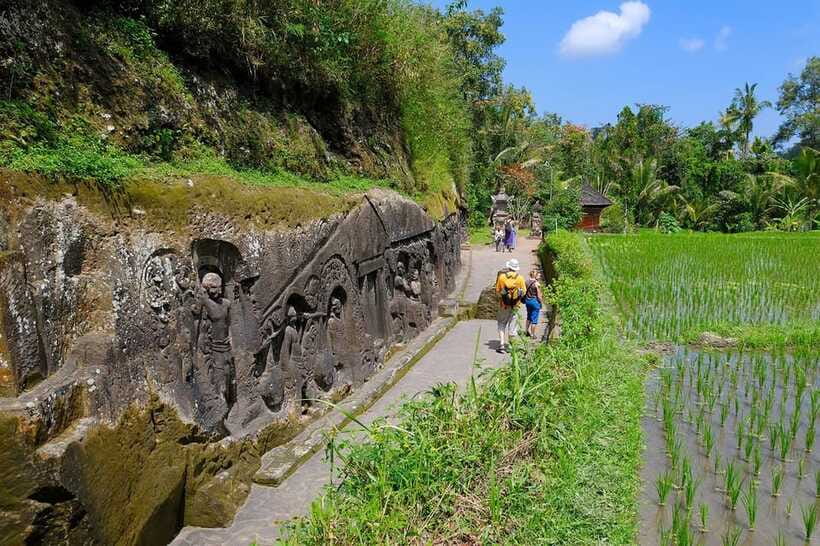
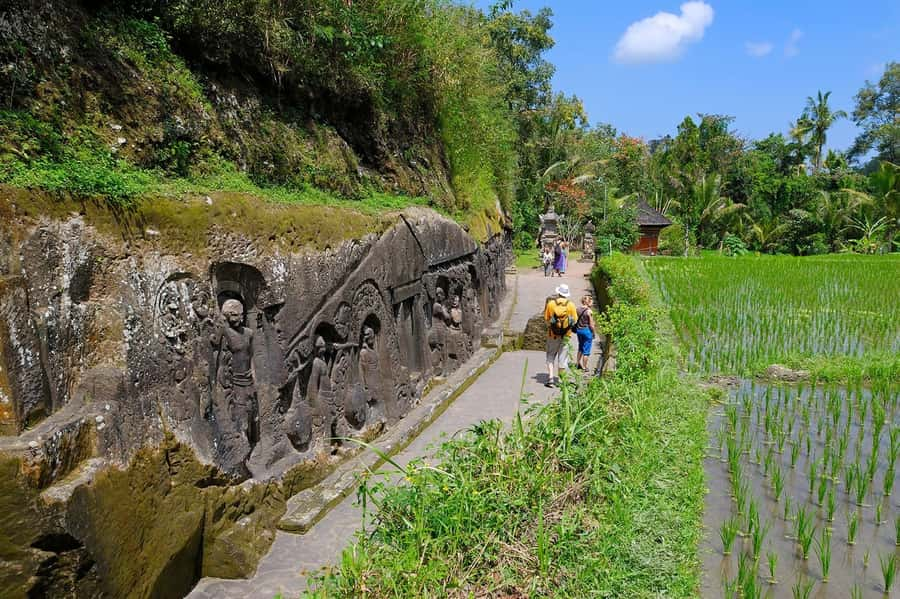
Yeh Pulu is one of those stops where you understand instantly why a guide matters. This Bedulu site includes an impressive 25-meter-long rock carving display, etched into the stone face.
You’ll see mythological characters and Hindu gods—but also people going about everyday life. That mix is a big part of what makes Yeh Pulu special for history-minded visitors: it’s not only about religion. It’s also about how stories and daily routines were captured in sacred art.
Expect more walking and uneven footing here too, since the site is built into the landscape. Go slow, and don’t rush your viewing. If you take your time, you can spot how different figures relate to each other across the long rock face.
Goa Gajah: demon-mouth entry and a calmer interior
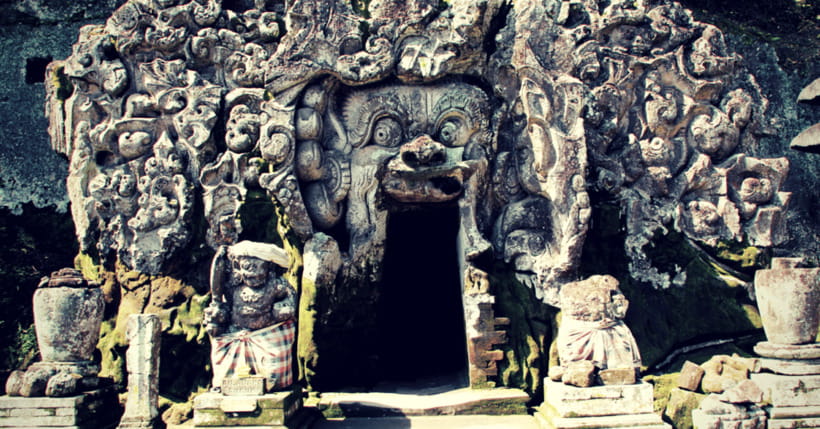
Goa Gajah Temple dates back to the 9th century and has one of the most memorable entrances in central Bali. The entrance resembles a demon’s mouth, giving the site a mystery-first vibe.
Inside, you’ll find stone carvings and structures that point to spiritual use—this is a place shaped for meditation and quieter practice. Even as a visitor, the right mindset helps. Keep your voice down, follow your guide’s instructions, and respect any areas that are off-limits.
A practical note for your photo planning: photography is allowed, but drone use may be restricted at some temples. When in doubt, ask your guide before launching anything.
Also watch your footing. Stone steps can be slippery in light rain, and this tour runs in light rain if needed. A light raincoat can help you keep moving comfortably rather than feeling miserable.
Gedong Arca (Bali Archaeological Museum): where the artifacts explain the temples
The day ends with a museum stop at Gedong Arca, also called the Bali Archaeological Museum, located in Tampaksiring Village. This is the place where you can slow down and connect the dots.
You’ll see heritage objects collected over the centuries, including carved pieces and sarcophagus-style items referenced during the day. Museum time gives you something temple-hopping doesn’t: a chance to study forms and materials without the same pressure of walking between sacred points.
One small consideration: museums can have downtime. I’ve seen examples of guides adjusting the plan when a museum was closed, substituting another meaningful stop. So if your visit day doesn’t line up with museum hours, it doesn’t automatically mean the day falls apart. Your guide should be able to redirect you thoughtfully.
How the private format keeps the day from feeling rushed
This is a private group tour, and that shows in the pacing. Many people highlight guides who keep things calm rather than sprinting from site to site. You also get pickup and drop-off, which matters because temple days are tiring enough without navigating on your own.
Guide quality is a standout theme. Different guides have been credited for being warm, flexible, and able to answer questions beyond the main attractions. Names you may hear associated with this kind of tour include Suker, Gusde, Komang, Joe, Subi, Agus, and Dharma—and the point isn’t the celebrity of the guide. The point is the skill: turning a set of stones into a readable story of Balinese culture and religious practice.
You’ll also benefit if your guide is good at crowd and traffic awareness. Several experiences mention route adjustments to help avoid heavier crowds, which can make the difference between enjoying temples and feeling annoyed at timing.
Optional add-ons that actually fit the archaeology day
This tour is built to be customizable. Some add-ons are available only for certain options, but the main idea is you can lengthen your day in ways that match your interests—without losing the core temple circuit.
Here are the most useful add-on categories to consider:
- Luwak coffee tasting: if you’re doing it, I’d treat it as a cultural stop, not a souvenir grab. It’s an easy pairing with a temple day because it gives you a break from heat and walking.
- Massage (1-hour or 2-hour traditional): this is a smart choice if you know you’ll feel your legs after Gunung Kawi and the other stair-heavy sections. It also turns the day into something more relaxing, not only intense.
- Polaroid camera with 10 photos: good if you want physical keepsakes without fiddling with your phone camera between sites.
- Jungle Swing + coffee: fun if you like photo moments and don’t mind adding another activity on top of temple walking.
- Solo or Tandem ATV (1-hour): great for adrenaline types who want a break from sacred calm.
- Rafting & Buffet (3-hour): best if you want a full adventure block day-to-night, and you’re comfortable fitting it into a 7-hour schedule.
If you’re not sure what to add, my practical advice is simple: choose one add-on that matches your energy level. One coffee-focused stop or one massage option usually complements this itinerary better than stacking multiple intense activities.
What to bring, how to dress, and what can ruin the day
Do this and you’ll enjoy the tour much more:
- Bring camera, sunscreen, and cash (handy for extras).
- Wear modest temple clothing (shoulders and knees covered).
- Bring a hat and water habits that keep you steady in the sun.
- Expect lots of stairs and uneven paths at Gunung Kawi, Yeh Pulu, and Goa Gajah.
What not to do:
- Don’t bring pets.
- Skip alcohol and drugs.
- Don’t touch carvings or restricted areas. Sacred sites are still active spiritual spaces.
Also keep in mind the tour isn’t friendly to everyone. It’s not recommended if you have mobility issues, use a wheelchair, are pregnant, or are over 70. That’s because the walking load and staircounts are real, not optional.
Price and value: why $36 can work for the right person
At about $36 per person for roughly 7 hours, this isn’t a cheap “just drive me around” outing. The value comes from what’s included: hotel pickup and drop-off, all entry fees, and mineral water. You also get a live English-speaking guide, which is the difference between seeing temples and understanding them.
Where the math changes:
- Food and drinks aren’t included, so you’ll need to plan lunch or snacks.
- Add-ons can raise the final cost if you choose coffee, massage, swing, ATV, or rafting.
Still, for visitors who want a guided archaeology-focused circuit without juggling tickets, that included entry-fee coverage and door-to-door transport is the main reason this price feels fair.
Who should book, and who should skip
This tour is ideal if you:
- Care about Bali’s temples, carvings, and religious traditions
- Want a guided narrative that makes stone details make sense
- Like a structured day with pickup, timing, and route choices handled
You should skip (or choose something flatter) if you:
- Have mobility limitations or use a wheelchair
- Are pregnant
- Are over 70
- Prefer minimal walking and very stable surfaces
And if you’re going in light rain, don’t panic. The tour runs in light rain, but bring a light raincoat and be careful on stone steps.
Should you book this Bali archaeology tour?
Book it if you want a single day that connects the dots between sacred water, cliff temples, carved rock storytelling, and museum artifacts. The biggest reason to go is not only the sites—it’s the guiding approach and the pacing that helps you actually see what you came for.
Skip it if stairs and uneven terrain are a deal-breaker for you. This tour rewards patience and movement, so it’s best with legs that can handle ancient paths.
If you do book, I’d go in with two goals: dress modestly, and ask your guide to point out what you’d otherwise miss. That’s when the day stops being a checklist and becomes a real understanding of Bali’s archaeology and spiritual life.
FAQ
FAQ
How long is the Bali Archeology Museum, Gunung Kawi & Goa Gajah Temple Tour?
The tour lasts about 7 hours.
How much does the tour cost?
The price listed is $36 per person.
What is included in the price?
Included are hotel pickup and drop-off, all entry fees, mineral water, and a live English-speaking guide. Some add-ons (like massage, Polaroid photos, or coffee tasting) may add extra inclusions when selected.
Is lunch or other food included?
No. Food and drinks are not included.
Are there any temple entry rules I should know?
Yes. Due to local customs, menstruating individuals are not permitted to enter the temple.
Can I bring pets or alcohol/drugs?
No. Pets, alcohol, and drugs are not allowed.
What should I bring?
Bring a camera, sunscreen, and cash. Wear comfortable shoes since there are lots of stairs and uneven paths.