REVIEW · PUGLIA
Visit + Experience at the Historical Museum of Firefighters and the Italian Red Cross
Book on Viator →Operated by Museo Storico dei Pompieri e della Croce Rossa Italiana · Bookable on Viator
Firefighters and Red Cross history in one place.
What makes the Museo Storico dei Pompieri e della Croce Rossa Italiana such a fun stop is the guided tour through over 3,000 items in a 2,500-square-meter museum, plus the virtual reality fire experience that helps you understand what an emergency can feel like. I love that the visit works for different ages at the same time, with stories of firefighters told through real vehicles, uniforms, equipment, prints, books, and vintage photos. One small consideration: if your group prefers quiet museums, the interactive bits (games, VR, and the extinguishing test) may feel like more action than you want.
The good news is that it’s designed with a family flow: adults and kids shift from exhibits to play, from VR to a real test, and then into a relaxed cafeteria moment with coffee or tea. The one drawback to plan around is time. It runs about 2 to 3 hours, and with kids in the mix, you’ll want to arrive with a little cushion so everyone can do the activities without feeling rushed.
In This Review
- Key highlights you’ll feel right away
- First stop: the museum that turns equipment into a story
- The guided tour and VR fire simulation: learning by doing (safely)
- The core of the museum: 3,000 pieces that show how firefighting changed
- Cafeteria break: coffee or tea without the hunt
- Kid play area and inflatable games: where the story becomes play
- Real test of extinguishing: the hands-on moment adults will respect too
- Take-home fun: the cardboard ladder model and certificate
- Timing, duration, and how to make the most of your 2–3 hours
- Price and value: what you’re really paying for
- Who should book this experience
- Practical details that matter before you go
- Should you book it?
- FAQ
- Where is the Historical Museum of Firefighters and the Italian Red Cross located?
- How long does the experience last?
- What’s included in the price of $17.35 per person?
- Is there a mobile ticket?
- Do adults and children both get to try extinguishing?
- Is there food included?
- Are there kid-friendly activities beyond the museum exhibits?
- What time is the museum open?
- What are the cancellation terms?
- Is this experience only for my group?
Key highlights you’ll feel right away
- 2,500 square meters of firefighter-and-emergency exhibits, packed with history you can actually walk through
- 3,000+ pieces across vehicles, uniforms, equipment, photos, prints, and books
- VR fire simulation that gives context without you needing prior knowledge
- Hands-on extinguishing tests for adults and children in the same shared experience space
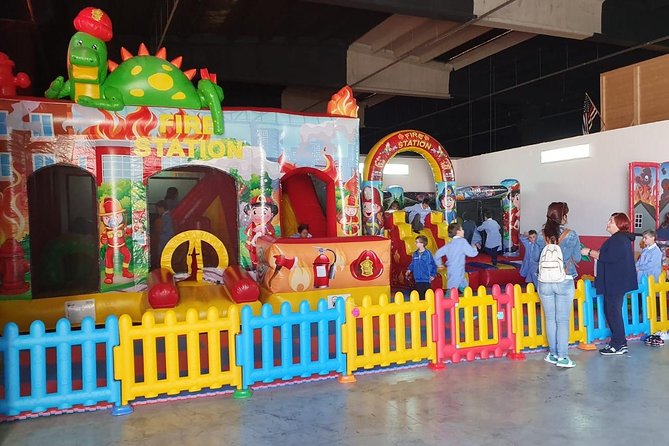
- Kid-focused play zone with themed games, video games, and inflatable activities
- A take-home model + certificate for children to extend the day after the museum
First stop: the museum that turns equipment into a story
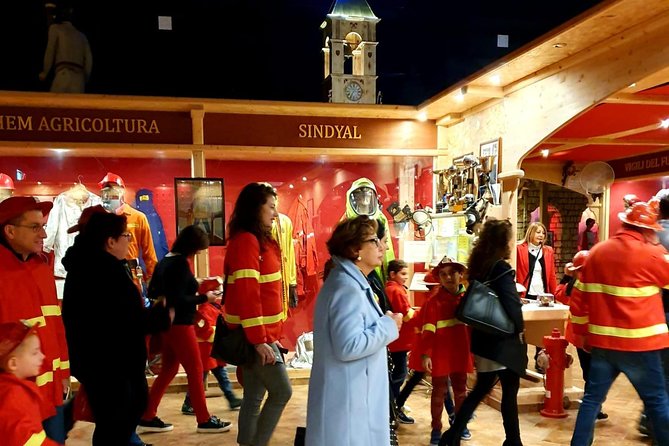
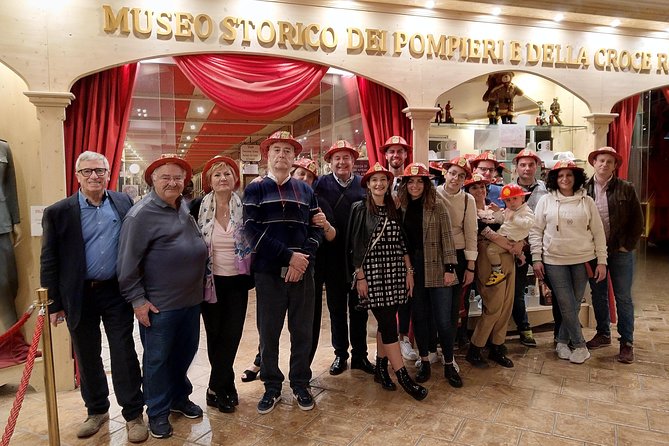
You start at the Museo Storico dei Pompieri e della Croce Rossa Italiana in Manfredonia, at Viale Antonio Meucci. The museum is built like a journey: large enough to feel substantial, but organized enough that a guided tour keeps you from getting lost in the details. The big headline is scale. You’re stepping into what’s described as the largest and most suggestive fire museum in the world, spread across 2,500 square meters, and covering the story of fire emergency services over time.
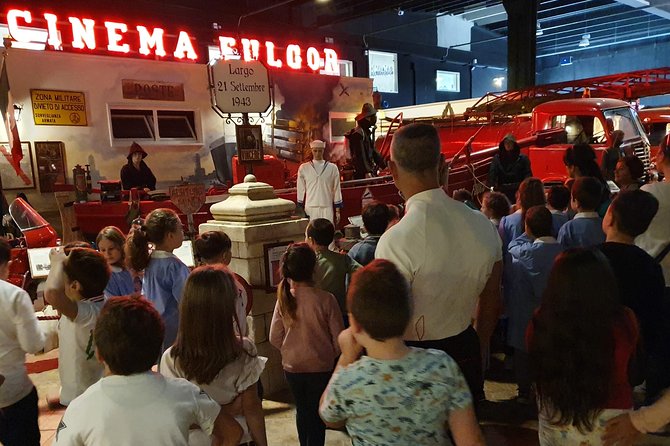
What I like most is how the collection isn’t just static display. Even before you reach the more interactive elements, the museum works hard to connect objects to what they were used for. You’ll see vehicles and the gear that firefighters needed, but also the human side through uniforms and historical visuals like engravings, prints, books, and vintage photographs. That blend matters. It’s not only about machinery; it’s about people, training, and how emergency response evolved.
For couples and solo adults, the museum can still be satisfying because the tour ties the items together into a timeline. For families, it gives kids a clear “mission” during the visit: learn what firefighters use, why they use it, and what happens when a fire is in play.
The guided tour and VR fire simulation: learning by doing (safely)
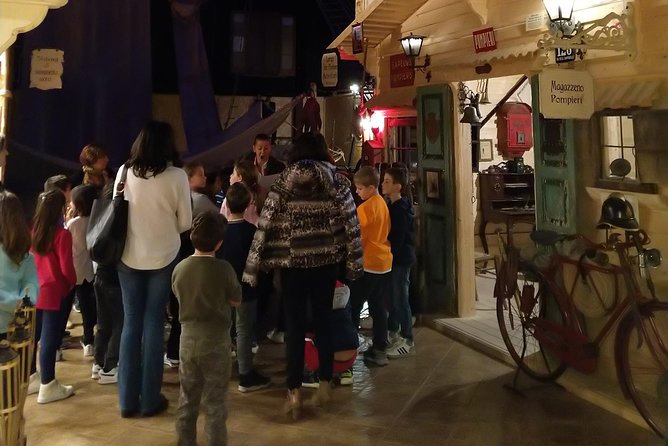
The museum doesn’t rely on you reading everything at your own speed. You get a guided tour that takes you through the main exhibition areas and the virtual reality environments. This is one of the strongest values in the experience because the guide helps you turn a pile of artifacts into a coherent story.
Then comes the virtual reality simulation. The description is simple: it simulates the presence of a fire along the way. In practical terms, that matters because fire-safety stories can feel abstract if you only hear them. VR gives you a sense of urgency and context—without you having to experience anything dangerous in real life.
I also appreciate the way this is paced. You’re not stuck in VR the whole time. You move from exhibits to the VR portion, then back into the real-world activities after. That rhythm helps a wide age range keep their attention. If you’re traveling with kids, it’s also a nice middle step between museum looking and the hands-on extinguishing test later.
One tip for your group: if you’ve got nervous kids or anyone who doesn’t like simulations, decide ahead of time how you’ll handle it together. The tour is designed to include everyone, but your comfort level still matters.
The core of the museum: 3,000 pieces that show how firefighting changed
The exhibition is described as including over 3,000 pieces, and that number isn’t just a marketing stat—it shapes the experience. You’ll encounter a lot of categories: vehicles, uniforms, equipment, engravings, prints, books, and vintage photographs. You can move through these in a guided flow, rather than trying to absorb it all at once.
This is where you get the most value if you like explanations—how emergency services developed, how tools improved, and how firefighters prepared for different situations over time. The presence of the Italian Red Cross in the title also signals that the story connects to broader emergency response and public service values, not only firefighting gear.
For adults, I think the strongest payoff is seeing how the equipment and uniforms reflect real changes. For kids, it becomes a scavenger-style adventure: they can point out items they recognize and then connect them to what firefighters actually do.
Cafeteria break: coffee or tea without the hunt
After the main visit, you can relax in the museum cafeteria. Coffee or tea is offered as part of the experience, so you aren’t forced to figure out where to eat right away. That sounds minor, but it’s one of those travel details that can make or break a family plan. It keeps the energy steady after the guided portion and before the kids shift into their play zone.
If your day in Puglia has already been a lot of driving or walking, this is a helpful reset. You can sit, breathe, and let the kids cool down a bit before the more active parts.
Kid play area and inflatable games: where the story becomes play
Once the tour segments are done, the kids have a dedicated play area with themed games and video games, plus an inflatable play space. This is more than entertainment. It’s built around the same theme, letting children act out being firefighters for a day.
For me, the value here is pacing. Families don’t always need more facts; they need an outlet that still feels connected to what they just learned. A play area that matches the theme keeps the transition from museum-to-play smoother, and it makes it easier for parents to stay relaxed because kids have room to move.
If you’re traveling with younger kids, this portion can also be a good buffer if they struggled to focus during the longer exhibit sections. If your kids are older and more independent, they may jump between the games and the inflatable area on their own, while you enjoy the slower parts of the day.
Real test of extinguishing: the hands-on moment adults will respect too
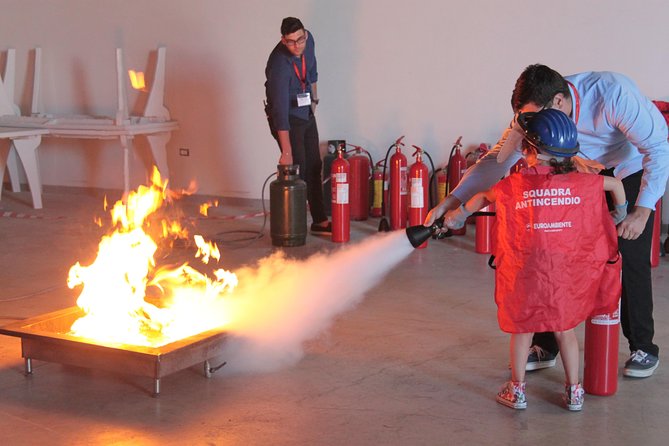
After (or alongside) the play and VR portions, the experience includes a real test of extinguishing the fire for both adults and children. This is one of the most memorable features because it turns the museum theme into a skill attempt, not just a spectacle.
You should expect it to be interactive and structured, with the goal of giving participants a taste of what using firefighting tools feels like. The fact that adults get to do it too is important for families. It avoids that common problem where kids do activities and adults wait around.
Safety matters, and the experience is set up as an organized museum attraction with staff and a guided flow. Still, if anyone in your group has physical limitations or concerns, plan to ask questions on site so you can match the right level of participation.
Take-home fun: the cardboard ladder model and certificate
To end the experience, children receive a cardboard firemen’s ladder model to assemble at home, plus a certificate of Little Firefighter. This part is surprisingly useful when you’re traveling with kids. It gives them something concrete to remember the day by, and it turns the visit into a continuing activity rather than a one-and-done outing.
From a parent perspective, it also helps you manage the emotional “end of the day” moment. Kids already have an achievement in hand, and assembling something at home is a simple way to recap what they learned—without extra screen time.
Timing, duration, and how to make the most of your 2–3 hours
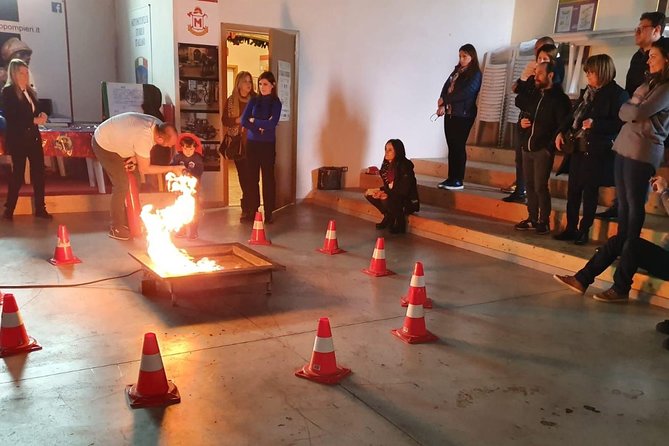
The experience runs about 2 to 3 hours. That’s long enough to cover exhibits, VR, the cafeteria break, kids’ play, and the extinguishing test, but short enough that you can still fit it into a day without turning it into a marathon.
Here’s how I’d plan it for a smooth visit:
- Arrive a bit early so the group can settle before the tour begins.
- If you’re bringing kids, set expectations early that there will be both museum time and play time.
- Plan to do the extinguishing test soon after you reach that section so kids don’t lose momentum.
- Use the cafeteria coffee/tea moment as a reset, not a rushed stop.
If your kids are energy-heavy, don’t schedule another intense activity immediately after. Give them a little time to decompress, since inflatable play can crank them up.
Price and value: what you’re really paying for
The price is $17.35 per person, and the value comes from how many different elements you get inside that single admission-style package. You’re not just buying entry into a museum. You get:
- Guided tour plus virtual reality environments
- Coffee and/or tea offered in the museum cafeteria
- Fire extinguishing tests for adults and children
- A play area with themed games, video games, and inflatable activities for kids
- A cardboard ladder model to assemble at home for children
- A certificate of Little Firefighter
That combination is why this works well for families. You’re paying to cover multiple interests—history fans, kids who want movement, and adults who appreciate the guided context. If your group includes both adults and children, this bundled structure usually feels like better value than piecing together separate activities.
Also, the experience is described as private for your group. That can make the whole flow easier, especially with kids who benefit from steadier pacing and attention.
Who should book this experience
This is a strong choice if you’re traveling with:
- Kids who like hands-on activities and themed play
- Parents who want a museum that doesn’t feel like homework
- Adults interested in firefighting gear, uniforms, and how emergency services developed
- Families who want a single stop that covers education + play + a take-home souvenir
It may be less ideal if you prefer quiet, slow, strictly self-guided museum wandering, since the VR and interactive components change the tone.
Practical details that matter before you go
The meeting point is the museum itself (Viale Antonio Meucci, 71043 Manfredonia FG, Italy). The museum hours listed run Monday through Sunday in two daily blocks: 9:00 AM–12:30 PM and 3:30 PM–5:30 PM.
The experience uses a mobile ticket, and confirmation is received unless you book very close to your travel date. Service animals are allowed, and most travelers can participate. It’s also described as private, meaning only your group takes part.
If you’re thinking about meals, note that lunch isn’t included—so you’ll want to plan something outside the museum after the 2–3 hour visit.
Should you book it?
Yes, if you want a family outing that’s more than just watching. The mix of guided history, VR context, hands-on extinguishing, and a dedicated kids play space makes it a rare museum visit that doesn’t leave parents bored or kids restless.
If your group is very schedule-tight or your kids get overstimulated easily, plan the timing carefully and treat the cafeteria break as part of your pacing strategy. But for most families in Puglia looking for an engaging, organized experience in a single stop, this is a very solid bet.
FAQ
Where is the Historical Museum of Firefighters and the Italian Red Cross located?
It’s in Manfredonia, Puglia, at Viale Antonio Meucci, 71043 Manfredonia FG, Italy.
How long does the experience last?
The visit is approximately 2 to 3 hours.
What’s included in the price of $17.35 per person?
You get a guided tour with virtual reality environments, coffee and/or tea in the museum cafeteria, fire extinguishing tests for adults and children, a children’s play area with themed games and inflatable activities, and children also receive a cardboard firemen’s ladder model and a Little Firefighter certificate.
Is there a mobile ticket?
Yes, the experience includes a mobile ticket.
Do adults and children both get to try extinguishing?
Yes. Fire extinguishing tests are included for both adults and children.
Is there food included?
Coffee and/or tea are offered in the museum cafeteria, but lunch is not included.
Are there kid-friendly activities beyond the museum exhibits?
Yes. There is a play area with themed games and video games, plus an inflatable play area where children can become firefighters for a day.
What time is the museum open?
The listed hours are Monday to Sunday: 9:00 AM to 12:30 PM and 3:30 PM to 5:30 PM.
What are the cancellation terms?
Free cancellation is available. You can cancel up to 24 hours in advance for a full refund; if you cancel within 24 hours of the start time, the amount paid is not refunded.
Is this experience only for my group?
Yes. It’s described as private, meaning only your group will participate. Service animals are allowed.