REVIEW · PISA
Tour of Carrara Marble: Quarry, Museum and Food Tasting
Book on Viator →Bookable on Viator
Carrara marble is less touristy than you expect. This 2.5-hour tour is run by Nicola, a geologist who explains how marble forms and how modern quarrying works, and you also get a real taste of Lardo di Colonnata right in the village. The big plus for me is the hands-on, question-friendly way he connects rock science to what you’re seeing in the quarry. One thing to consider: if you’re traveling with small kids, the tour cost can feel heavy since child pricing wasn’t mentioned and it’s not built around tiny attention spans.
I especially like the small-group format (max 8), because you’re not just herded from point to point. It runs in English, uses a mobile ticket, and is timed for a 10:00am start, with the day returning to the same meeting point. The route is designed around the mountains and the village, so you’re outdoors and up close to the working stone world.
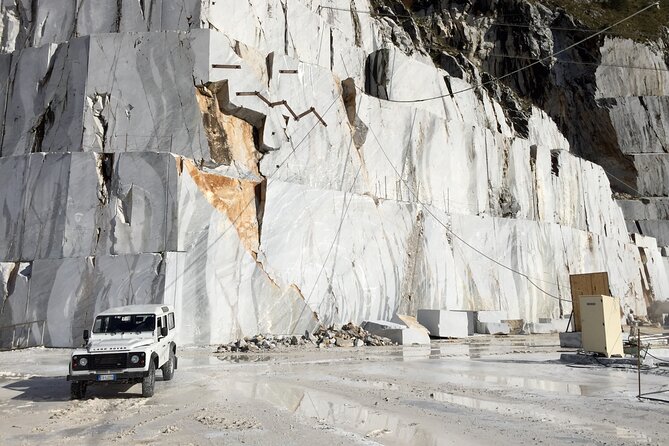
Weather matters here. The experience requires good weather, and Nicola has shown flexibility by rearranging the order when conditions were bad, so it’s worth planning for layers and being ready to adapt. You’ll spend time around the quarries at Ponti di Vara, including watching big cutting equipment like diamond saws if the schedule allows, then head to Colonnata for the tasting.
In This Review
- Key highlights worth planning for
- Why Carrara Quarries Feel Different From Usual Sightseeing
- Meet Your Guide and Get Into the Marble Mindset (Nicola the Geologist)
- Ponti di Vara: Quarry Stops, Stone Education, and Watching the Cutting Work
- Colonnata Village and the Lardo di Colonnata Tasting
- Group Size, Timing, and Getting There for a 10:00am Start
- Price and Value: What You’re Paying For in Carrara
- Who Should Book (and Who Might Skip This One)
- Should You Book the Tour of Carrara Marble?
- FAQ
- How long is the Carrara Marble: Quarry, Museum and Food Tasting tour?
- What time does the tour start?
- Where does the tour meet and where does it end?
- Is the tour offered in English?
- How many people are in the group?
- What food is included in the tour?
- Is admission included for the quarry or museum parts?
- What happens if the weather is poor?
Key highlights worth planning for
- Nicola the geologist guiding quarry science in plain English
- Ponti di Vara quarry viewpoints plus a museum-style stone education
- Colonnata village visit centered on quarry families and tradition
- Lardo di Colonnata tasting, aged in a marble basin
- Small-group size (8 max) with room for real questions
- Weather-adjusted timing when the mountains get rainy
Why Carrara Quarries Feel Different From Usual Sightseeing
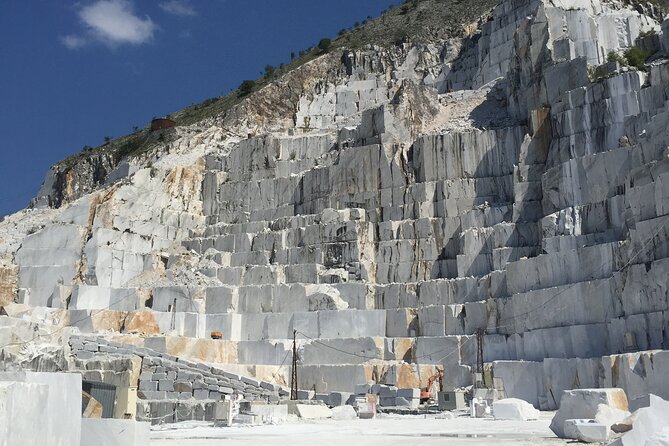
Carrara has been pulling marble from the mountains for thousands of years, so this isn’t a one-stop photo stop. The tour puts you near the quarry world where stone is extracted, cut, and turned into art and furniture. That context changes the way you look at marble back home.
What makes it click is the mix of scale and explanation. You can see how huge the operations are, but you also get the why: how quarry methods evolved, what different rock conditions mean, and how the industry turns raw stone into something useful. It’s practical knowledge, not just dates and names.
And then there’s the food part, which keeps the whole morning from feeling like a lecture. Colonnata is the kind of town where quarry work shaped daily life, and the lardo tasting connects that work to a local tradition.
Meet Your Guide and Get Into the Marble Mindset (Nicola the Geologist)
The real engine of this tour is Nicola. He’s not only a guide; he’s a geologist, and that matters because his answers stay rooted in how stone actually behaves. You’ll get clear explanations about marble’s history and production, plus the big picture of what quarry workers do now and what they did in ancient times.
His English is described as very good, and the tone comes through as friendly and service-focused. The best part is that you’re encouraged to ask questions. If you’re the type who wonders what a tool is used for or why a particular method is used, this tour will keep feeding that curiosity.
A bonus detail from the tour experience: Nicola and his family are involved in the marble business. That gives his explanations an insider feel, and it also explains why the tour tends to go beyond the basics and into the real day-to-day realities of stone work.
Ponti di Vara: Quarry Stops, Stone Education, and Watching the Cutting Work
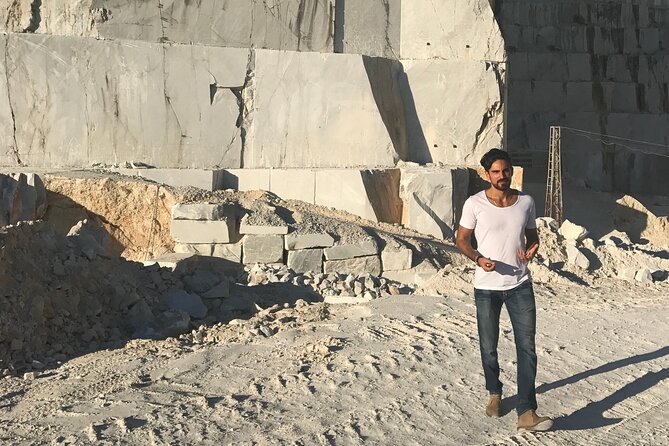
The first stop is Ponti di Vara, and it’s designed as more than one quarry “look at this” moment. You’ll take a few stops in front of different quarry areas in the Carrara mountains. At each one, you’ll learn about the history and methods of excavation, and you’ll build a mental map for how experts go from rough rock to finished pieces.
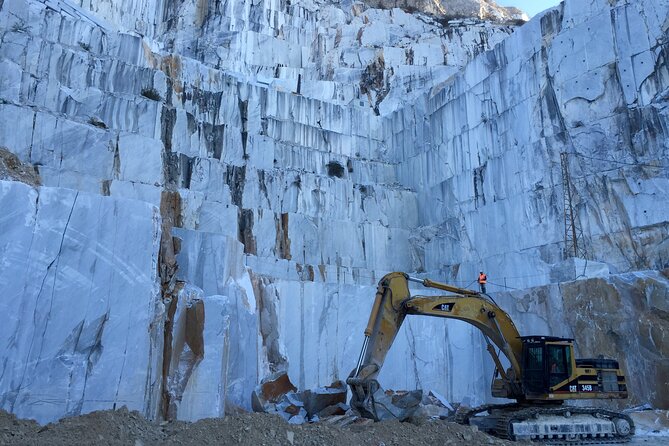
This is where the tour earns its time. Seeing a quarry from a distance is one thing. Understanding how excavation happens, how stone is processed, and what changes between traditional and modern work is another. When conditions line up, you may even be able to watch diamond saws and heavy equipment in action, which gives you a sense of scale you can’t get from museum-only marble talk.
There’s also a museum-style stone exploration component at the first stop. That’s a nice pairing because it gives you a place to connect what you saw outside to the broader story of marble production. And if you like souvenirs that feel locally made, there’s an on-site shop mentioned as selling handmade products produced locally.
A practical note: quarries can mean uneven ground and outdoor time. Wear shoes you don’t mind getting dusty, and dress for changing mountain weather.
Colonnata Village and the Lardo di Colonnata Tasting
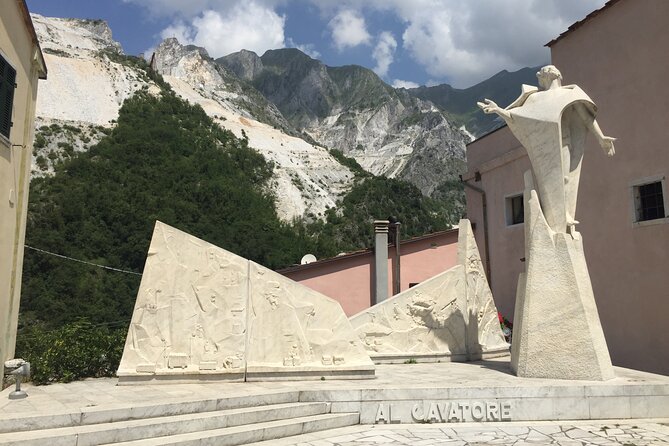
After the quarry time, you head to Colonnata, a small village tied closely to quarry families. This stop is where the tour shifts from stone to culture, but it doesn’t feel like a random detour. Colonnata is home to the quarry men, so the food tradition makes sense in context.
The star here is Lardo di Colonnata. You’ll taste it, and you’ll also learn what makes it special: it’s a cold cut aged in a marble basin using a specific local recipe. That detail is more than trivia. It’s a reminder that marble isn’t just a product in the workshop; it’s part of the local food system and daily life.
Keep expectations realistic. Lardo is rich, and if you focus too hard on what you’re tasting, it may not work for everyone. But if you take it as a local specialty and try a small bite first, it often lands better than people expect.
Colonnata also gives you a calmer finish to the morning, after the scale and sound of quarry operations.
Group Size, Timing, and Getting There for a 10:00am Start
This is a small-group tour with a maximum of 8 travelers, so you’re not stuck listening through a crowd. You’ll get more personal attention, and the guide can slow down when questions come up. That’s one of the main reasons the tour feels worth it even though it’s only about 2 hours 30 minutes.
Timing is straightforward. The start time is 10:00am at Via Miseglia Fantiscritti, 54033 Carrara MS, Italy, and it ends back at the same meeting point. The structure is two main blocks: about 1 hour around the quarry area at Ponti di Vara and about 1 hour in Colonnata. The travel between stops fills the rest.
It’s also described as near public transportation, so you should have options if you’re not driving. Still, plan on being outside for parts of the morning, so bring layers and plan to move at a pace set by the group and terrain.
Price and Value: What You’re Paying For in Carrara
At $95.34 per person for roughly 2.5 hours, you’re not just paying for entry tickets. The value is the guide’s specialist interpretation of a working industry. Quarrying can be confusing if you’re looking at it as a tourist; with Nicola explaining what you’re seeing, the time becomes much more useful.
You also get a real included experience at both stops: the quarry time has admission listed as free for that segment, and the Colonnata stop includes the lardo tasting. On top of that, it’s in English, in a group that stays under 8, which usually means less waiting and more conversation.
So when you’re deciding whether it’s worth the money, think of it like this: the ticket buys you understanding plus access to a guided explanation of a place that’s hard to interpret on your own. If you care about craft, materials, art, architecture, or geology, that’s where the price tends to make sense quickly.
Who Should Book (and Who Might Skip This One)
I’d put this tour at the top of the list if you’re the type who enjoys asking questions and learning how things work. It’s a strong fit for:
- People interested in materials and design, since marble is the raw ingredient behind so many sculptures and buildings
- Anyone curious about how a long-running industry operates in real time
- Food lovers who want the local story behind what’s on the table in Colonnata
This is also a good choice if you like small groups. With a max of 8, you’re more likely to get individualized answers instead of a rapid-fire script.
On the flip side, if you’re traveling with very small children, think twice. The tour cost issue came up directly, and quarry settings generally aren’t designed for short attention spans. The experience can be educational, but it’s still an outdoor working-area morning.
If you’re bringing a dog, it’s worth asking. There’s at least one mention of a dog being allowed during the tour, and that suggests it may be possible with advance confirmation.
Should You Book the Tour of Carrara Marble?
If you want Carrara to be more than a marble shop run, book it. The strongest reason is Nicola: a geologist guide who ties marble science, quarry methods, and historical production into a morning you can actually picture. Add in the Colonnata lardo tasting aged in a marble basin, and you get a rare combo of stone and local life in one format.
You should also book if you’re okay with being outside and you want the day to feel structured: quarry viewpoints first, then a village food stop. With an 8-person cap, the whole experience stays personal.
Skip it only if your group can’t handle the outdoor timing, or if you’re traveling with very young kids and the cost feels unjustified for their needs. Otherwise, this is one of the more meaningful ways to understand why Carrara marble matters.
FAQ
How long is the Carrara Marble: Quarry, Museum and Food Tasting tour?
It lasts about 2 hours 30 minutes.
What time does the tour start?
The tour starts at 10:00am.
Where does the tour meet and where does it end?
It starts at Via Miseglia Fantiscritti, 54033 Carrara MS, Italy, and it ends back at the same meeting point.
Is the tour offered in English?
Yes, it’s offered in English.
How many people are in the group?
The tour has a maximum of 8 travelers.
What food is included in the tour?
You’ll taste Lardo di Colonnata in the village of Colonnata.
Is admission included for the quarry or museum parts?
Admission is listed as free for the stops on the itinerary.
What happens if the weather is poor?
The experience requires good weather. If it’s canceled due to poor weather, you’ll be offered a different date or a full refund.